The Story
Plant Bio
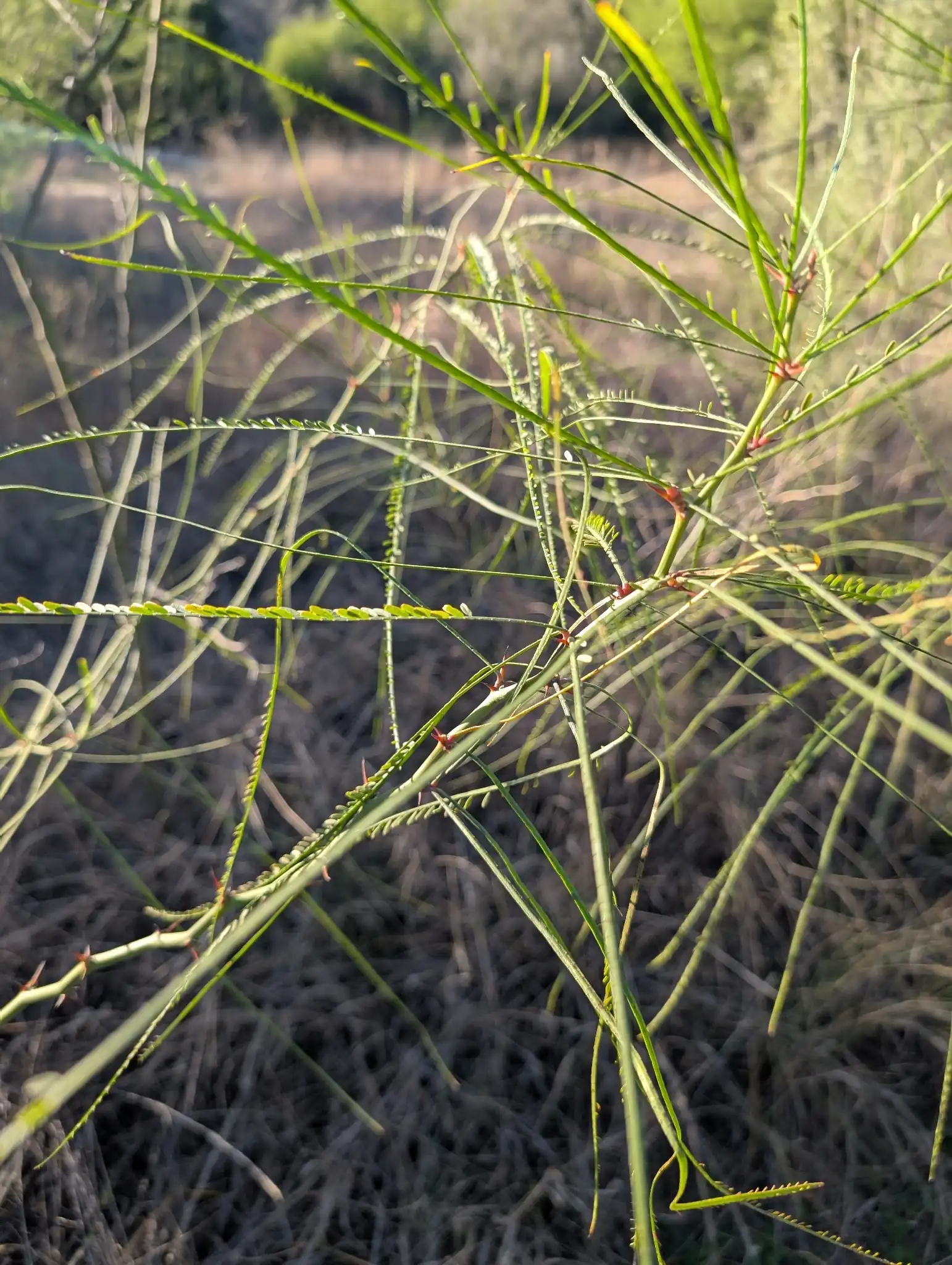
Parkinsonia aculeata, commonly known as Jerusalem thorn, is a deciduous, spiny tree or large shrub native to the warm arid regions of the Americas. It develops a loose, weeping canopy of fine-textured foliage supported by green, photosynthetic branches that continue to produce energy even after the leaflets drop during dry spells.
This species is distinguished by its bright yellow flowers featuring a single standard petal that turns orange-red with age, followed by elongated seed pods. Sharp, recurved thorns arm the zig-zagging stems, providing a formidable physical barrier and structural interest in desert landscapes.
Uses & Benefits:
Essentials
At a Glance
Plant Type
Tree
Height
393"
Width
315"
Light
Full Sun
Zones
8, 9, 10
Water
Low
Humidity
Moderate
Lifespan
Perennial
Native To
Americas
Toxicity
Toxic to livestock
Bloom period
Spring – Summer
In flower about 6 months of the year
Planting
How to Grow
- Plant in a location that receives at least six hours of direct sunlight daily.
- Ensure the soil is well-drained, as waterlogged conditions quickly induce root rot.
- Water deeply but infrequently during the first growing season to establish a deep root system.
- Withhold supplemental fertilizer, as this species is adapted to nutrient-poor soils.
Pro Tip
Avoid heavy pruning into old, leafless wood, as these mature branches lack active buds and will fail to regenerate.
Keep It Thriving
Care Guide
Do
- Provide sharp soil drainage to prevent fungal root pathogens.
- Prune lightly to maintain a single-trunk or multi-trunk shape as desired.
- Wear thick protective gloves when handling the thorny branches.
Don't
- Do not overwater once established, as excess moisture promotes weak growth and rot.
- Do not apply nitrogen-heavy fertilizers, which can cause excessive, floppy branching.
- Do not prune heavily into old, bare wood where dormant buds are absent.
Seasonal Care Calendar
| Task | Jan | Feb | Mar | Apr | May | Jun | Jul | Aug | Sep | Oct | Nov | Dec |
|---|---|---|---|---|---|---|---|---|---|---|---|---|
| Pest Check | ||||||||||||
| Propagate | ||||||||||||
| Prune | ||||||||||||
| Winter Prep |
Watch Out For
Pests & Diseases
Common Pests
Common Diseases
In the Garden
Landscape Uses & Companions
Landscape Uses
Companion Plants
Multiply
Propagation Methods
Good to Know
Common Questions
Jerusalem Thorn questions
What zones can Jerusalem Thorn grow in?
Jerusalem Thorn is hardy in USDA Zones 8–10: in that range it survives winter in the ground. Colder than Zone 8, winters are too cold for it to survive outdoors.
When does Jerusalem Thorn bloom?
Jerusalem Thorn typically blooms from spring to summer. Exact timing shifts a week or two with your zone — Sow's bloom calendar maps it to your garden.
Does Jerusalem Thorn need full sun?
Jerusalem Thorn does best in full sun (6+ hours).
Is Jerusalem Thorn drought tolerant?
Yes — once established (usually after the first full season), Jerusalem Thorn handles dry spells with minimal watering. Water deeply its first year to build the root system that makes that possible.
More Parkinsonia to compare
Keep exploring
Explore the genus
Hardy in your zone?
Grow Jerusalem Thorn with confidence
See it in a design of your actual yard, get zone-matched care reminders, and track it season by season in your garden journal.