The Story
Plant Bio
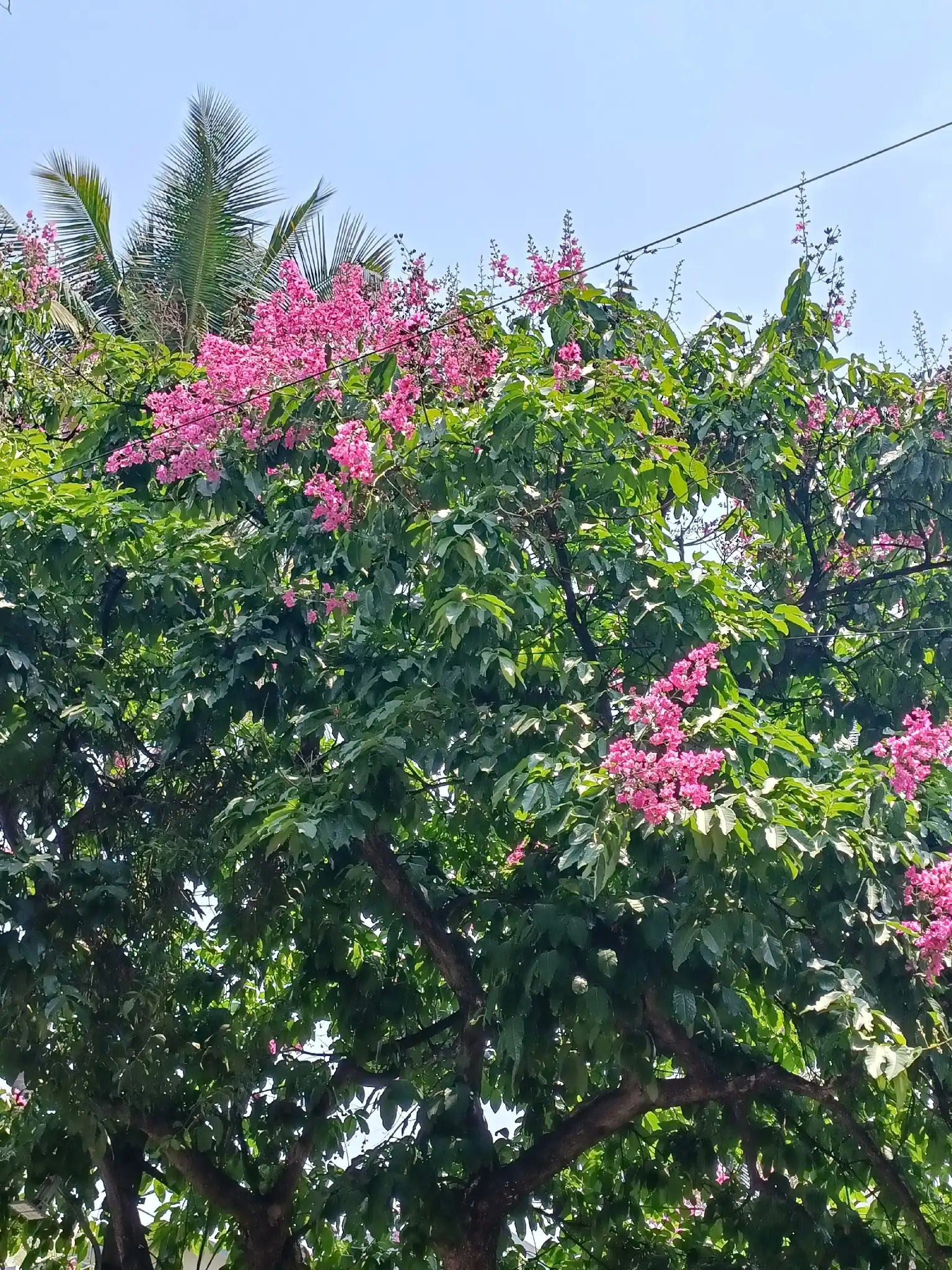
Lagerstroemia speciosa, the queen's crape myrtle, is a large deciduous tree from tropical Asia that reaches 30 to 60 feet tall with a 30 to 40 foot rounded, vase-shaped crown and smooth mottled light brown to gray bark that sheds in thin plates. The opposite leathery leaves are elliptic to obovate and 4 to 14 inches long, dark green above and paler beneath, turning red before falling where winters are cool and holding longer in the tropics.
It is far larger in all parts than the common crape myrtle, with ruffled bright pink to lavender flowers 3 inches wide carried in dense terminal panicles 12 to 24 inches long from late spring into summer. The follow-on woody capsules persist on the tree but do not attract wildlife, and the multistemmed trunk with drooping branches needs early spacing to make a strong street or shade form.
Uses & Benefits:
Essentials
At a Glance
Plant Type
Tree
Height
720"
Width
480"
Light
Full Sun
Zones
10
Water
Moderate
Humidity
Tolerant of high humidity
Lifespan
Long-lived tree
Native To
Tropical southern Asia to Philippines
Toxicity
Non-toxic to humans, dogs and cats; capsules not edible
Bloom period
Late spring – Summer
In flower about 4 months of the year
Planting
How to Grow
- Plant in full sun with room for a 30- to 40-foot crown, after danger of frost has passed.
- Dig the hole as deep as the root ball and twice as wide in well-drained clay, sand or loam.
- Backfill, water to settle, and mulch 2 to 3 inches deep keeping mulch off the trunk.
- Water deeply twice weekly the first year, then only in extended dry spells once established.
- Fertilize through the growing season and prune in late winter to set scaffold spacing.
Pro Tip
Mulch to the drip line and keep string trimmers off the trunk; the bark is thin and wounds easily. Water deeply and fertilize regularly on sandy or alkaline ground or the foliage turns chlorotic despite its drought rating once established.
Keep It Thriving
Care Guide
Do
- Give full sun and room for a wide crown.
- Mulch and water faithfully the first two years.
- Prune young trees for strong, well-spaced structure.
Don't
- Do not plant in saline soil or where frost settles.
- Do not injure the thin bark with mowers or trimmers.
- Do not use overhead irrigation that keeps foliage wet.
Seasonal Care Calendar
| Task | Jan | Feb | Mar | Apr | May | Jun | Jul | Aug | Sep | Oct | Nov | Dec |
|---|---|---|---|---|---|---|---|---|---|---|---|---|
| Fertilize | ||||||||||||
| Mulch | ||||||||||||
| Pest Check | ||||||||||||
| Plant | ||||||||||||
| Prune |
Watch Out For
Pests & Diseases
Common Pests
Common Diseases
In the Garden
Landscape Uses & Companions
Landscape Uses
Multiply
Propagation Methods
Good to Know
Common Questions
Queen's Crape Myrtle questions
What zones can Queen's Crape Myrtle grow in?
Queen's Crape Myrtle is hardy in USDA Zone 10: in that range it survives winter in the ground. Colder than Zone 10, winters are too cold for it to survive outdoors.
When does Queen's Crape Myrtle bloom?
Queen's Crape Myrtle typically blooms from late spring to late summer. Exact timing shifts a week or two with your zone — Sow's bloom calendar maps it to your garden.
Does Queen's Crape Myrtle need full sun?
Queen's Crape Myrtle does best in full sun (6+ hours).
Is Queen's Crape Myrtle drought tolerant?
Yes — once established (usually after the first full season), Queen's Crape Myrtle handles dry spells with minimal watering. Water deeply its first year to build the root system that makes that possible.
More Lagerstroemia to compare
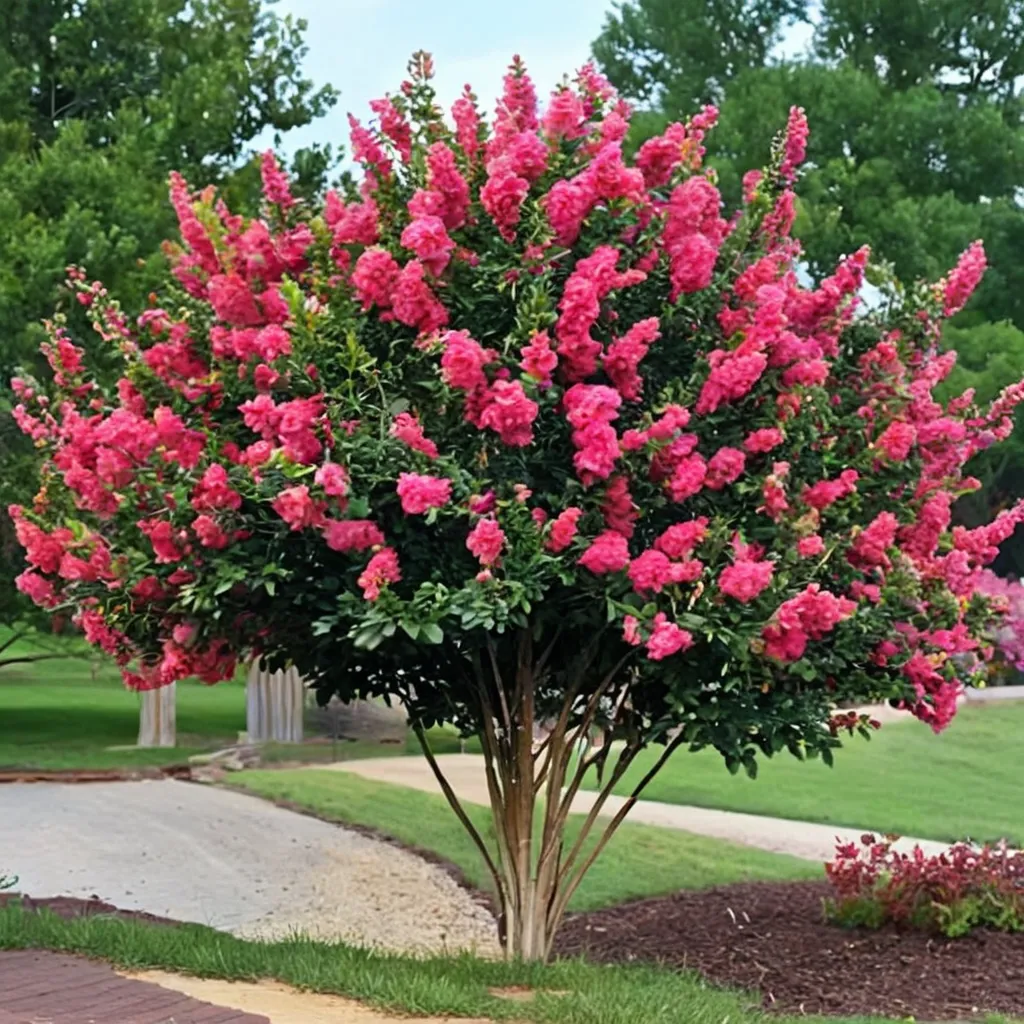
Tonto Indian Crapemyrtle
Lagerstroemia indica 'Tonto'
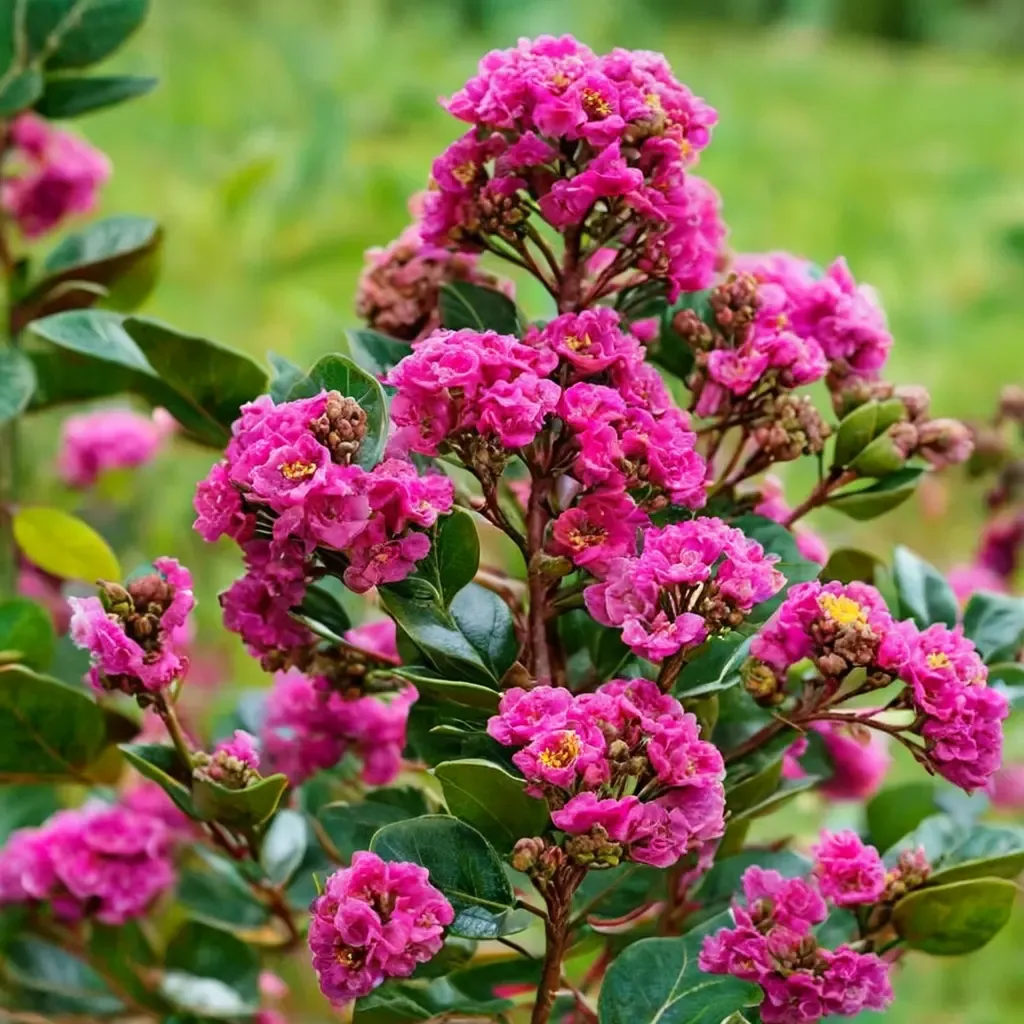
Northern Belle Crape Myrtle
Lagerstroemia indica 'Northern Belle'
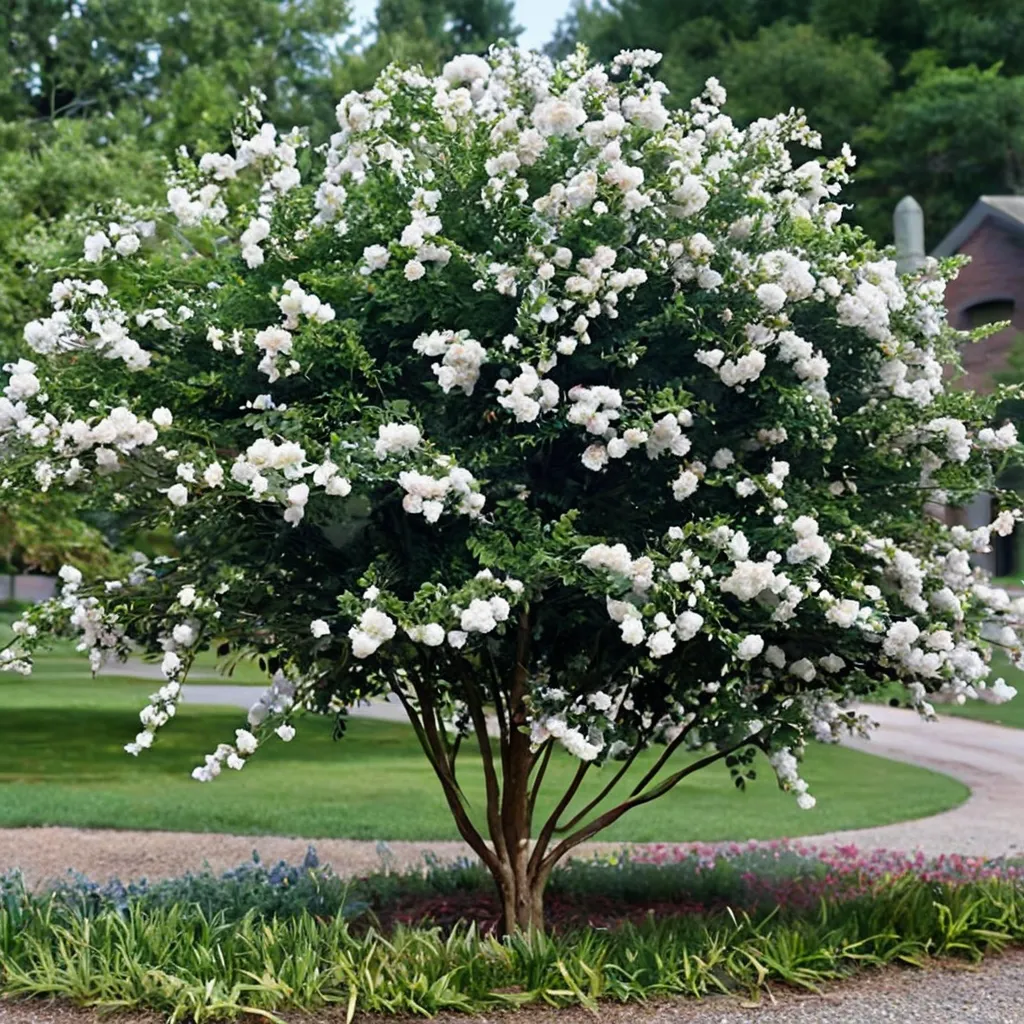
Acoma Crepe Myrtle
Lagerstroemia indica 'Acoma'
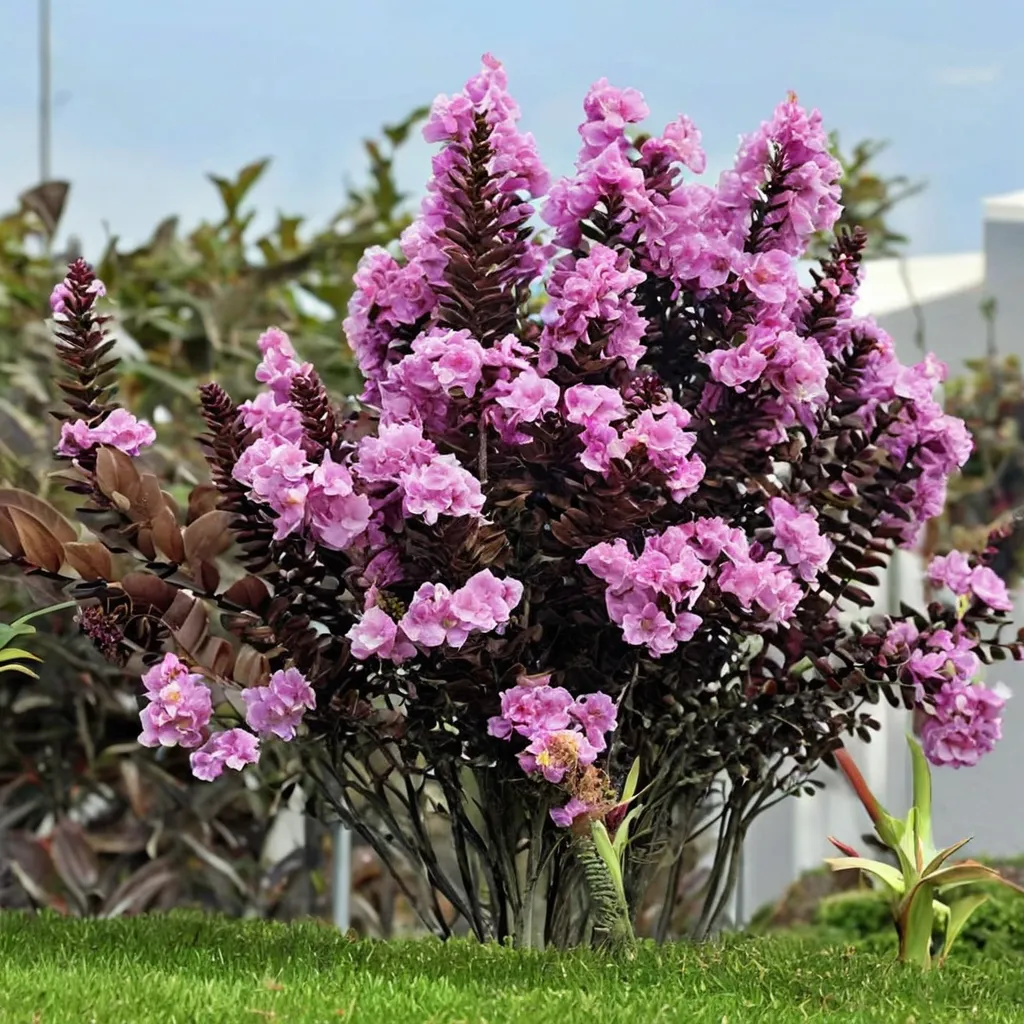
Crape Myrtle Delta Eclipse
Lagerstroemia indica 'Delta Eclipse'
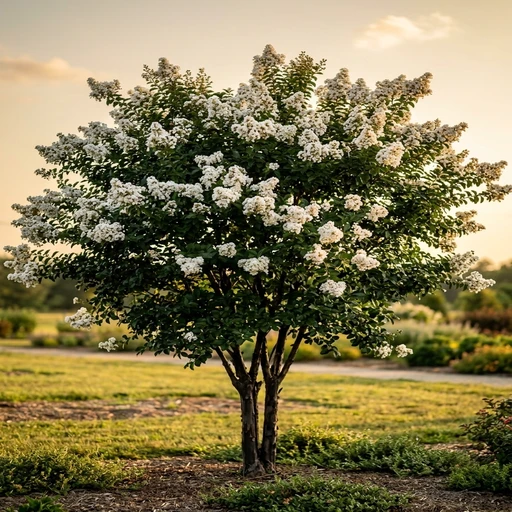
Natchez Crape Myrtle
Lagerstroemia x hybrida 'Natchez'
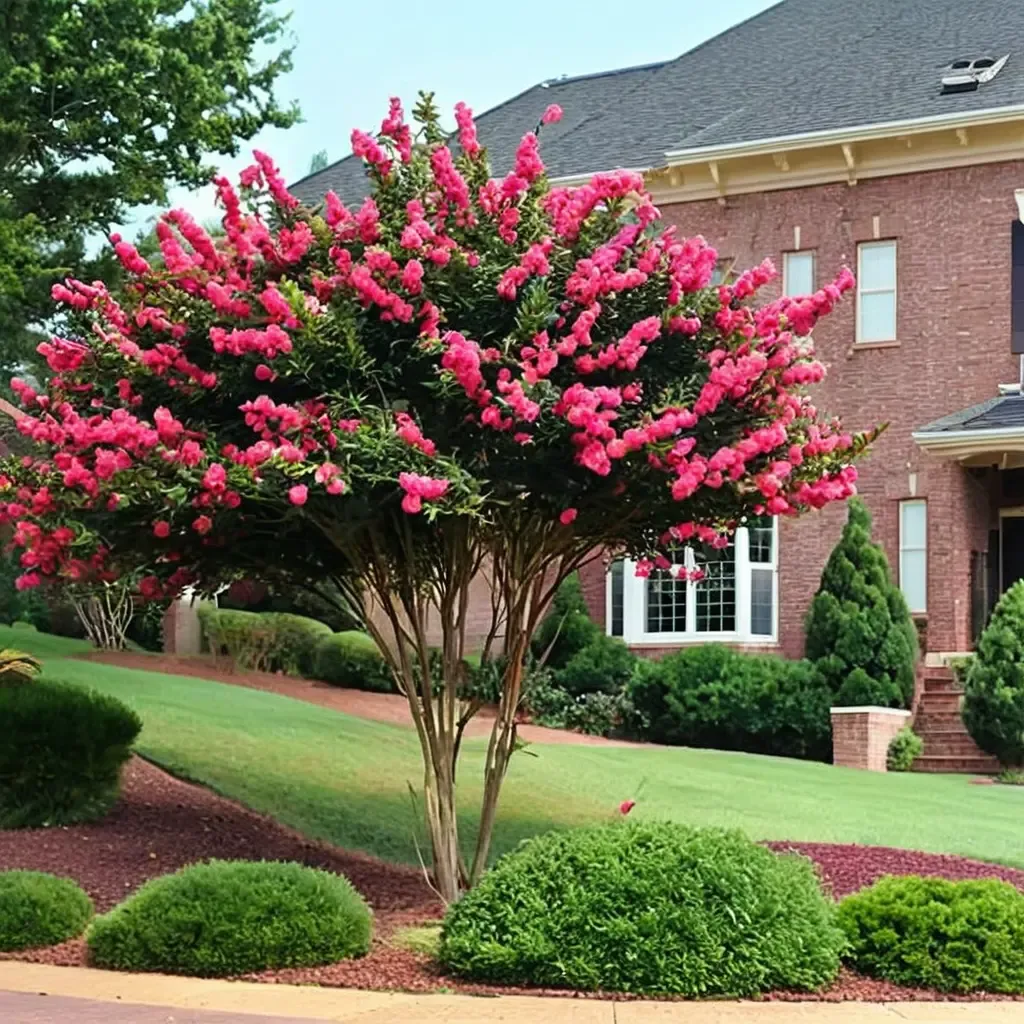
Tonto Crape Myrtle
Lagerstroemia indica 'Tonto Hardy'
Keep exploring
Explore the genus
Hardy in your zone?
Grow Queen's Crape Myrtle with confidence
See it in a design of your actual yard, get zone-matched care reminders, and track it season by season in your garden journal.