The Story
Plant Bio
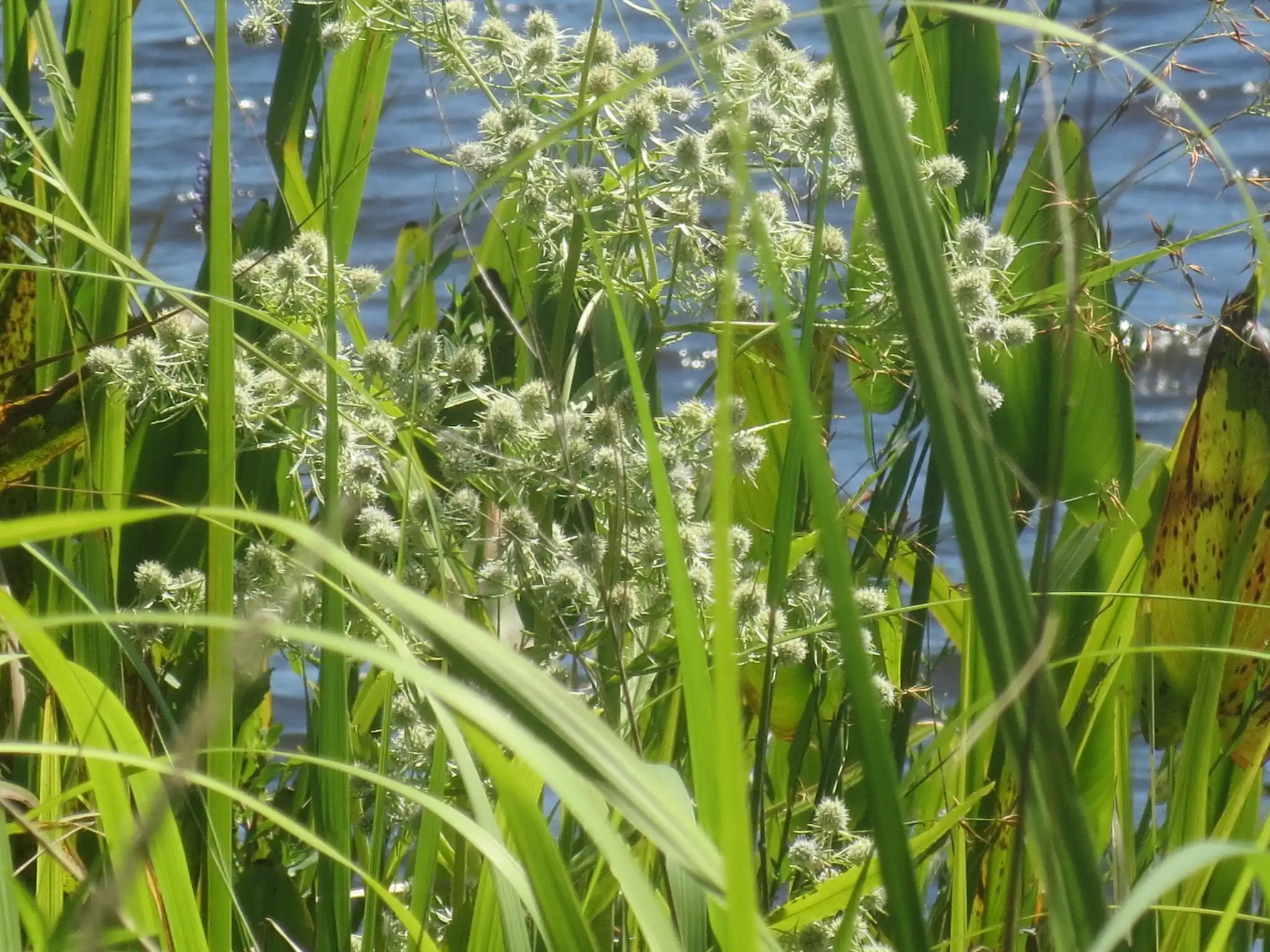
Eryngium aquaticum is a coarse, upright herbaceous perennial from eastern North American marshes and wet savannas, reaching three to four feet with basal rosettes of linear to oblong-lanceolate leaves. The flowers are tiny and packed into tight rounded heads ringed by spiny bracts, opening white with an occasional purplish tinge from summer into fall.
Unlike the dry-prairie rattlesnakemaster it is often sold as, this is a true wetland plant that accepts wet soil and shallow standing water and tolerates tidal freshwater-brackish marsh. Tall stems sprawl in rich soil or shade, so site it in full sun with consistent moisture and stake where needed to hold the heads upright.
Uses & Benefits:
Essentials
At a Glance
Plant Type
Perennial
Height
48"
Width
24"
Light
Full Sun, Partial Sun
Zones
6, 7, 8
Water
Medium to wet
Humidity
Adaptable
Lifespan
Perennial
Native To
Eastern USA
Toxicity
Unknown
Bloom period
Summer – Fall
In flower about 6 months of the year
Planting
How to Grow
- Plant in full sun in medium to wet loam, crowns at soil level, 18 to 24 inches apart.
- Water to settle and keep consistently moist; shallow standing water is tolerated once established.
- Stake tall stems early where soil is rich or light is less than full sun.
- Cut back spent tops in late fall after seed heads have hardened.
Pro Tip
Plant lean and wet in full sun; rich soil and shade produce tall, sprawling stems that never fully straighten.
Keep It Thriving
Care Guide
Do
- Site in full sun with consistent moisture
- Leave seed heads through fall for birds and winter structure
- Stake tall stems before they lean
Don't
- Do not plant in dry shade or highly fertile soil that promotes sprawl
- Do not substitute dry-soil E. yuccifolium for wet-ground planting
- Do not cut into the crown when cleaning up old tops
Seasonal Care Calendar
| Task | Jan | Feb | Mar | Apr | May | Jun | Jul | Aug | Sep | Oct | Nov | Dec |
|---|---|---|---|---|---|---|---|---|---|---|---|---|
| Mulch | ||||||||||||
| Plant | ||||||||||||
| Propagate | ||||||||||||
| Spring Cleanup | ||||||||||||
| Stake |
Watch Out For
Pests & Diseases
Common Pests
Common Diseases
In the Garden
Landscape Uses & Companions
Landscape Uses
Multiply
Propagation Methods
Good to Know
Common Questions
Marsh Rattlesnake Master questions
What zones can Marsh Rattlesnake Master grow in?
Marsh Rattlesnake Master is hardy in USDA Zones 6–8: in that range it survives winter in the ground. Colder than Zone 6, grow it in a container you can move to shelter for the winter, or as an annual. Warmer than Zone 8, winter isn't the problem: it prefers colder winters, and summer heat can shorten its life.
When does Marsh Rattlesnake Master bloom?
Marsh Rattlesnake Master typically blooms from summer to fall. Exact timing shifts a week or two with your zone — Sow's bloom calendar maps it to your garden.
Does Marsh Rattlesnake Master need full sun?
Marsh Rattlesnake Master does best in full sun to part shade. In hot climates, afternoon shade keeps blooms fresher longer.
Is Marsh Rattlesnake Master drought tolerant?
Yes — once established (usually after the first full season), Marsh Rattlesnake Master handles dry spells with minimal watering. Water deeply its first year to build the root system that makes that possible.
More Eryngium to compare
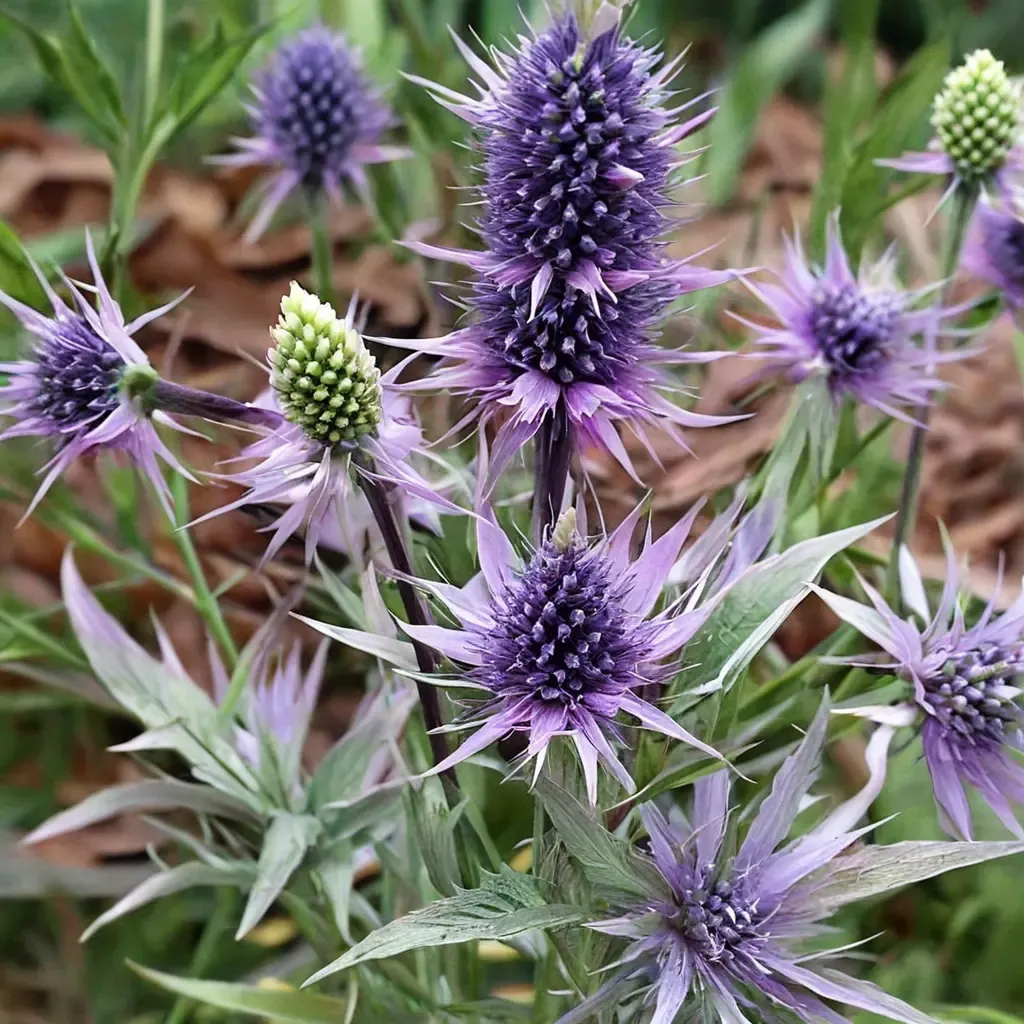
Sea Holly
Eryngium heterophyllum
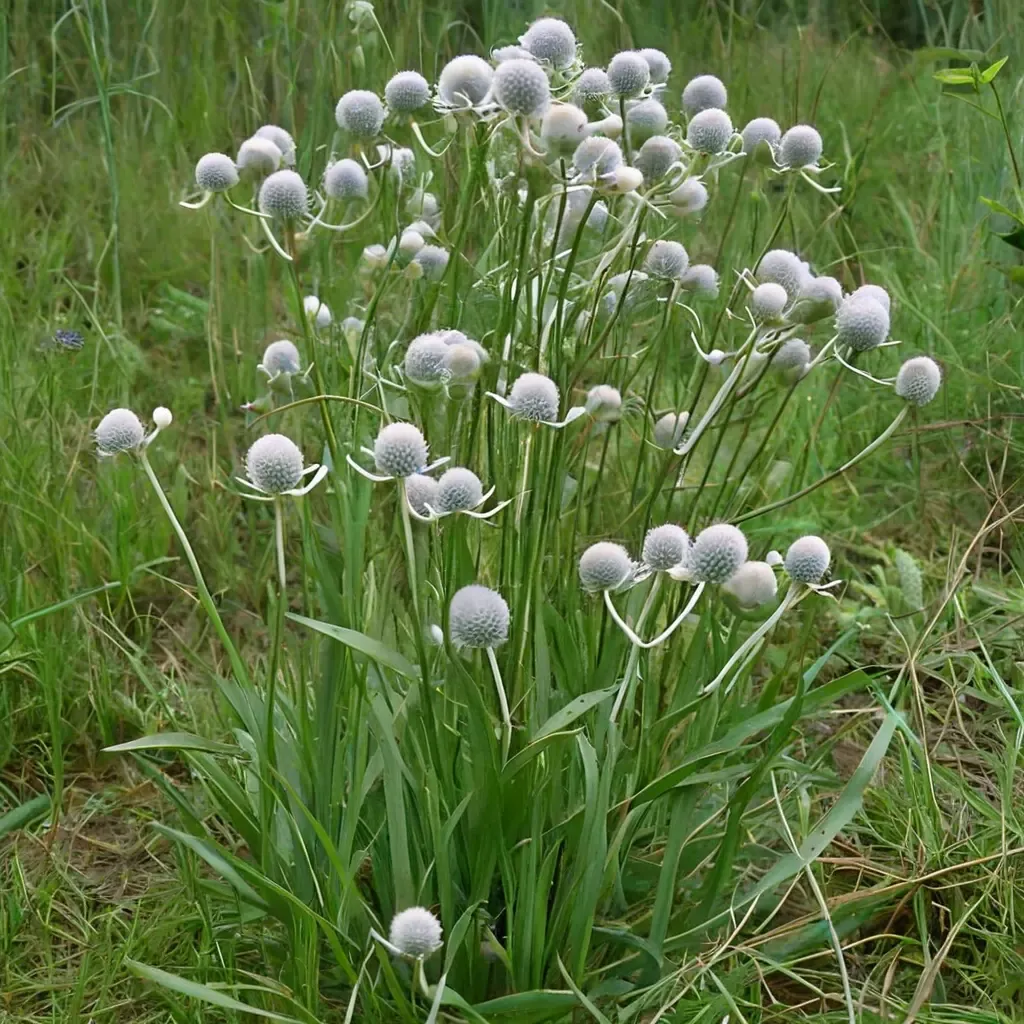
Rattlesnake master
Eryngium yuccifolium
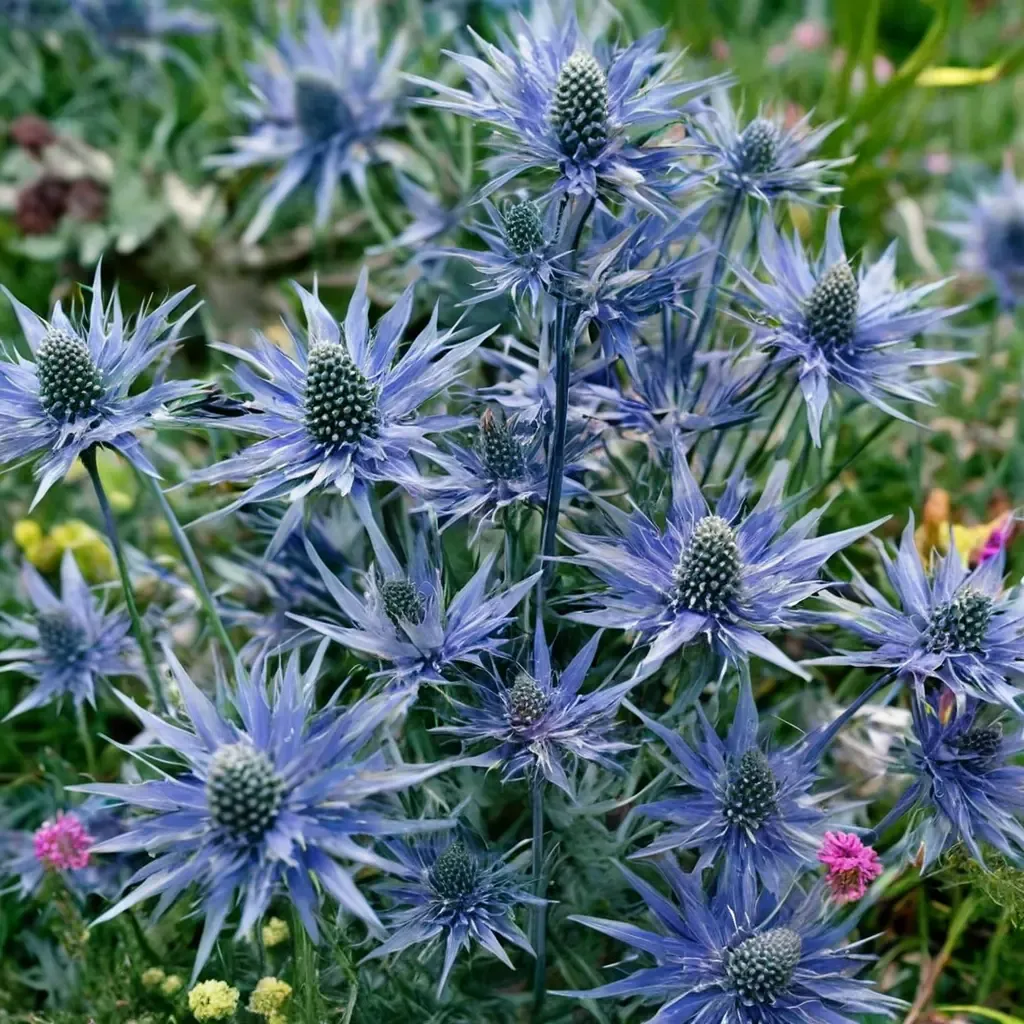
Big Blue Sea Holly
Eryngium x hybrida 'Big Blue'
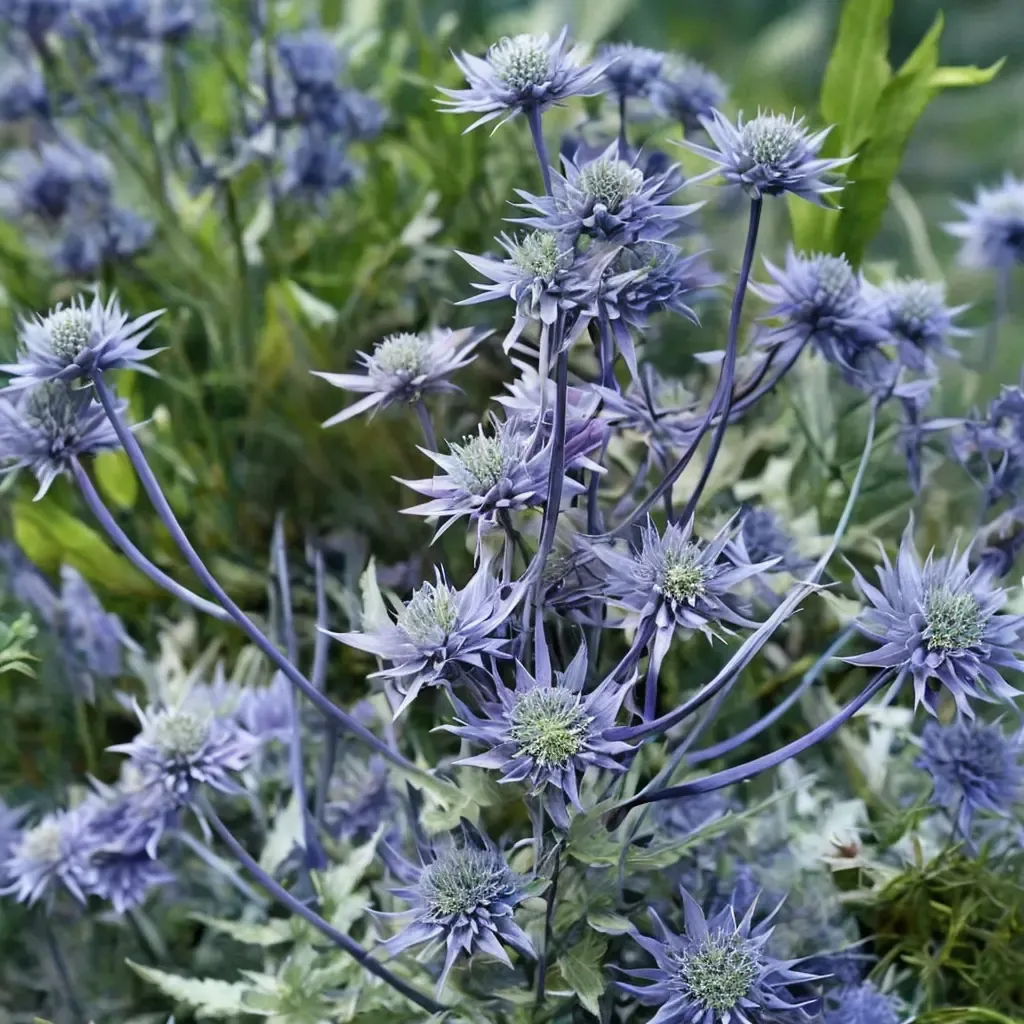
Blue Glitter Sea Holly
Eryngium planum 'Blue Glitter'
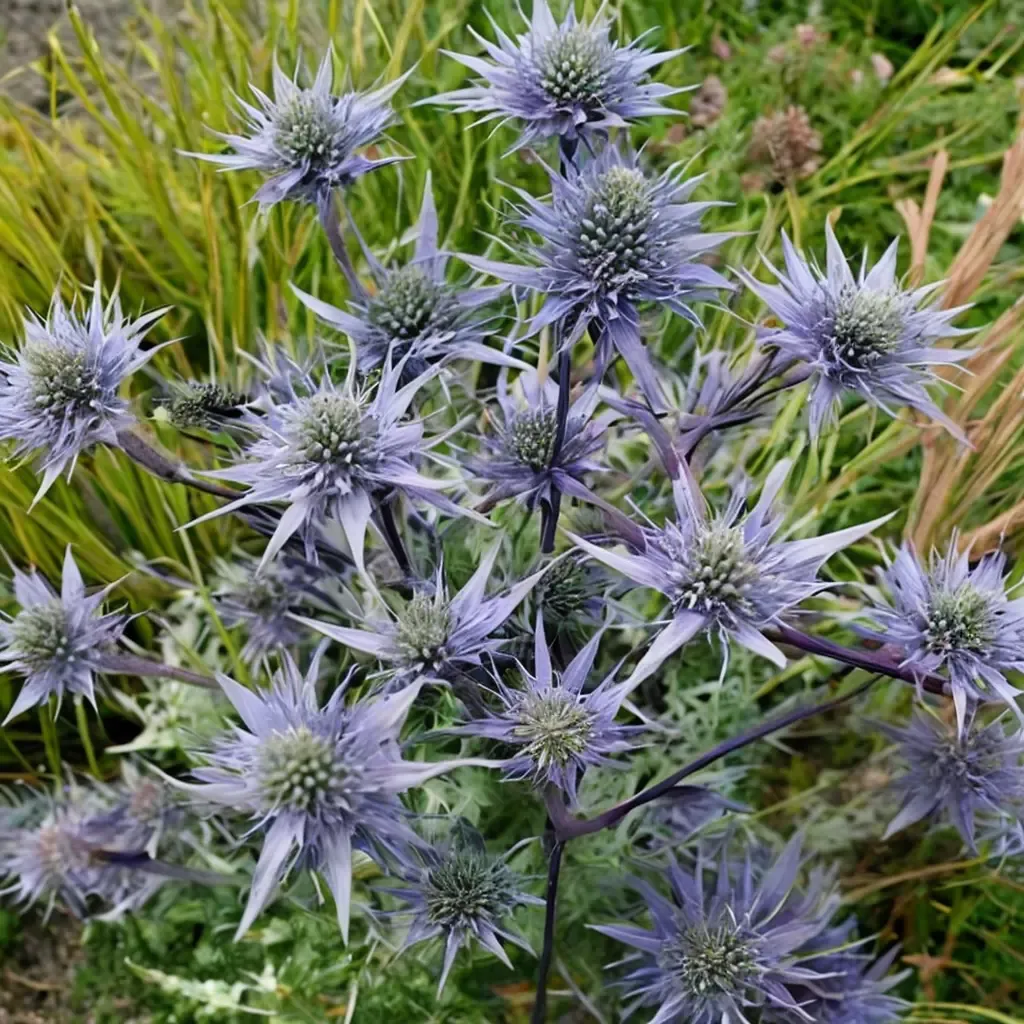
Picos Blue Sea Holly
Eryngium bourgatii 'Picos Blue'
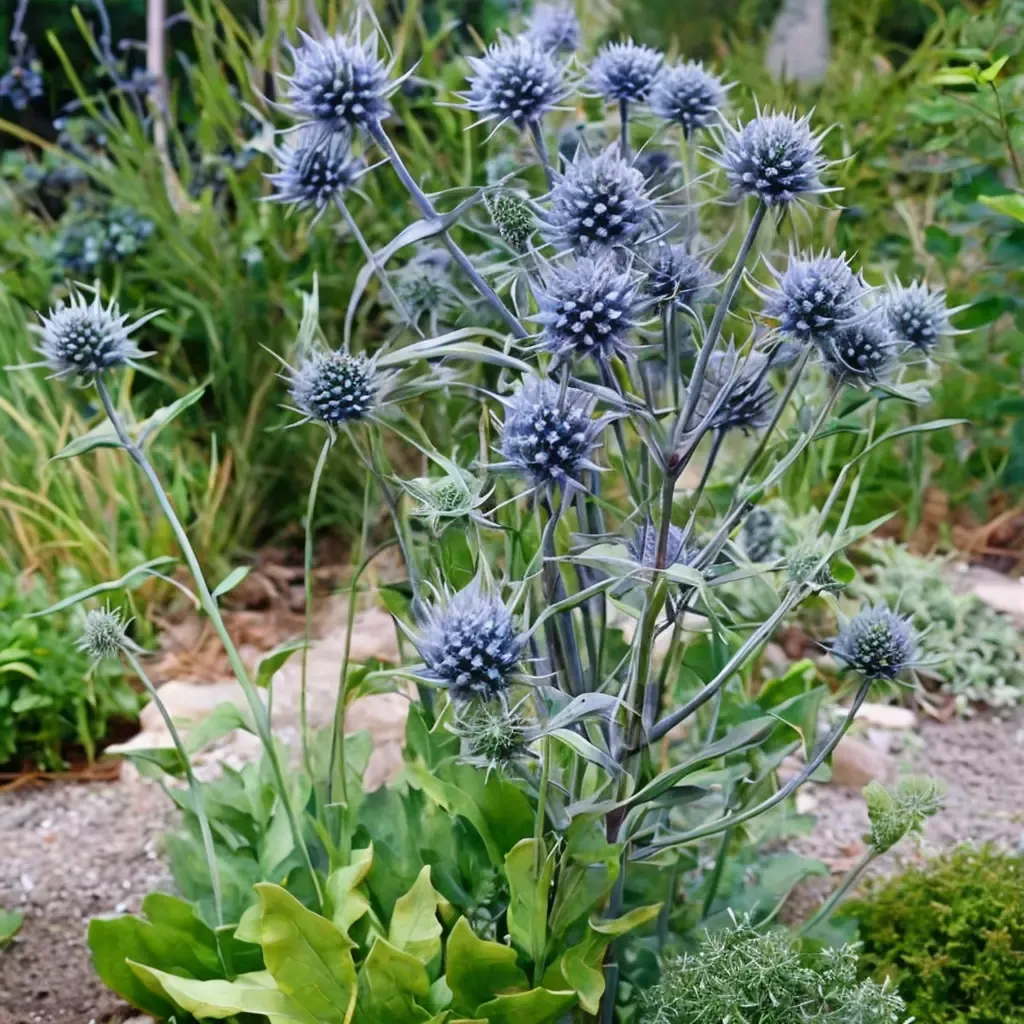
Flat Sea Holly
Eryngium planum
Keep exploring
Explore the genus
Hardy in your zone?
Grow Marsh Rattlesnake Master with confidence
See it in a design of your actual yard, get zone-matched care reminders, and track it season by season in your garden journal.