The Story
Plant Bio
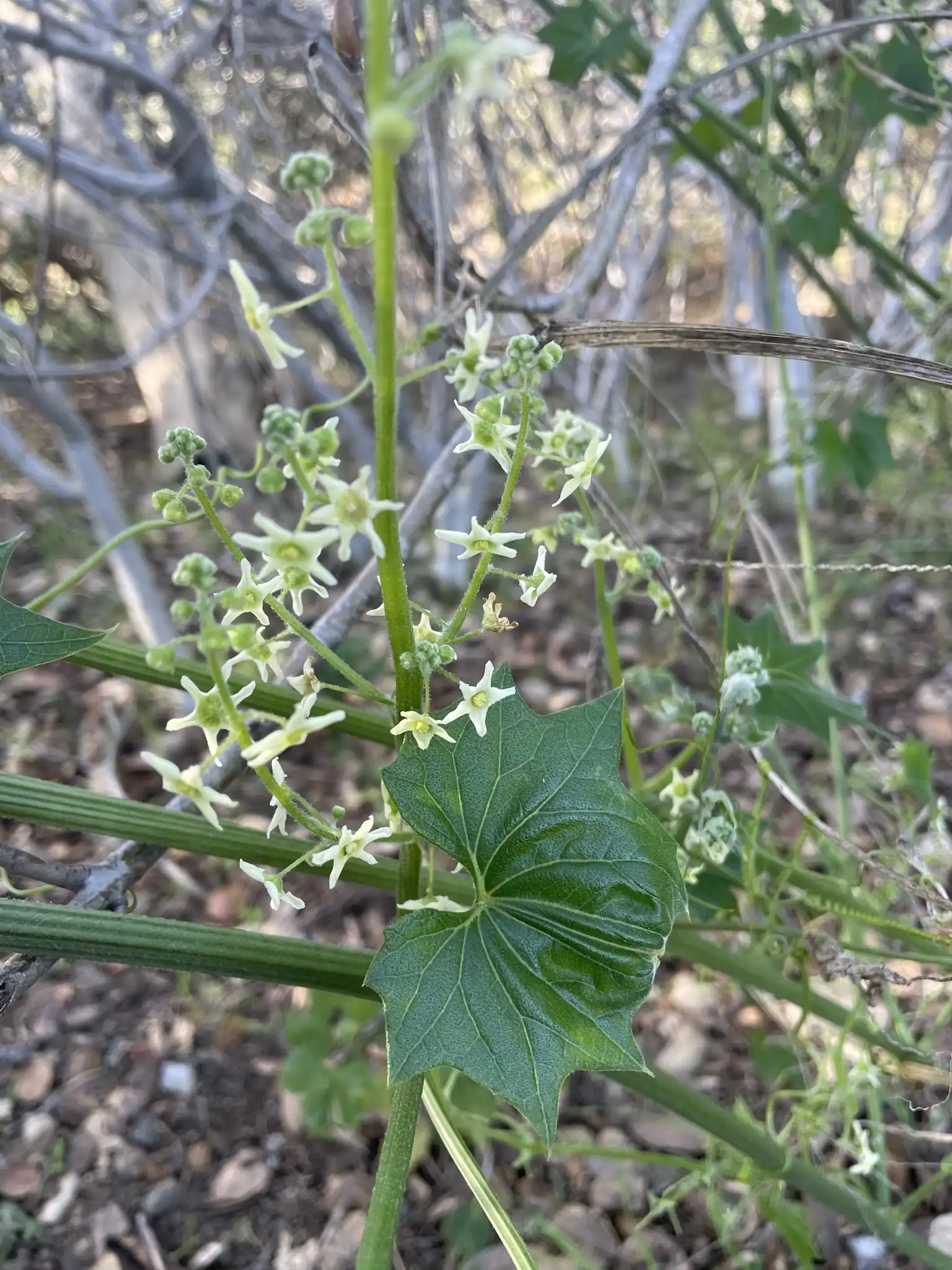
Marah fabacea, known as California man-root, is a rapid-growing perennial vine native to California and Nevada that climbs using coiling tendrils. It emerges from a massive, water-storing subterranean tuber in late winter, producing palmately lobed foliage and racemes of cream to yellow-green flowers before dying back completely in summer.
This species uses its immense underground caudex to endure months of summer drought without rainfall. Its spiky spherical seed pods contain toxic, saponin-rich seeds and release a fluid that irritates skin upon contact.
Uses & Benefits:
Essentials
At a Glance
Plant Type
Vine
Height
240"
Width
236"
Light
Full Sun, Partial Sun
Zones
8, 9, 10
Water
Low
Humidity
Moderate
Lifespan
Perennial
Native To
North America (California, Nevada)
Toxicity
Toxic if ingested, skin irritant
Bloom period
Winter – Spring
In flower about 6 months of the year
Planting
How to Grow
- Plant in sharply draining sandy, loamy, or clay soil in full sun to partial shade.
- Provide a robust trellis, fence, or adjacent native shrub structure to support coiling tendrils.
- Water lightly through winter and early spring during active vine development and flowering.
- Cease irrigation entirely when top growth yellow-browning signifies summer dormancy.
- Cut withered dead vines back to ground level after stems dry completely.
Pro Tip
Withhold all water once foliage begins yellowing in late spring; summer moisture during dormancy causes fatal tuber rot.
Keep It Thriving
Care Guide
Do
- Ensure high soil drainage to prevent moisture accumulation around the underground caudex.
- Allow top growth to die back naturally in late spring to feed the underground tuber.
- Wear protective gloves when handling spiky seed pods or broken vines.
Don't
- Do not water the plant during its summer dormancy period.
- Do not slice into or damage the living underground tuber system.
- Do not plant near edible vegetable beds where spiny fruits could be mistaken for cultivated cucumbers.
Seasonal Care Calendar
| Task | Jan | Feb | Mar | Apr | May | Jun | Jul | Aug | Sep | Oct | Nov | Dec |
|---|---|---|---|---|---|---|---|---|---|---|---|---|
| Pest Check | ||||||||||||
| Plant | ||||||||||||
| Propagate | ||||||||||||
| Prune |
Watch Out For
Pests & Diseases
Common Pests
Common Diseases
In the Garden
Landscape Uses & Companions
Landscape Uses
Multiply
Propagation Methods
Good to Know
Common Questions
California Man-root questions
What zones can California Man-root grow in?
California Man-root is hardy in USDA Zones 8–10: in that range it survives winter in the ground. Colder than Zone 8, grow it in a container you can move to shelter for the winter, or as an annual.
Is California Man-root deer resistant?
Not reliably. Deer may browse California Man-root, especially tender spring growth — plan on repellents or fencing where pressure is high.
When does California Man-root bloom?
California Man-root typically blooms from winter to spring. Exact timing shifts a week or two with your zone — Sow's bloom calendar maps it to your garden.
Does California Man-root need full sun?
California Man-root does best in full sun to part shade. In hot climates, afternoon shade keeps blooms fresher longer.
Is California Man-root drought tolerant?
Yes — once established (usually after the first full season), California Man-root handles dry spells with minimal watering. Water deeply its first year to build the root system that makes that possible.
Keep exploring
Explore the genus
Hardy in your zone?
Grow California Man-root with confidence
See it in a design of your actual yard, get zone-matched care reminders, and track it season by season in your garden journal.