The Story
Plant Bio
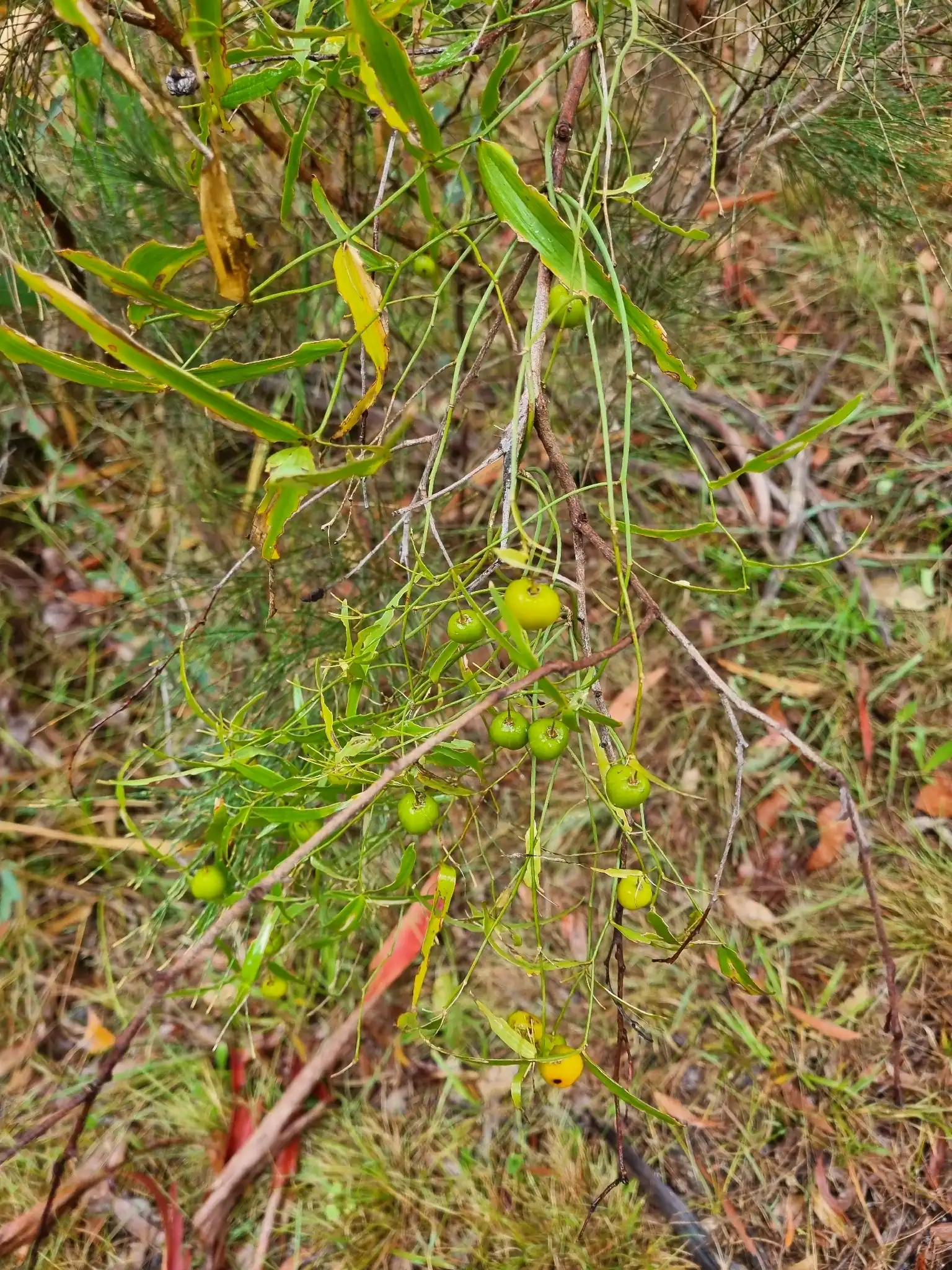
Eustrephus latifolius is an evergreen, tuberous-rooted vine native to eastern Australia and the Pacific Islands that climbs up to twenty feet via slender twining stems. Parallel-veined leaves emerge along wiry stems, bearing small, hanging white to pale pink flowers with furry-edged inner petals through spring and summer.
The species climbs without tightly constricting host plants, allowing it to scramble over trellises or act as a dense ground cover. Bright orange berries follow the summer bloom, opening to reveal glossy black seeds surrounded by edible white arils.
Uses & Benefits:
Essentials
At a Glance
Plant Type
Vine
Height
236"
Width
236"
Light
Full Sun, Partial Sun, Shade
Zones
9, 10
Water
Low to medium
Humidity
Moderate to high
Lifespan
Perennial
Native To
Eastern Australia, Malesia, Pacific Islands
Toxicity
Non-toxic
Bloom period
Late spring – Late summer
In flower about 4 months of the year
Planting
How to Grow
- Select a planting site in partial to full shade with well-draining soil, or prepare a large container with standard potting mix.
- Plant at the same depth as the nursery container, firming the soil gently around the roots.
- Provide a trellis or bamboo stakes to support the young twining stems as they establish.
- Water regularly until established, allowing the upper soil layer to dry slightly between irrigations.
Pro Tip
Trim growth lightly after fruiting to control size; cutting back into old, leafless woody stems prevents fresh resprouting.
Keep It Thriving
Care Guide
Do
- Provide sturdy climbing support or trellis for vertical growth
- Ensure soil drains completely to protect the tuberous roots
Don't
- Do not leave pots sitting in standing water
- Avoid severe hard pruning into old bare wood
Seasonal Care Calendar
| Task | Jan | Feb | Mar | Apr | May | Jun | Jul | Aug | Sep | Oct | Nov | Dec |
|---|---|---|---|---|---|---|---|---|---|---|---|---|
| Fertilize | ||||||||||||
| Pest Check | ||||||||||||
| Prune | ||||||||||||
| Winter Prep |
Watch Out For
Pests & Diseases
Common Pests
Common Diseases
In the Garden
Landscape Uses & Companions
Landscape Uses
Companion Plants
Multiply
Propagation Methods
Good to Know
Common Questions
Wombat Berry questions
What zones can Wombat Berry grow in?
Wombat Berry is hardy in USDA Zones 9–10: in that range it survives winter in the ground. Colder than Zone 9, grow it in a container you can move to shelter for the winter, or as an annual.
When does Wombat Berry bloom?
Wombat Berry typically blooms from late spring to late summer. Exact timing shifts a week or two with your zone — Sow's bloom calendar maps it to your garden.
Does Wombat Berry need full sun?
Wombat Berry does best in full sun to part shade. In hot climates, afternoon shade keeps blooms fresher longer.
Is Wombat Berry drought tolerant?
Yes — once established (usually after the first full season), Wombat Berry handles dry spells with minimal watering. Water deeply its first year to build the root system that makes that possible.
Keep exploring
Explore the genus
Hardy in your zone?
Grow Wombat Berry with confidence
See it in a design of your actual yard, get zone-matched care reminders, and track it season by season in your garden journal.