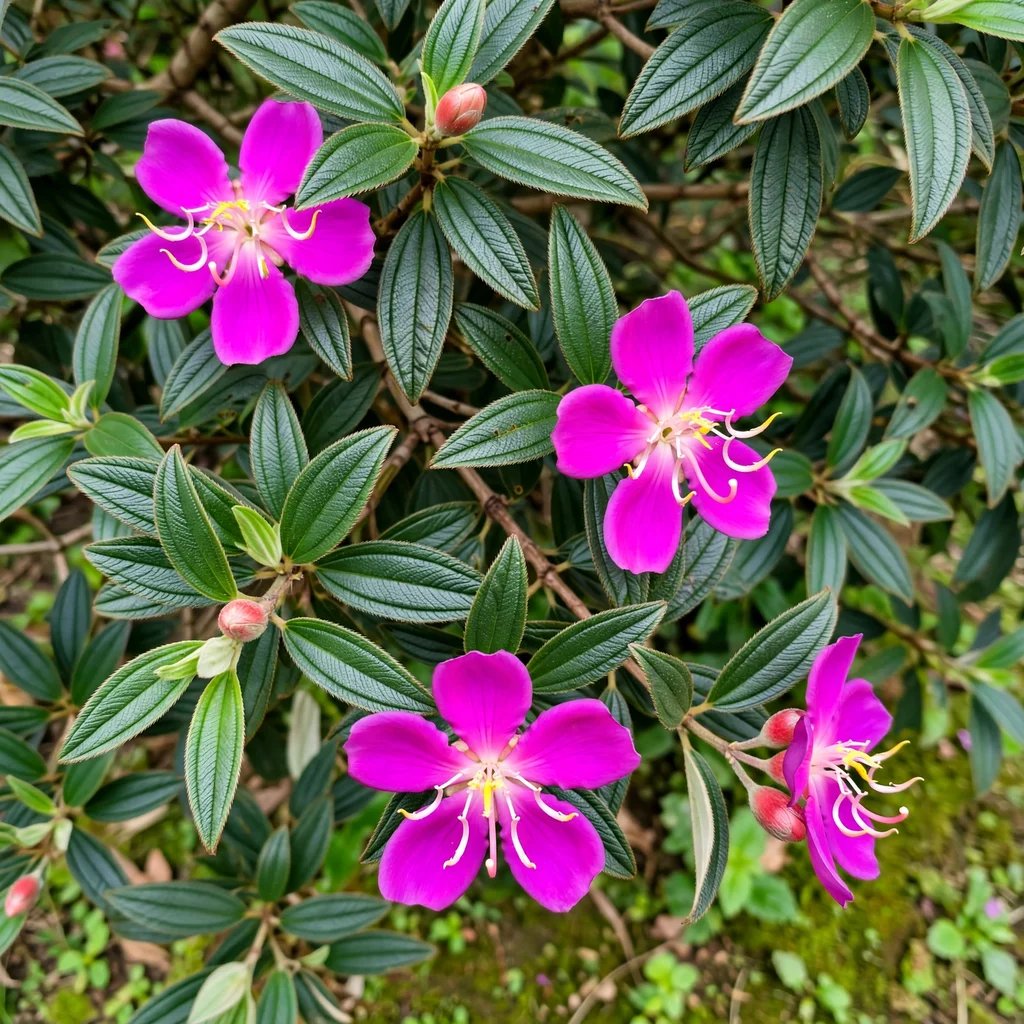
The Story
Plant Bio
Andesanthus lepidotus, still sold as Tibouchina lepidota, is a large evergreen shrub to small tree from wet montane forest in the Andes of Colombia, Ecuador, Panama, Peru and Venezuela. It carries opposite lance-shaped leaves with a rippled, hairy surface, dark green above and paler beneath, on dense well-branched woody stems.
The display is masses of rich royal violet-purple flowers that cover the canopy from summer into fall, with a separate white form sold as alba. In cultivation it reaches 12 feet by 10 feet as a patio tree but is held at 3 to 10 feet by pruning, flowering on new wood made in the current season.
Uses & Benefits:
Essentials
At a Glance
Plant Type
Shrub
Height
144"
Width
120"
Light
Full Sun, Partial Sun
Zones
9, 10
Water
Medium
Humidity
High
Lifespan
Long-lived evergreen shrub
Native To
Andes: Colombia, Ecuador, Panama, Peru, Venezuela
Toxicity
Unknown
Bloom period
Summer – Fall
In flower about 6 months of the year
Planting
How to Grow
- Plant in full sun in acidic, well-drained soil improved with organic matter at pH 5.5 to 6.5.
- Set the root ball level with the soil surface and mulch 2 to 3 inches deep, keeping mulch off the stems.
- Water deeply after planting and through establishment; keep drainage sharp and never leave the pot standing in water.
- Feed with an acid-forming fertilizer at the drip line in spring if growth is pale.
- Move containers indoors before first frost to bright light above freezing.
Pro Tip
Keep the soil at pH 5.5 to 6.5 and prune only right after flowering; alkaline soil locks out iron and late pruning removes the wood that flowers in fall.
Keep It Thriving
Care Guide
Do
- Mulch to keep roots cool and evenly moist
- Test soil pH and hold it at 5.5 to 6.5
- Tip-prune young plants to build dense branching
Don't
- Do not overwater or plant in soggy soil
- Do not prune in late summer or fall
- Do not plant in alkaline soil without acid amendment
Seasonal Care Calendar
| Task | Jan | Feb | Mar | Apr | May | Jun | Jul | Aug | Sep | Oct | Nov | Dec |
|---|---|---|---|---|---|---|---|---|---|---|---|---|
| Fertilize | ||||||||||||
| Mulch | ||||||||||||
| Pest Check | ||||||||||||
| Prune | ||||||||||||
| Winter Prep |
Watch Out For
Pests & Diseases
Common Pests
Common Diseases
In the Garden
Landscape Uses & Companions
Landscape Uses
Multiply
Propagation Methods
Good to Know
Common Questions
Glory Bush questions
What zones can Glory Bush grow in?
Glory Bush is hardy in USDA Zones 9–10: in that range it survives winter in the ground. Colder than Zone 9, grow it in a container you can move to shelter for the winter.
Is Glory Bush deer resistant?
Yes — Glory Bush is rated deer-resistant. Deer typically pass it over, though extreme hunger can override any plant's defenses.
When does Glory Bush bloom?
Glory Bush typically blooms from summer to fall. Exact timing shifts a week or two with your zone — Sow's bloom calendar maps it to your garden.
Does Glory Bush need full sun?
Glory Bush does best in full sun to part shade. In hot climates, afternoon shade keeps blooms fresher longer.
More Tibouchina to compare
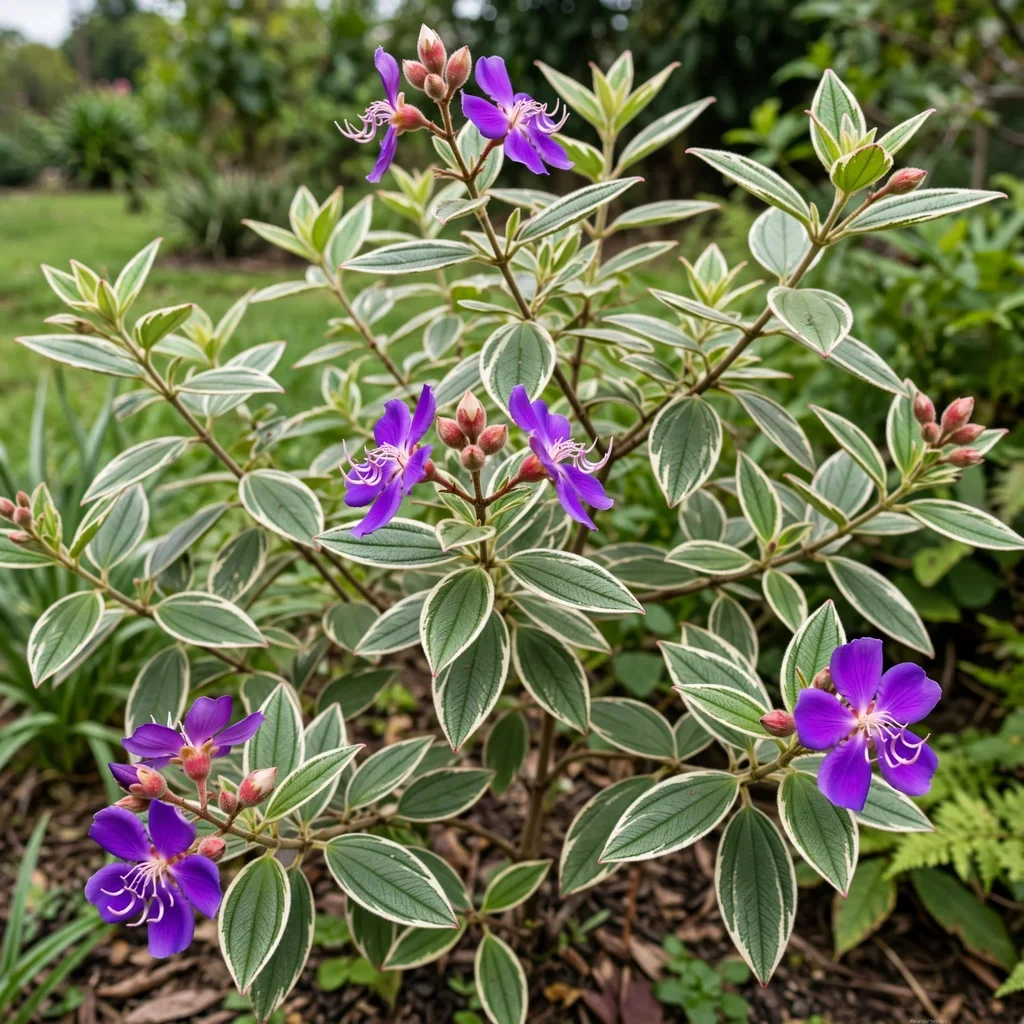
Variegated Princess Flower
Tibouchina urvilleana 'Variegata'
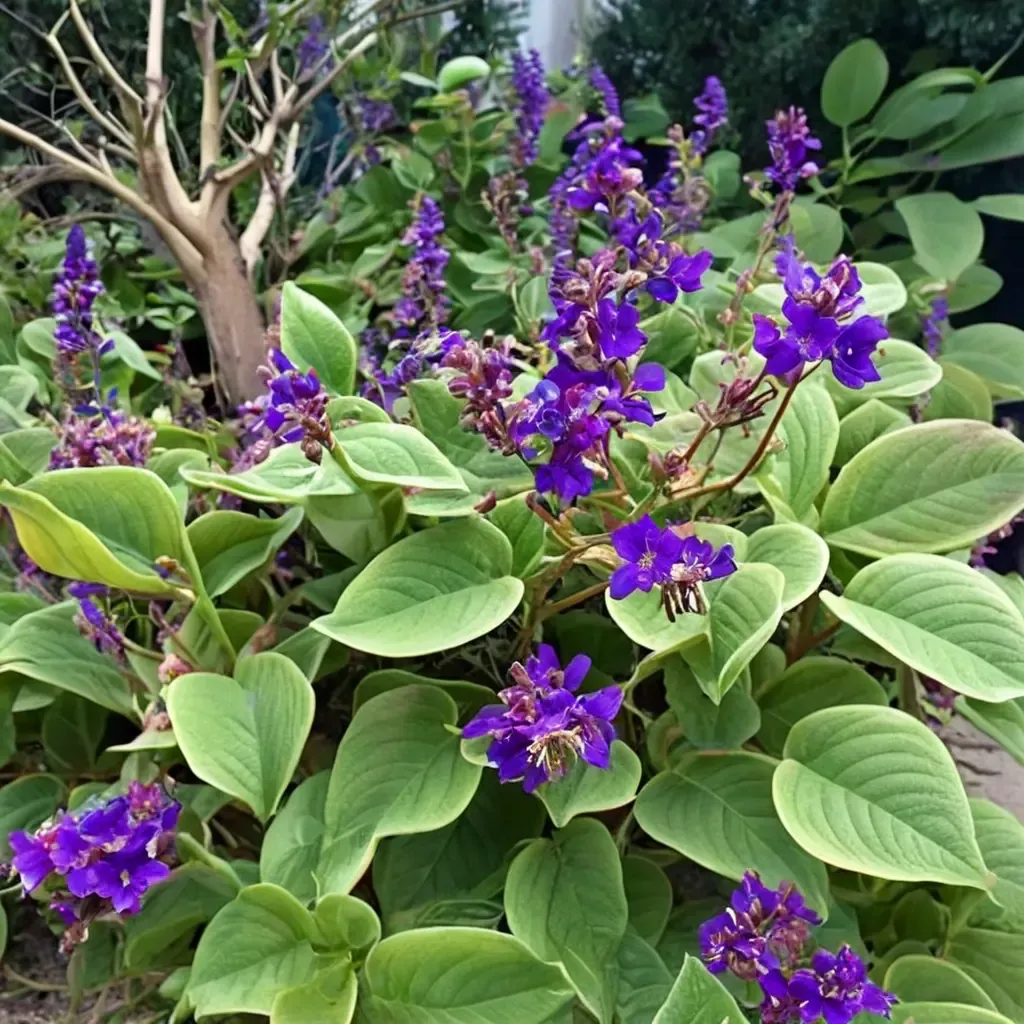
Silverleaf Princess Flower
Tibouchina heteromalla
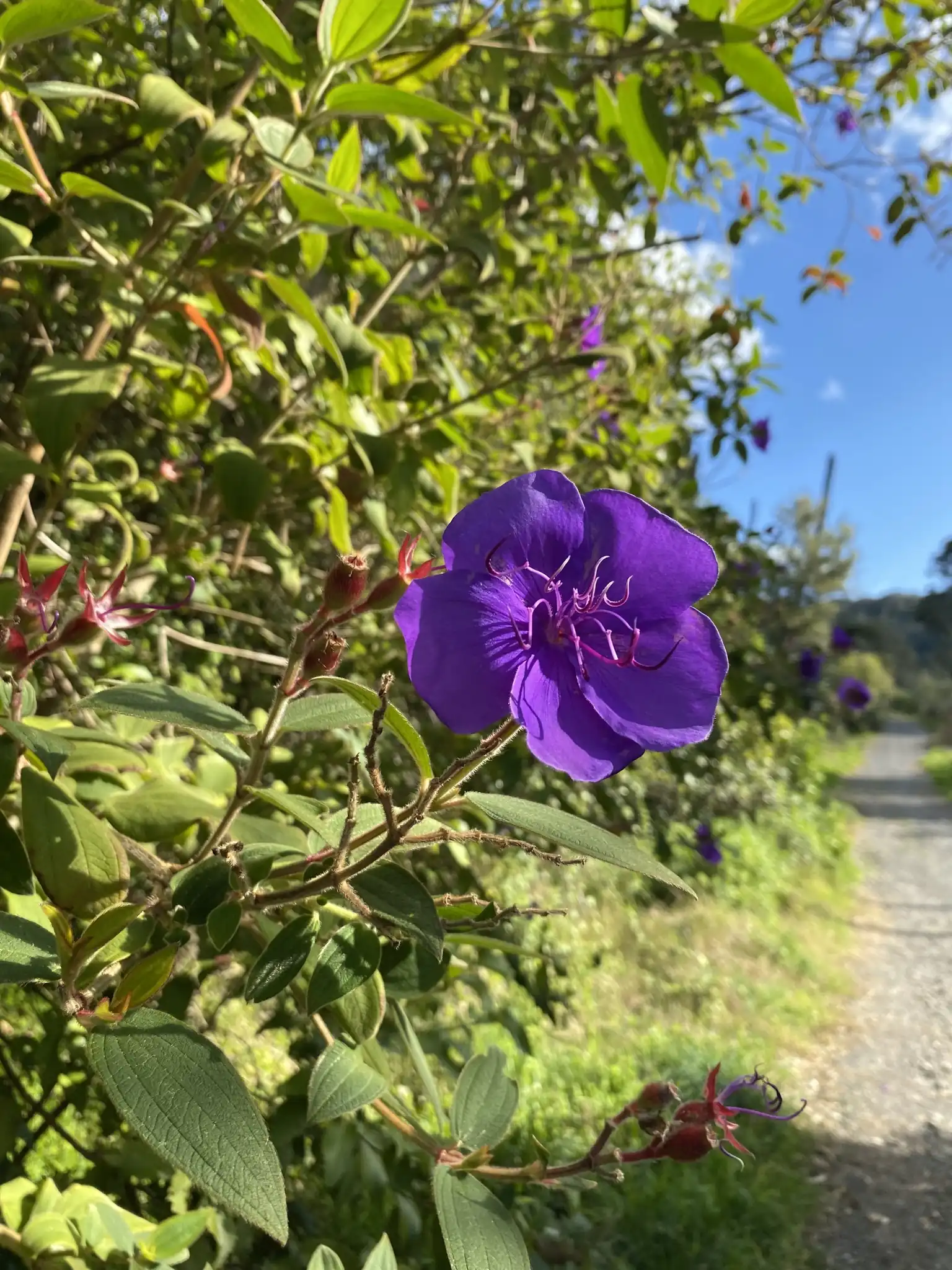
Princess Flower
Tibouchina urvilleana
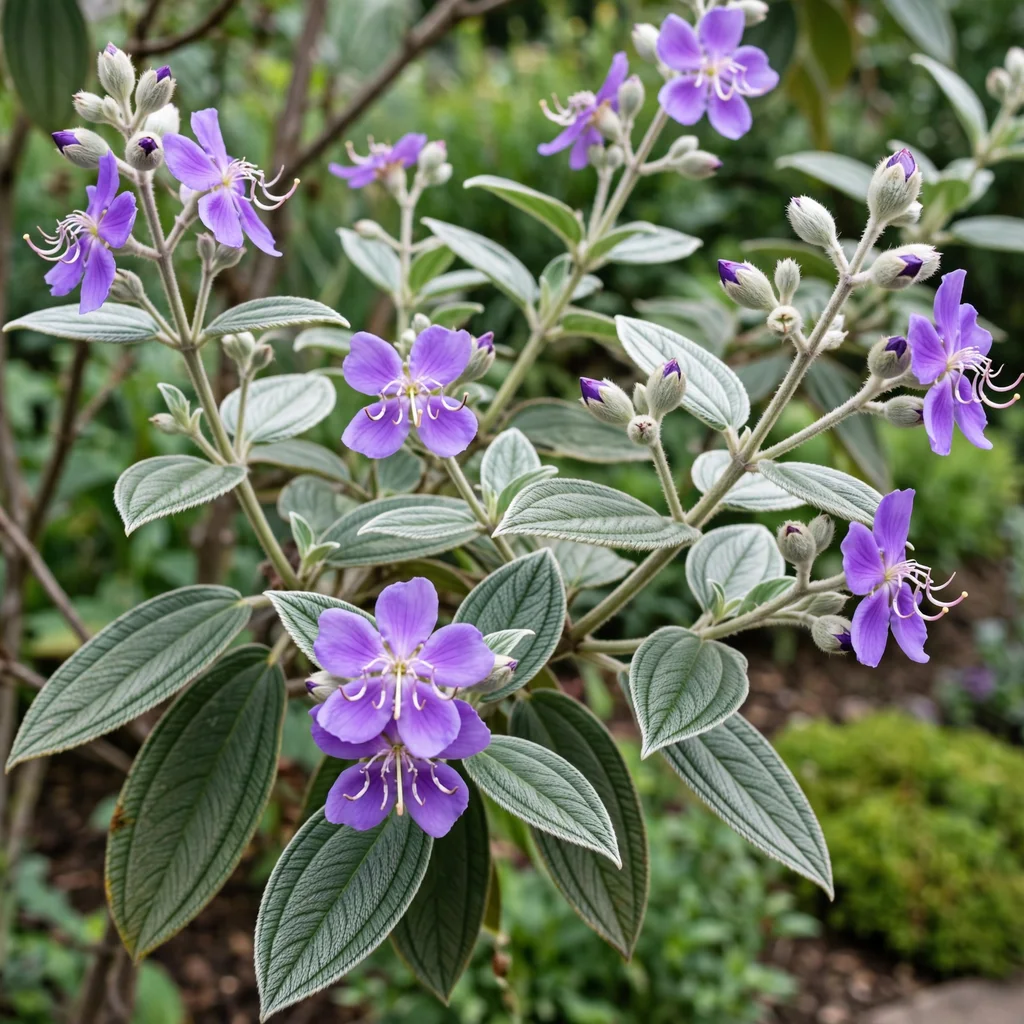
Bears Ear
Tibouchina clavata
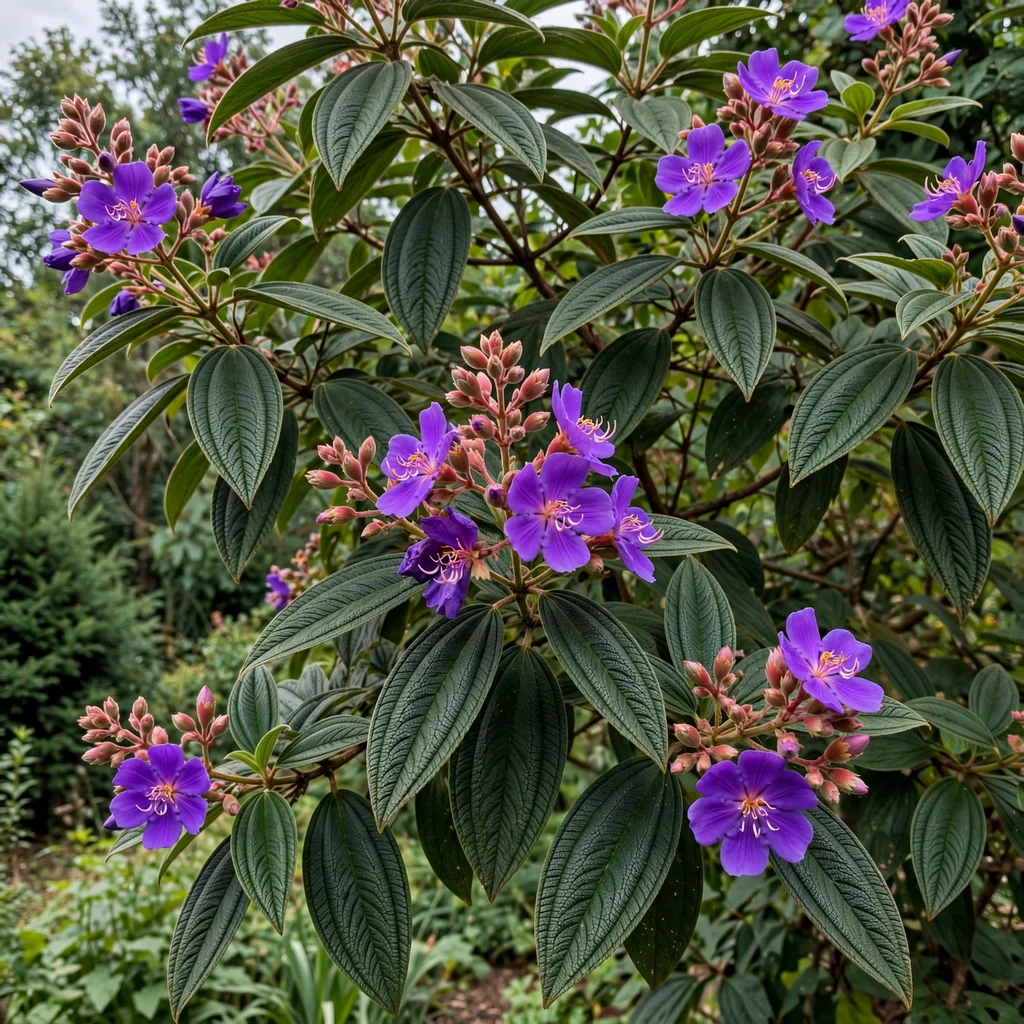
Purple Glory Tree
Tibouchina granulosa
Keep exploring
Explore the genus
Hardy in your zone?
Grow Glory Bush with confidence
See it in a design of your actual yard, get zone-matched care reminders, and track it season by season in your garden journal.