The Story
Plant Bio
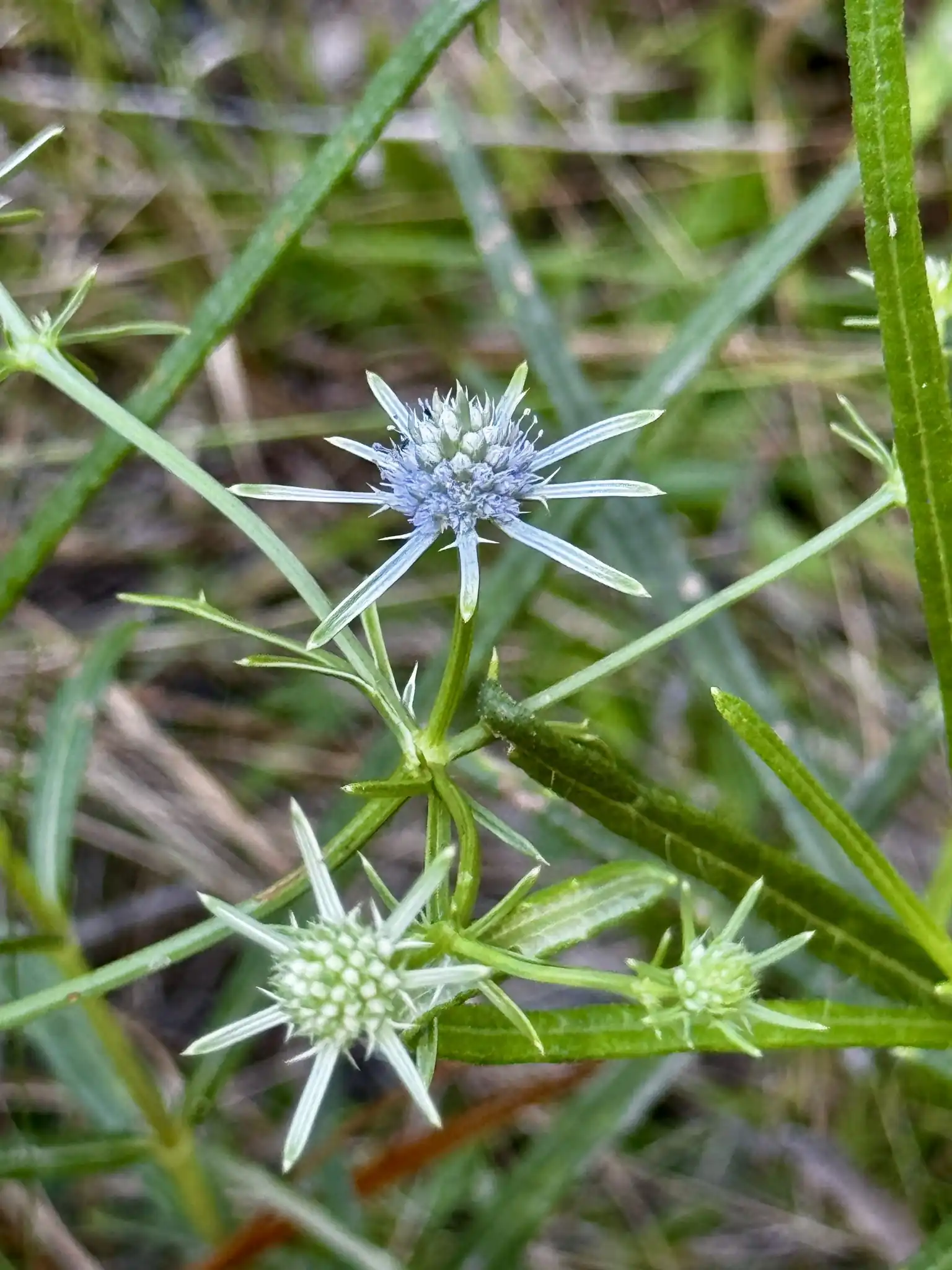
Eryngium integrifolium is an erect, short-lived perennial from southeastern wet savannas and flatwoods, growing one to three feet tall on a solitary branching stem from a deep taproot with tuberous laterals. Basal leaves are oblong to ovate, one to two inches long with shallow teeth and netted veins, while stem leaves are smaller, unlobed and elliptic to linear-lanceolate.
Unlike many sea-hollies it lacks spiny-tipped leaf margins; the defense sits in the stiff spiny bracts that ring each dense ball-shaped head under a half inch across. Heads open light to medium blue to violet from late summer into fall, and crowns renew by self-sown seed after one to two seasons of bloom.
Uses & Benefits:
Essentials
At a Glance
Plant Type
Perennial
Height
36"
Width
24"
Light
Full Sun, Partial Sun
Zones
6, 7, 8, 9, 10
Water
Moist to wet
Humidity
High
Lifespan
Short-lived perennial
Native To
Southeastern USA
Toxicity
Unknown
Bloom period
Late summer – Fall
In flower about 4 months of the year
Planting
How to Grow
- Plant in spring into full sun in moist to wet sandy loam or clay.
- Set the crown at soil level and water in deeply to settle soil around the taproot.
- Mulch lightly to hold moisture but keep mulch off the crown.
- Water to keep soil consistently moist through summer and fall bloom.
- Leave fall heads to drop seed for replacement plants.
Pro Tip
Give it full sun and soil that stays consistently moist to wet; it stalls and dies out in dry xeric beds where other eryngos thrive. Let several heads mature seed in fall so seedlings replace the short-lived parent crowns, and do not cut into the taproot when weeding or transplanting.
Keep It Thriving
Care Guide
Do
- Keep soil consistently moist to wet through the growing season.
- Allow some heads to mature and self-sow to replace short-lived crowns.
- Site in full sun in open, airy planting.
Don't
- Do not let soil dry out as for dryland sea-hollies.
- Do not divide or disturb the deep taproot.
- Do not site in dry rock gardens or salt-spray positions.
Seasonal Care Calendar
| Task | Jan | Feb | Mar | Apr | May | Jun | Jul | Aug | Sep | Oct | Nov | Dec |
|---|---|---|---|---|---|---|---|---|---|---|---|---|
| Mulch | ||||||||||||
| Pest Check | ||||||||||||
| Plant | ||||||||||||
| Propagate | ||||||||||||
| Winter Prep |
Watch Out For
Pests & Diseases
Common Pests
Common Diseases
In the Garden
Landscape Uses & Companions
Landscape Uses
Multiply
Propagation Methods
Good to Know
Common Questions
Blueflower Eryngo questions
What zones can Blueflower Eryngo grow in?
Blueflower Eryngo is hardy in USDA Zones 6–10: in that range it survives winter in the ground. Colder than Zone 6, grow it in a container you can move to shelter for the winter, or as an annual.
When does Blueflower Eryngo bloom?
Blueflower Eryngo typically blooms from late summer to late fall. Exact timing shifts a week or two with your zone — Sow's bloom calendar maps it to your garden.
Does Blueflower Eryngo need full sun?
Blueflower Eryngo does best in full sun to part shade. In hot climates, afternoon shade keeps blooms fresher longer.
More Eryngium to compare
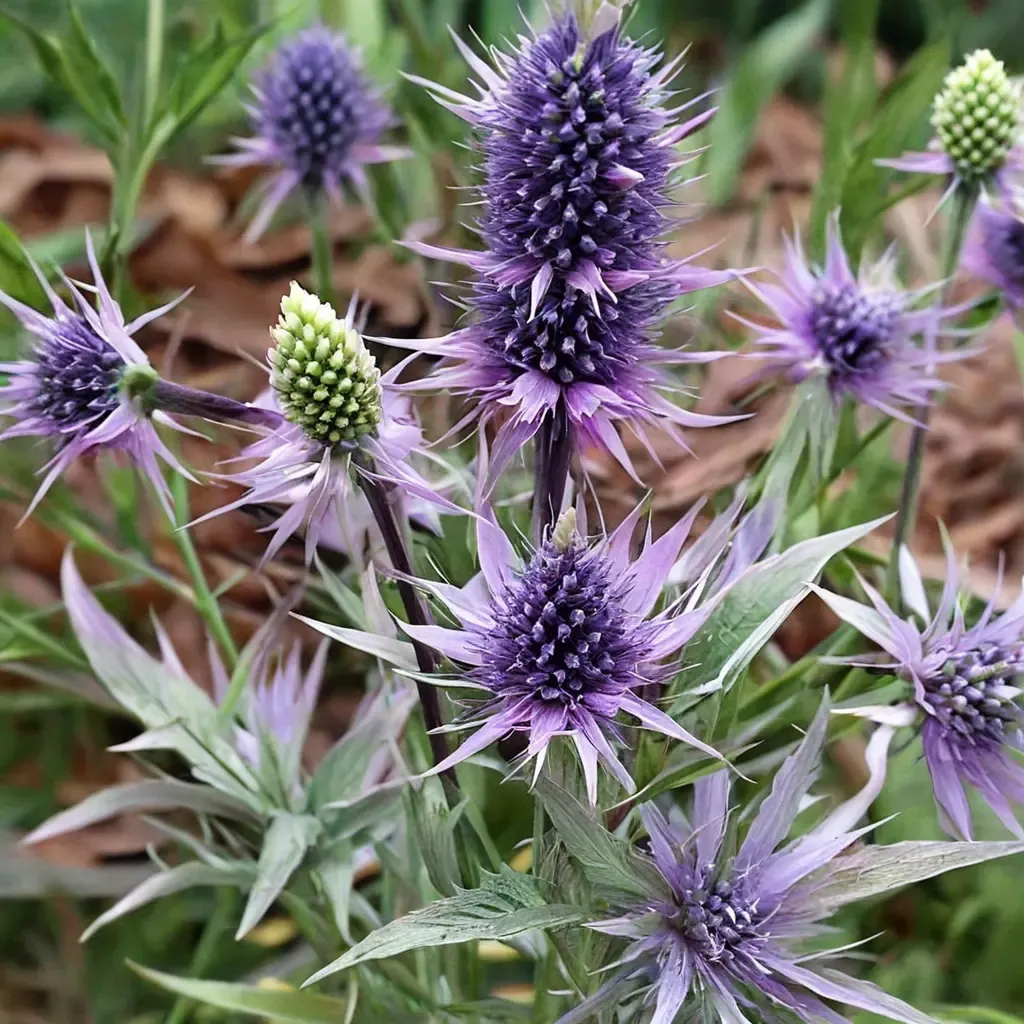
Sea Holly
Eryngium heterophyllum
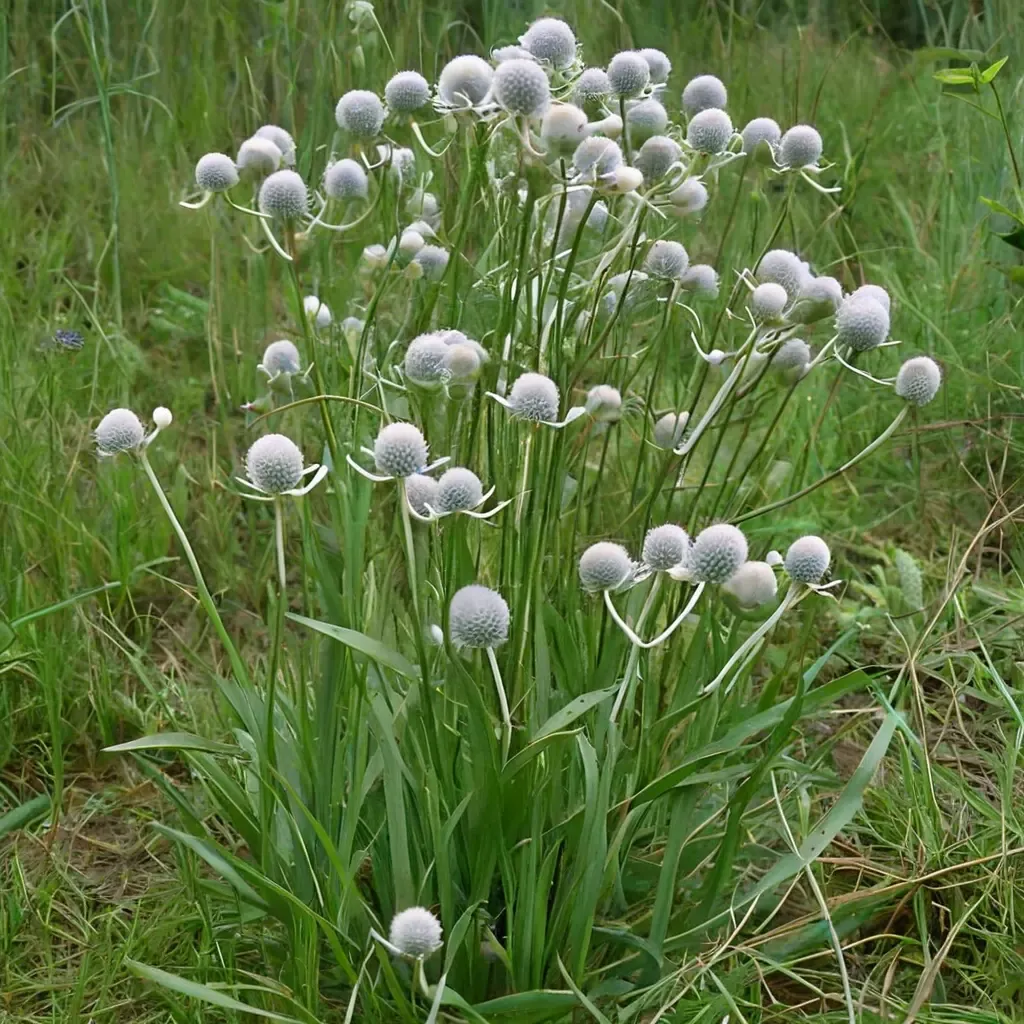
Rattlesnake master
Eryngium yuccifolium
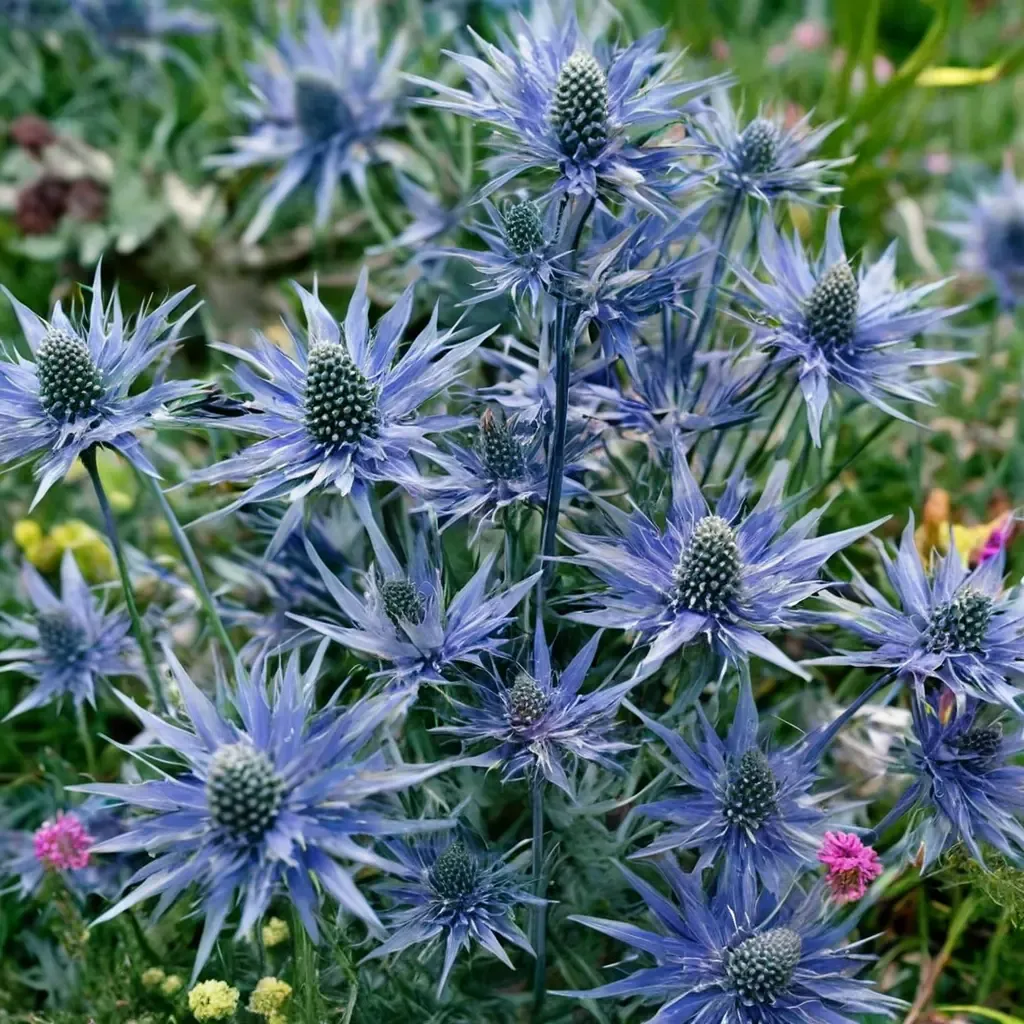
Big Blue Sea Holly
Eryngium x hybrida 'Big Blue'
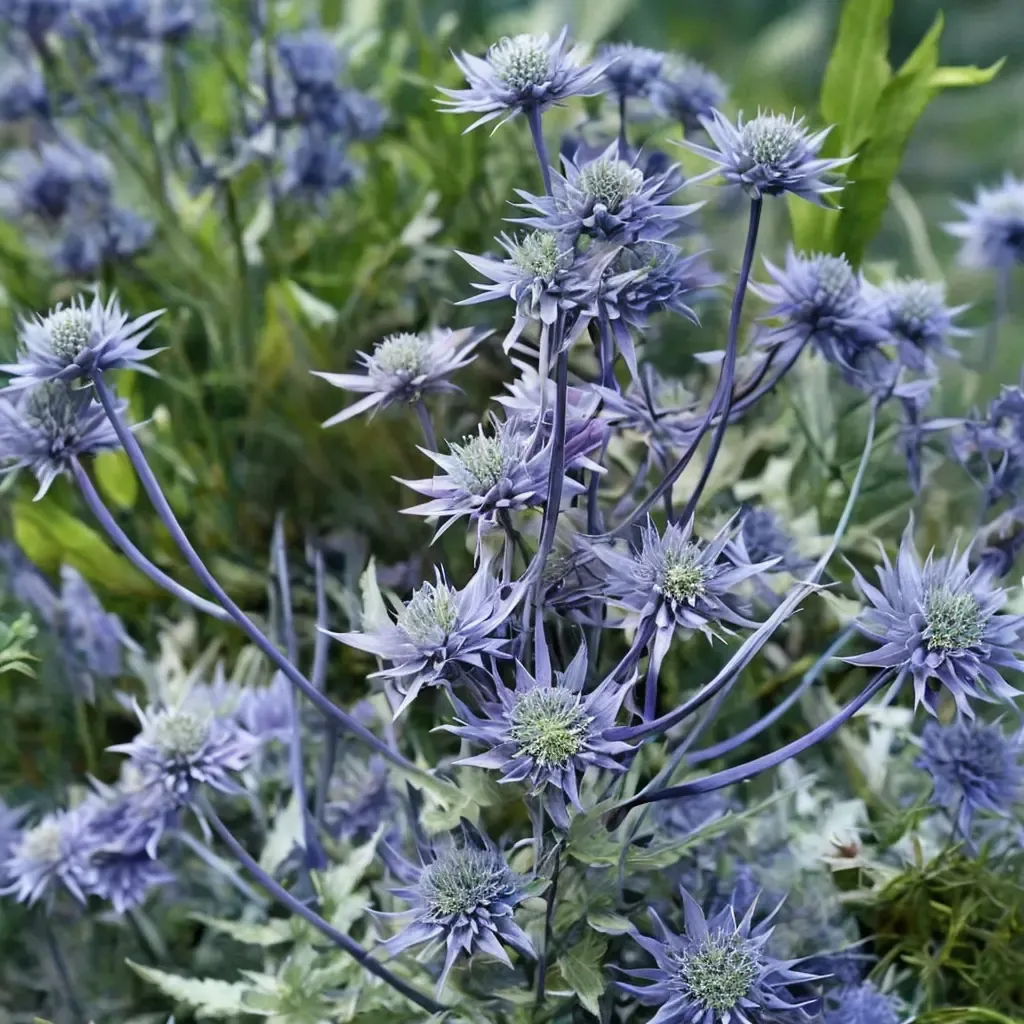
Blue Glitter Sea Holly
Eryngium planum 'Blue Glitter'
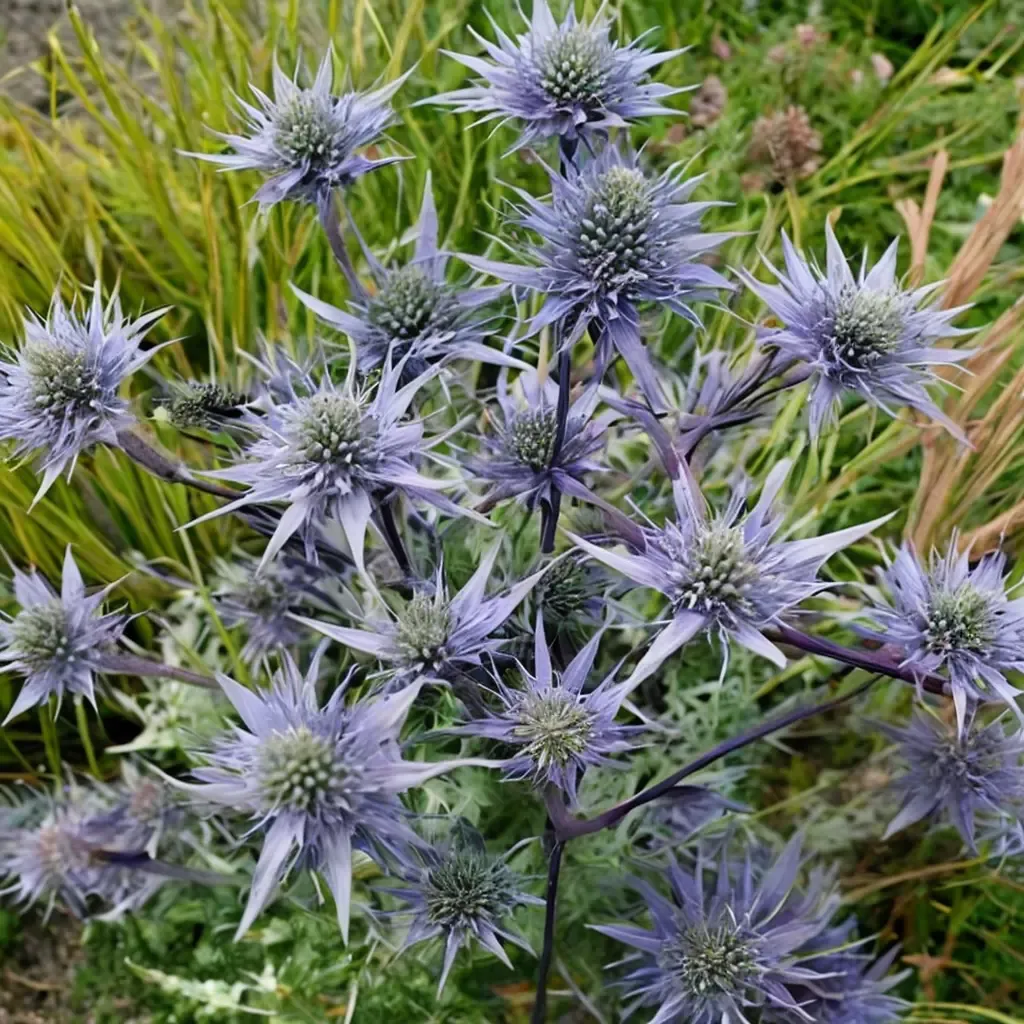
Picos Blue Sea Holly
Eryngium bourgatii 'Picos Blue'
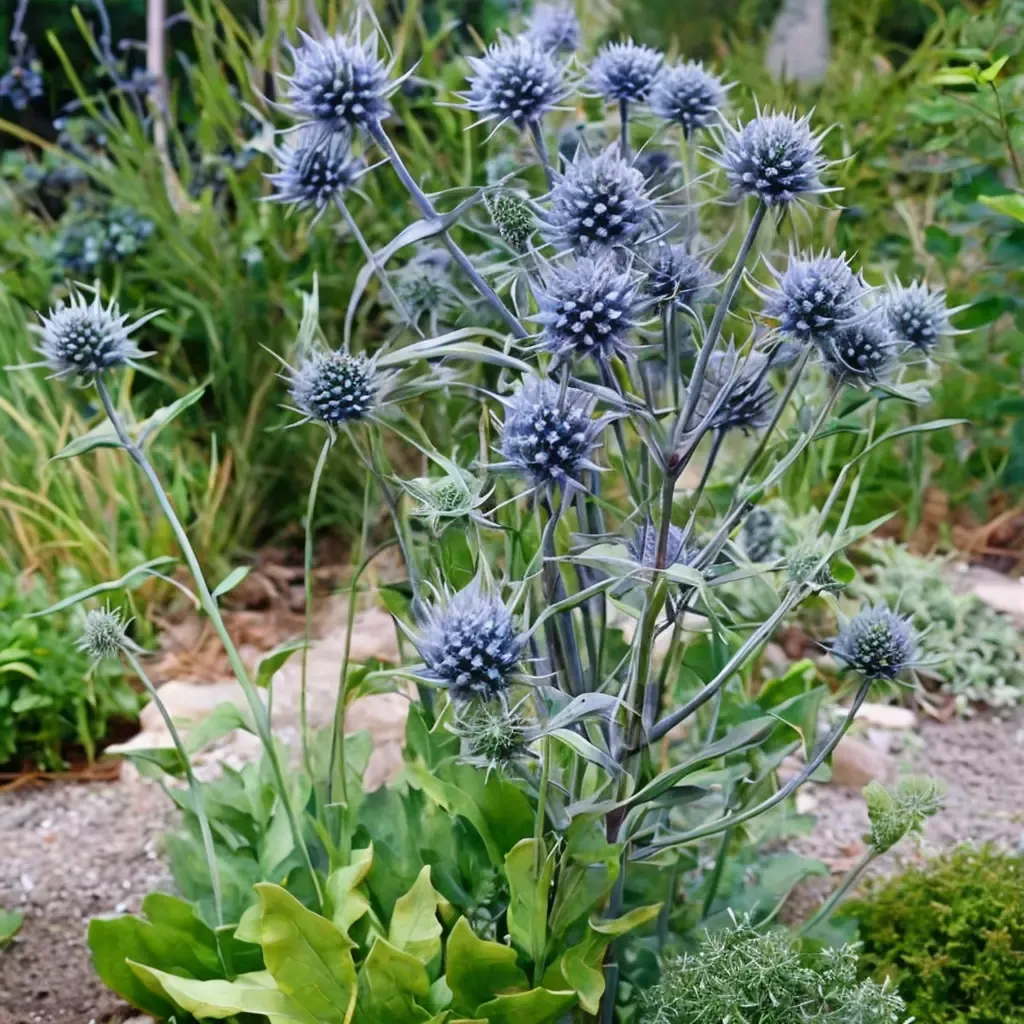
Flat Sea Holly
Eryngium planum
Keep exploring
Explore the genus
Hardy in your zone?
Grow Blueflower Eryngo with confidence
See it in a design of your actual yard, get zone-matched care reminders, and track it season by season in your garden journal.