The Story
Plant Bio
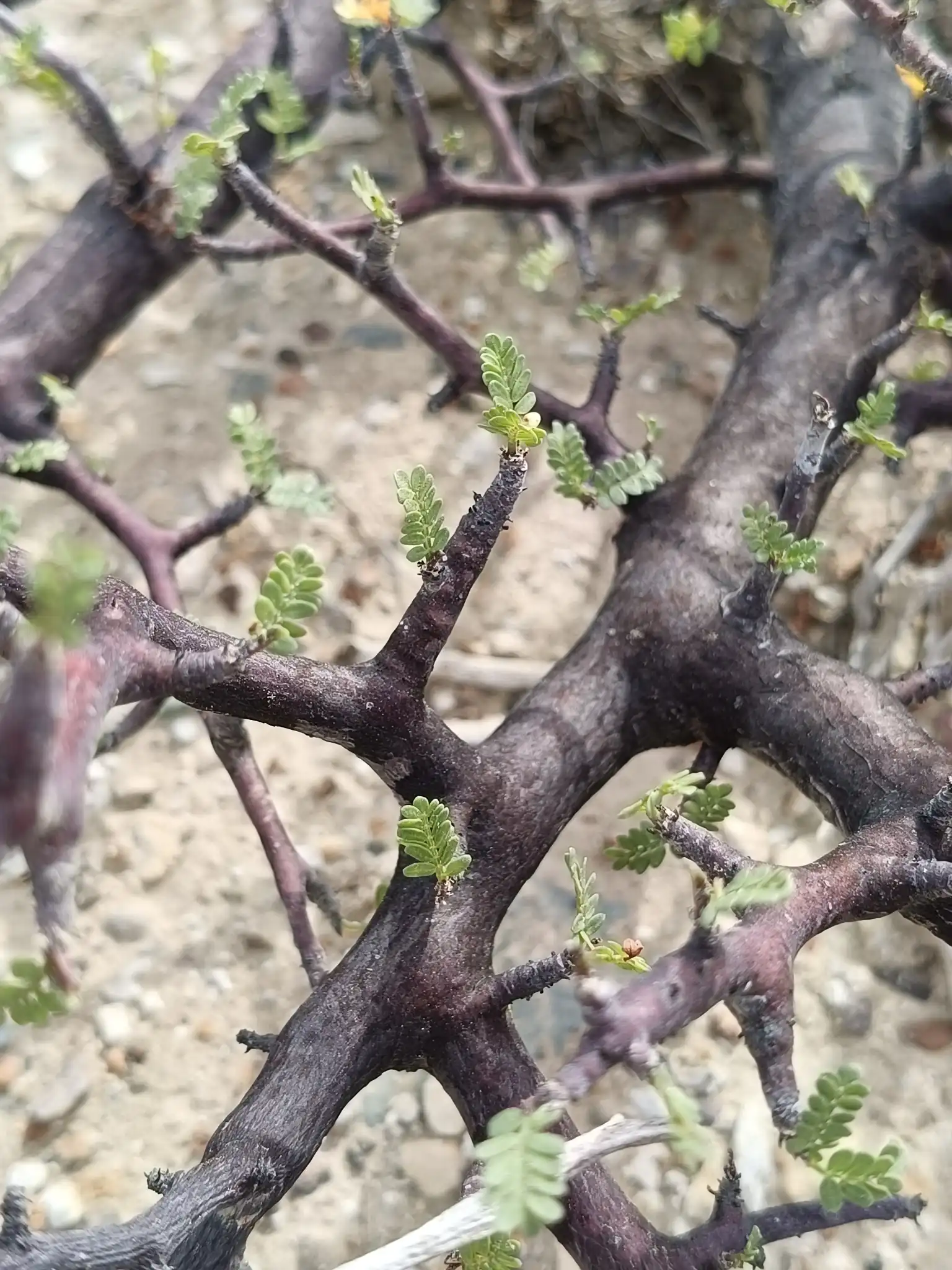
Bursera microphylla, commonly known as the elephant tree, is a thick-stemmed, caudiciform shrub or small tree native to the desert regions of the southwestern United States and northwestern Mexico. Its swollen, water-storing trunk and crooked branches are covered in smooth, reddish-brown bark that exfoliates into papery, iridescent flakes over time.
Crushed pinnate foliage releases strong aromatic terpenes, while the green bark beneath the peeling layer photosynthesizes even when the plant drops its leaves during drought. In cultivation, it forms a naturally dwarfed, bonsai-like specimen prized for container culture and xeric gardens.
Uses & Benefits:
Essentials
At a Glance
Plant Type
Cactus Succulent
Height
240"
Width
240"
Light
Full Sun, Partial Sun
Zones
9, 10
Water
Low
Humidity
Low
Lifespan
Perennial
Native To
Southwestern US, Northwestern Mexico
Toxicity
Resin may cause skin irritation
Bloom period
Summer
In flower about 3 months of the year
Planting
How to Grow
- Plant in a heavy, highly porous mineral substrate composed mostly of pumice, coarse sand, and crushed granite.
- Position in full sun to maximize trunk swelling and promote tight, compact branching.
- Water thoroughly during warm summer months only after the potting medium has dried out completely.
- Cease watering in fall as temperatures drop and protect the plant from freezing temperatures below 28°F.
Pro Tip
Keep the potting medium completely dry during winter dormancy, as damp soil under cold conditions rapidly triggers fatal trunk rot.
Keep It Thriving
Care Guide
Do
- Provide absolute sharp drainage using coarse mineral grit.
- Expose to maximum full sunlight and hot ambient temperatures.
- Allow the root ball to dry out entirely between waterings.
Don't
- Do not water while the plant is leafless during winter dormancy.
- Avoid heavy pruning into old leafless stems that lack visible dormant buds.
- Do not use organic-rich compost or heavy clay soils.
Seasonal Care Calendar
| Task | Jan | Feb | Mar | Apr | May | Jun | Jul | Aug | Sep | Oct | Nov | Dec |
|---|---|---|---|---|---|---|---|---|---|---|---|---|
| Fertilize | ||||||||||||
| Pest Check | ||||||||||||
| Prune | ||||||||||||
| Winter Prep |
Watch Out For
Pests & Diseases
Common Pests
Common Diseases
In the Garden
Landscape Uses & Companions
Landscape Uses
Multiply
Propagation Methods
Good to Know
Common Questions
Elephant Tree questions
What zones can Elephant Tree grow in?
Elephant Tree is hardy in USDA Zones 9–10: in that range it survives winter in the ground. Colder than Zone 9, grow it in a container you can move to shelter for the winter, or as an annual.
When does Elephant Tree bloom?
Elephant Tree typically blooms in summer. Exact timing shifts a week or two with your zone — Sow's bloom calendar maps it to your garden.
Does Elephant Tree need full sun?
Elephant Tree does best in full sun to part shade. In hot climates, afternoon shade keeps blooms fresher longer.
Is Elephant Tree drought tolerant?
Yes — once established (usually after the first full season), Elephant Tree handles dry spells with minimal watering. Water deeply its first year to build the root system that makes that possible.
More Bursera to compare
Keep exploring
Explore the genus
Hardy in your zone?
Grow Elephant Tree with confidence
See it in a design of your actual yard, get zone-matched care reminders, and track it season by season in your garden journal.