The Story
Plant Bio
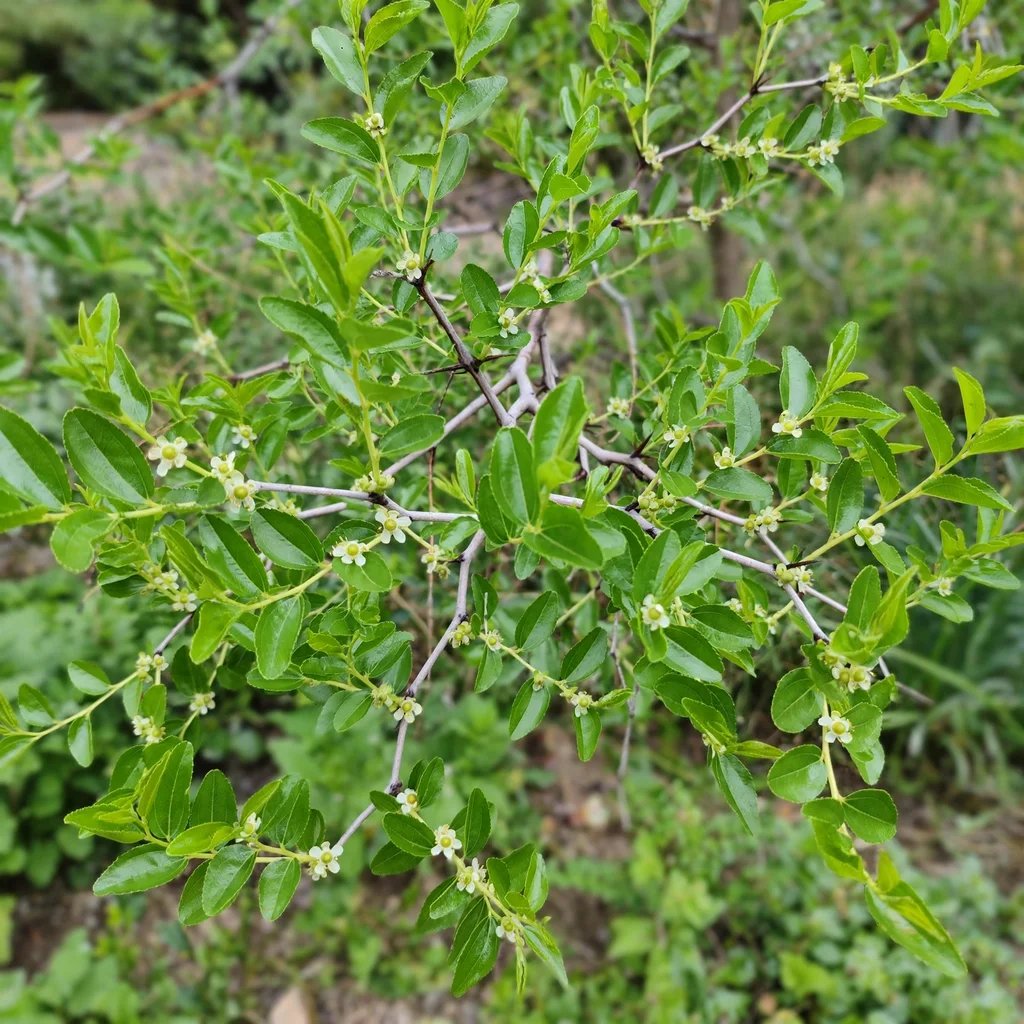
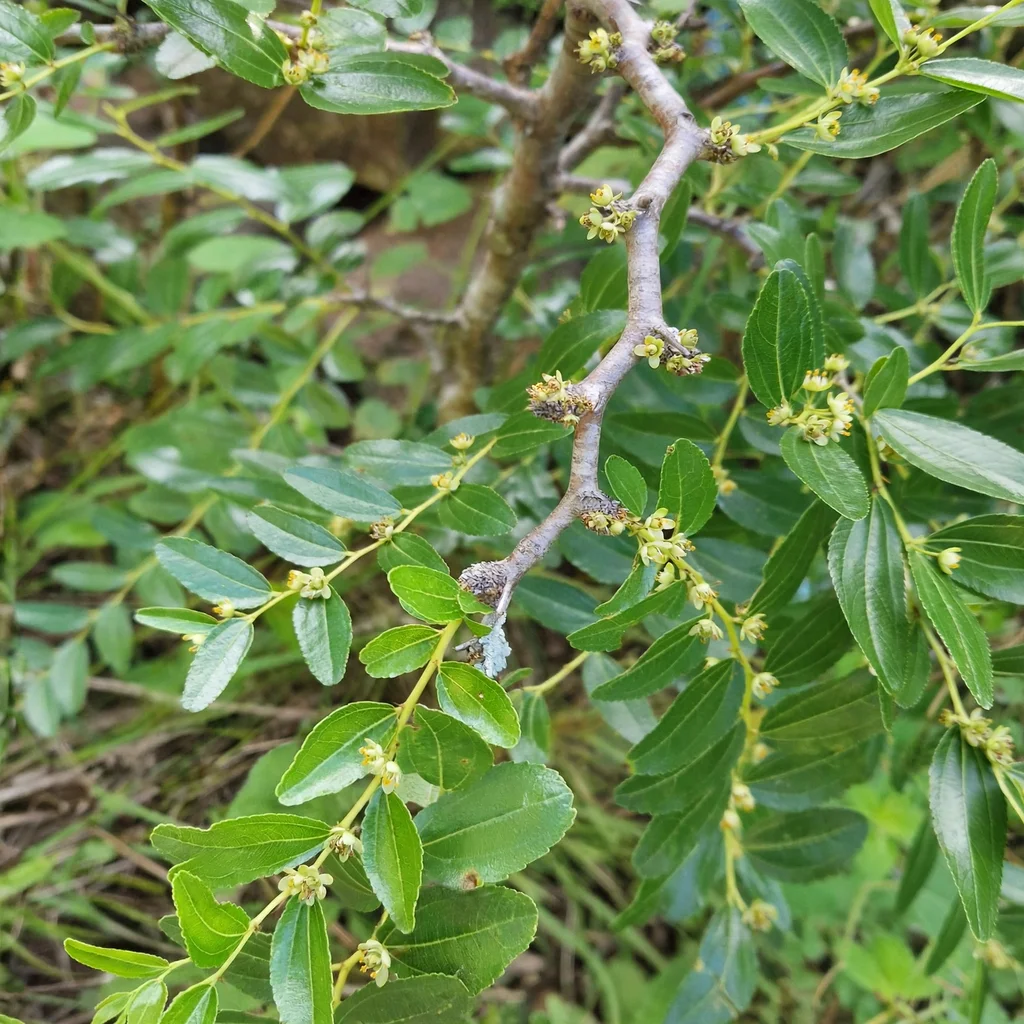
Ziziphus jujuba is a deciduous tree or large shrub from southeastern Europe to China, reaching 15 to 30 feet with an erect multi-trunked rounded to vase-shaped crown. The brown-green branchlets zigzag between nodes and carry small alternate glossy leaves with three basal veins that turn gold-yellow in fall.
Small fragrant white to yellow-green flowers sit singly or in small clusters in the leaf axils in late spring and are followed by 1- to 3-inch drupes that ripen red-brown with sweet flesh around a two-seeded stone. It leafs out four to six weeks late, fruits on current-season wood with little pruning needed, and forms thorny suckering thickets where fallen fruit can be messy.
Uses & Benefits:
Essentials
At a Glance
Plant Type
Tree
Height
360"
Width
360"
Light
Full Sun, Partial Sun
Zones
6, 7, 8, 9
Water
Low
Humidity
Adaptable
Lifespan
Long-lived woody tree
Native To
Southeastern Europe to China
Toxicity
Non-toxic; edible fruit, thorny spines
Bloom period
Late spring – Early summer
In flower about 2 months of the year
Planting
How to Grow
- Plant in full sun in spring after frost in well-drained clay, loam, or sand, allowing 24 to 60 feet of space.
- Set container or bare-root stock at the same depth it grew and water in deeply to settle the soil.
- Water regularly the first season, then reduce; established trees are drought and salt tolerant and dislike wet feet.
- Mulch 2 to 3 inches, keeping mulch off the trunk, and prune in late winter before bud break to remove suckers and crossing wood.
- Harvest drupes from late summer into fall as color turns from green to red-brown.
Pro Tip
Plant in your hottest full-sun spot and hold back water once established; late leaf-out is normal and fruit only ripens with summer heat.
Keep It Thriving
Care Guide
Do
- Give full sun and sustained summer heat for fruit set.
- Provide well-drained soil and tolerate poor, alkaline ground.
- Remove root suckers and fallen fruit to keep the planting tidy.
Don't
- Do not overwater or plant where soil stays soggy.
- Do not plant in a cool short-season spot with no summer heat.
- Do not panic at late spring leaf-out or prune off all new wood where fruit forms.
Seasonal Care Calendar
| Task | Jan | Feb | Mar | Apr | May | Jun | Jul | Aug | Sep | Oct | Nov | Dec |
|---|---|---|---|---|---|---|---|---|---|---|---|---|
| Harvest | ||||||||||||
| Mulch | ||||||||||||
| Pest Check | ||||||||||||
| Plant | ||||||||||||
| Prune |
Watch Out For
Pests & Diseases
Common Pests
Common Diseases
In the Garden
Landscape Uses & Companions
Landscape Uses
Multiply
Propagation Methods
Good to Know
Common Questions
Jujube questions
What zones can Jujube grow in?
Jujube is hardy in USDA Zones 6–9: in that range it survives winter in the ground. Colder than Zone 6, winters are too cold for it to survive outdoors. Warmer than Zone 9, winter isn't the problem: it prefers colder winters, and summer heat can shorten its life.
When does Jujube bloom?
Jujube typically blooms from late spring to early summer. Exact timing shifts a week or two with your zone — Sow's bloom calendar maps it to your garden.
Does Jujube need full sun?
Jujube does best in full sun to part shade. In hot climates, afternoon shade keeps blooms fresher longer.
Is Jujube drought tolerant?
Yes — once established (usually after the first full season), Jujube handles dry spells with minimal watering. Water deeply its first year to build the root system that makes that possible.
More Ziziphus to compare
Keep exploring
Explore the genus
Hardy in your zone?
Grow Jujube with confidence
See it in a design of your actual yard, get zone-matched care reminders, and track it season by season in your garden journal.