The Story
Plant Bio
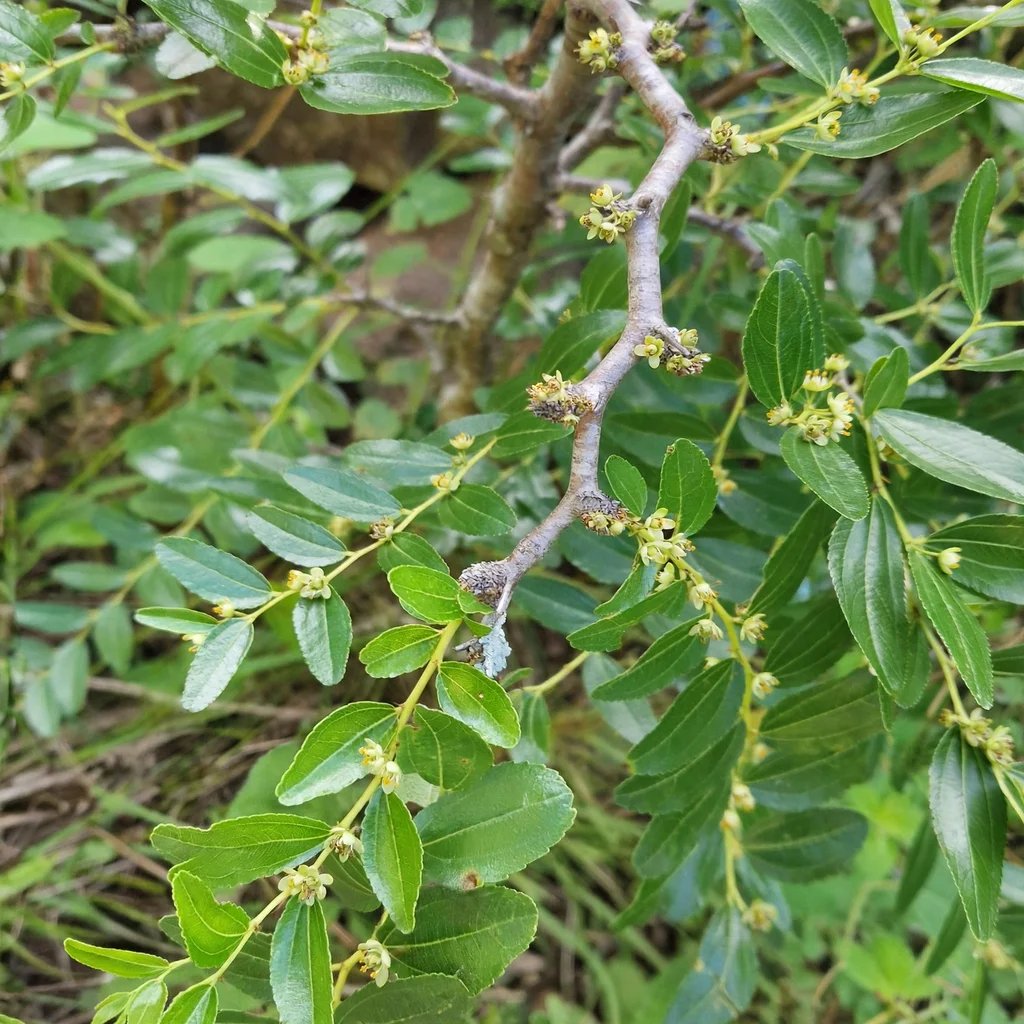
Ziziphus jujuba, the Chinese jujube, is a deciduous spiny tree or large shrub reaching 15 to 30 feet in cultivation, with drooping zig-zag branches armed with thorns and suckering freely from the roots. The alternate glossy green leaves are ovate to lance-shaped with three prominent veins and toothed margins, turning gold-yellow in fall.
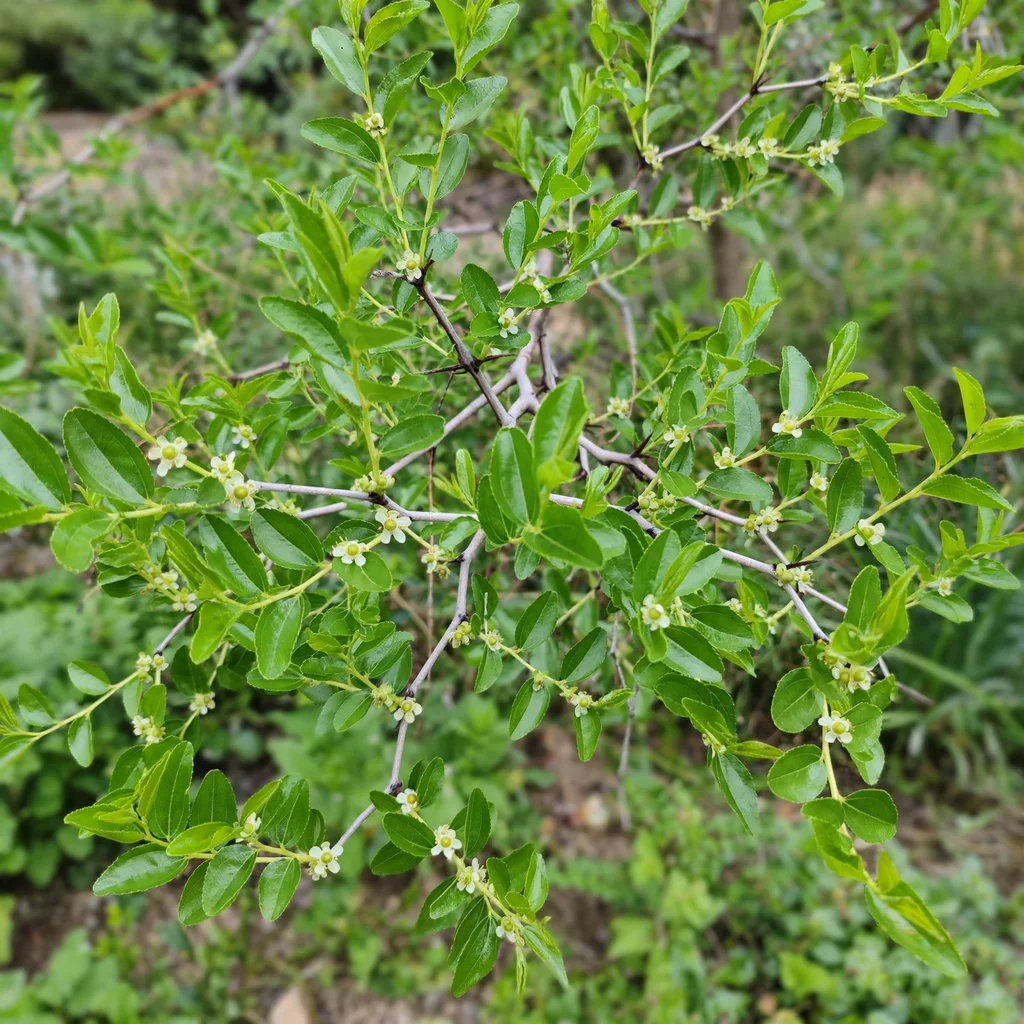
The flowers are inconspicuous fragrant clusters of small white to yellow-green five-petaled blooms borne in the leaf axils from spring to early summer. They ripen into edible date-like drupes that color from green to red-brown, borne on short spur-like shoots alongside the thorns.
Uses & Benefits:
Essentials
At a Glance
Plant Type
Fruit Vegetable
Height
360"
Width
240"
Light
Full Sun, Partial Sun
Zones
6, 7, 8, 9
Water
Low to moderate
Humidity
Low
Lifespan
Long-lived woody tree
Native To
Temperate Asia from southeastern Europe to China
Toxicity
Fruit edible; thorns cause mechanical injury
Bloom period
Spring – Early summer
In flower about 4 months of the year
Planting
How to Grow
- Plant in full sun in well-drained clay, loam or sand with acid to alkaline pH, spacing 15 to 20 feet to allow a spreading vase crown.
- Set the graft union above soil level, water deeply at planting, then water consistently through the first summer while roots establish.
- Mulch 2 to 3 inches deep to hold moisture, keeping mulch off the trunk, and give mature trees deep soakings in dry heat.
- Prune in late winter to remove suckers, crossing stems and damaged wood, and wear gloves for the zig-zag thorns.
Pro Tip
Pull or cut root suckers as they appear; left alone they form thorny thickets and divert energy from fruiting wood.
Keep It Thriving
Care Guide
Do
- Give full sun and warm summer heat for ripening.
- Provide well-drained soil with steady moisture for best fruit size.
- Remove root suckers promptly to keep a single trunk.
- Pick fruit as it colors and thin overcrowded clusters for larger dates.
Don't
- Do not plant in heavy poorly drained soil where crown rot develops.
- Do not let suckers establish into a thicket.
- Do not expect good crops from seedlings or in short-season northern sites.
- Do not plant beside paths or patios where thorns and fallen fruit cause mess.
Seasonal Care Calendar
| Task | Jan | Feb | Mar | Apr | May | Jun | Jul | Aug | Sep | Oct | Nov | Dec |
|---|---|---|---|---|---|---|---|---|---|---|---|---|
| Harvest | ||||||||||||
| Mulch | ||||||||||||
| Pest Check | ||||||||||||
| Plant | ||||||||||||
| Prune |
Watch Out For
Pests & Diseases
Common Pests
Common Diseases
In the Garden
Landscape Uses & Companions
Landscape Uses
Multiply
Propagation Methods
Good to Know
Common Questions
Chinese Jujube questions
What zones can Chinese Jujube grow in?
Chinese Jujube is hardy in USDA Zones 6–9: in that range it survives winter in the ground. Colder than Zone 6, grow it in a container you can move to shelter for the winter, or as an annual. Warmer than Zone 9, winter isn't the problem: it prefers colder winters, and summer heat can shorten its life.
When does Chinese Jujube bloom?
Chinese Jujube typically blooms from early spring to early summer. Exact timing shifts a week or two with your zone — Sow's bloom calendar maps it to your garden.
Does Chinese Jujube need full sun?
Chinese Jujube does best in full sun to part shade. In hot climates, afternoon shade keeps blooms fresher longer.
Is Chinese Jujube drought tolerant?
Yes — once established (usually after the first full season), Chinese Jujube handles dry spells with minimal watering. Water deeply its first year to build the root system that makes that possible.
More Ziziphus to compare
Keep exploring
Explore the genus
Hardy in your zone?
Grow Chinese Jujube with confidence
See it in a design of your actual yard, get zone-matched care reminders, and track it season by season in your garden journal.