The Story
Plant Bio
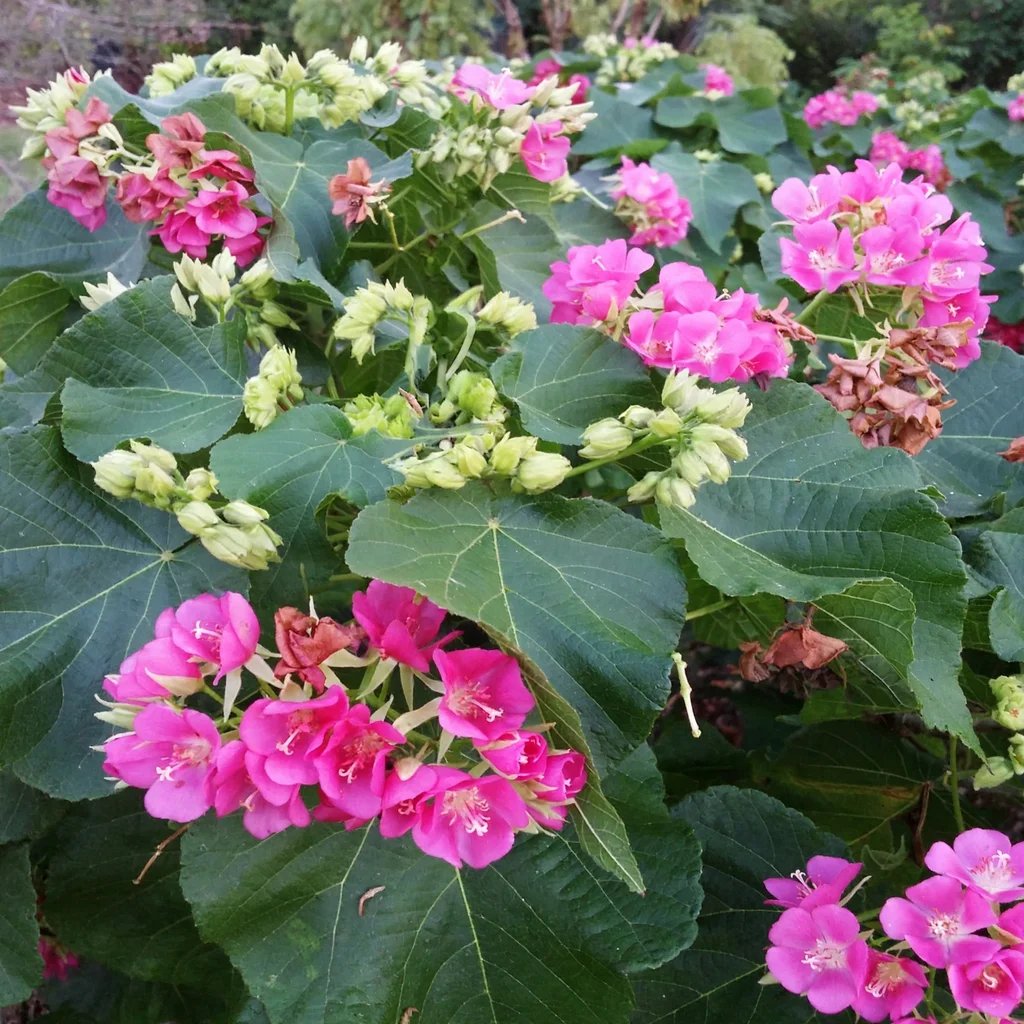
Dombeya burgessiae is an evergreen shrub or small tree from tropical Africa that builds a large mounded frame with big soft heart-shaped green leaves. It blooms on cool-season wood with dense hydrangea-like umbels of small pink flowers that carry a sweet scent.
'Seminole' is a Florida-raised hybrid selection of D. burgessiae grown for fragrant deep pink to rose snowball clusters 3 to 4 inches across from fall to spring. It reaches about 7 feet tall and 7 to 10 feet wide with age, holds bloom when little else flowers, and loses next winter's buds if cut after August.
Uses & Benefits:
Essentials
At a Glance
Plant Type
Shrub
Height
84"
Width
108"
Light
Full Sun, Partial Sun
Zones
9, 10
Water
Average
Humidity
Average
Lifespan
Long-lived shrub
Native To
Tropical Africa
Toxicity
Unknown
Bloom period
Fall – Spring
In flower about 9 months of the year
Planting
How to Grow
- Plant in full sun to part shade after frost danger passes, allowing 7 to 10 feet for the mature mound.
- Set into fertile loam that drains freely; amend poor spots with compost and water in well.
- Water regularly through the first season, then water deeply during dry spells; established plants handle short drought.
- Prune by one-third to one-half right after spring bloom to shape and hold size near 5 feet if needed.
- Cover in place or move pots inside if temperatures near 25F are forecast; light frost is tolerated but hard freezes damage buds.
Pro Tip
Prune right after bloom finishes in spring; wood cut after August loses next winter's buds.
Keep It Thriving
Care Guide
Do
- Give full sun for the fullest shape and heaviest winter bloom.
- Water deeply during establishment and dry fall weather.
- Mulch 2 to 3 inches to hold soil moisture while keeping mulch off the stems.
Don't
- Do not prune after August; you will cut off next season's buds.
- Do not plant in soggy soil or high-pH fill where leaves yellow between the veins.
- Do not let aphids or scale build up; honeydew leads to black sooty mold on leaves.
Seasonal Care Calendar
| Task | Jan | Feb | Mar | Apr | May | Jun | Jul | Aug | Sep | Oct | Nov | Dec |
|---|---|---|---|---|---|---|---|---|---|---|---|---|
| Mulch | ||||||||||||
| Pest Check | ||||||||||||
| Plant | ||||||||||||
| Prune | ||||||||||||
| Winter Prep |
Watch Out For
Pests & Diseases
Common Pests
Common Diseases
In the Garden
Landscape Uses & Companions
Landscape Uses
Multiply
Propagation Methods
Good to Know
Common Questions
Tropical Rose Hydrangea questions
What zones can Tropical Rose Hydrangea grow in?
Tropical Rose Hydrangea is hardy in USDA Zones 9–10: in that range it survives winter in the ground. Colder than Zone 9, grow it in a container you can move to shelter for the winter.
When does Tropical Rose Hydrangea bloom?
Tropical Rose Hydrangea typically blooms from fall to spring. Exact timing shifts a week or two with your zone — Sow's bloom calendar maps it to your garden.
Does Tropical Rose Hydrangea need full sun?
Tropical Rose Hydrangea does best in full sun to part shade. In hot climates, afternoon shade keeps blooms fresher longer.
Is Tropical Rose Hydrangea drought tolerant?
Yes — once established (usually after the first full season), Tropical Rose Hydrangea handles dry spells with minimal watering. Water deeply its first year to build the root system that makes that possible.
More Dombeya to compare
Keep exploring
Explore the genus
Hardy in your zone?
Grow Tropical Rose Hydrangea with confidence
See it in a design of your actual yard, get zone-matched care reminders, and track it season by season in your garden journal.