The Story
Plant Bio
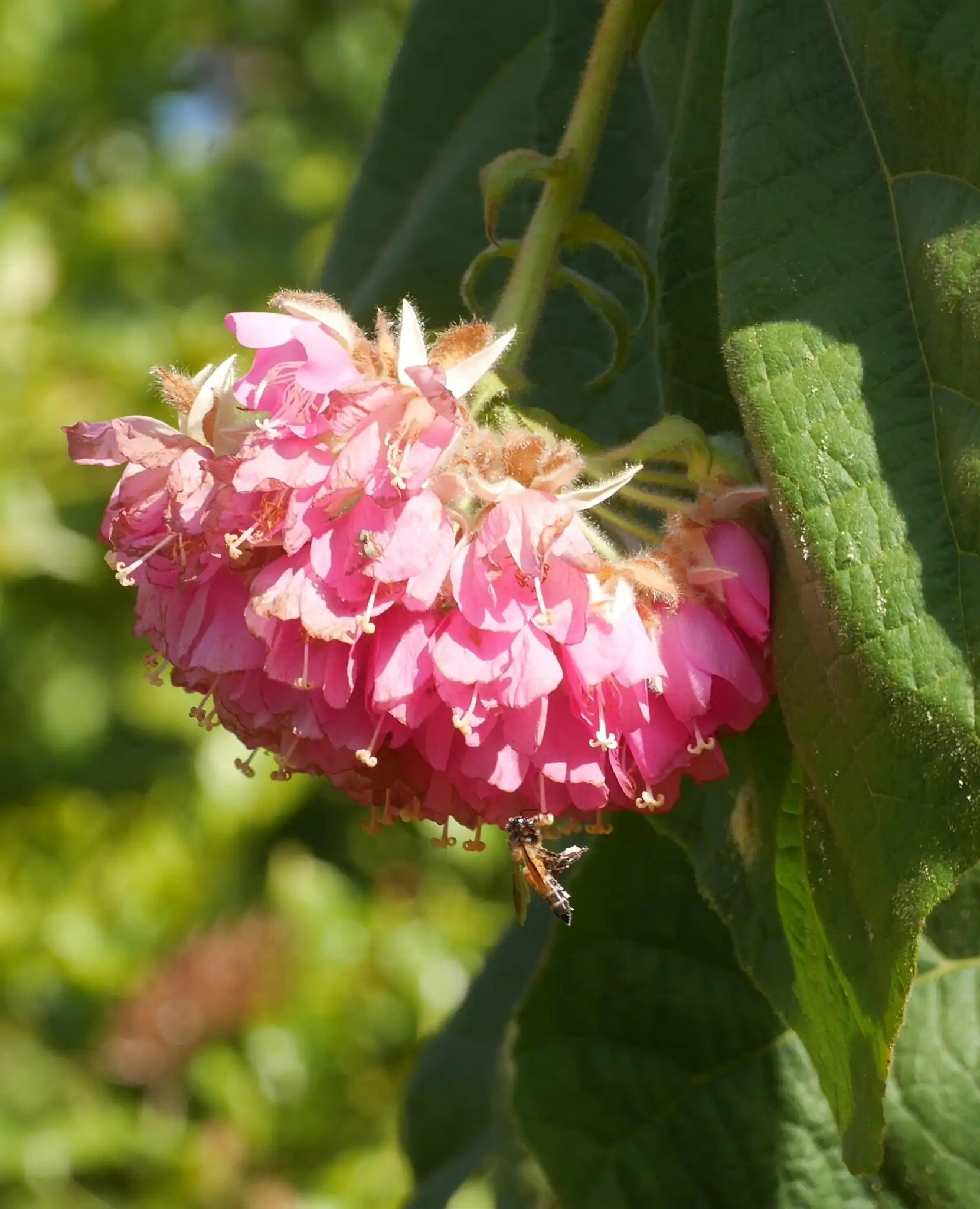
Dombeya wallichii is a rounded evergreen shrub to small tree from eastern Madagascar, reaching twenty to thirty feet tall with an equal spread and a dense, symmetrical crown. The alternate leaves are heart-shaped and coarse-textured, five to eight inches long with toothed margins, light green and held through winter except after hard frost.
The winter display is a set of pendent five- to six-inch spheres carried below the foliage, each a tight cluster of small five-petalled flowers in pink to rosy mauve. The flowers open over weeks with a sweet scent and drop intact, supplying nectar to hummingbirds, bees and butterflies when little else blooms.
Uses & Benefits:
Essentials
At a Glance
Plant Type
Shrub
Height
360"
Width
300"
Light
Full Sun, Partial Sun
Zones
9, 10
Water
Moderate
Humidity
Average
Lifespan
Long-lived woody shrub
Native To
Eastern Madagascar
Toxicity
Unknown
Bloom period
Winter – Early spring
In flower about 4 months of the year
Planting
How to Grow
- Plant in spring after frost danger passes in full sun to light shade with room for a twenty-foot spread.
- Dig a hole twice the pot width in rich loam, set the crown level, backfill and water deeply.
- Water regularly through the first season, then only during dry spells once roots are established.
- Feed lightly in spring with a balanced fertilizer; correct yellowing in high-pH soil with micronutrients.
- Prune after flowering to shape and remove spent heads; stake young trunks to prevent breakage.
Pro Tip
Prune only after bloom finishes in spring; cutting in fall removes the wood that carries winter flowers.
Keep It Thriving
Care Guide
Do
- Give it full sun for heaviest bloom and space for a wide crown.
- Water deeply until established, then cut back to dry spells only.
- Prune in spring right after flowering to build strong branching.
Don't
- Do not prune in fall; you will cut off winter buds.
- Do not plant in salty or windswept coastal soil.
- Do not leave young plants exposed to frost without cover.
Seasonal Care Calendar
| Task | Jan | Feb | Mar | Apr | May | Jun | Jul | Aug | Sep | Oct | Nov | Dec |
|---|---|---|---|---|---|---|---|---|---|---|---|---|
| Fertilize | ||||||||||||
| Pest Check | ||||||||||||
| Plant | ||||||||||||
| Prune | ||||||||||||
| Winter Prep |
Watch Out For
Pests & Diseases
Common Pests
Common Diseases
In the Garden
Landscape Uses & Companions
Landscape Uses
Multiply
Propagation Methods
Good to Know
Common Questions
Pink Ball Tree questions
What zones can Pink Ball Tree grow in?
Pink Ball Tree is hardy in USDA Zones 9–10: in that range it survives winter in the ground. Colder than Zone 9, grow it in a container you can move to shelter for the winter.
When does Pink Ball Tree bloom?
Pink Ball Tree typically blooms from early winter to early spring. Exact timing shifts a week or two with your zone — Sow's bloom calendar maps it to your garden.
Does Pink Ball Tree need full sun?
Pink Ball Tree does best in full sun to part shade. In hot climates, afternoon shade keeps blooms fresher longer.
Is Pink Ball Tree drought tolerant?
Yes — once established (usually after the first full season), Pink Ball Tree handles dry spells with minimal watering. Water deeply its first year to build the root system that makes that possible.
More Dombeya to compare
Keep exploring
Explore the genus
Hardy in your zone?
Grow Pink Ball Tree with confidence
See it in a design of your actual yard, get zone-matched care reminders, and track it season by season in your garden journal.