The Story
Plant Bio
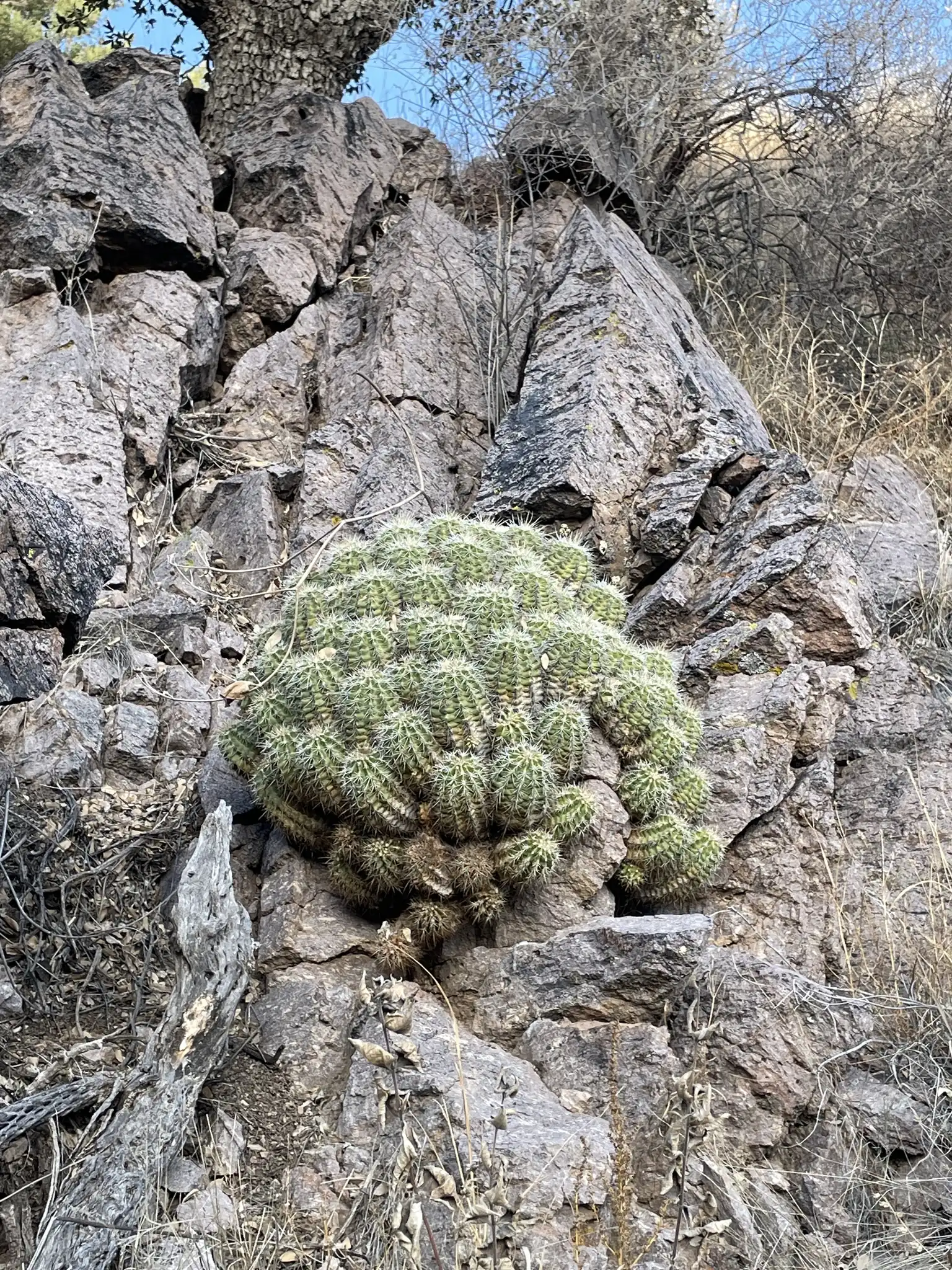
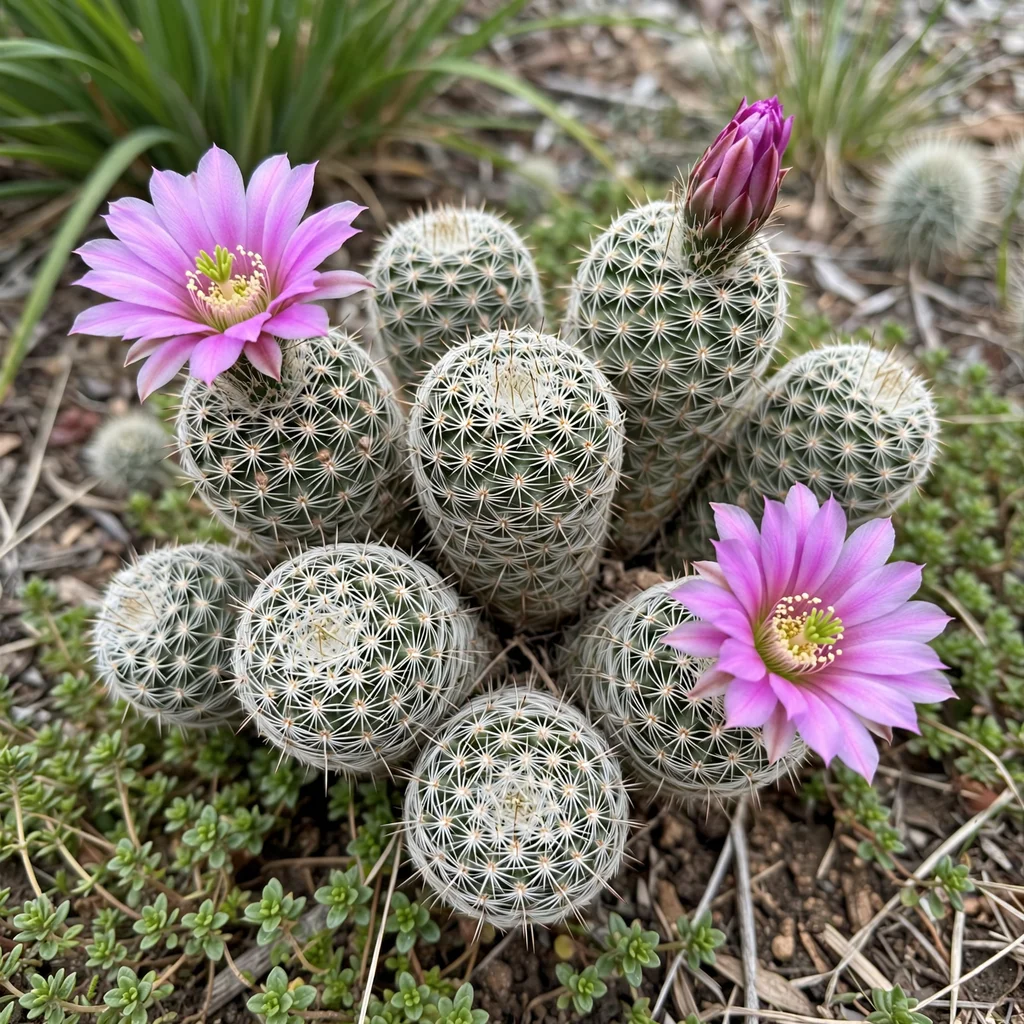
Echinocereus coccineus is a clump-forming cactus from rocky slopes of the southwestern United States and northeastern Mexico, building mounds of cylindrical ribbed stems to about sixteen inches high. It carries no leaves; photosynthesis runs through the green stems, which are armed with dense white spines along the ribs.
What sets it apart is the spring display of large scarlet-red cups with crimson inner tepals, borne on the sides of the stems and followed by fleshy berry fruits. A single crown spreads over years into a dome of fifty to one hundred stems, and established clumps tolerate frost and prolonged drought once hardened off by a dry fall.
Uses & Benefits:
Essentials
At a Glance
Plant Type
Cactus Succulent
Height
16"
Width
18"
Light
Full Sun
Zones
4, 5, 6, 7, 8, 9, 10
Water
Low
Humidity
Low
Lifespan
Perennial
Native To
Southwestern USA to NE Mexico
Toxicity
Unknown - spiny stems
Bloom period
Spring – Early summer
In flower about 4 months of the year
Planting
How to Grow
- Plant in full sun against a south or west wall in sharply drained, mineral-rich soil.
- Shake nursery soil from the roots, trim roots by one-third, and set in a shallow hole without burying the stem base.
- Top-dress with gravel, not bark, and wait several days before watering to let cuts seal.
- Water sparingly in spring and summer, then withhold water in fall to let stems shrivel and harden for winter.
- Leave clumps undisturbed; buy nursery-grown plants only and never dig from the wild.
Pro Tip
Plant it dry in mineral soil and keep it dry in fall; rich soil and late watering rot the crown before cold ever does.
Keep It Thriving
Care Guide
Do
- Give full sun and open air movement around the clump.
- Use mineral, fast-draining soil with a gravel mulch.
- Let plants go dry in fall to harden for cold.
Don't
- Do not plant in clay or rich organic soil that holds water.
- Do not bury the stem base or water immediately after planting.
- Do not water in fall to plump shriveled stems.
Seasonal Care Calendar
| Task | Jan | Feb | Mar | Apr | May | Jun | Jul | Aug | Sep | Oct | Nov | Dec |
|---|---|---|---|---|---|---|---|---|---|---|---|---|
| Pest Check | ||||||||||||
| Plant | ||||||||||||
| Propagate | ||||||||||||
| Winter Prep |
Watch Out For
Pests & Diseases
Common Pests
Common Diseases
In the Garden
Landscape Uses & Companions
Landscape Uses
Companion Plants
Multiply
Propagation Methods
Good to Know
Common Questions
Scarlet Hedgehog Cactus questions
What zones can Scarlet Hedgehog Cactus grow in?
Scarlet Hedgehog Cactus is hardy in USDA Zones 4–10: in that range it survives winter in the ground.
When does Scarlet Hedgehog Cactus bloom?
Scarlet Hedgehog Cactus typically blooms from early spring to early summer. Exact timing shifts a week or two with your zone — Sow's bloom calendar maps it to your garden.
Does Scarlet Hedgehog Cactus need full sun?
Scarlet Hedgehog Cactus does best in full sun (6+ hours).
Is Scarlet Hedgehog Cactus drought tolerant?
Yes — once established (usually after the first full season), Scarlet Hedgehog Cactus handles dry spells with minimal watering. Water deeply its first year to build the root system that makes that possible.
More Echinocereus to compare
Keep exploring
Explore the genus
Grow Scarlet Hedgehog Cactus with confidence
See it in a design of your actual yard, get zone-matched care reminders, and track it season by season in your garden journal.