The Story
Plant Bio
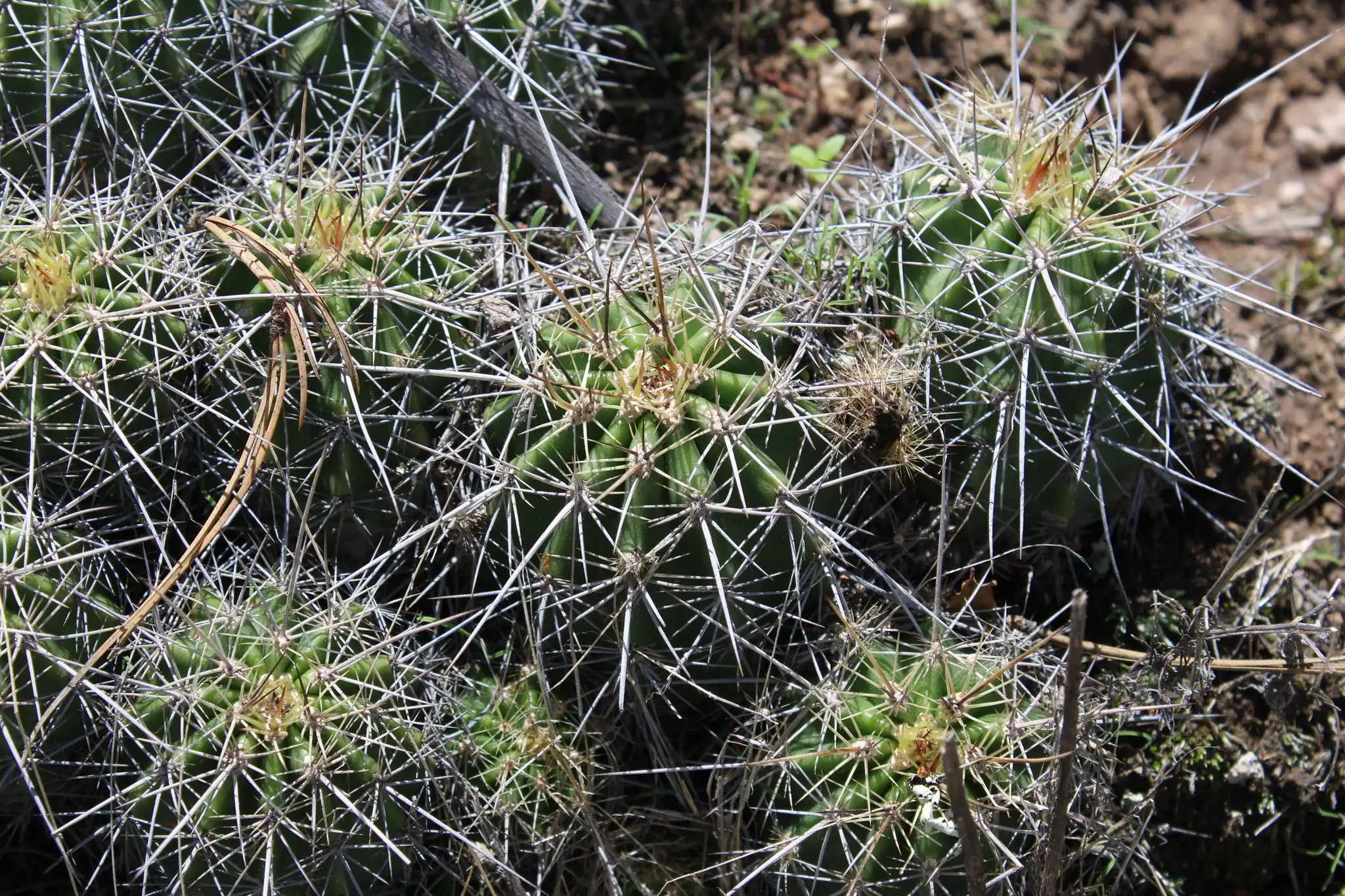
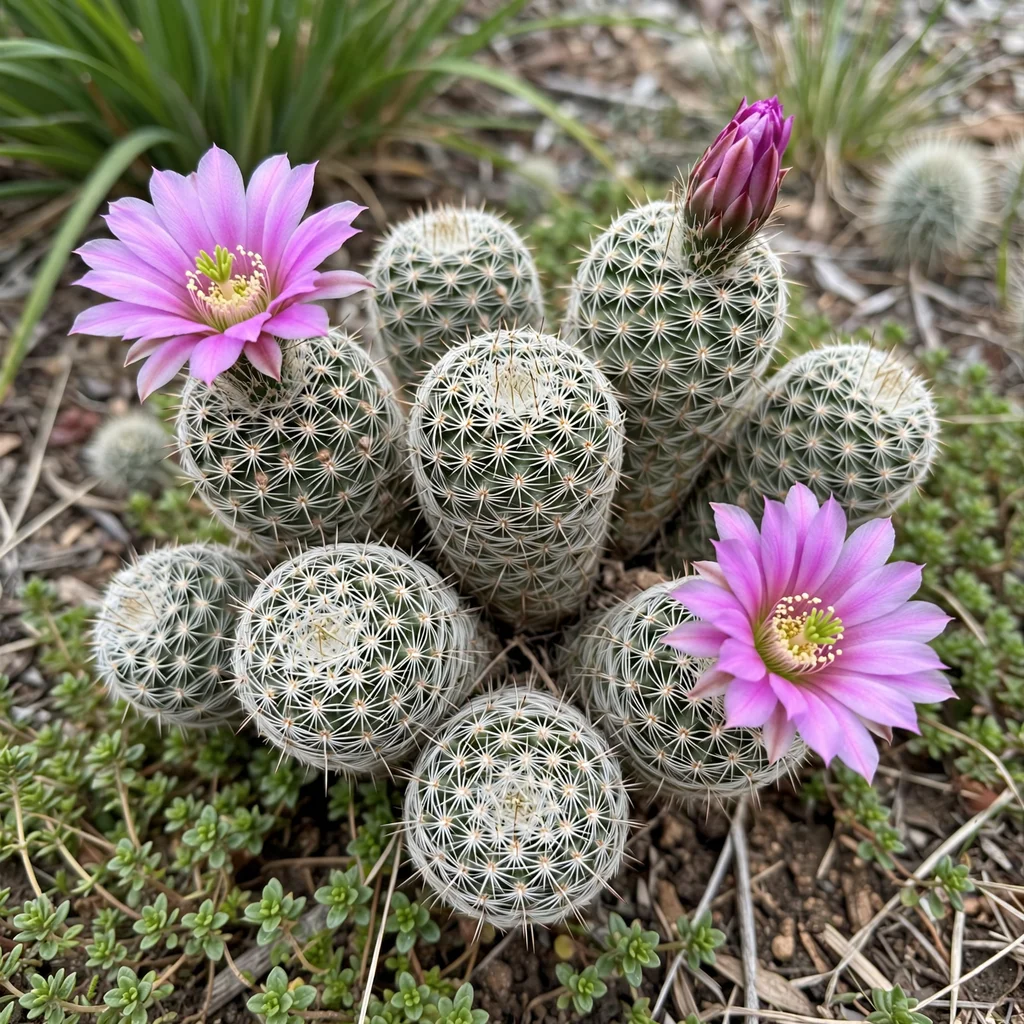
Echinocereus polyacanthus, the Mojave mound cactus, is a low-growing cactus that branches from the base to form dense mounds of cylindrical green stems. Individual stems reach 6 to 14 inches tall by 3 to 4 inches wide, and old clumps widen to 35 inches across with up to 400 stems packed into a cushion.
Single funnel-shaped flowers break directly through the stem skin in early spring, opening bright pink-magenta to red-orange. The dense covering of yellow to reddish-brown needle spines and the mound habit separate it from the closely allied scarlet-cup hedgehogs with which it has long been confused.
Uses & Benefits:
Essentials
At a Glance
Plant Type
Cactus Succulent
Height
14"
Width
35"
Light
Full Sun, Partial Sun
Zones
8, 9, 10
Water
Low
Humidity
Low
Lifespan
Long-lived perennial
Native To
Mexico
Toxicity
Non-toxic, spiny
Bloom period
Early spring – Mid spring
In flower about 2 months of the year
Planting
How to Grow
- Set in full sun with strong air movement; give light afternoon shade only in extreme heat.
- Plant high in a light sandy mineral cactus mix that drains in seconds.
- Water deeply, then let the mix dry fully before watering again.
- Feed with diluted cactus fertilizer every 2 to 3 weeks in spring and summer only.
- Overwinter cool, bright and almost dry to trigger spring bloom.
Pro Tip
Keep winter cool, bright and almost dry; a warm wet winter rots the crown and stops spring buds from setting.
Keep It Thriving
Care Guide
Do
- Plant in full sun in a gritty mineral mix that drains fast
- Water deeply then let soil dry fully before watering again
- Feed with diluted cactus fertilizer every 2 to 3 weeks in spring and summer only
Don't
- Do not overwater or leave in cold wet soil
- Do not fertilize in fall or winter
- Do not cut healthy stems; remove only dead or diseased tissue
Seasonal Care Calendar
| Task | Jan | Feb | Mar | Apr | May | Jun | Jul | Aug | Sep | Oct | Nov | Dec |
|---|---|---|---|---|---|---|---|---|---|---|---|---|
| Fertilize | ||||||||||||
| Pest Check | ||||||||||||
| Plant | ||||||||||||
| Propagate | ||||||||||||
| Winter Prep |
Watch Out For
Pests & Diseases
Common Pests
Common Diseases
In the Garden
Landscape Uses & Companions
Landscape Uses
Companion Plants
Multiply
Propagation Methods
Good to Know
Common Questions
Mojave Mound Cactus questions
What zones can Mojave Mound Cactus grow in?
Mojave Mound Cactus is hardy in USDA Zones 8–10: in that range it survives winter in the ground. Colder than Zone 8, grow it in a container you can move to shelter for the winter, or as an annual.
When does Mojave Mound Cactus bloom?
Mojave Mound Cactus typically blooms in early to mid-spring. Exact timing shifts a week or two with your zone — Sow's bloom calendar maps it to your garden.
Does Mojave Mound Cactus need full sun?
Mojave Mound Cactus does best in full sun to part shade. In hot climates, afternoon shade keeps blooms fresher longer.
Is Mojave Mound Cactus drought tolerant?
Yes — once established (usually after the first full season), Mojave Mound Cactus handles dry spells with minimal watering. Water deeply its first year to build the root system that makes that possible.
More Echinocereus to compare
Keep exploring
Explore the genus
Hardy in your zone?
Grow Mojave Mound Cactus with confidence
See it in a design of your actual yard, get zone-matched care reminders, and track it season by season in your garden journal.