The Story
Plant Bio
Desmos chinensis is an evergreen scrambling shrub or liana reaching 5 to 10 feet tall and 5 to 8 feet wide, with stout young branches bearing raised grayish-white lenticels. Leaves are alternate, oblong to elliptic and 2 to 5 inches long, thinly papery and glossy green above with a glaucous sparsely hairy underside, new growth flushing light green to bronze.
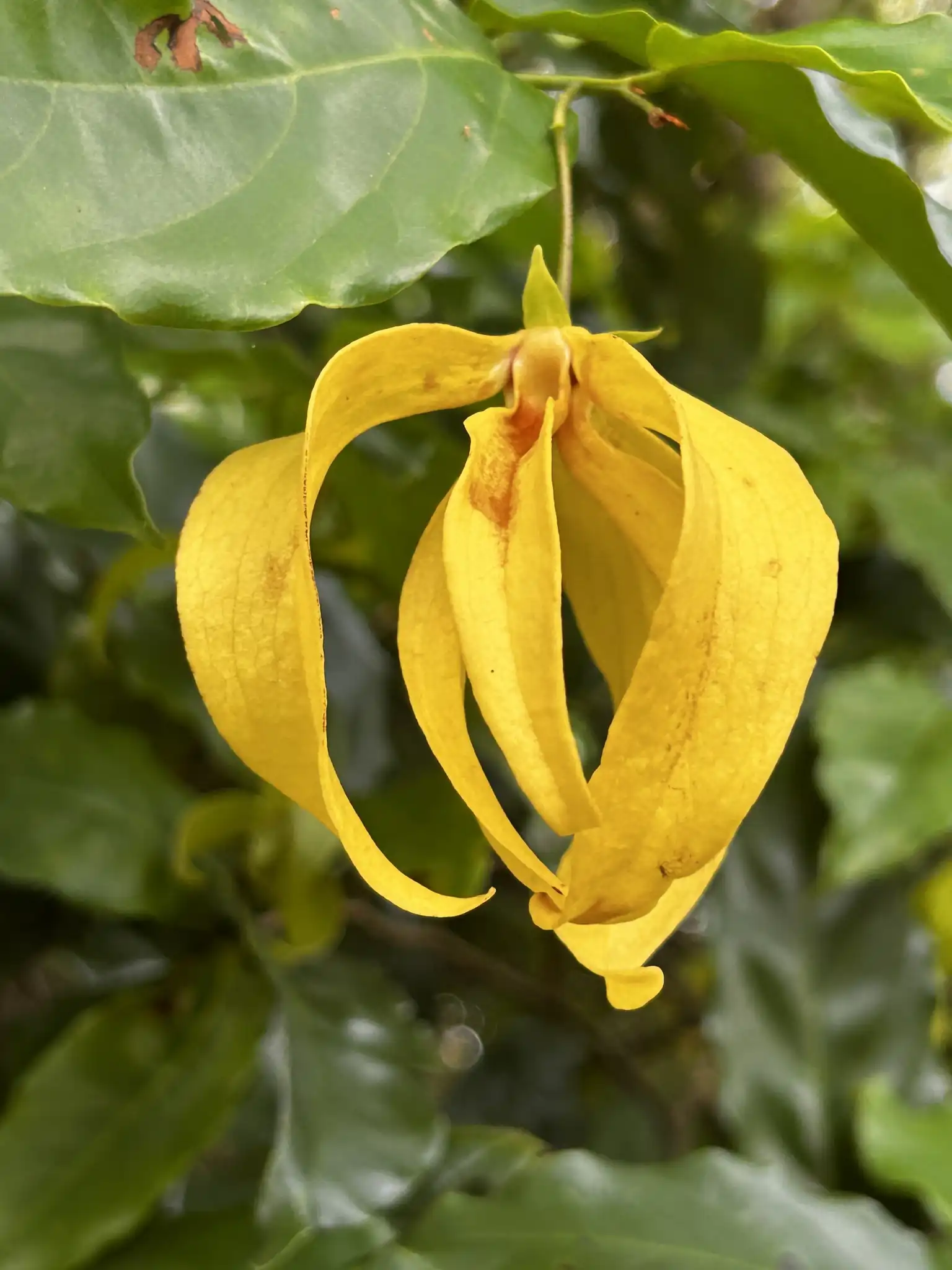
Flowers are solitary and pendulous, 1 to 2 inches wide with three greenish-yellow to yellow petals that release a ylang-ylang fragrance strongest in the morning. Bloom runs spring through summer, the pendulous structure drawing beetles and small insects rather than hummingbirds.
Uses & Benefits:
Essentials
At a Glance
Plant Type
Shrub
Height
118"
Width
98"
Light
Full Sun, Partial Sun
Zones
10
Water
Evenly moist
Humidity
High
Lifespan
Evergreen shrub
Native To
South China and Tropical Asia
Toxicity
Non-toxic
Bloom period
Spring – Summer
In flower about 6 months of the year
Planting
How to Grow
- Plant in full sun to partial shade after frost danger has passed, in rich loamy or sandy soil at pH 6.0-7.0.
- Set the root ball level with the soil surface in a wide hole or large container with large drainage holes.
- Water to settle, then keep evenly moist through the growing season, letting the top inch dry before watering again.
- Provide a low trellis or support and tie scrambling stems to guide coverage.
- Feed through spring and summer with a balanced slow-release tropical fertilizer.
Pro Tip
Prune lightly after the main flowering flush to encourage lateral branching; cutting hard into old leafless wood gives slow, patchy regrowth.
Keep It Thriving
Care Guide
Do
- Keep soil evenly moist and humidity high during heat
- Ensure sharp drainage to keep roots aerated
- Prune lightly after flowering to control scrambling stems
Don't
- Do not plant in heavy waterlogged soil where root rot starts
- Do not expose to temperatures below 32F
- Do not cut hard into old bare wood
- Do not use overhead irrigation late in the day in humid weather
Seasonal Care Calendar
| Task | Jan | Feb | Mar | Apr | May | Jun | Jul | Aug | Sep | Oct | Nov | Dec |
|---|---|---|---|---|---|---|---|---|---|---|---|---|
| Fertilize | ||||||||||||
| Pest Check | ||||||||||||
| Plant | ||||||||||||
| Prune |
Watch Out For
Pests & Diseases
Common Pests
Common Diseases
In the Garden
Landscape Uses & Companions
Landscape Uses
Multiply
Propagation Methods
Good to Know
Common Questions
Dwarf Ylang-Ylang questions
What zones can Dwarf Ylang-Ylang grow in?
Dwarf Ylang-Ylang is hardy in USDA Zone 10: in that range it survives winter in the ground. Colder than Zone 10, grow it in a container you can move to shelter for the winter.
When does Dwarf Ylang-Ylang bloom?
Dwarf Ylang-Ylang typically blooms from spring to summer. Exact timing shifts a week or two with your zone — Sow's bloom calendar maps it to your garden.
Does Dwarf Ylang-Ylang need full sun?
Dwarf Ylang-Ylang does best in full sun to part shade. In hot climates, afternoon shade keeps blooms fresher longer.
Is Dwarf Ylang-Ylang drought tolerant?
Yes — once established (usually after the first full season), Dwarf Ylang-Ylang handles dry spells with minimal watering. Water deeply its first year to build the root system that makes that possible.
Keep exploring
Explore the genus
Hardy in your zone?
Grow Dwarf Ylang-Ylang with confidence
See it in a design of your actual yard, get zone-matched care reminders, and track it season by season in your garden journal.