The Story
Plant Bio
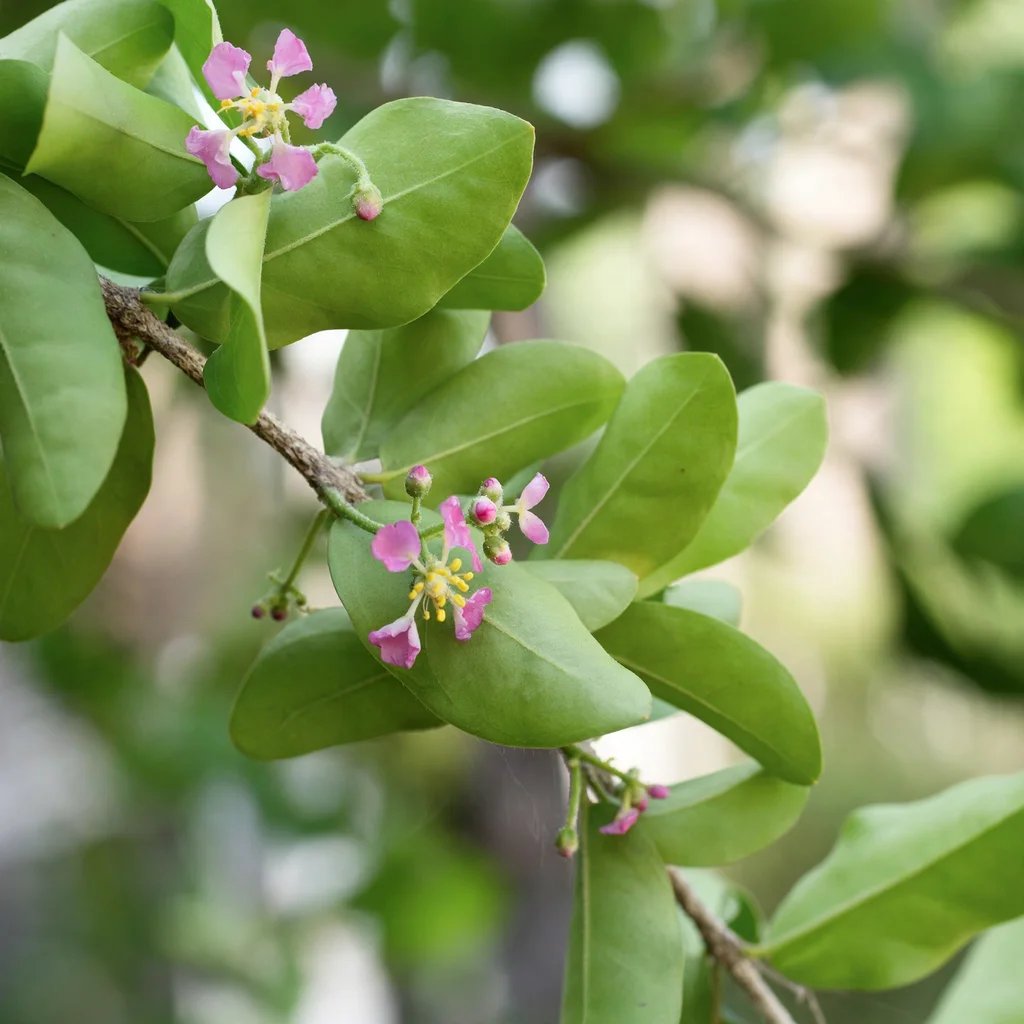
Malpighia glabra, the Barbados cherry, is a large bushy evergreen shrub or small multi-trunked tree reaching 10 to 12 foot tall with a 10 to 15 foot rounded canopy of moderate density. The leaves are evergreen, opposite, simple and lance-shaped, 2 to 4 inches long with entire margins, borne on short petioles with minute stinging hairs.
Flowers are pink to pinkish-lavender, about one-half inch across with five clawed petals, borne in terminal clusters from spring to fall with repeat flushes after rain and followed by tart red fleshy cherries one-half to one inch across. Nursery plants labeled Malpighia punicifolia are the cultivated fruiting acerola form of this complex, selected for heavy fruit set and extremely high vitamin C, distinct from the wild South Texas form.
Uses & Benefits:
Essentials
At a Glance
Plant Type
Shrub
Height
144"
Width
180"
Light
Full Sun, Partial Sun
Zones
9, 10
Water
Moderate
Humidity
High
Lifespan
Long-lived shrub
Native To
Southern Texas, Mexico, West Indies, Central and South America
Toxicity
Non-toxic; leaf hairs irritate skin
Bloom period
Spring – Fall
In flower about 9 months of the year
Planting
How to Grow
- Plant in full sun to part sun in fertile, well-drained soil, spacing plants 5 to 6 foot apart for a screen.
- Set the root ball level with the grade and water deeply at planting, then water steadily through the first warm season.
- Mulch 2 to 3 inches deep, keeping mulch off the trunk, to hold moisture for flowering and fruit set.
- Tip-prune lightly after fruiting flushes to shape the canopy or train 2 to 3 trunks for a small tree form.
- Feed for steady growth on fertile soil and protect from frost below zone 9B.
Pro Tip
Start with certified nematode-free stock and confirm the heavy-fruiting acerola form at purchase, as trade labels mix glabra and emarginata.
Keep It Thriving
Care Guide
Do
- Do plant in nematode-free fertile soil with good drainage.
- Do water through flowering and fruiting to hold the crop.
- Do wear gloves and long sleeves when picking among the leaves.
Don't
- Do not plant in soggy or compacted ground that stays wet.
- Do not cut hard back into old bare wood to reduce size.
- Do not expect salt tolerance or hard frost tolerance.
Seasonal Care Calendar
| Task | Jan | Feb | Mar | Apr | May | Jun | Jul | Aug | Sep | Oct | Nov | Dec |
|---|---|---|---|---|---|---|---|---|---|---|---|---|
| Fertilize | ||||||||||||
| Harvest | ||||||||||||
| Pest Check | ||||||||||||
| Plant | ||||||||||||
| Prune |
Watch Out For
Pests & Diseases
Common Pests
Common Diseases
In the Garden
Landscape Uses & Companions
Landscape Uses
Multiply
Propagation Methods
Good to Know
Common Questions
Barbados Cherry questions
What zones can Barbados Cherry grow in?
Barbados Cherry is hardy in USDA Zones 9–10: in that range it survives winter in the ground. Colder than Zone 9, grow it in a container you can move to shelter for the winter.
When does Barbados Cherry bloom?
Barbados Cherry typically blooms from spring to fall. Exact timing shifts a week or two with your zone — Sow's bloom calendar maps it to your garden.
Does Barbados Cherry need full sun?
Barbados Cherry does best in full sun to part shade. In hot climates, afternoon shade keeps blooms fresher longer.
Is Barbados Cherry drought tolerant?
Yes — once established (usually after the first full season), Barbados Cherry handles dry spells with minimal watering. Water deeply its first year to build the root system that makes that possible.
Keep exploring
Explore the genus
Hardy in your zone?
Grow Barbados Cherry with confidence
See it in a design of your actual yard, get zone-matched care reminders, and track it season by season in your garden journal.