The Story
Plant Bio
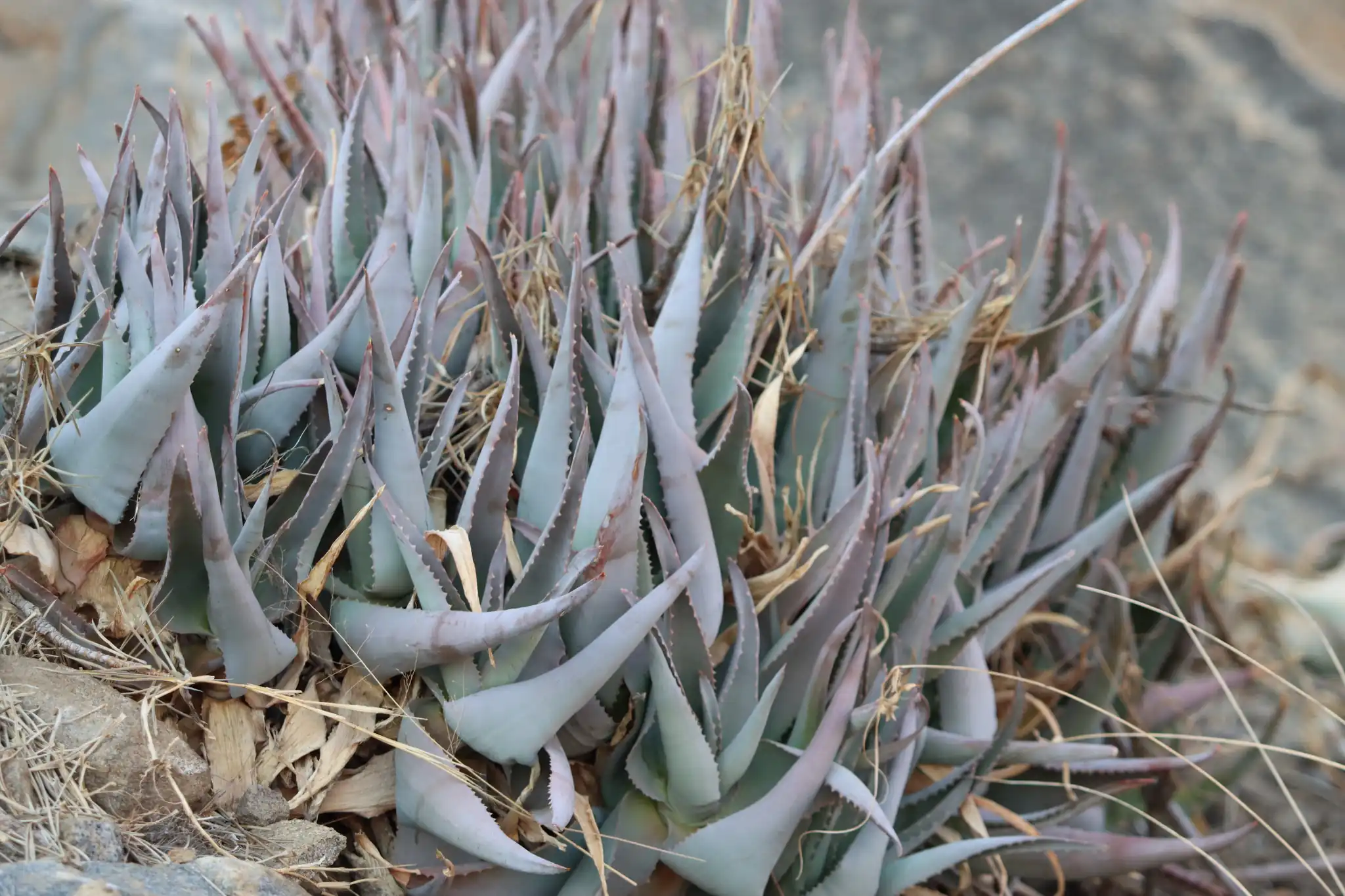
Aloe deltoideodonta is a stemless or short-stemmed aloe from the seasonally dry sandstone hills of south-central Madagascar, forming slow-growing clumps by pupping from the base. In cultivation it builds a low mound 8 to 12 inches tall and up to 24 inches wide of broad, fleshy rosettes that store water through drought.
Leaves are pale green with darker green parallel stripes running the length of the blade and straw-colored triangular teeth along the margins. Flowers rise on a tall upright stem as a short conical raceme of tubular inch-long blooms in pale to deep salmon-orange with green tips, opening near-white and reflexing with age.
Uses & Benefits:
Essentials
At a Glance
Plant Type
Cactus Succulent
Height
12"
Width
24"
Light
Full Sun, Partial Sun
Zones
9, 10
Water
Low
Humidity
Unknown
Lifespan
Long-lived perennial
Native To
Madagascar
Toxicity
Mildly toxic if ingested
Bloom period
Late summer – Fall
In flower about 4 months of the year
Planting
How to Grow
- Plant in full sun to light shade in very gritty, fast-draining sandy or rocky soil with the crown at soil level.
- Water deeply then let dry completely; water occasionally in summer and infrequently once established.
- Keep below 25F frost-free; move containers indoors or under cover before hard frost.
- Remove the spent flower stem at the base and clear dried lower leaves; no other pruning is needed.
- Top-dress with gravel to keep leaves off wet soil and hold the rosette upright.
Pro Tip
Grow it hard in gritty, fast-draining soil and water only when dry; winter wet rots the crown long before 25F cold damages the leaves.
Keep It Thriving
Care Guide
Do
- Give full sun to filtered sun and sharp drainage.
- Inspect leaf axils and buds regularly for mealybug, scale and mite galls.
- Divide crowded clumps by offsets to renew vigor.
Don't
- Do not overwater or leave pots standing in saucers of water.
- Do not plant in heavy clay or moisture-holding potting soil.
- Do not overhead water or leave the crown wet in cold weather.
Seasonal Care Calendar
| Task | Jan | Feb | Mar | Apr | May | Jun | Jul | Aug | Sep | Oct | Nov | Dec |
|---|---|---|---|---|---|---|---|---|---|---|---|---|
| Deadhead | ||||||||||||
| Pest Check | ||||||||||||
| Plant | ||||||||||||
| Propagate | ||||||||||||
| Winter Prep |
Watch Out For
Pests & Diseases
Common Pests
Common Diseases
In the Garden
Landscape Uses & Companions
Landscape Uses
Multiply
Propagation Methods
Good to Know
Common Questions
Striped Aloe questions
What zones can Striped Aloe grow in?
Striped Aloe is hardy in USDA Zones 9–10: in that range it survives winter in the ground. Colder than Zone 9, grow it in a container you can move to shelter for the winter, or as an annual.
When does Striped Aloe bloom?
Striped Aloe typically blooms from late summer to late fall. Exact timing shifts a week or two with your zone — Sow's bloom calendar maps it to your garden.
Does Striped Aloe need full sun?
Striped Aloe does best in full sun to part shade. In hot climates, afternoon shade keeps blooms fresher longer.
Is Striped Aloe drought tolerant?
Yes — once established (usually after the first full season), Striped Aloe handles dry spells with minimal watering. Water deeply its first year to build the root system that makes that possible.
More Aloe to compare
Compton's Aloe
Aloe comptonii
Cooper's Aloe
Aloe cooperi
Safari Rose Aloe
Aloe vera 'Safari Rose'
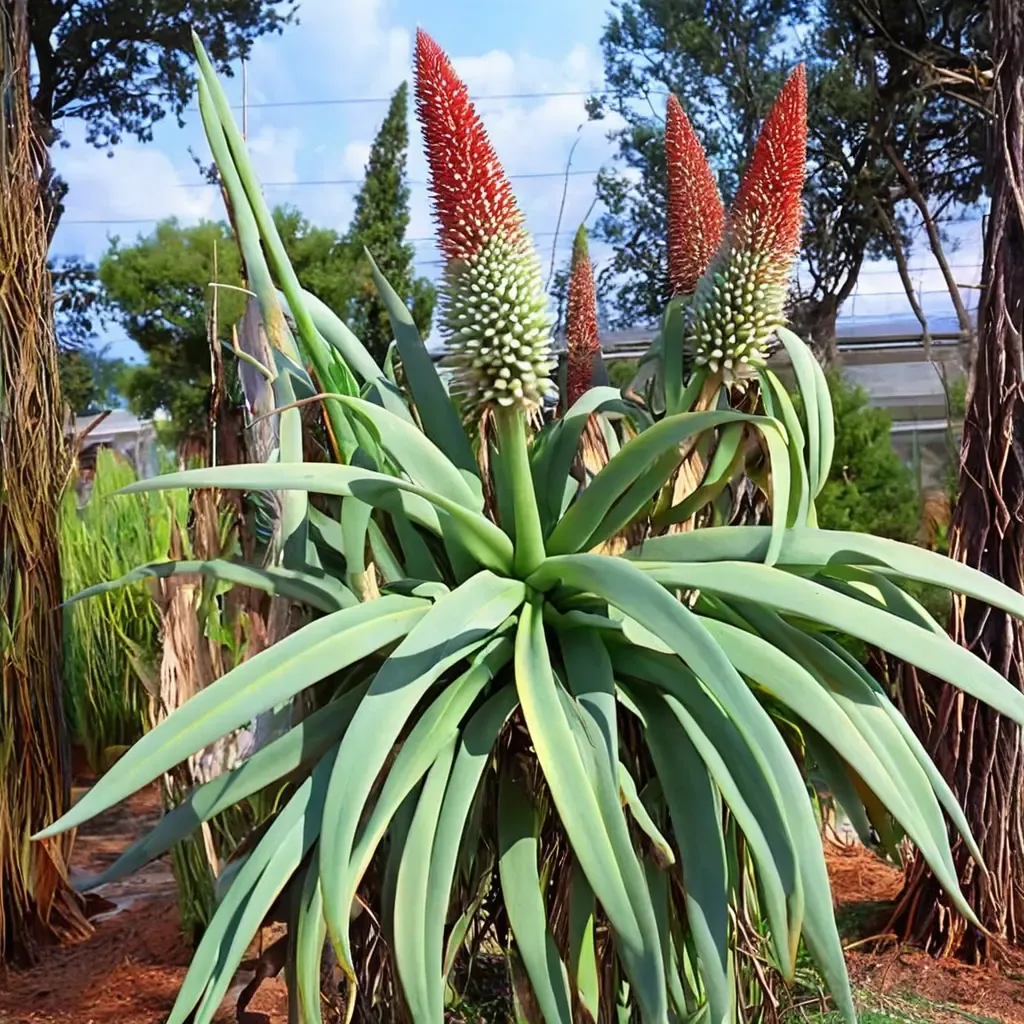
Tilt-Head Aloe
Aloe speciosa 'Tilt-Head Aloe'
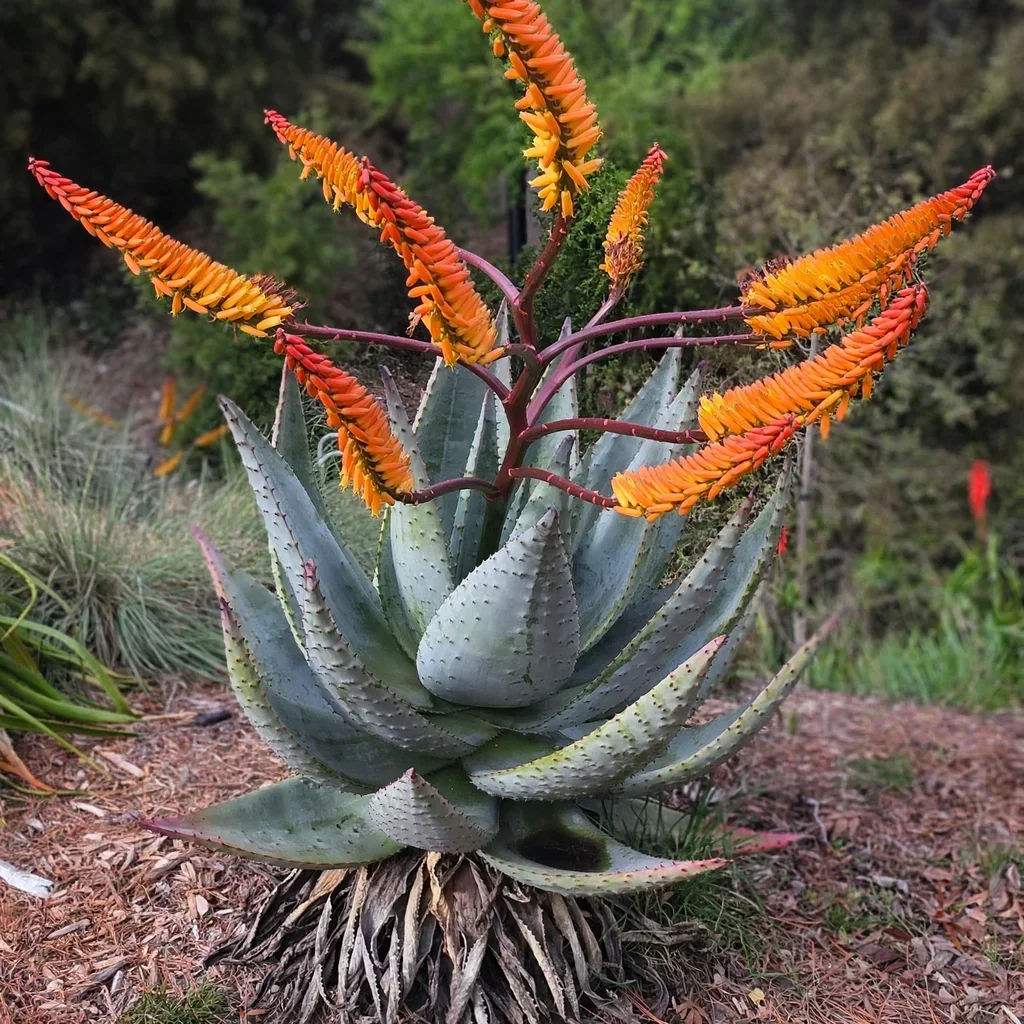
Mountain Aloe
Aloe marlothii 'Flat Flowered Aloe'
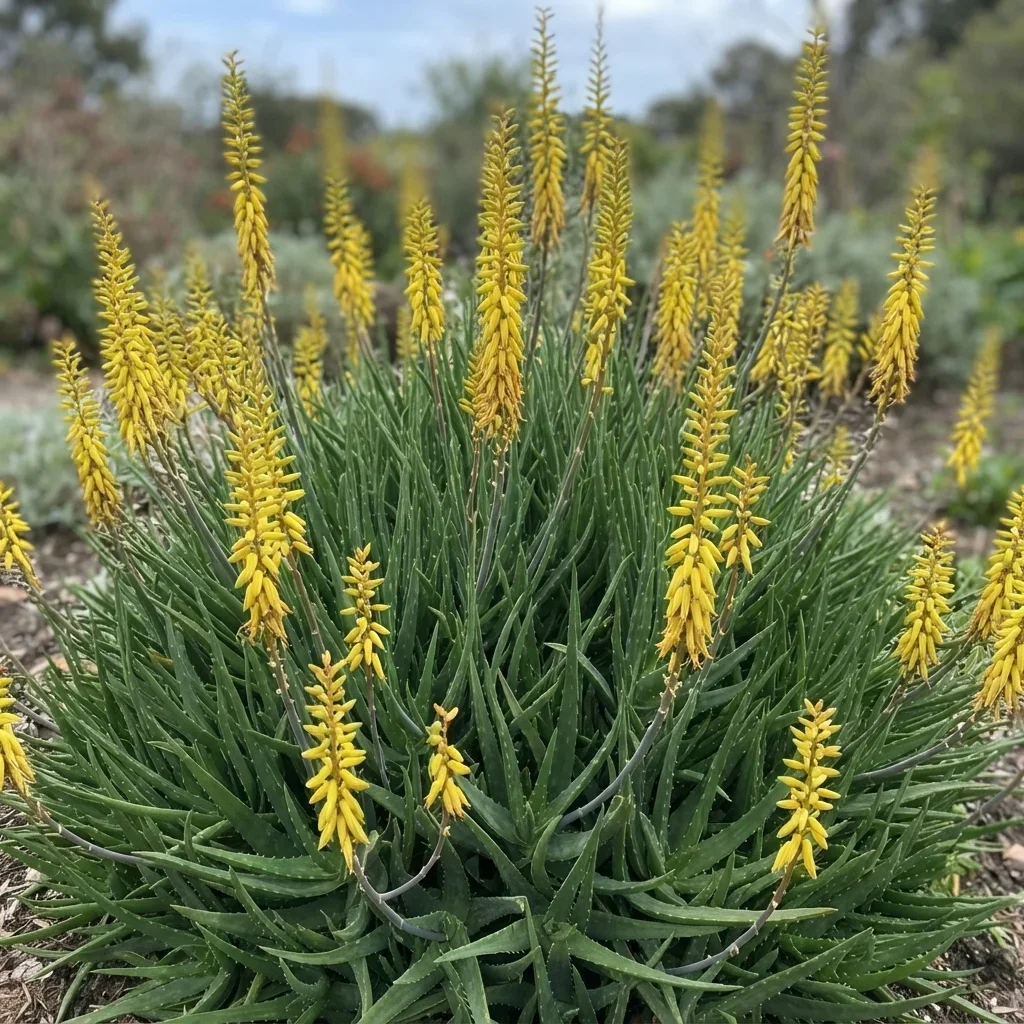
Fence Aloe
Aloe tenuior 'Fence Aloe'
Keep exploring
Explore the genus
Hardy in your zone?
Grow Striped Aloe with confidence
See it in a design of your actual yard, get zone-matched care reminders, and track it season by season in your garden journal.