The Story
Plant Bio
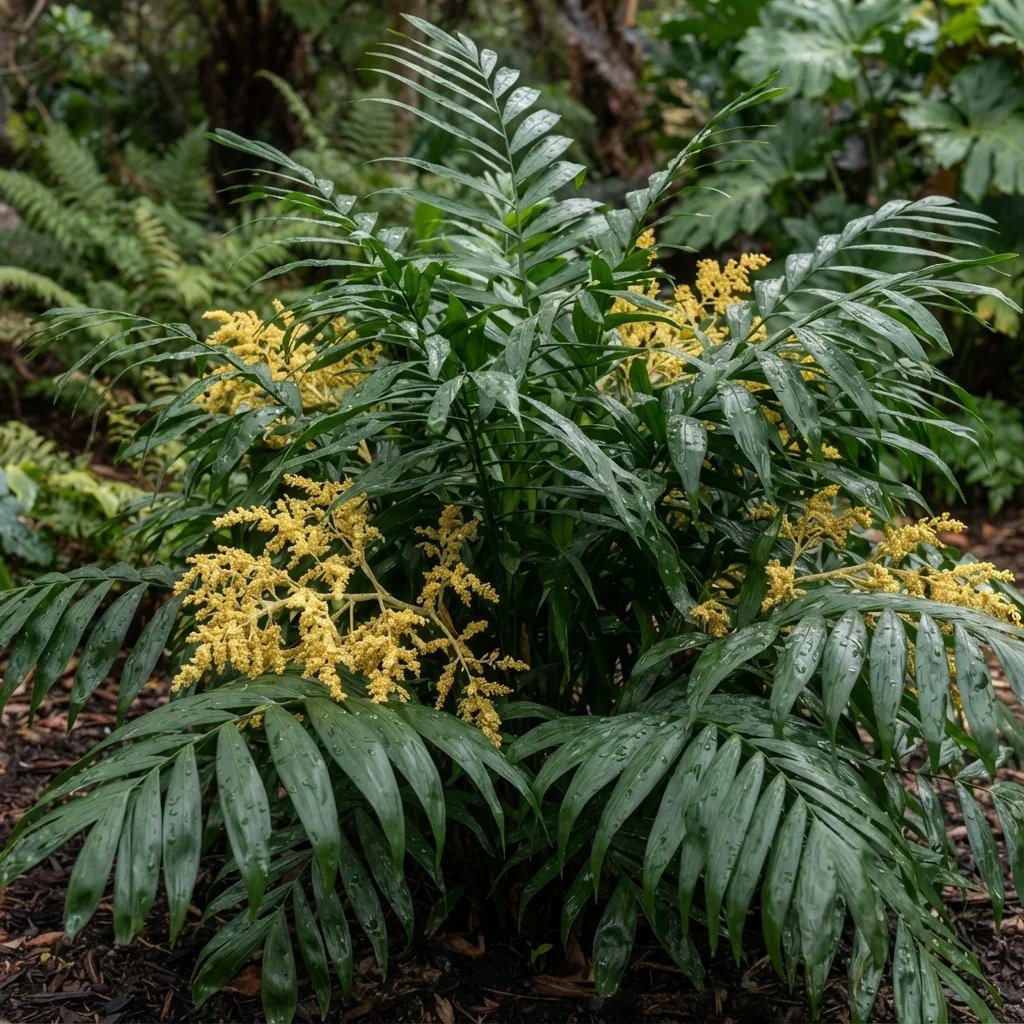
Chamaedorea cataractarum is a clumping, trunkless palm native to riverbanks and stream margins in southern Mexico. It produces dense clusters of arching feather fronds with dark green, glossy leaflets that reach four to six feet tall.
Unlike single-trunked palms, this species expands via subterranean rhizomes to form a bushy, multi-stemmed habit. Small, creamy-yellow flower spikes emerge near the base of the plant in late winter, though indoor container specimens rarely bloom.
Uses & Benefits:
Essentials
At a Glance
Plant Type
Tropical
Height
72"
Width
72"
Light
Partial Sun, Shade
Zones
9, 10
Water
Moderate to high
Humidity
High
Lifespan
Perennial
Native To
Mexico
Toxicity
Non-toxic
Bloom period
Late winter – Spring
In flower about 4 months of the year
Marketplace
Where to Buy
Shipping costs Year-round shipping Free shipping
Planting
How to Grow
- Plant in a porous, well-draining potting mixture rich in organic matter with an acidic to neutral pH.
- Position in bright, indirect light indoors or in partial to full shade outdoors protected from hot afternoon sun.
- Water regularly to keep the root zone evenly moist, ensuring surplus water drains freely away from the pot base.
- Apply a balanced palm fertilizer every one to two months during the spring and summer active growing season.
Pro Tip
Keep the potting medium constantly moist without allowing the container to sit in stagnant water; dry indoor air induces rapid spider mite infestations on the leaflet undersides.
Keep It Thriving
Care Guide
Do
- Keep the soil mix consistently damp to the touch.
- Maintain high ambient humidity around the foliage.
- Provide bright indirect light or partial shade.
Don't
- Do not allow the root zone to dry out completely.
- Do not leave the pot standing in pooled water.
- Do not expose fronds to direct, harsh afternoon sunlight.
Seasonal Care Calendar
| Task | Jan | Feb | Mar | Apr | May | Jun | Jul | Aug | Sep | Oct | Nov | Dec |
|---|---|---|---|---|---|---|---|---|---|---|---|---|
| Fertilize | ||||||||||||
| Pest Check | ||||||||||||
| Prune | ||||||||||||
| Winter Prep |
Watch Out For
Pests & Diseases
Common Pests
Common Diseases
In the Garden
Landscape Uses & Companions
Landscape Uses
Multiply
Propagation Methods
Good to Know
Common Questions
Cat Palm questions
What zones can Cat Palm grow in?
Cat Palm is hardy in USDA Zones 9–10: in that range it survives winter in the ground. Colder than Zone 9, grow it in a container you can move to shelter for the winter, or as an annual.
When does Cat Palm bloom?
Cat Palm typically blooms from late winter to late spring. Exact timing shifts a week or two with your zone — Sow's bloom calendar maps it to your garden.
Does Cat Palm need full sun?
Cat Palm does best in part shade.
More Chamaedorea to compare
Keep exploring
Explore the genus
Hardy in your zone?
Grow Cat Palm with confidence
See it in a design of your actual yard, get zone-matched care reminders, and track it season by season in your garden journal.