The Story
Plant Bio
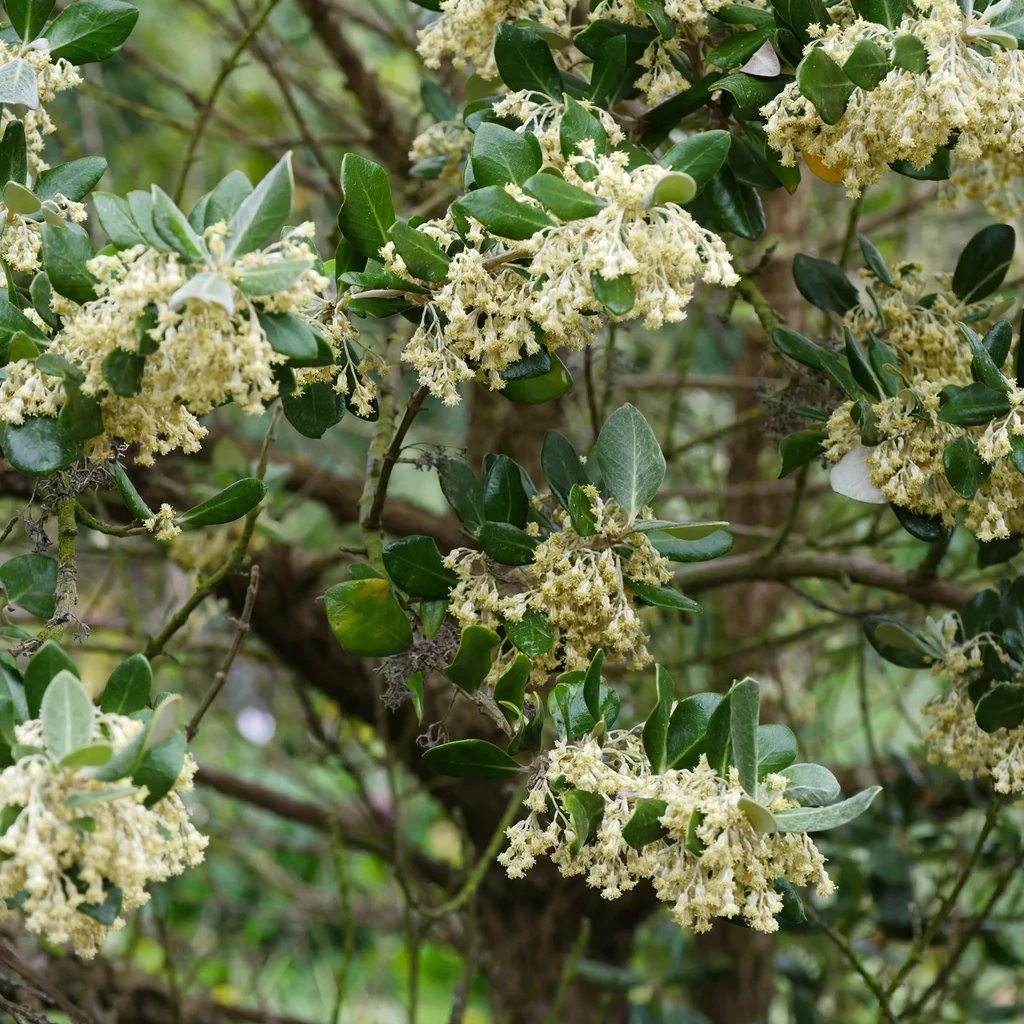
Olearia traversiorum is an evergreen shrub to small tree from the Chatham Islands, forming an upright conical crown with stout trunks in the wild. The oval leathery leaves are glossy dark green above and felted white beneath, and the small cylindric heads carry cream disc florets with no rays.
Sold as Olearia traversii, it is distinguished by opposite leaves with persistent white tomentum and dense axillary panicles of 5 to 68 small fluffy-seeded heads. It holds as a fast-growing evergreen windbreak for coastal exposure, tolerating drought and hard cutting back to bare wood where many broadleaf evergreens fail.
Uses & Benefits:
Essentials
At a Glance
Plant Type
Shrub
Height
360"
Width
240"
Light
Full Sun
Zones
9, 10
Water
Low once established
Humidity
Low to moderate
Lifespan
Long-lived evergreen shrub
Native To
Chatham Islands, New Zealand
Toxicity
Unknown - no toxicity record found
Bloom period
Late spring – Summer
In flower about 4 months of the year
Planting
How to Grow
- Plant in full sun in free-draining sand, loam or chalk with neutral to alkaline reaction.
- Dig a hole twice the pot width, set the rootball level, backfill and water deeply.
- Mulch 2 to 3 inches deep with bark, keeping mulch clear of the trunk.
- Water regularly the first season, then taper off; established plants take drought.
- Shelter from hard frost the first winter in zone 9 until wood hardens.
Pro Tip
Allow a central leader to establish, then shorten new growth by one-third after flowering to keep the crown dense.
Keep It Thriving
Care Guide
Do
- Do plant in open sun with air movement and sharp drainage.
- Do tip-prune after flowering to keep a dense conical habit.
- Do use it as a second-line windbreak behind a front-line salt barrier.
Don't
- Do not plant in heavy clay or ground that stays wet in winter.
- Do not shear annually into a tight hedge; it performs best allowed its natural form.
- Do not cut into old leafless wood except to renovate, then allow a full season to reshoot.
Seasonal Care Calendar
| Task | Jan | Feb | Mar | Apr | May | Jun | Jul | Aug | Sep | Oct | Nov | Dec |
|---|---|---|---|---|---|---|---|---|---|---|---|---|
| Mulch | ||||||||||||
| Pest Check | ||||||||||||
| Plant | ||||||||||||
| Propagate | ||||||||||||
| Prune |
Watch Out For
Pests & Diseases
Common Pests
Common Diseases
In the Garden
Landscape Uses & Companions
Landscape Uses
Multiply
Propagation Methods
Good to Know
Common Questions
Chatham Island Akeake questions
What zones can Chatham Island Akeake grow in?
Chatham Island Akeake is hardy in USDA Zones 9–10: in that range it survives winter in the ground. Colder than Zone 9, grow it in a container you can move to shelter for the winter.
When does Chatham Island Akeake bloom?
Chatham Island Akeake typically blooms from late spring to late summer. Exact timing shifts a week or two with your zone — Sow's bloom calendar maps it to your garden.
Does Chatham Island Akeake need full sun?
Chatham Island Akeake does best in full sun (6+ hours).
Is Chatham Island Akeake drought tolerant?
Yes — once established (usually after the first full season), Chatham Island Akeake handles dry spells with minimal watering. Water deeply its first year to build the root system that makes that possible.
More Olearia to compare
Sticky Daisy-bush
Olearia glutinosa
Twiggy Daisy-Bush
Olearia ramulosa
Coastal Daisy-Bush
Olearia solandri
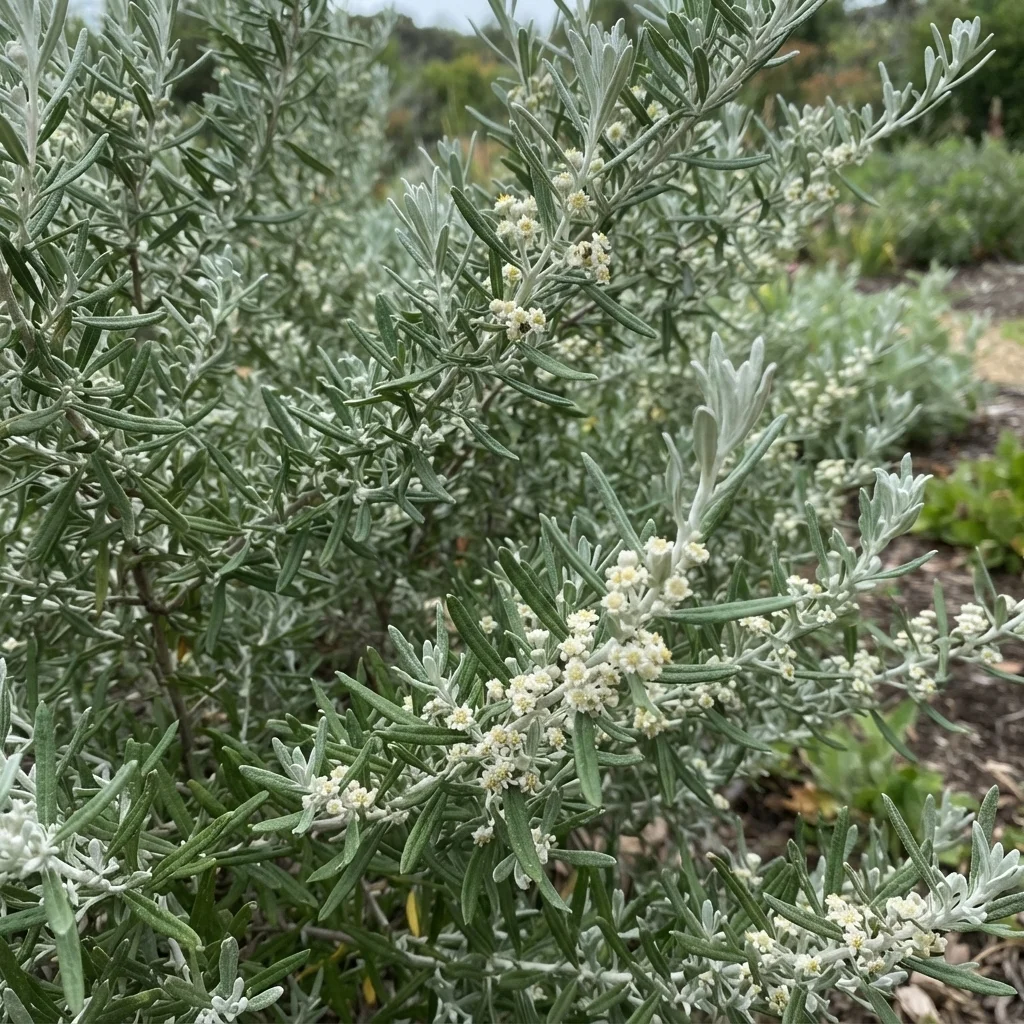
Coast Daisy-bush
Olearia axillaris
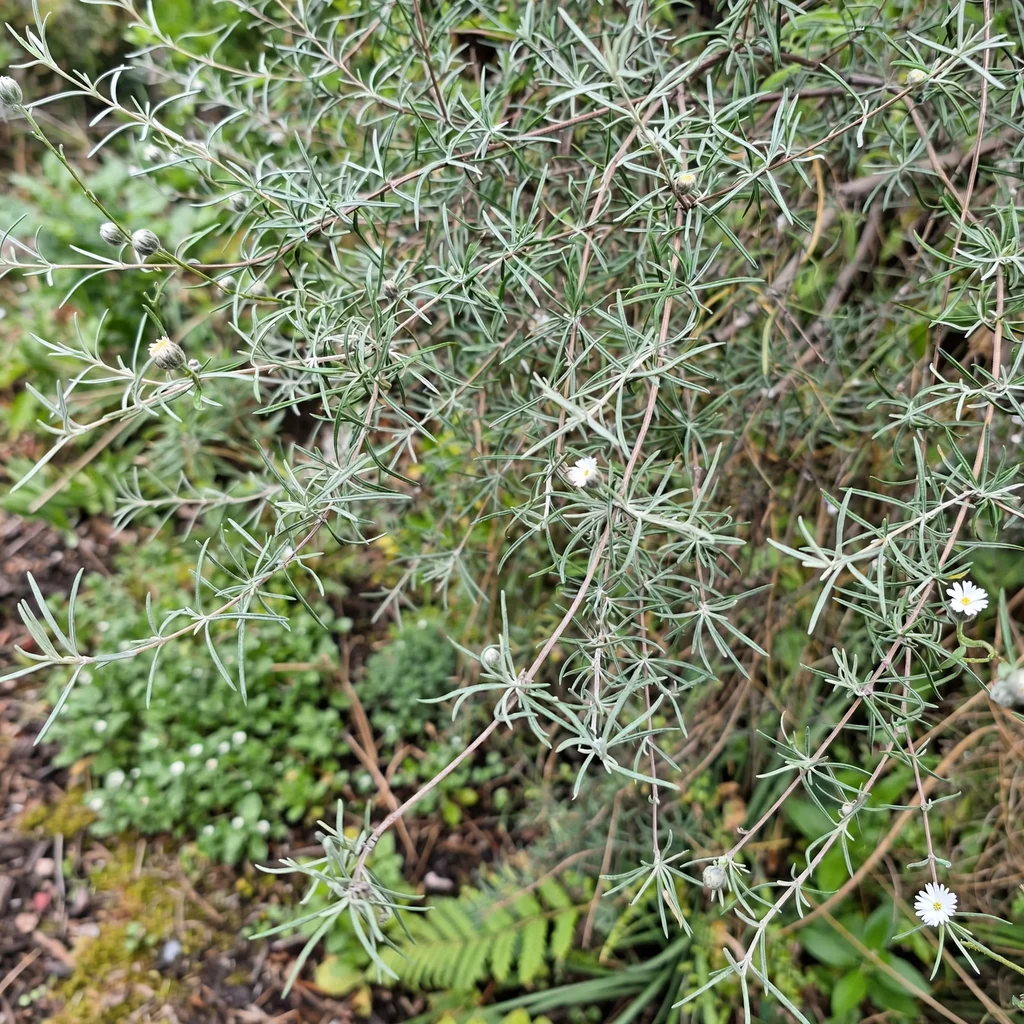
Twiggy Tree Daisy
Olearia lineata
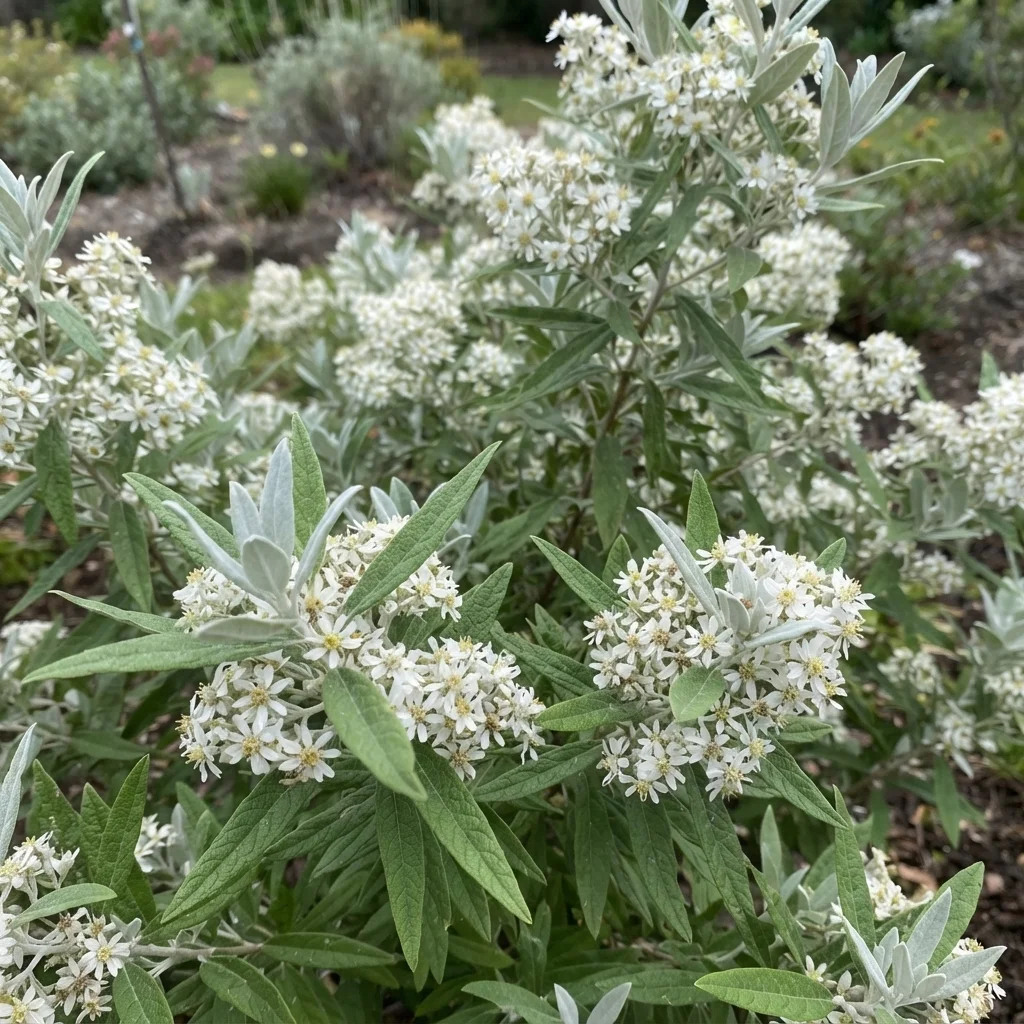
Snowy Daisy-Bush
Olearia lirata
Keep exploring
Explore the genus
Hardy in your zone?
Grow Chatham Island Akeake with confidence
See it in a design of your actual yard, get zone-matched care reminders, and track it season by season in your garden journal.