The Story
Plant Bio
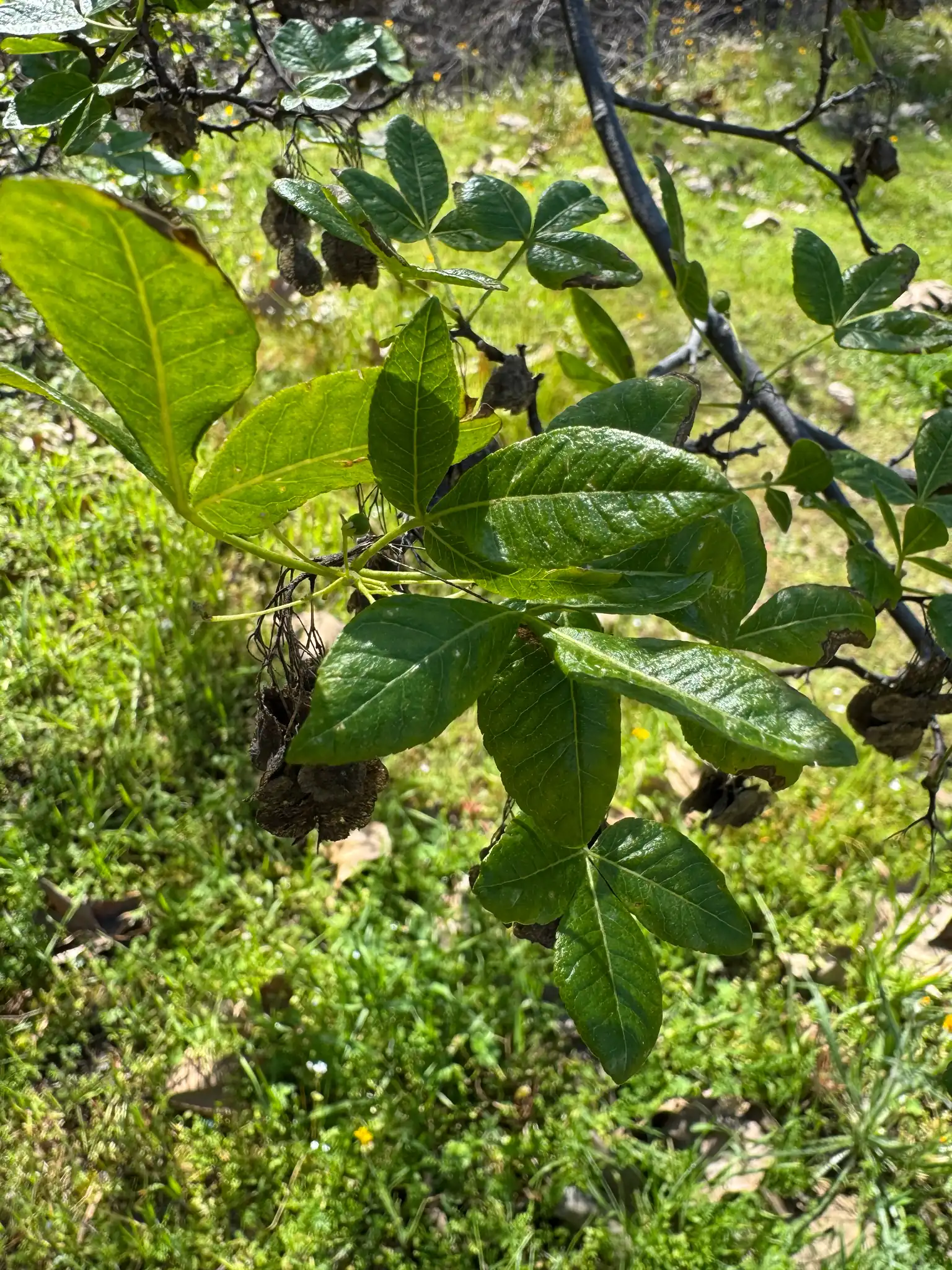
Ptelea crenulata, the California hoptree, is a deciduous shrub or low-branched small tree with many stems from the base, reaching 8 to 16 feet in the wild. The alternate leaves are trifoliate, with lanceolate to obovate dark green leaflets dotted with translucent oil glands that smell of citrus when crushed.
It is distinguished from the eastern hoptree by smaller 1 to 3 inch leaflets with crenulate to serrate margins, glabrous above and hairy beneath. Spring brings terminal clusters of small greenish-white fragrant flowers followed by round straw-colored winged samaras about 1/2 to 3/4 inch across.
Uses & Benefits:
Essentials
At a Glance
Plant Type
Shrub
Height
192"
Width
177"
Light
Full Sun, Partial Sun
Zones
7, 8, 9, 10
Water
Low
Humidity
Unknown
Lifespan
Woody perennial
Native To
California, USA
Toxicity
Unknown
Bloom period
Spring – Summer
In flower about 6 months of the year
Planting
How to Grow
- Plant in fall in partial sun in dry, well-drained clay or loam, spacing to allow 10 to 14 feet spread.
- Set the rootball level with the soil surface and backfill with native soil only.
- Water deeply at planting, then water sparingly through the first dry season to establish.
- Top with thin leaf litter kept clear of stems and withhold routine summer irrigation once established.
Pro Tip
Site it in partial sun with sharp drainage and withhold summer water once established; cutting into old leafless wood regrows slowly, so prune lightly or not at all.
Keep It Thriving
Care Guide
Do
- Plant as a dry understory shrub with afternoon shade in hot sites.
- Allow leaf litter to act as mulch and keep the root crown dry.
- Leave spent flowers to form winged samaras for birds.
Don't
- Do not plant in hot full-sun irrigated beds.
- Do not over-water in summer or hold water around the base.
- Do not shear into old bare wood.
Seasonal Care Calendar
| Task | Jan | Feb | Mar | Apr | May | Jun | Jul | Aug | Sep | Oct | Nov | Dec |
|---|---|---|---|---|---|---|---|---|---|---|---|---|
| Mulch | ||||||||||||
| Pest Check | ||||||||||||
| Plant | ||||||||||||
| Prune |
Watch Out For
Pests & Diseases
Common Pests
Common Diseases
In the Garden
Landscape Uses & Companions
Landscape Uses
Companion Plants
Multiply
Propagation Methods
Good to Know
Common Questions
California Hoptree questions
What zones can California Hoptree grow in?
California Hoptree is hardy in USDA Zones 7–10: in that range it survives winter in the ground. Colder than Zone 7, grow it in a container you can move to shelter for the winter.
When does California Hoptree bloom?
California Hoptree typically blooms from spring to summer. Exact timing shifts a week or two with your zone — Sow's bloom calendar maps it to your garden.
Does California Hoptree need full sun?
California Hoptree does best in full sun to part shade. In hot climates, afternoon shade keeps blooms fresher longer.
Is California Hoptree drought tolerant?
Yes — once established (usually after the first full season), California Hoptree handles dry spells with minimal watering. Water deeply its first year to build the root system that makes that possible.
More Ptelea to compare
Keep exploring
Explore the genus
Hardy in your zone?
Grow California Hoptree with confidence
See it in a design of your actual yard, get zone-matched care reminders, and track it season by season in your garden journal.