The Story
Plant Bio
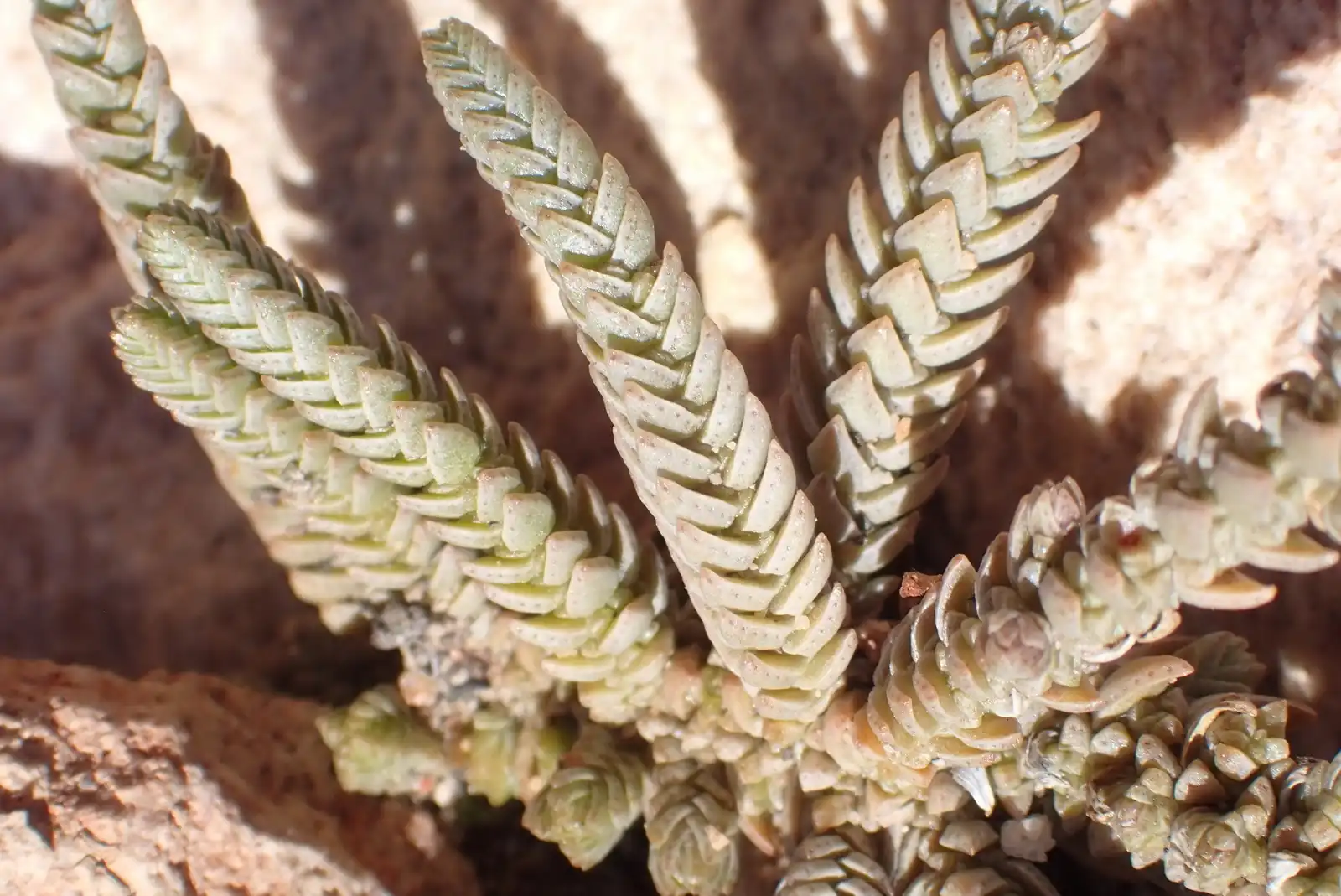
Crassula muscosa is an evergreen succulent subshrub from arid rocky ground in South Africa and southern Namibia, forming low branching stems that rise 4 to 12 inches tall and spread wider. The stems are clothed in tiny overlapping leaves stacked in four ranks, and bear minute pale yellow flowers spaced along the stems from spring into summer.
What reads as a miniature chain or square-section cord is foliage alone: each leaf clasps the stem so tightly the stem itself disappears beneath the column. In strong sun the bright to yellow-green chains flush reddish-brown, and new tips emerge light green against the older growth.
Uses & Benefits:
Essentials
At a Glance
Plant Type
Cactus Succulent
Height
12"
Width
12"
Light
Full Sun, Partial Sun
Zones
9, 10
Water
Low
Humidity
Low
Lifespan
Perennial
Native To
South Africa, Namibia
Toxicity
Mildly toxic to cats and dogs
Bloom period
Spring – Summer
In flower about 6 months of the year
Planting
How to Grow
- Grow outdoors in zones 9-11 in full sun to part shade with 6 or more hours of bright light; grow indoors elsewhere in the brightest window with afternoon shade in extreme heat.
- Plant in a gritty, fast-draining cactus-succulent mix with sand and perlite or pumice in a pot with drainage, sized only about 30 percent larger than the rootball.
- Water deeply then let the mix dry completely between waterings; withhold water in winter and never let water pool in the leaf joints.
- Feed once in spring and once in summer with a diluted balanced succulent fertilizer; no fall or winter feeding.
- Rotate the pot for even growth and remove only yellowed or rotted segments; protect from frost below about 20F.
Pro Tip
Keep it dry, bright and airy in a shallow pot only slightly larger than the rootball; losses come from wet mix and still air, not from pests.
Keep It Thriving
Care Guide
Do
- Give 6 or more hours of bright light with good air movement
- Let the mix dry completely between waterings
- Inspect leaf axils, crown and roots for cottony mealybug
Don't
- Do not overwater, especially in winter
- Do not plant in heavy garden soil or an oversized pot without drainage
- Do not wet the leaves repeatedly or hold plants cold and damp
Seasonal Care Calendar
| Task | Jan | Feb | Mar | Apr | May | Jun | Jul | Aug | Sep | Oct | Nov | Dec |
|---|---|---|---|---|---|---|---|---|---|---|---|---|
| Fertilize | ||||||||||||
| Pest Check | ||||||||||||
| Plant | ||||||||||||
| Propagate | ||||||||||||
| Prune |
Watch Out For
Pests & Diseases
Common Pests
Common Diseases
In the Garden
Landscape Uses & Companions
Landscape Uses
Multiply
Propagation Methods
Good to Know
Common Questions
Watch Chain questions
What zones can Watch Chain grow in?
Watch Chain is hardy in USDA Zones 9–10: in that range it survives winter in the ground. Colder than Zone 9, grow it in a container you can move to shelter for the winter, or as an annual.
When does Watch Chain bloom?
Watch Chain typically blooms from spring to summer. Exact timing shifts a week or two with your zone — Sow's bloom calendar maps it to your garden.
Does Watch Chain need full sun?
Watch Chain does best in full sun to part shade. In hot climates, afternoon shade keeps blooms fresher longer.
Is Watch Chain drought tolerant?
Yes — once established (usually after the first full season), Watch Chain handles dry spells with minimal watering. Water deeply its first year to build the root system that makes that possible.
More Crassula to compare
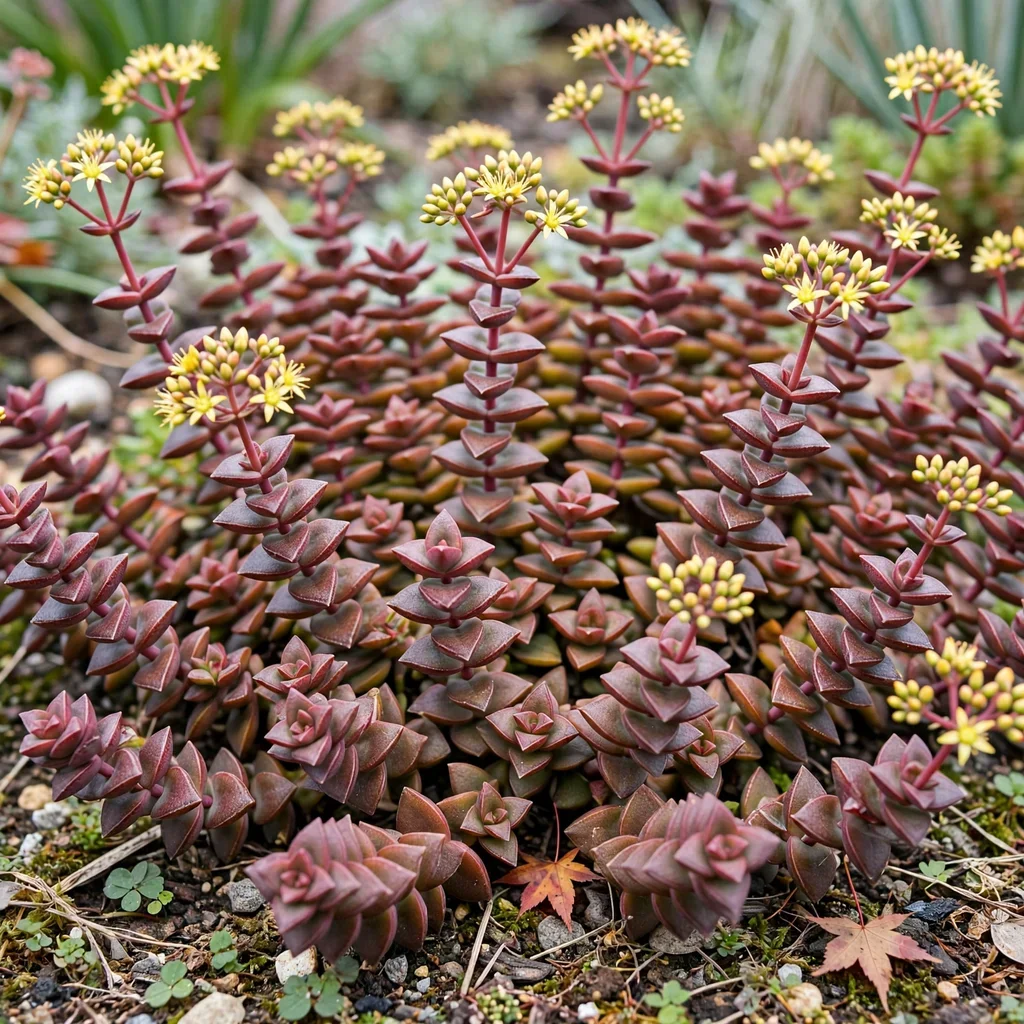
Small Red Carpet String of Buttons
Crassula perforata 'Small Red Carpet'
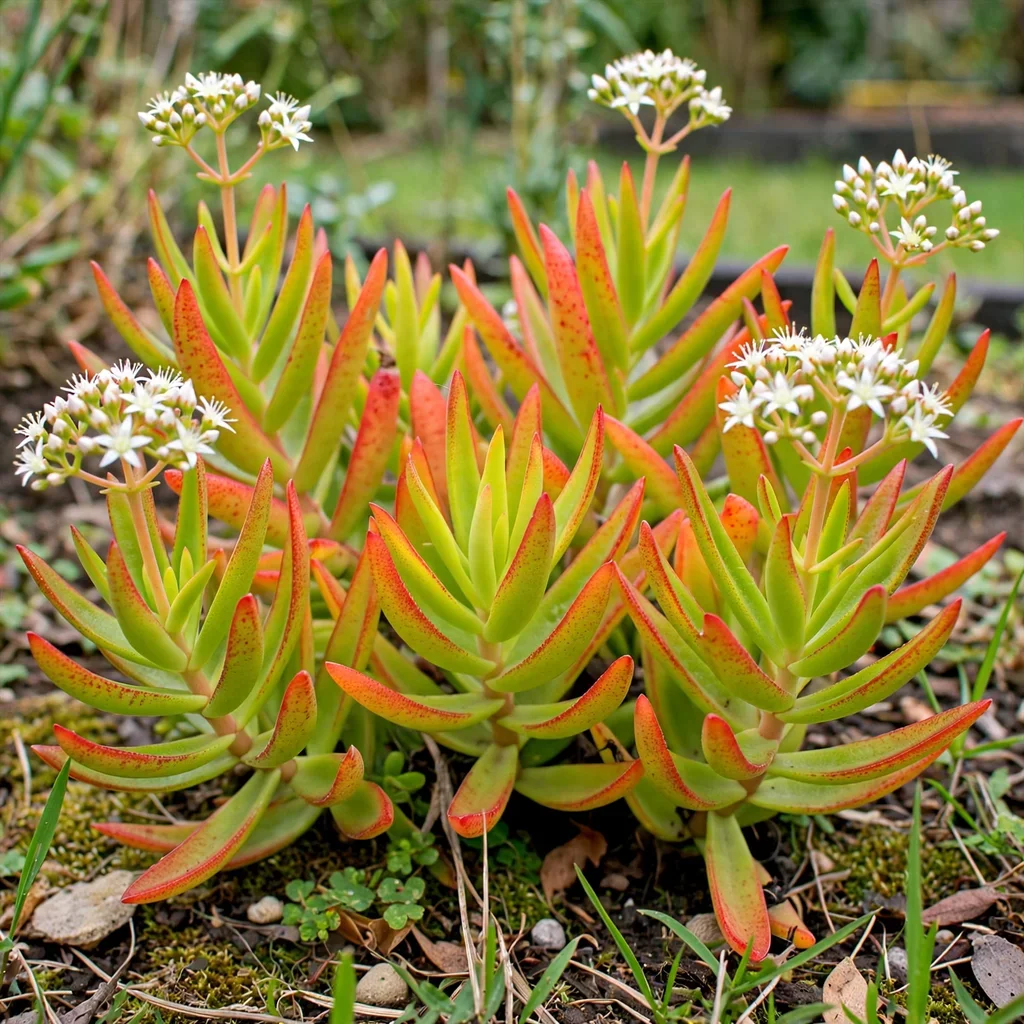
Campfire Crassula
Crassula erosula 'Campfire'
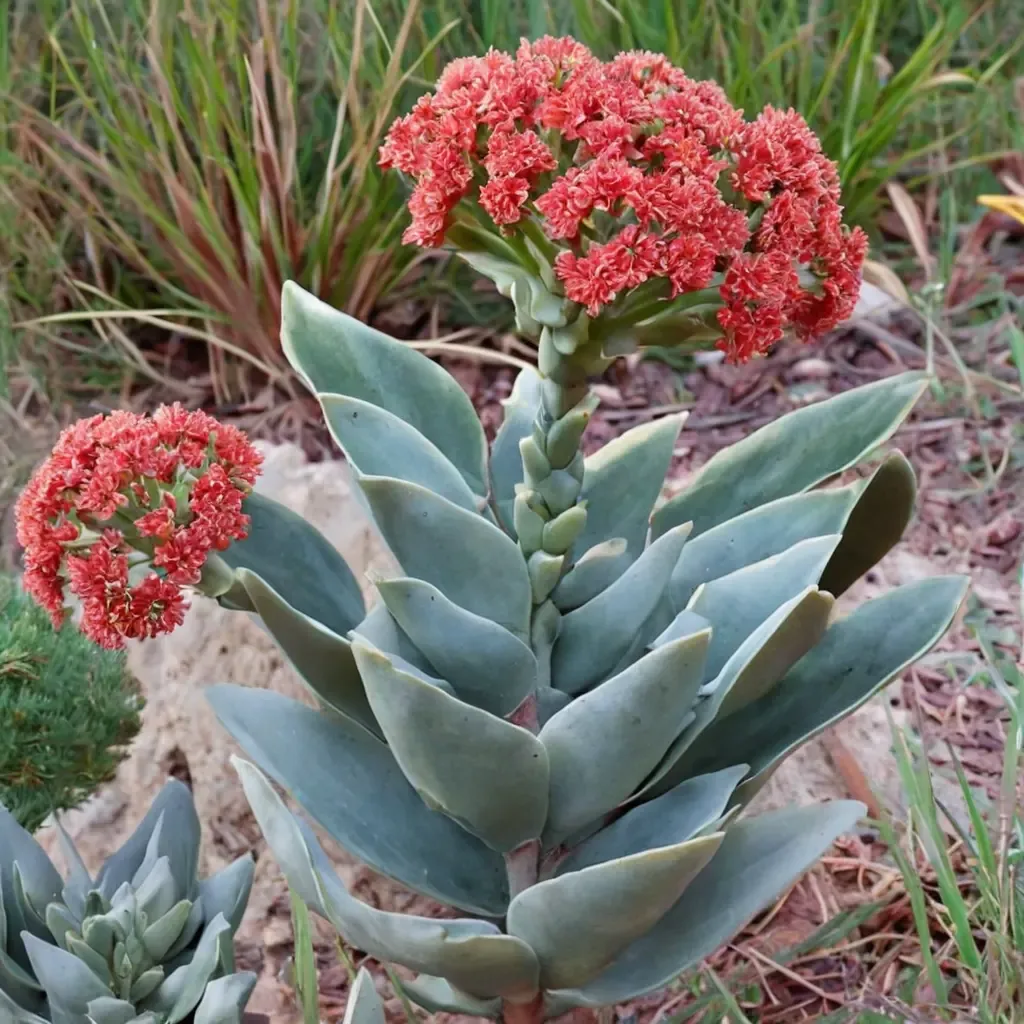
Propeller Plant
Crassula falcata
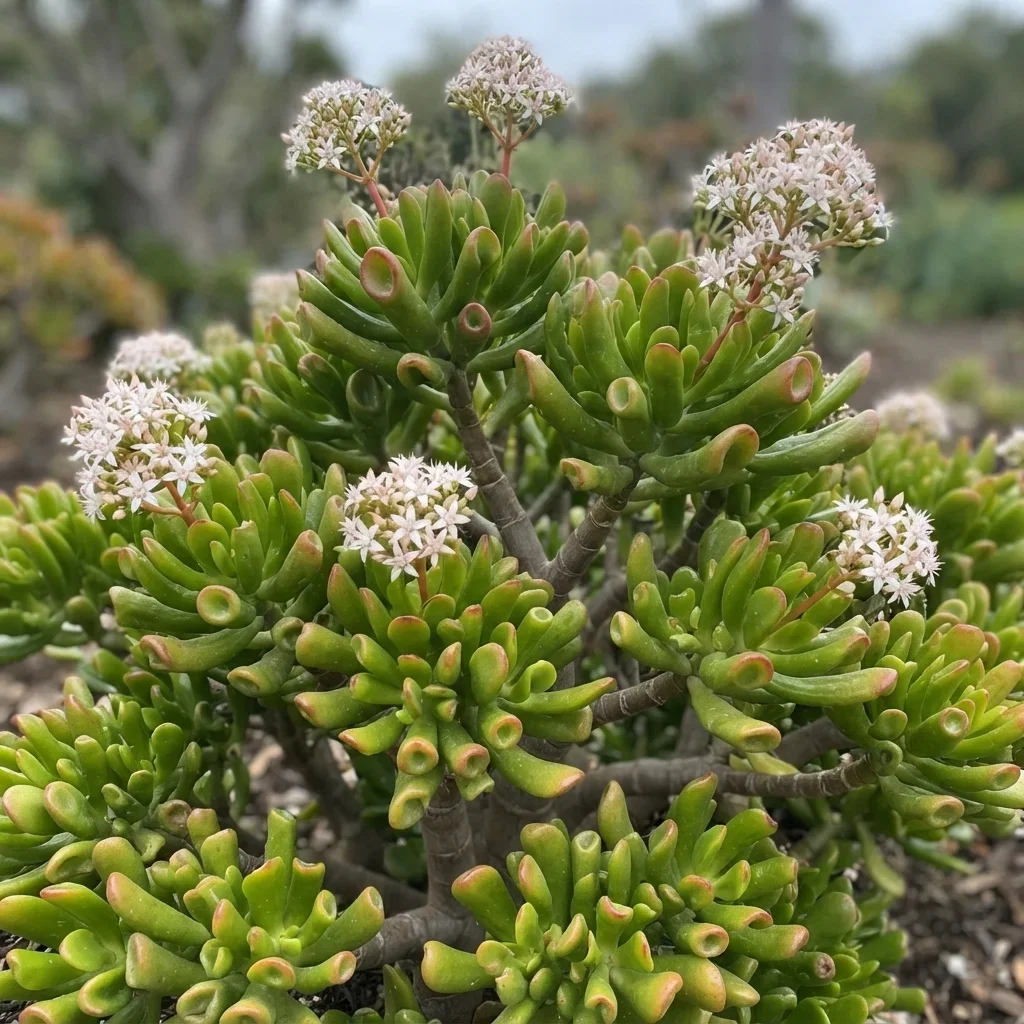
Hobbit Jade Plant
Crassula ovata 'Hobbit'
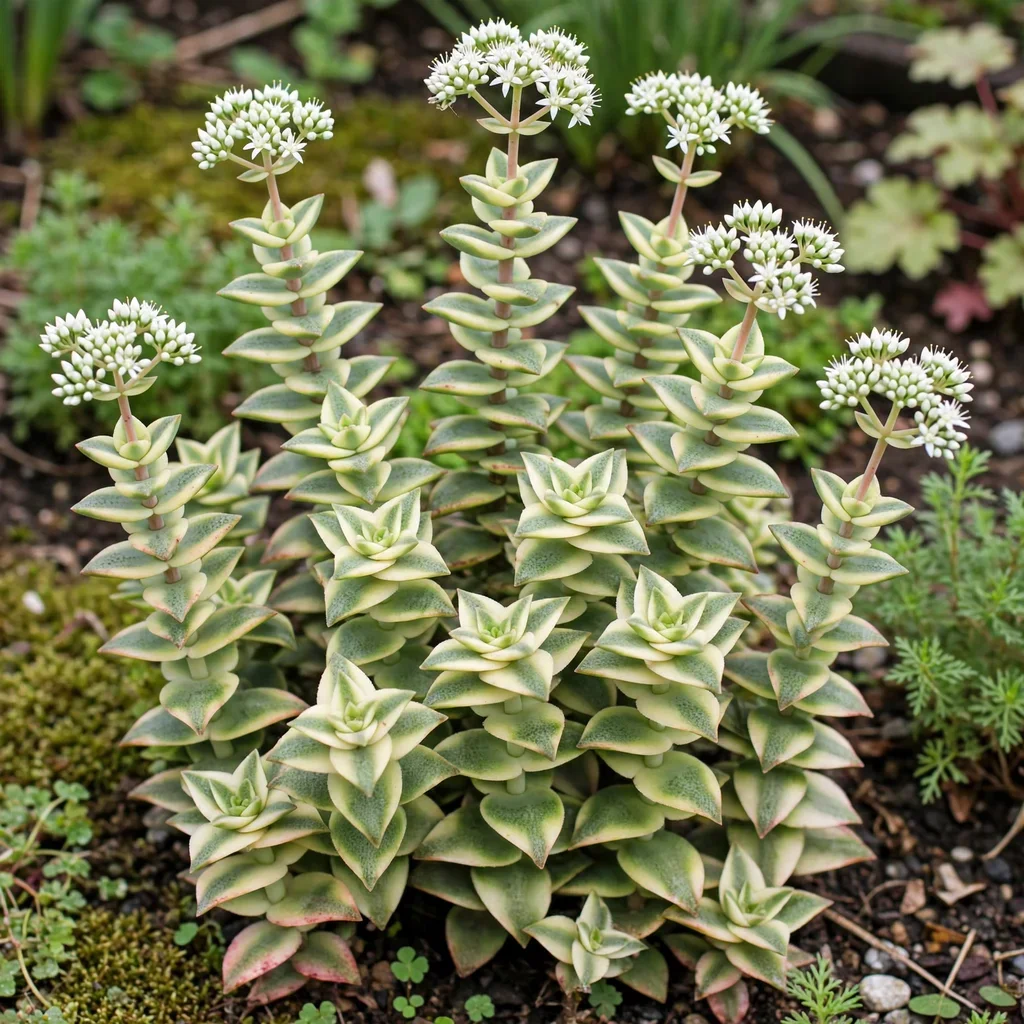
Variegated Red Pagoda
Crassula capitella 'Variegata'
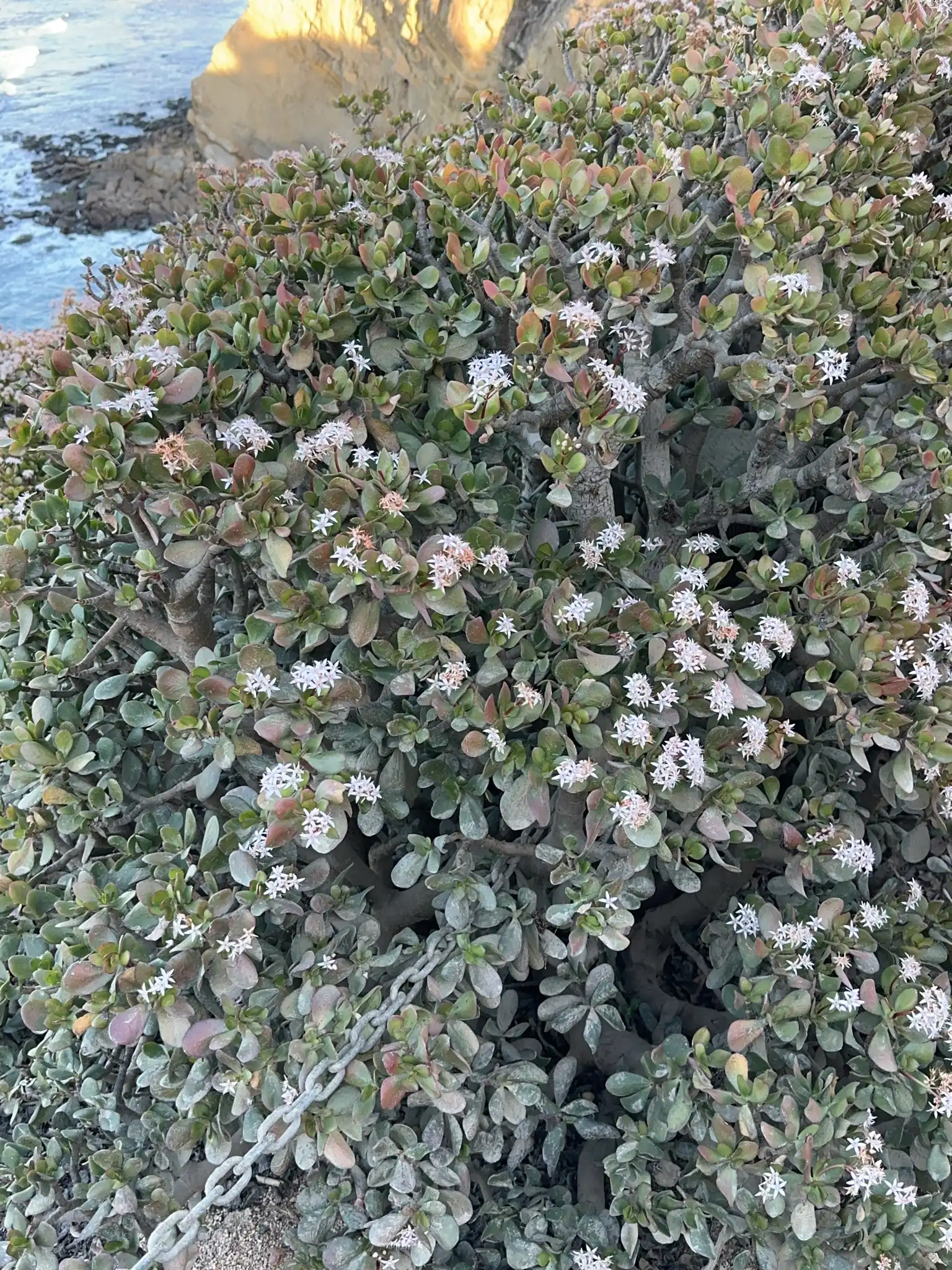
Jade Plant
Crassula ovata
Keep exploring
Explore the genus
Hardy in your zone?
Grow Watch Chain with confidence
See it in a design of your actual yard, get zone-matched care reminders, and track it season by season in your garden journal.