The Story
Plant Bio
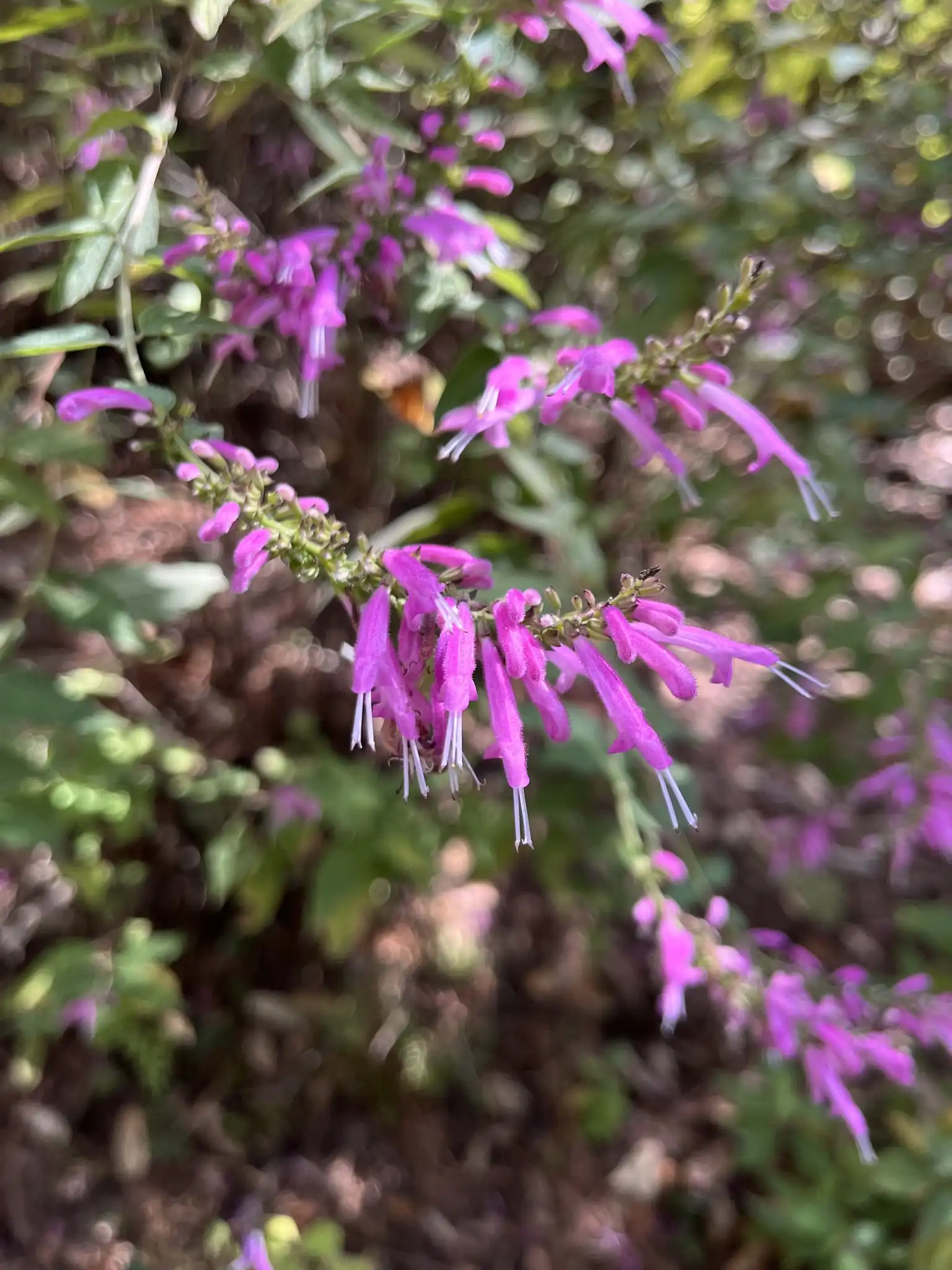
Salvia iodantha is a tall upright shrubby perennial from the mountains of central Mexico, reaching 6 to 10 feet tall and 4 to 6 feet wide with many brittle hollow square stems from the base. The thin broad lanceolate leaves are mid-dark green with indented veins and soft crenations, and the bright cerise-magenta tubular flowers are carried in crowded whorls of six to eight.
Unlike low mounding sages it is scandent and requires support or close planting with trees and shrubs to keep its long stems upright and sheltered from wind. The velvety magenta-purple flowers open staggered along 6-inch trusses from fall through winter with peak bloom in December and January, feeding fall hummingbirds until sustained cold below 25 degrees stops flowering.
Uses & Benefits:
Essentials
At a Glance
Plant Type
Perennial
Height
120"
Width
72"
Light
Full Sun, Partial Sun
Zones
8, 9, 10
Water
Moderate
Humidity
Unknown
Lifespan
Perennial
Native To
Mexico
Toxicity
Unknown
Bloom period
Fall – Winter
In flower about 6 months of the year
Planting
How to Grow
- Plant in full sun with at least 6 hours daily in rich loamy well-drained soil.
- Space 4 to 6 feet to allow clump development and set a trellis or plant beside shrubs for support.
- Water deeply weekly and mulch to keep roots cool.
- Cut large old stems back by half in spring after flowering; do not cut to the ground yearly.
- Shelter from strong wind and hard frost; roots survive to 20 degrees but bloom stops below 40 degrees and tops are damaged by sustained cold below 25 degrees.
Pro Tip
Cut large old stems back by half in spring after flowering and keep the plant staked and sheltered; cutting it to the ground each year or leaving it exposed to wind removes the wood it blooms on.
Keep It Thriving
Care Guide
Do
- Provide support or plant with trees and shrubs for wind protection
- Water deeply weekly and mulch to keep roots cool
- Feed and mulch well after spring pruning
Don't
- Do not cut all stems hard to the ground every year
- Do not plant in exposed windy frost pockets
- Do not expect bloom when nights stay below 40 degrees
Seasonal Care Calendar
| Task | Jan | Feb | Mar | Apr | May | Jun | Jul | Aug | Sep | Oct | Nov | Dec |
|---|---|---|---|---|---|---|---|---|---|---|---|---|
| Fertilize | ||||||||||||
| Mulch | ||||||||||||
| Pest Check | ||||||||||||
| Prune | ||||||||||||
| Stake |
Watch Out For
Pests & Diseases
Common Pests
In the Garden
Landscape Uses & Companions
Landscape Uses
Multiply
Propagation Methods
Good to Know
Common Questions
Mexican Fuchsia Sage questions
What zones can Mexican Fuchsia Sage grow in?
Mexican Fuchsia Sage is hardy in USDA Zones 8–10: in that range it survives winter in the ground. Colder than Zone 8, grow it in a container you can move to shelter for the winter, or as an annual.
Is Mexican Fuchsia Sage deer resistant?
Yes — Mexican Fuchsia Sage is rated deer-resistant. Deer typically pass it over, though extreme hunger can override any plant's defenses.
When does Mexican Fuchsia Sage bloom?
Mexican Fuchsia Sage typically blooms from fall to winter. Exact timing shifts a week or two with your zone — Sow's bloom calendar maps it to your garden.
Does Mexican Fuchsia Sage need full sun?
Mexican Fuchsia Sage does best in full sun to part shade. In hot climates, afternoon shade keeps blooms fresher longer.
More Salvia to compare
May Night Sage
Salvia nemorosa 'May Night'
Celestial Blue Sage Wood Sage
Salvia nemorosa 'Celestial Blue'
Marcus Woodland Sage
Salvia nemorosa 'Marcus'
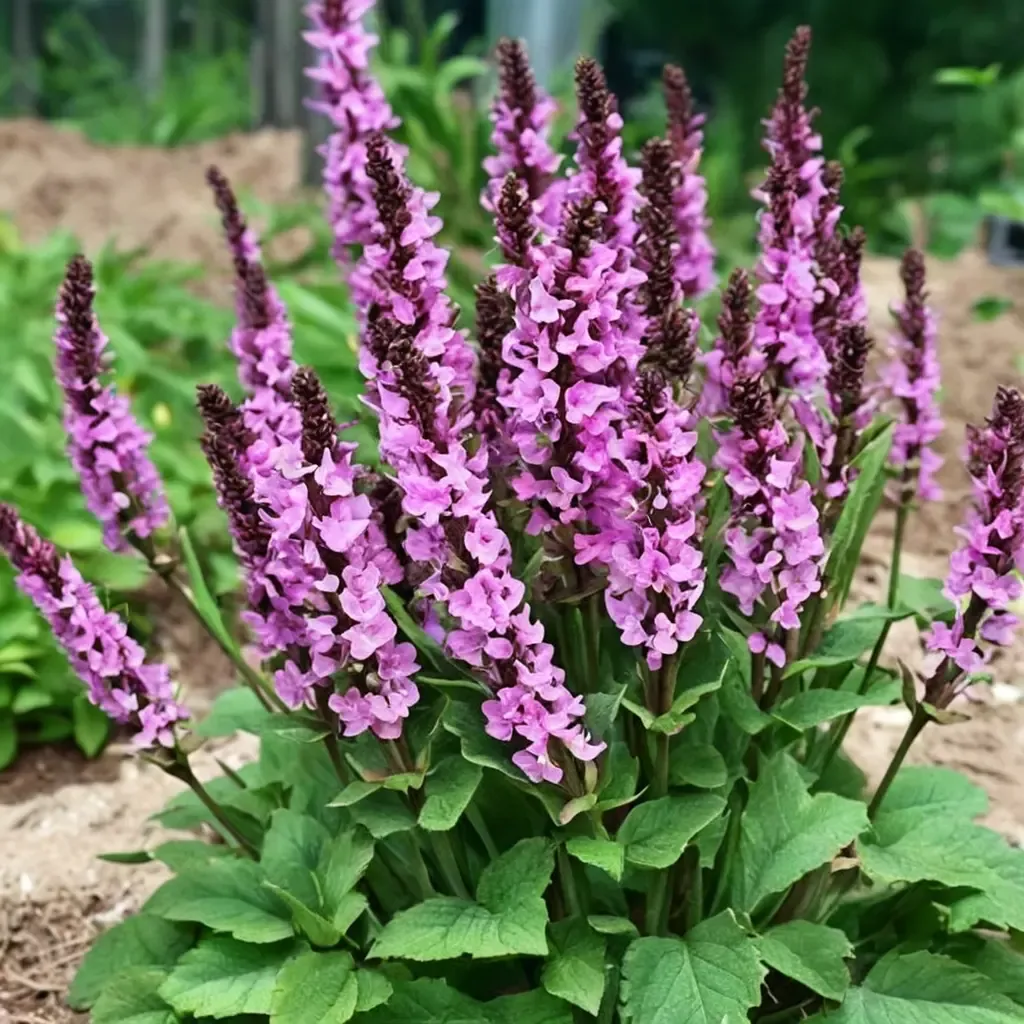
Rose Marvel Sage
Salvia nemorosa 'Rose Marvel'
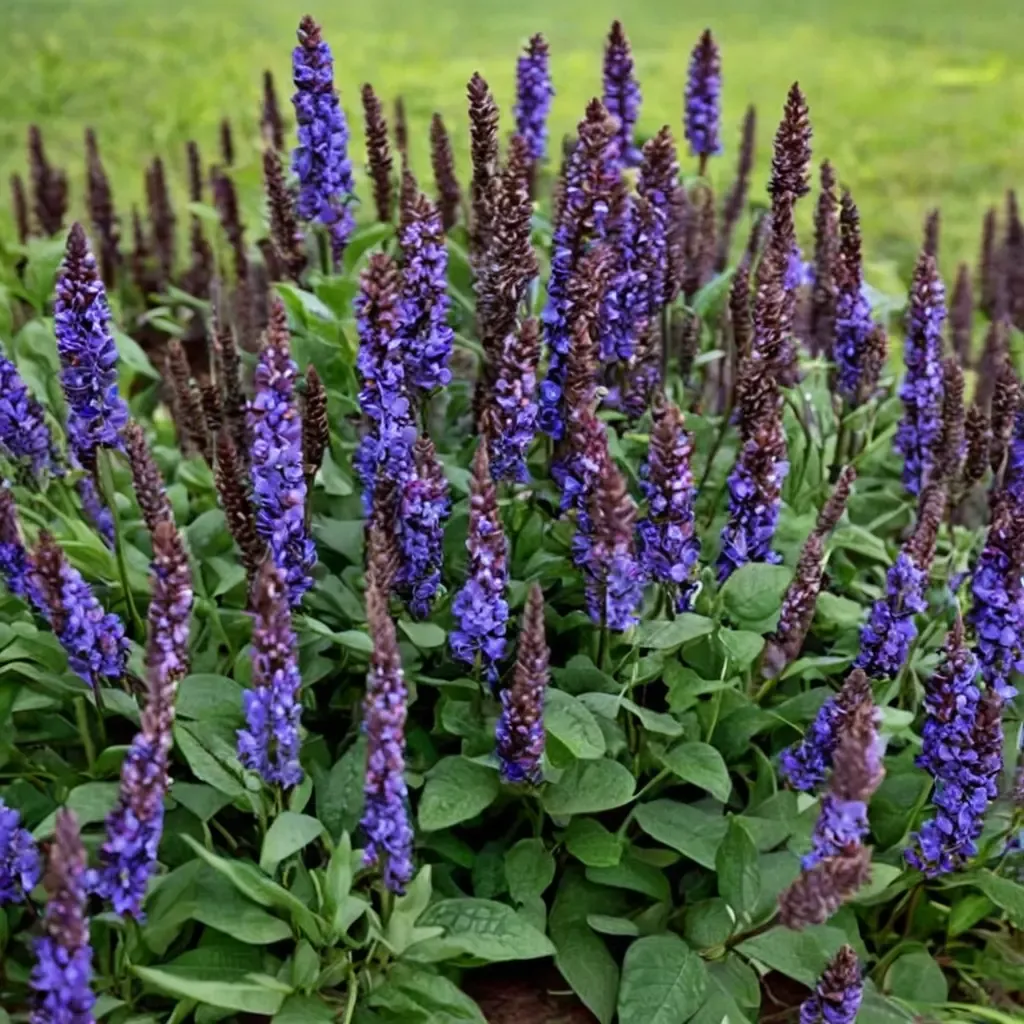
Bumbleblue Sage
Salvia nemorosa 'Bumbleblue'
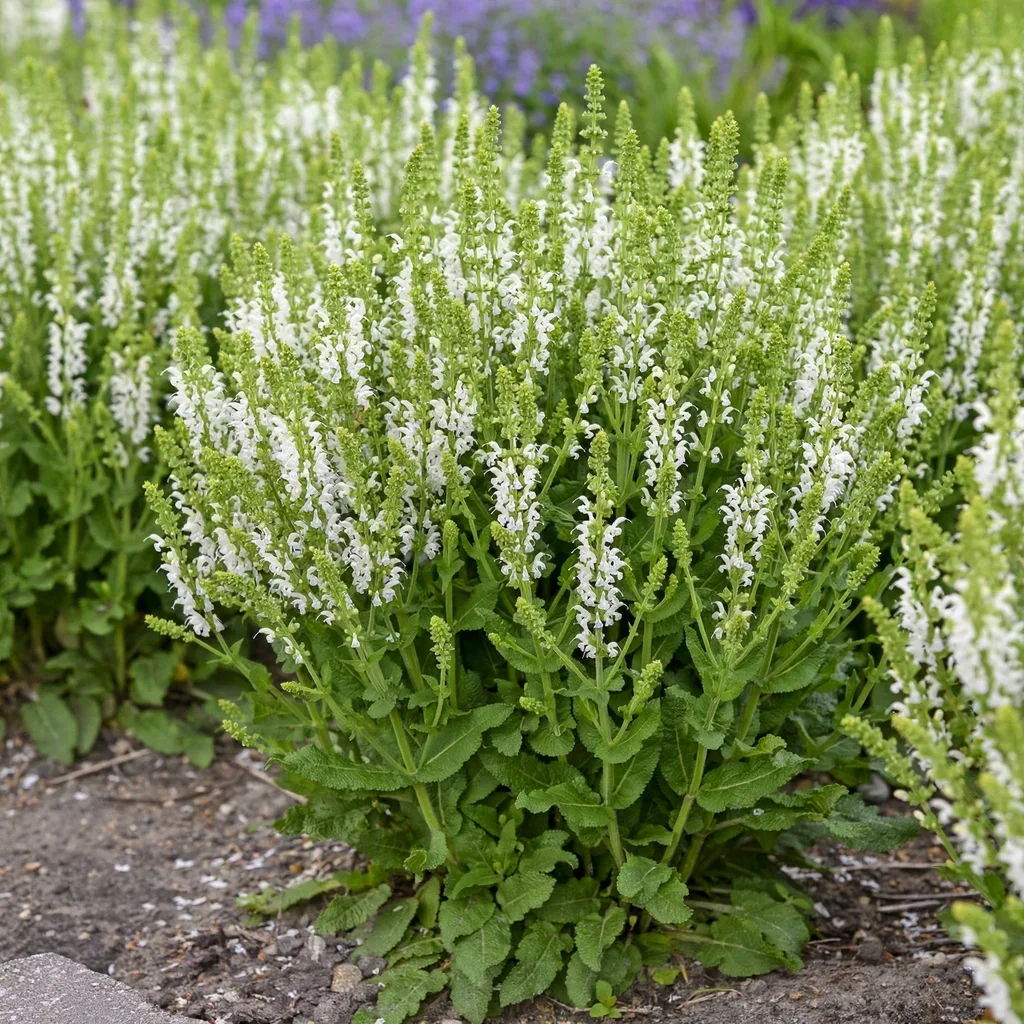
White Profusion Salvia
Salvia x hybrida 'White Profusion'
Keep exploring
Explore the genus
Hardy in your zone?
Grow Mexican Fuchsia Sage with confidence
See it in a design of your actual yard, get zone-matched care reminders, and track it season by season in your garden journal.