The Story
Plant Bio
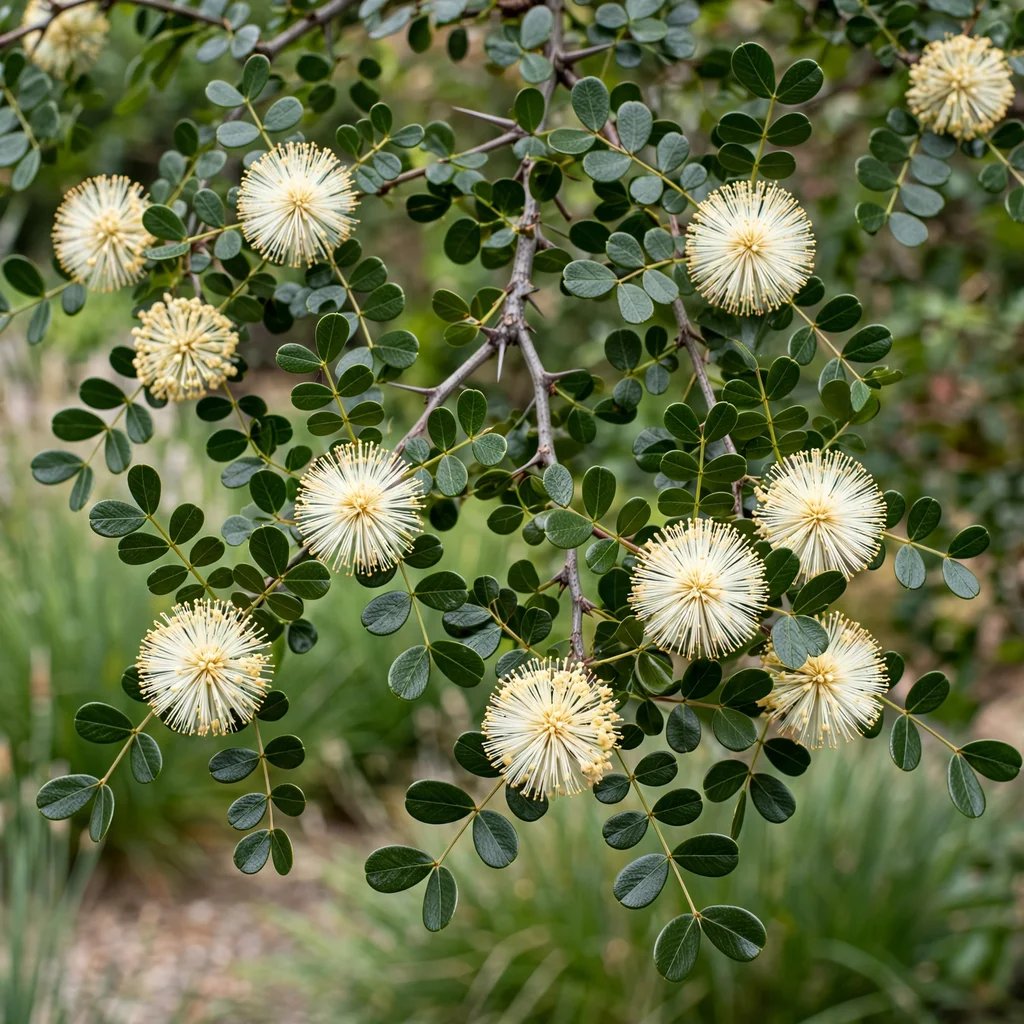
Ebenopsis ebano is a slow-growing evergreen thorn tree from south Texas and eastern Mexico, forming a multi-trunked tree 15 to 30 feet tall with stout zig-zag branches and a dense low crown. The leaves are twice-pinnate and glossy dark green with tiny leaflets in two pairs per pinna, and the summer flowers are dense 1.5-inch cylindrical spikes of cream stamens with a heavy sweet scent.
Sold as Pithecellobium flexicaule, this is the Texas ebony now placed in Ebenopsis, distinguished by cruel sharp spines on young zig-zag growth and thick dark pods with sweet but poisonous seeds. It holds its dark crown to the ground unless raised, tolerates heat and drought on rocky well-drained sand, and is injured by overwatering and hard cutting into old bare wood more than by neglect.
Uses & Benefits:
Essentials
At a Glance
Plant Type
Tree
Height
360"
Width
240"
Light
Full Sun, Partial Sun
Zones
8, 9, 10
Water
Low
Humidity
Low
Lifespan
Long-lived
Native To
South Texas to eastern Mexico
Toxicity
Toxic seeds and foliage
Bloom period
Early summer – Late summer
In flower about 3 months of the year
Planting
How to Grow
- Plant in spring in full sun in rocky or sandy well-drained soil with the root flare at grade.
- Water deeply at planting, then taper to infrequent deep soakings once established.
- Stake a young single-trunk form for one season and select scaffold limbs early.
- Mulch 2 to 3 inches clear of the trunk and keep irrigation and lawn water off the crown.
Pro Tip
Train the scaffold young and raise the crown a little each spring; cutting hard back into old bare wood sunburns the bark and stalls regrowth.
Keep It Thriving
Care Guide
Do
- Site away from foot traffic, pools, and play areas for thorns and pod litter
- Wear heavy gloves and eye protection when pruning thorny branches
- Water sparingly and allow soil to dry between soakings
Don't
- Do not over-irrigate or plant in wet clay that stays soggy
- Do not top or overprune and expose bark to full sun
- Do not let livestock or pets chew foliage or seeds
Seasonal Care Calendar
| Task | Jan | Feb | Mar | Apr | May | Jun | Jul | Aug | Sep | Oct | Nov | Dec |
|---|---|---|---|---|---|---|---|---|---|---|---|---|
| Mulch | ||||||||||||
| Pest Check | ||||||||||||
| Plant | ||||||||||||
| Propagate | ||||||||||||
| Prune |
Watch Out For
Pests & Diseases
Common Pests
Common Diseases
In the Garden
Landscape Uses & Companions
Landscape Uses
Multiply
Propagation Methods
Good to Know
Common Questions
Texas Ebony questions
What zones can Texas Ebony grow in?
Texas Ebony is hardy in USDA Zones 8–10: in that range it survives winter in the ground. Colder than Zone 8, winters are too cold for it to survive outdoors.
Is Texas Ebony deer resistant?
Not reliably. Deer may browse Texas Ebony, especially tender spring growth — plan on repellents or fencing where pressure is high.
When does Texas Ebony bloom?
Texas Ebony typically blooms in summer. Exact timing shifts a week or two with your zone — Sow's bloom calendar maps it to your garden.
Does Texas Ebony need full sun?
Texas Ebony does best in full sun to part shade. In hot climates, afternoon shade keeps blooms fresher longer.
Is Texas Ebony drought tolerant?
Yes — once established (usually after the first full season), Texas Ebony handles dry spells with minimal watering. Water deeply its first year to build the root system that makes that possible.
More Pithecellobium to compare
Keep exploring
Explore the genus
Hardy in your zone?
Grow Texas Ebony with confidence
See it in a design of your actual yard, get zone-matched care reminders, and track it season by season in your garden journal.