The Story
Plant Bio
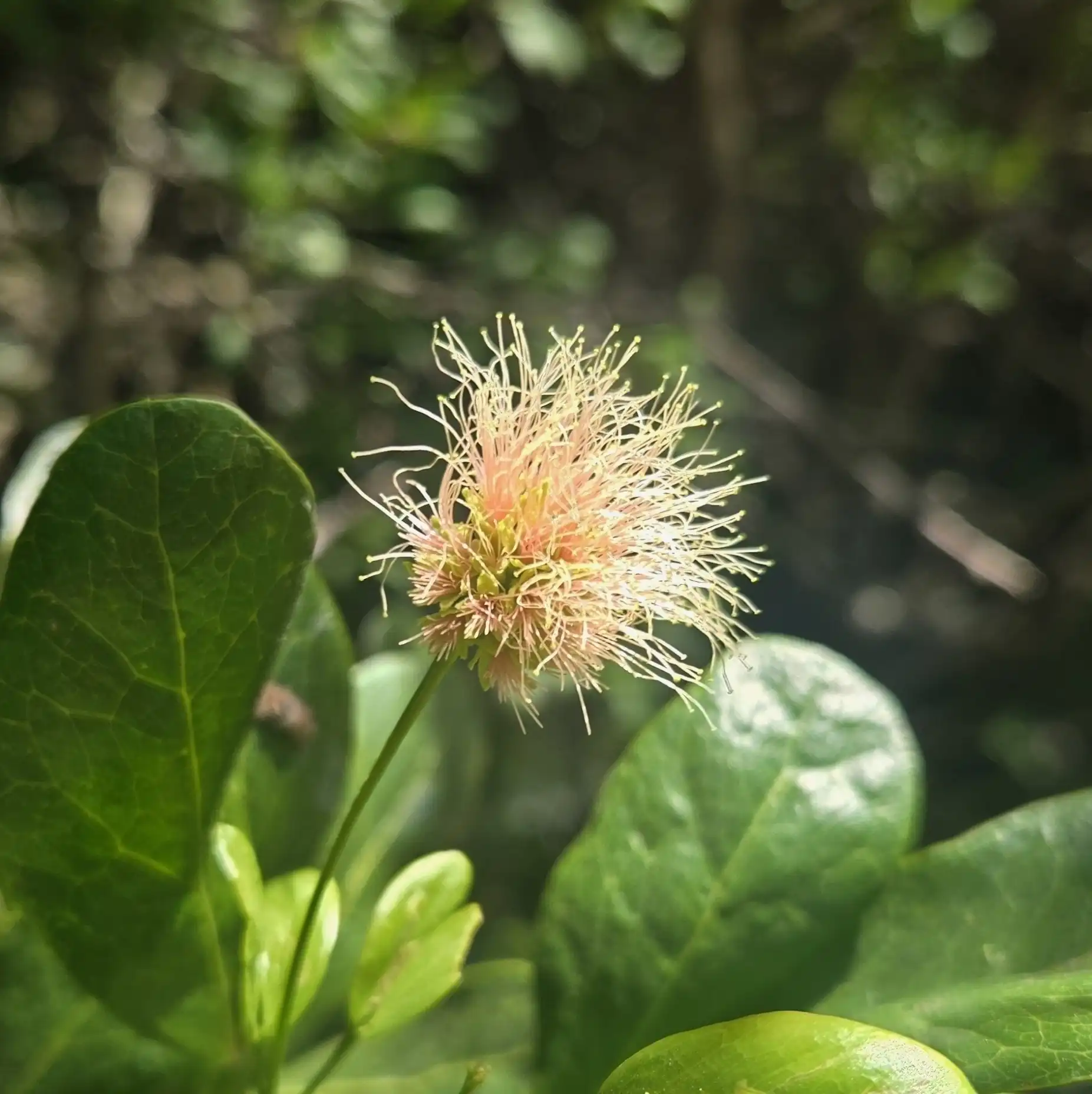
Pithecellobium keyense is an evergreen large shrub or small tree to 8 to 15 feet, often wider than tall, with short trunks, many spreading branches and gray bark that cracks shallowly with age. Leaves are alternate and twice-compound with paired leaflets about 2 inches long that hold year-round where winters stay frost-free.
Flowers open white and age to deep pink in fragrant globose powderpuff heads from winter into spring, followed by coiled brown pods that split to expose black seeds in a red aril. It roots in moist but sharply drained sand or limestone with a humus top and tolerates salt wind, brief storm-surge overwash and extended drought once established.
Uses & Benefits:
Essentials
At a Glance
Plant Type
Shrub
Height
180"
Width
216"
Light
Full Sun
Zones
9, 10
Water
Low once established
Humidity
Tolerant of salt wind and coastal humidity
Lifespan
Long-lived
Native To
South Florida and tropical America
Toxicity
Unknown
Bloom period
Winter – Spring
In flower about 6 months of the year
Planting
How to Grow
- Choose full sun in moist, well-drained sand or limestone with a humus top layer.
- Dig a hole no deeper than the container and twice as wide, then set the crown at grade.
- Backfill with native soil, firm gently, and water deeply to settle.
- Mulch thinly with leaf litter, keeping mulch back from the trunks.
- Water regularly through the first dry season, then taper to no supplemental water once rooted.
Pro Tip
Shape after spring bloom and keep the crown above standing water; plants take brief salt overwash but decline where roots sit long-flooded.
Keep It Thriving
Care Guide
Do
- Plant in full sun with sharp drainage and high-pH sand or limestone.
- Water deeply during establishment until new shoots extend.
- Buy only nursery-propagated stock from a reputable South Florida native nursery.
Don't
- Do not plant in low ground that stays flooded after rain.
- Do not collect seed or plants from the wild.
- Do not cut back into old leafless wood to reduce size.
Seasonal Care Calendar
| Task | Jan | Feb | Mar | Apr | May | Jun | Jul | Aug | Sep | Oct | Nov | Dec |
|---|---|---|---|---|---|---|---|---|---|---|---|---|
| Mulch | ||||||||||||
| Pest Check | ||||||||||||
| Plant | ||||||||||||
| Propagate | ||||||||||||
| Prune |
Watch Out For
Pests & Diseases
Common Pests
Common Diseases
In the Garden
Landscape Uses & Companions
Landscape Uses
Multiply
Propagation Methods
Good to Know
Common Questions
Florida Keys Blackbead questions
What zones can Florida Keys Blackbead grow in?
Florida Keys Blackbead is hardy in USDA Zones 9–10: in that range it survives winter in the ground. Colder than Zone 9, grow it in a container you can move to shelter for the winter.
When does Florida Keys Blackbead bloom?
Florida Keys Blackbead typically blooms from winter to spring. Exact timing shifts a week or two with your zone — Sow's bloom calendar maps it to your garden.
Does Florida Keys Blackbead need full sun?
Florida Keys Blackbead does best in full sun (6+ hours).
Is Florida Keys Blackbead drought tolerant?
Yes — once established (usually after the first full season), Florida Keys Blackbead handles dry spells with minimal watering. Water deeply its first year to build the root system that makes that possible.
More Pithecellobium to compare
Keep exploring
Explore the genus
Hardy in your zone?
Grow Florida Keys Blackbead with confidence
See it in a design of your actual yard, get zone-matched care reminders, and track it season by season in your garden journal.