The Story
Plant Bio
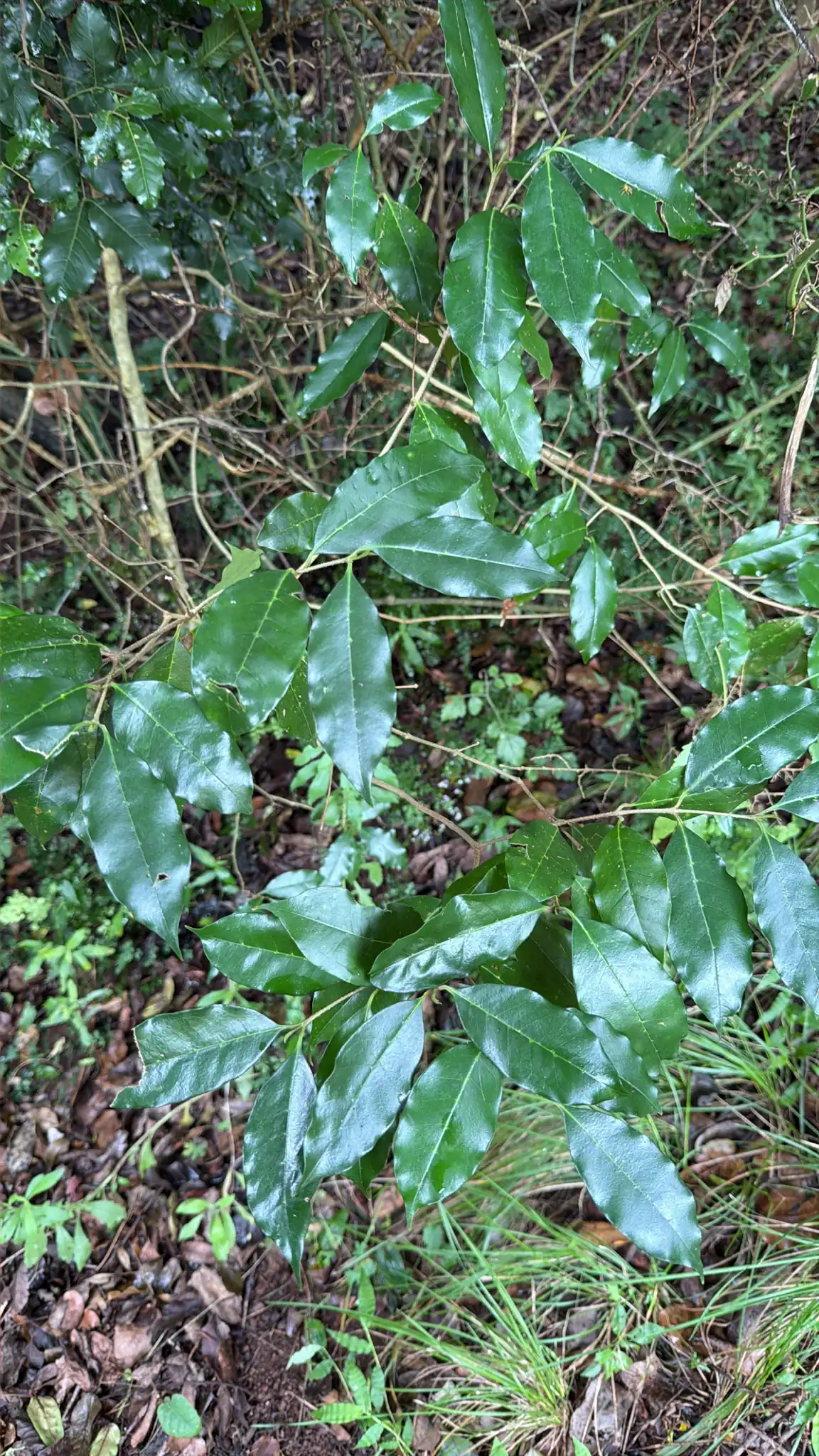
Olea paniculata is an evergreen rainforest tree growing up to 100 feet tall in native habitats, featuring a bushy canopy and smooth grey-brown bark marked by visible lenticels. Small, creamy-white flowers bloom in branched terminal panicles from spring to summer, followed by bluish-black ovoid drupes that mature through fall.
Unlike the common olive, this species bears leaves with tiny hollow pits, known as domatia, tucked along the midvein on their paler undersides. The thin-fleshed fruits are bitter and unpalatable to humans but serve as a valuable natural food source for frugivorous birds.
Uses & Benefits:
Essentials
At a Glance
Plant Type
Tree
Height
1181"
Width
591"
Light
Full Sun, Partial Sun
Zones
9, 10
Water
Moderate
Humidity
High
Lifespan
Perennial
Native To
Asia and Oceania
Toxicity
Non-toxic
Bloom period
Spring – Summer
In flower about 6 months of the year
Planting
How to Grow
- Select a planting location in full sun to partial shade with well-drained soil.
- Dig a planting hole twice as wide as the root ball and equal in depth.
- Position the plant so the root collar sits level with the surrounding soil line.
- Water thoroughly after planting and apply a light mulch layer around the base, keeping it clear of the stem.
Pro Tip
Prune lightly right after flowering to shape the canopy; avoid cutting back into old leafless wood as mature stems will not re-sprout.
Keep It Thriving
Care Guide
Do
- Water regularly during initial establishment until deep roots develop.
- Tip-prune after flowering to encourage bushier canopy development.
- Apply a light layer of organic mulch around the root zone to retain soil moisture.
Don't
- Do not prune hard into bare, leafless wood.
- Do not allow containerized specimens to stand in waterlogged potting mix.
- Do not plant outdoors where temperatures regularly fall below freezing.
Seasonal Care Calendar
| Task | Jan | Feb | Mar | Apr | May | Jun | Jul | Aug | Sep | Oct | Nov | Dec |
|---|---|---|---|---|---|---|---|---|---|---|---|---|
| Fertilize | ||||||||||||
| Pest Check | ||||||||||||
| Propagate | ||||||||||||
| Prune |
Watch Out For
Pests & Diseases
Common Pests
Common Diseases
In the Garden
Landscape Uses & Companions
Landscape Uses
Multiply
Propagation Methods
Good to Know
Common Questions
Australian Olive questions
What zones can Australian Olive grow in?
Australian Olive is hardy in USDA Zones 9–10: in that range it survives winter in the ground. Colder than Zone 9, winters are too cold for it to survive outdoors.
When does Australian Olive bloom?
Australian Olive typically blooms from spring to summer. Exact timing shifts a week or two with your zone — Sow's bloom calendar maps it to your garden.
Does Australian Olive need full sun?
Australian Olive does best in full sun to part shade. In hot climates, afternoon shade keeps blooms fresher longer.
Is Australian Olive drought tolerant?
Yes — once established (usually after the first full season), Australian Olive handles dry spells with minimal watering. Water deeply its first year to build the root system that makes that possible.
More Olea to compare
Keep exploring
Explore the genus
Hardy in your zone?
Grow Australian Olive with confidence
See it in a design of your actual yard, get zone-matched care reminders, and track it season by season in your garden journal.