The Story
Plant Bio
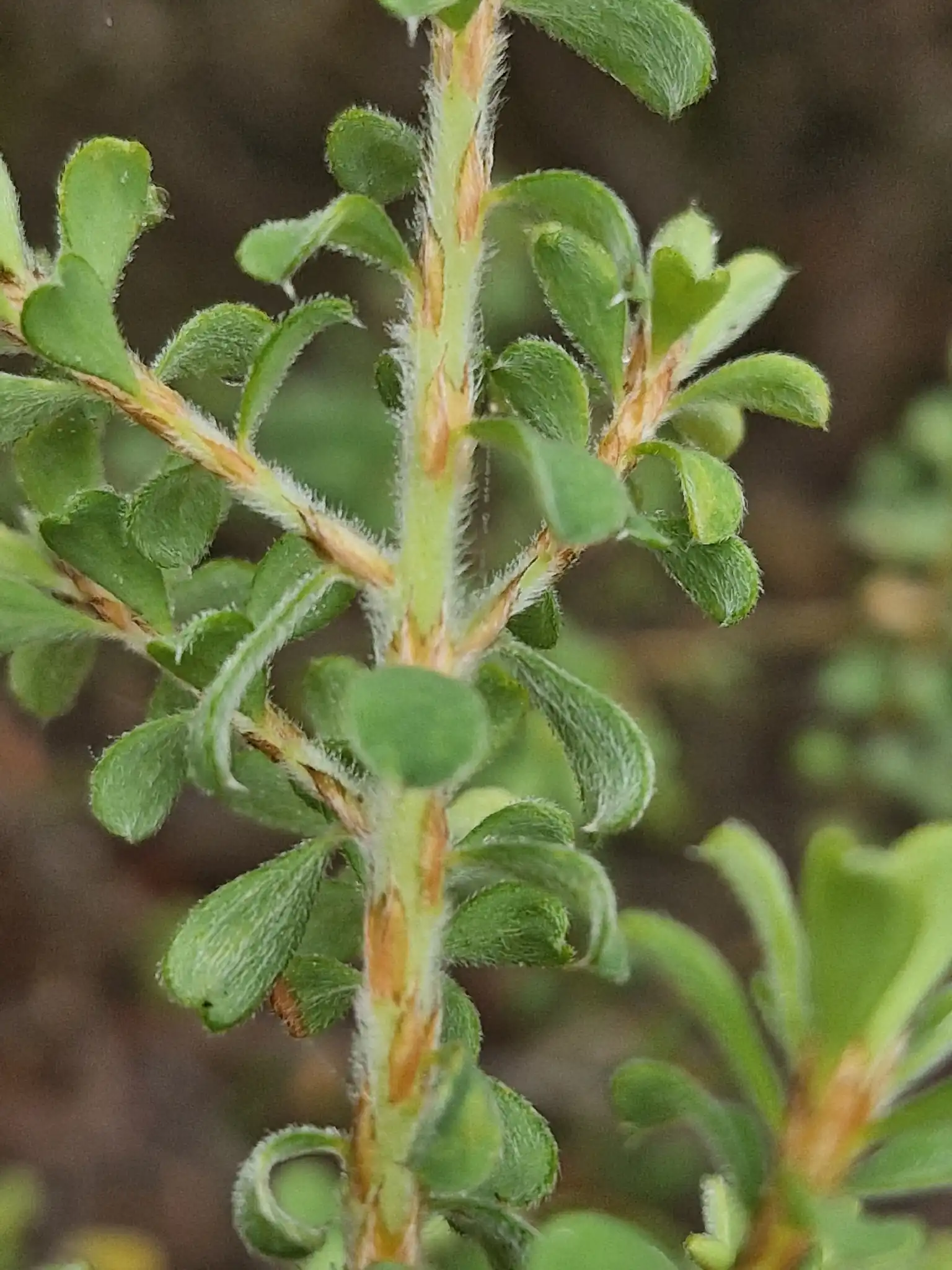
Pultenaea villosa, known as the hairy bush-pea, is an evergreen spreading shrub native to eastern Australia with weeping branchlets covered in dense, short hairs. From spring into summer, it produces small, bright yellow pea-shaped flowers marked with red or brown standard petals along terminal shoots.
The tiny obovate leaves carry a greyish or bronze-green bloom due to their stiff hair coating, contrasting with gracefully cascading branch tips. Its weeping, fountain-like habit makes it ideal for spilling over low retaining walls or growing in container displays.
Uses & Benefits:
Essentials
At a Glance
Plant Type
Shrub
Height
72"
Width
96"
Light
Full Sun, Partial Sun
Zones
9, 10
Water
Low to Moderate
Humidity
Moderate
Lifespan
Perennial
Native To
Australia
Toxicity
Non-toxic
Bloom period
Spring – Summer
In flower about 6 months of the year
Planting
How to Grow
- Select a planting site in full sun or light afternoon shade with moist, sandy or loamy soil.
- Ensure excellent drainage by mounding soil or amending bed profiles prior to planting.
- Water regularly during initial root establishment, allowing the top layer of soil to dry slightly between irrigations.
- Apply a light mulch layer around the root zone to retain soil moisture while keeping mulch clear of the primary stem.
- Prune tips lightly right after the spring-summer blooming period to prevent legginess.
Pro Tip
Tip-prune immediately after flowering to encourage dense branching; cutting into old leafless wood kills the stem because it lacks dormant buds to reshoot.
Keep It Thriving
Care Guide
Do
- Plant in a location that receives at least half a day of direct sunshine.
- Prune lightly every year after flowering to maintain a compact, bushy form.
- Provide supplementary irrigation during prolonged dry and warm summer spells.
Don't
- Do not prune hard into old bare wood, as the plant cannot reshoot from mature stems.
- Do not plant in heavy, unamended clay soils where standing water causes root rot.
- Do not apply standard high-phosphorus fertilizers.
Seasonal Care Calendar
| Task | Jan | Feb | Mar | Apr | May | Jun | Jul | Aug | Sep | Oct | Nov | Dec |
|---|---|---|---|---|---|---|---|---|---|---|---|---|
| Fertilize | ||||||||||||
| Pest Check | ||||||||||||
| Prune | ||||||||||||
| Winter Prep |
Watch Out For
Pests & Diseases
Common Pests
Common Diseases
In the Garden
Landscape Uses & Companions
Landscape Uses
Companion Plants
Multiply
Propagation Methods
Good to Know
Common Questions
Hairy Bush-pea questions
What zones can Hairy Bush-pea grow in?
Hairy Bush-pea is hardy in USDA Zones 9–10: in that range it survives winter in the ground. Colder than Zone 9, grow it in a container you can move to shelter for the winter.
Is Hairy Bush-pea deer resistant?
Not reliably. Deer may browse Hairy Bush-pea, especially tender spring growth — plan on repellents or fencing where pressure is high.
When does Hairy Bush-pea bloom?
Hairy Bush-pea typically blooms from spring to summer. Exact timing shifts a week or two with your zone — Sow's bloom calendar maps it to your garden.
Does Hairy Bush-pea need full sun?
Hairy Bush-pea does best in full sun to part shade. In hot climates, afternoon shade keeps blooms fresher longer.
Is Hairy Bush-pea drought tolerant?
Yes — once established (usually after the first full season), Hairy Bush-pea handles dry spells with minimal watering. Water deeply its first year to build the root system that makes that possible.
More Pultenaea to compare
Keep exploring
Explore the genus
Hardy in your zone?
Grow Hairy Bush-pea with confidence
See it in a design of your actual yard, get zone-matched care reminders, and track it season by season in your garden journal.