Also known as Bush-pea · 13 saves
Pultenaea
Pultenaea, the genus most gardeners know as bush-pea. We track 4 varieties; the ones most used by real gardeners.
The 4 most-saved Pultenaea varieties
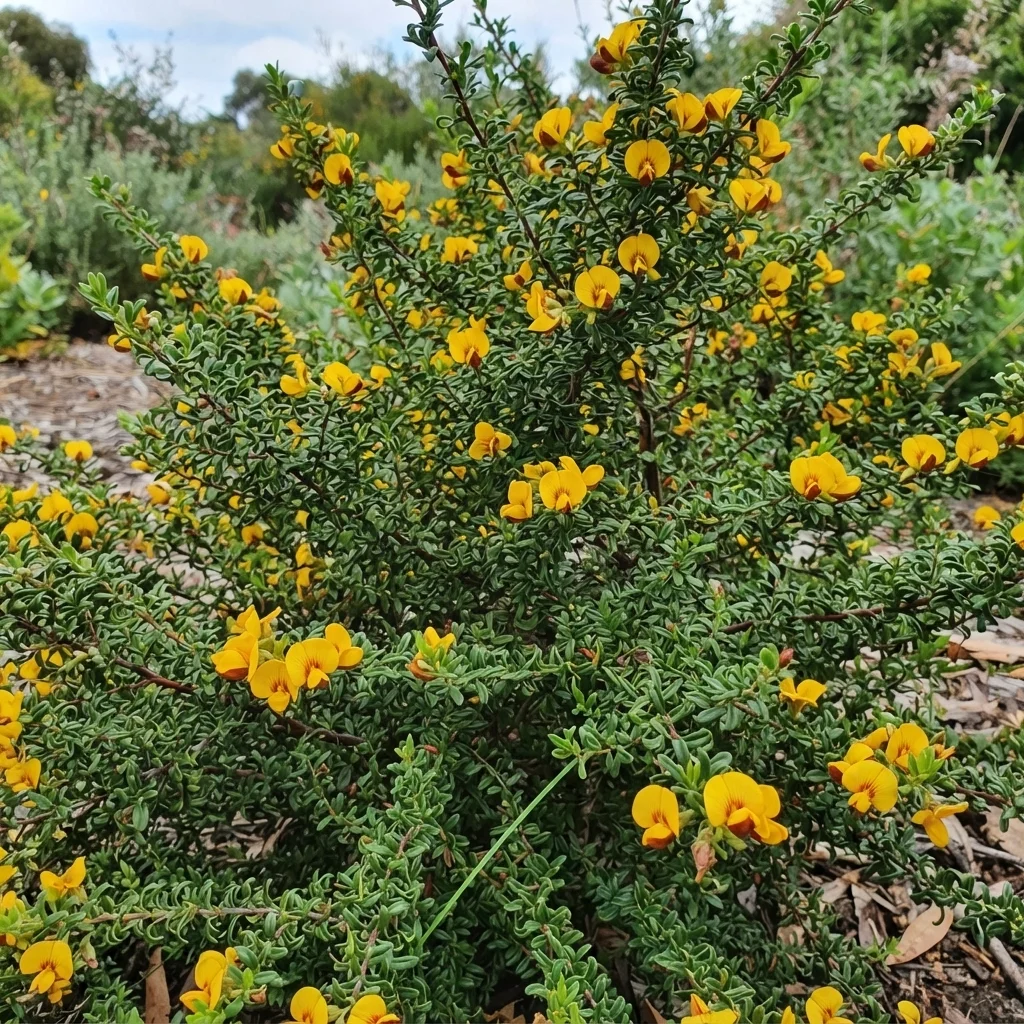
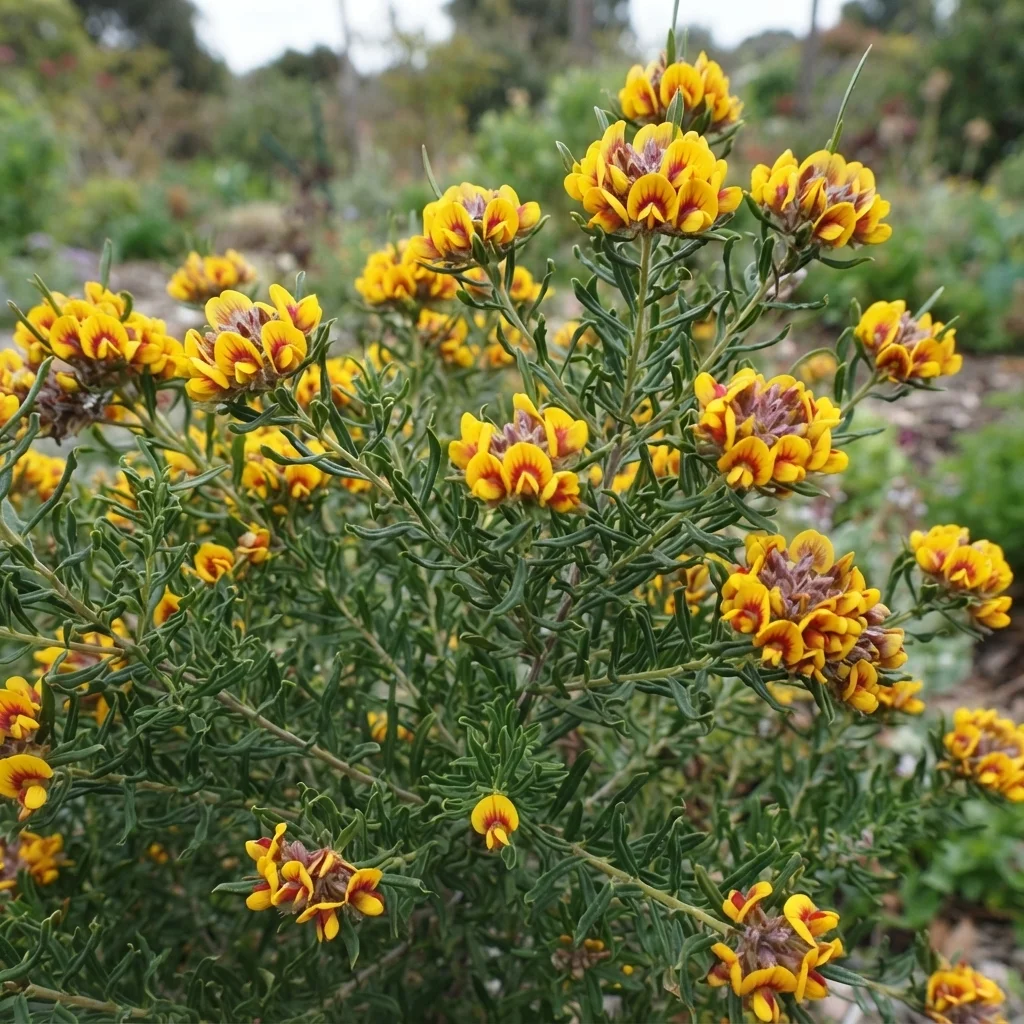
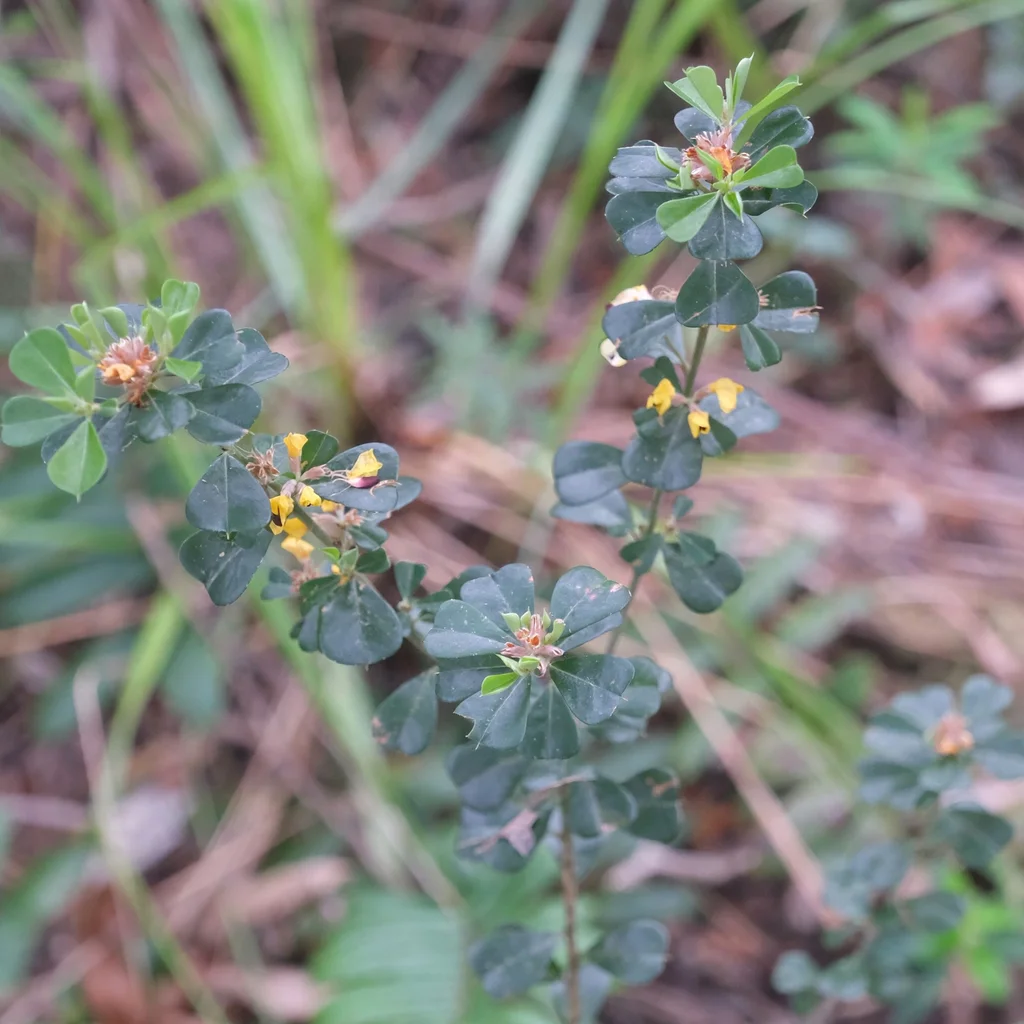
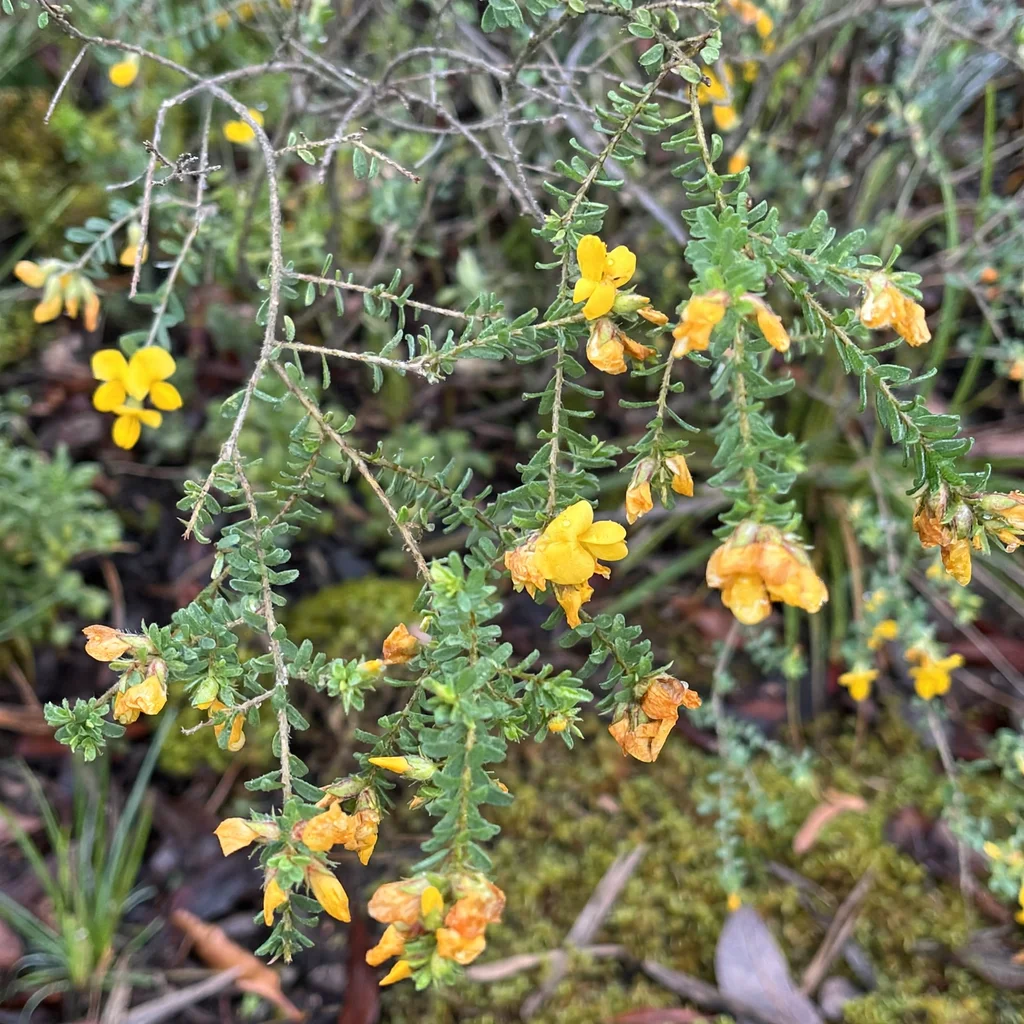
4 species of Pultenaea
Each one is a parent of the varieties above.
Track your Pultenaea in Sow
Save the Pultenaea you grow and get care reminders timed to your zone.
How to grow Pultenaea
Whats common across all Pultenaea varieties in our catalog — drawn from the care records of the 4 most-grown of them.
The Pultenaea year
- PruneMay and June100% of varieties
Prune the branchlets lightly immediately after flowering to encourage dense growth.
- FertilizeMarch and April100% of varieties
Apply a low-phosphorus native plant fertilizer sparingly if growth is sluggish.
- Check for PestsJune and July100% of varieties
Inspect the dense inner foliage for spider mites and scale insects.
- Winter PrepNovember75% of varieties
Provide frost protection or move container-grown specimens to a sheltered area if severe freezes are expected.


Do
- Do plant in highly permeable, sandy, or gravelly soil to prevent root rot.
- Do prune lightly every year immediately after the spring bloom to maintain a dense, bushy shape.
- Do protect young plants from deer and rabbit browsing using physical cages or repellents.
- Keep the soil consistently moist, especially during dry summer spells.
- Use only low-phosphorus fertilizers formulated specifically for Australian native plants.
Avoid
- Don't prune hard into old, woody stems that lack active green foliage.
- Don't apply standard high-phosphorus fertilizers, as many Australian Fabaceae are sensitive to phosphorus.
- Don't plant in heavy clay soils or low-lying areas prone to standing water.
- Do not allow the root zone to dry out completely, as the plant has low drought tolerance.
What goes wrong with Pultenaea
| Problem | What you'll see | What to do |
|---|---|---|
| Aphids | Sucking pests that cluster on tender new growth, causing distorted leaves. | Wash off with a strong spray of water or apply insecticidal soap. |
| Spider mites | Tiny arachnids that cause fine webbing and stippling on the tiny leaves under hot, dry conditions. | Increase humidity around the plant and spray with horticultural oil. |
| Deer browsing | Deer chew back the tender wiry stems, destroying the plant's form. | Protect with wire cages or apply scent-based repellents. |
| Spider Mites | Fine webbing beneath leaves accompanied by speckled, yellowing foliage. | Increase airflow and spray foliage with horticultural oil or insecticidal soap. |
| Root rot | Fungal decay of the root system caused by excess moisture, leading to sudden wilting and death. | Ensure perfect soil drainage and avoid overwatering. |
| Powdery mildew | White fungal coating on foliage in humid, stagnant air. | Improve air circulation and prune surrounding vegetation to increase sunlight. |
| Root Rot | Rapid wilting, leaf yellowing, and decay of underground roots caused by overwatering. | Improve soil drainage immediately and reduce watering frequency. |
Making more Pultenaea
Seed
- Pour hot water over the seeds and let them soak for 12 to 24 hours to break physical dormancy.
- Sow the swollen seeds in a well-drained, acidic seed-raising mix.
- Keep the medium moist and place in a warm, brightly lit position.
- Pot up individual seedlings once they are large enough to handle safely.
Semi-hardwood cuttings
- Take 3-inch semi-hardwood cuttings from firm, current-season growth in late spring or fall.
- Remove the leaves from the lower half of the cutting and dip the base in rooting hormone.
- Insert the cuttings into a moist, free-draining propagation mix of perlite and peat.
- Place under mist or in a humid propagation frame until roots establish.
Pultenaea questions
How many types of Pultenaea are there?
The Sow catalog tracks 4 distinct Pultenaea varieties. The most popular — ranked by 13 real gardeners — are shown first above.
What zones does Pultenaea grow in?
Across its varieties, Pultenaea covers USDA Zones 8–10. Individual varieties differ — each plant page lists its exact range, and Sow filters the catalog to your zone automatically.
When does Pultenaea bloom?
Most Pultenaea varieties bloom from spring to summer.
Which Pultenaea should I choose?
Start from the most-saved varieties above — popularity across thousands of gardens is a strong signal of reliability — then filter by your zone and sun. In the Sow app you can preview any of them in a photo of your actual yard before you buy.