The Story
Plant Bio
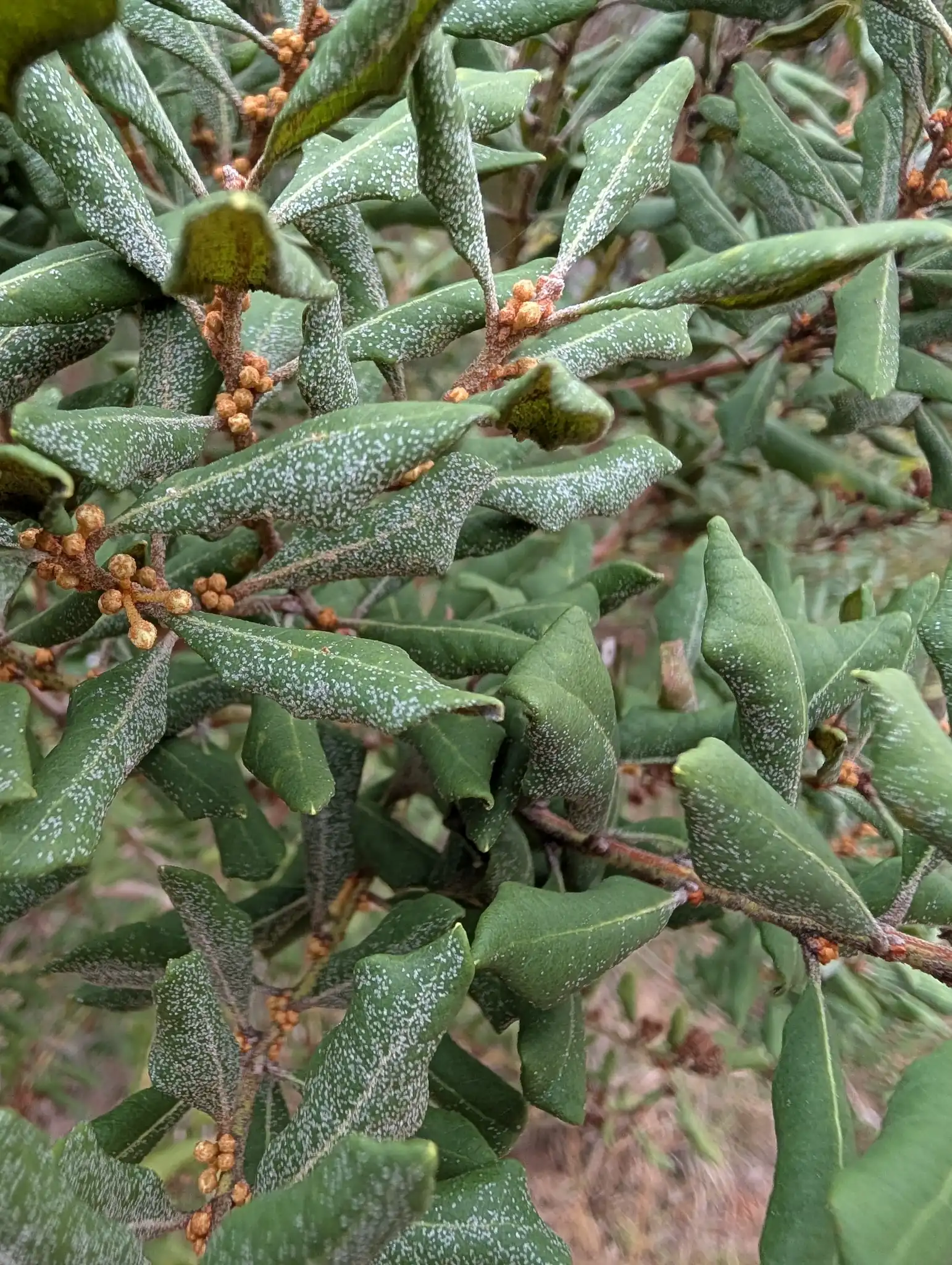
Lyonia ferruginea is an evergreen shrub or small tree with a crooked trunk and open irregular crown, reaching 6 to 12 feet in gardens and to 35 feet as a tree in the wild. The thick elliptic leaves are dark green above and coated in rust-colored hairs beneath, with new growth emerging rusty-orange before maturing.
White urn-shaped flowers open in dense clusters in spring with a faint rose fragrance, followed by dry capsules that birds eat. It is distinguished by the dense rusty pubescence on the leaf undersides and by suckering from the base without seeding aggressively, and a leaning trunk is normal form rather than damage.
Uses & Benefits:
Essentials
At a Glance
Plant Type
Shrub
Height
144"
Width
84"
Light
Full Sun, Partial Sun
Zones
8, 9, 10
Water
Dry to medium
Humidity
Unknown
Lifespan
Long-lived
Native To
Southeastern USA
Toxicity
Toxic
Bloom period
Spring
In flower about 3 months of the year
Planting
How to Grow
- Plant in full sun to light shade in acidic sand, loam, or clay that drains but can hold some moisture.
- Set the root ball level with the soil surface and water deeply at planting, then water regularly until established.
- Mulch with pine bark or pine straw to keep roots cool and conserve moisture without burying the stem.
- Allow its natural irregular form to develop and limit pruning to light shaping after spring bloom.
Pro Tip
Check for rusty hairs on the leaf undersides to confirm identity against Lyonia fruticosa, accept a crooked trunk as normal, and site it in acidic sand away from salt spray.
Keep It Thriving
Care Guide
Do
- Grow in acidic sand or loam with moisture that ranges from moderately moist to dry
- Water deeply during establishment, then rely on its tolerance of very long dry periods
- Leave the crooked trunk and basal suckers to form a natural thicket where space allows
Don't
- Do not plant in alkaline soil or in direct salt spray and salt flooding
- Do not shear heavily or cut back into old leafless wood
- Do not eat any plant parts and keep pets and livestock from browsing foliage
Seasonal Care Calendar
| Task | Jan | Feb | Mar | Apr | May | Jun | Jul | Aug | Sep | Oct | Nov | Dec |
|---|---|---|---|---|---|---|---|---|---|---|---|---|
| Mulch | ||||||||||||
| Pest Check | ||||||||||||
| Plant | ||||||||||||
| Propagate | ||||||||||||
| Prune |
Watch Out For
Pests & Diseases
Common Pests
Common Diseases
In the Garden
Landscape Uses & Companions
Landscape Uses
Companion Plants
Multiply
Propagation Methods
Good to Know
Common Questions
Rusty Staggerbush questions
What zones can Rusty Staggerbush grow in?
Rusty Staggerbush is hardy in USDA Zones 8–10: in that range it survives winter in the ground. Colder than Zone 8, grow it in a container you can move to shelter for the winter.
When does Rusty Staggerbush bloom?
Rusty Staggerbush typically blooms in spring. Exact timing shifts a week or two with your zone — Sow's bloom calendar maps it to your garden.
Does Rusty Staggerbush need full sun?
Rusty Staggerbush does best in full sun to part shade. In hot climates, afternoon shade keeps blooms fresher longer.
Is Rusty Staggerbush drought tolerant?
Yes — once established (usually after the first full season), Rusty Staggerbush handles dry spells with minimal watering. Water deeply its first year to build the root system that makes that possible.
More Lyonia to compare
Keep exploring
Explore the genus
Hardy in your zone?
Grow Rusty Staggerbush with confidence
See it in a design of your actual yard, get zone-matched care reminders, and track it season by season in your garden journal.