The Story
Plant Bio
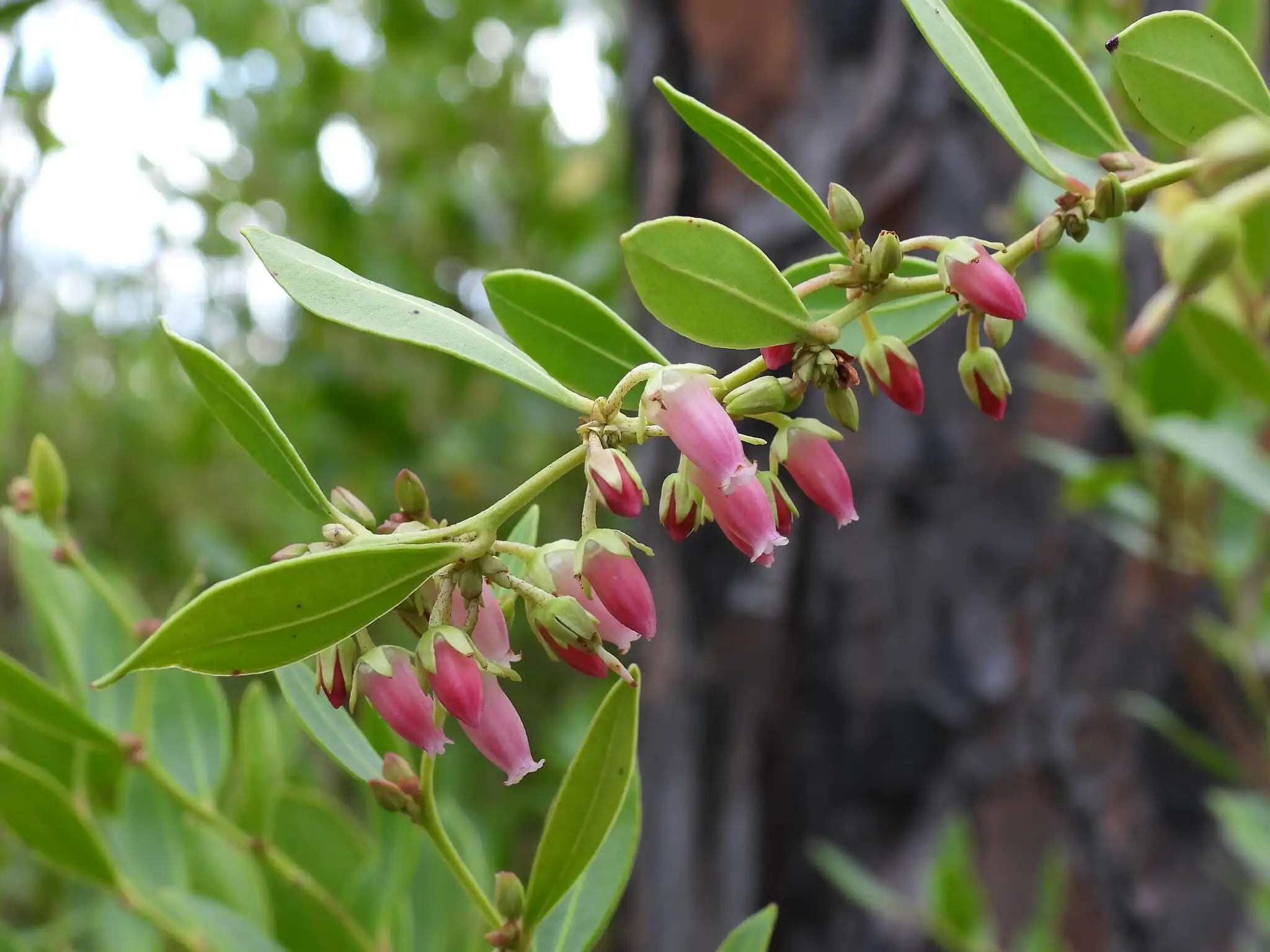
Lyonia lucida is an evergreen shrub of the southeastern coastal plain reaching 3 to 6 feet tall and wide, suckering by rhizomes into dense thickets. Leaves are alternate, thick and leathery, glossy green and ovate with an entire margin and a pale midrib, holding through winter.
What sets it apart is the spring display of clustered urn-shaped bells under 1 inch long in pink to white with red-burgundy tones, fragrant and borne in racemes, followed by dry five-parted brown capsules. Stems arch and spread to form an impenetrable thicket that blocks foot traffic, thriving in acid, moist shade where it roots and suckers freely.
Uses & Benefits:
Essentials
At a Glance
Plant Type
Shrub
Height
72"
Width
72"
Light
Partial Sun, Shade
Zones
7, 8, 9
Water
Moist to wet
Humidity
High
Lifespan
Long-lived shrub
Native To
Southeastern U.S. coastal plain
Toxicity
Highly toxic if ingested
Bloom period
Spring – Early summer
In flower about 4 months of the year
Planting
How to Grow
- Plant in spring in acid soil below pH 6.0 enriched with pine bark or leaf mold.
- Set the crown level, water deeply, and keep soil consistently moist to wet.
- Place in partial to deep shade with protection from hot afternoon sun.
- Mulch 2 to 3 inches with pine straw to hold moisture and acidity.
- Allow room for suckering or lift and remove root suckers to contain spread.
Pro Tip
Give it room to sucker and an acid, moist site; it stalls in dry or alkaline ground and must stay out of reach of livestock and pets.
Keep It Thriving
Care Guide
Do
- Do plant in acid, humus-rich ground that stays moist to wet.
- Do allow space for thicket formation or plan to remove suckers.
- Do keep children, pets and livestock from eating leaves, flowers and sap.
Don't
- Do not plant in alkaline or dry soil.
- Do not plant where cattle, sheep, goats or horses browse in late winter and spring.
- Do not let new plantings dry out before roots establish in sand.
Seasonal Care Calendar
| Task | Jan | Feb | Mar | Apr | May | Jun | Jul | Aug | Sep | Oct | Nov | Dec |
|---|---|---|---|---|---|---|---|---|---|---|---|---|
| Mulch | ||||||||||||
| Pest Check | ||||||||||||
| Plant | ||||||||||||
| Prune |
Watch Out For
Pests & Diseases
Common Pests
Common Diseases
In the Garden
Landscape Uses & Companions
Landscape Uses
Multiply
Propagation Methods
Good to Know
Common Questions
Fetterbush questions
What zones can Fetterbush grow in?
Fetterbush is hardy in USDA Zones 7–9: in that range it survives winter in the ground. Colder than Zone 7, grow it in a container you can move to shelter for the winter. Warmer than Zone 9, winter isn't the problem: it prefers colder winters, and summer heat can shorten its life.
Is Fetterbush deer resistant?
Yes — Fetterbush is rated deer-resistant. Deer typically pass it over, though extreme hunger can override any plant's defenses.
When does Fetterbush bloom?
Fetterbush typically blooms from early spring to early summer. Exact timing shifts a week or two with your zone — Sow's bloom calendar maps it to your garden.
Does Fetterbush need full sun?
Fetterbush does best in part shade.
More Lyonia to compare
Keep exploring
Explore the genus
Hardy in your zone?
Grow Fetterbush with confidence
See it in a design of your actual yard, get zone-matched care reminders, and track it season by season in your garden journal.