The Story
Plant Bio
Tree aloes are evergreen succulent trees from southern Africa that store water in thick leaves and fibrous trunks to endure extended drought. They hold toothed lance-shaped leaves in terminal rosettes and raise tubular bird-pollinated flowers on stout upright racemes.
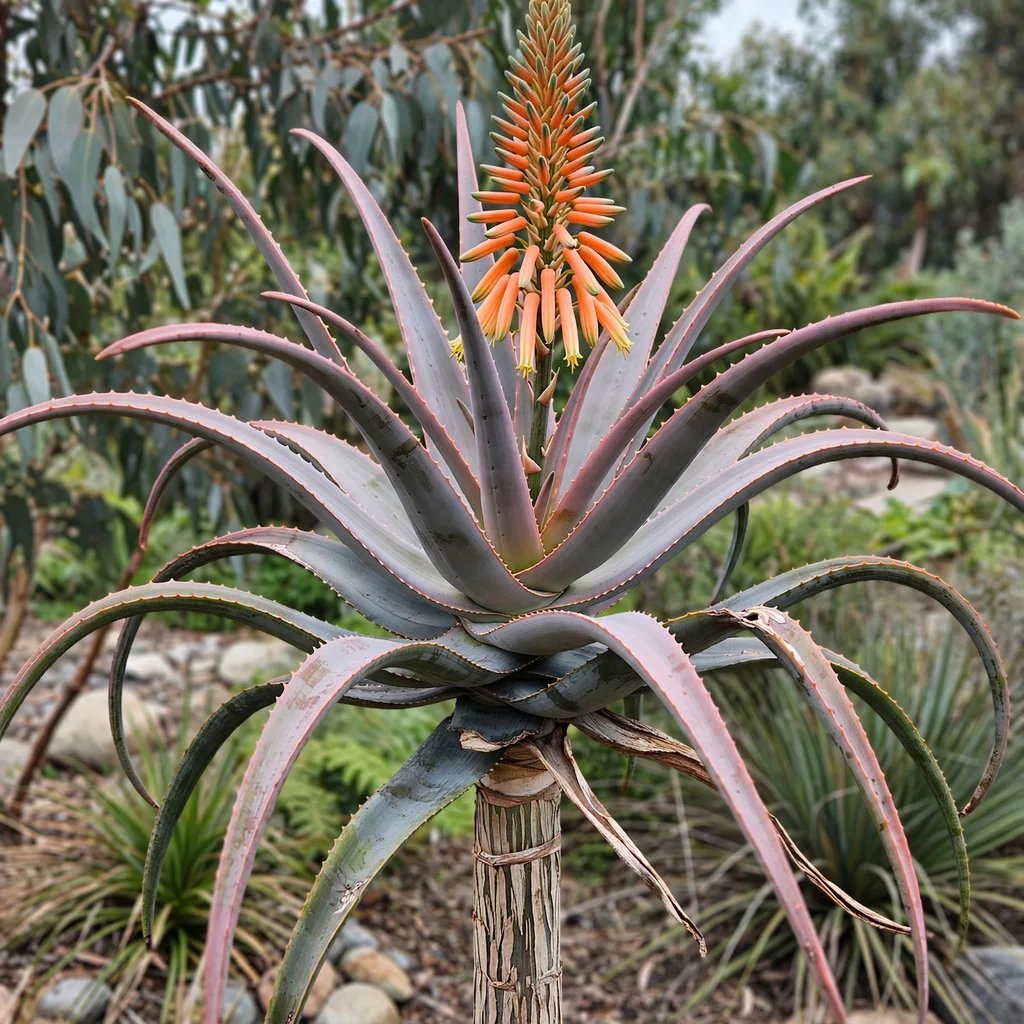
'Hercules' is a garden hybrid of Aloe barberae by Aloe dichotoma that builds a single stout forking trunk with a spreading crown to 35 feet tall, branching less than Aloe barberae and growing faster than either parent. It carries broad triangular blue-gray to deep green leaves tinted rose on new growth on a smooth trunk with peeling striped bark, and mature plants bear erect racemes of salmon-orange tubular flowers tipped green from spring to fall.
Uses & Benefits:
Essentials
At a Glance
Plant Type
Tree
Height
420"
Width
216"
Light
Full Sun, Partial Sun
Zones
9, 10
Water
Low
Humidity
Low
Lifespan
Long-lived
Native To
Garden hybrid, not wild
Toxicity
Mildly toxic if ingested
Bloom period
Spring – Fall
In flower about 9 months of the year
Planting
How to Grow
- Plant in full sun in lean gritty sand or rocky loam that drains in seconds; set the root crown slightly high and never in a low pocket that holds water.
- Dig a hole no deeper than the nursery soil line and twice as wide, backfilling with native soil loosened with coarse sand or pumice, not rich compost.
- Water deeply once at planting, then sparingly until new leaf growth shows; established trees need only occasional deep soakings in long dry spells.
- Give it 15 to 20 feet of clear space for the crown and keep sprinklers off the trunk and rosettes.
- Protect below 25 degrees F with frost cloth; established plants take brief drops to 20 degrees F but cold plus wet rots the crown.
Pro Tip
Keep it lean and dry once established; rich soil and frequent water push soft top-heavy growth that topples in wind.
Keep It Thriving
Care Guide
Do
- Plant high in porous sandy soil that drains fast
- Give full sun with room for a 15 to 20 foot crown
- Water deeply but infrequently once established
- Pull dead lower leaves by hand to expose the trunk
Don't
- Do not plant in clay, low spots, or standing water
- Do not enrich with heavy compost or frequent fertilizer
- Do not water on a lawn schedule or wet the crown in winter
- Do not cut the trunk back to control size
Seasonal Care Calendar
| Task | Jan | Feb | Mar | Apr | May | Jun | Jul | Aug | Sep | Oct | Nov | Dec |
|---|---|---|---|---|---|---|---|---|---|---|---|---|
| Pest Check | ||||||||||||
| Plant | ||||||||||||
| Prune | ||||||||||||
| Winter Prep |
Watch Out For
Pests & Diseases
Common Pests
Common Diseases
In the Garden
Landscape Uses & Companions
Landscape Uses
Good to Know
Common Questions
Hercules Aloe questions
What zones can Hercules Aloe grow in?
Hercules Aloe is hardy in USDA Zones 9–10: in that range it survives winter in the ground. Colder than Zone 9, winters are too cold for it to survive outdoors.
Is Hercules Aloe deer resistant?
Yes — Hercules Aloe is rated deer-resistant. Deer typically pass it over, though extreme hunger can override any plant's defenses.
When does Hercules Aloe bloom?
Hercules Aloe typically blooms from spring to fall. Exact timing shifts a week or two with your zone — Sow's bloom calendar maps it to your garden.
Does Hercules Aloe need full sun?
Hercules Aloe does best in full sun to part shade. In hot climates, afternoon shade keeps blooms fresher longer.
Is Hercules Aloe drought tolerant?
Yes — once established (usually after the first full season), Hercules Aloe handles dry spells with minimal watering. Water deeply its first year to build the root system that makes that possible.
More Aloe to compare
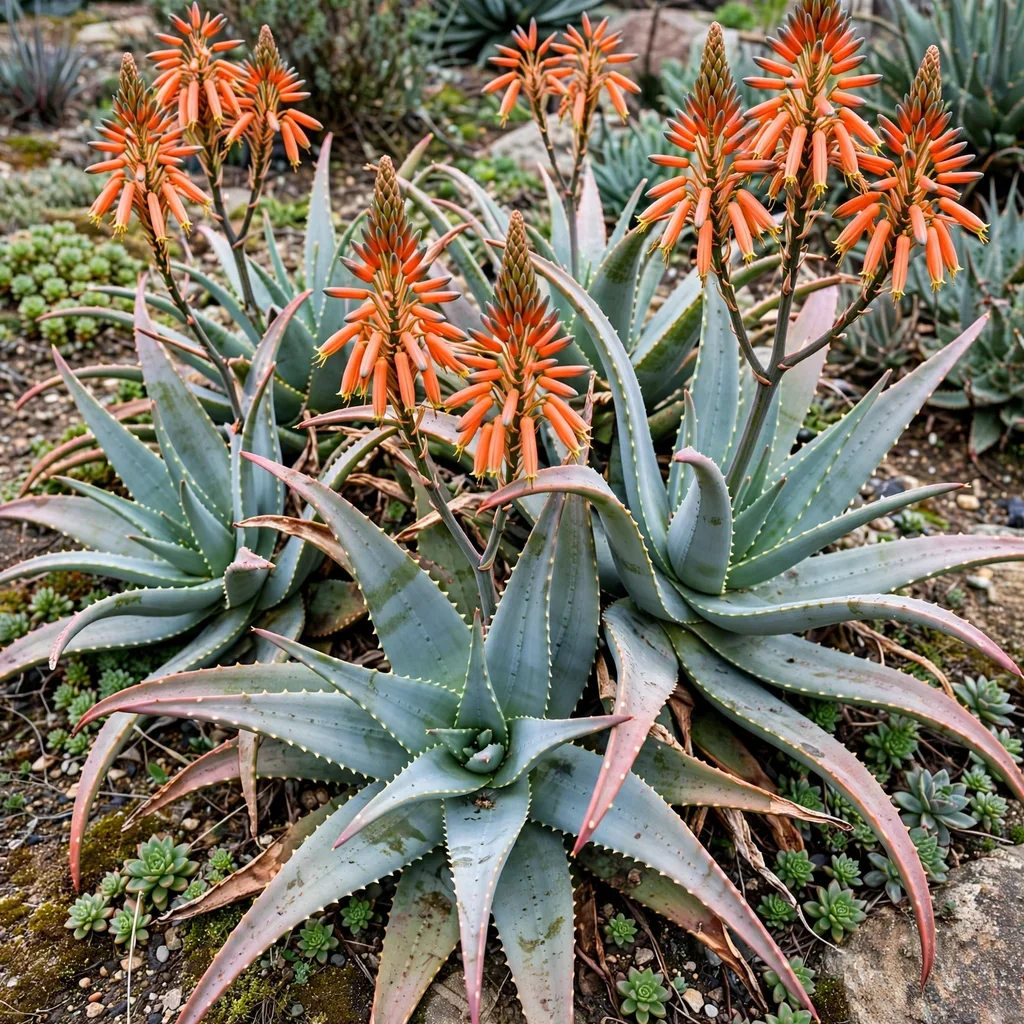
Compton's Aloe
Aloe comptonii
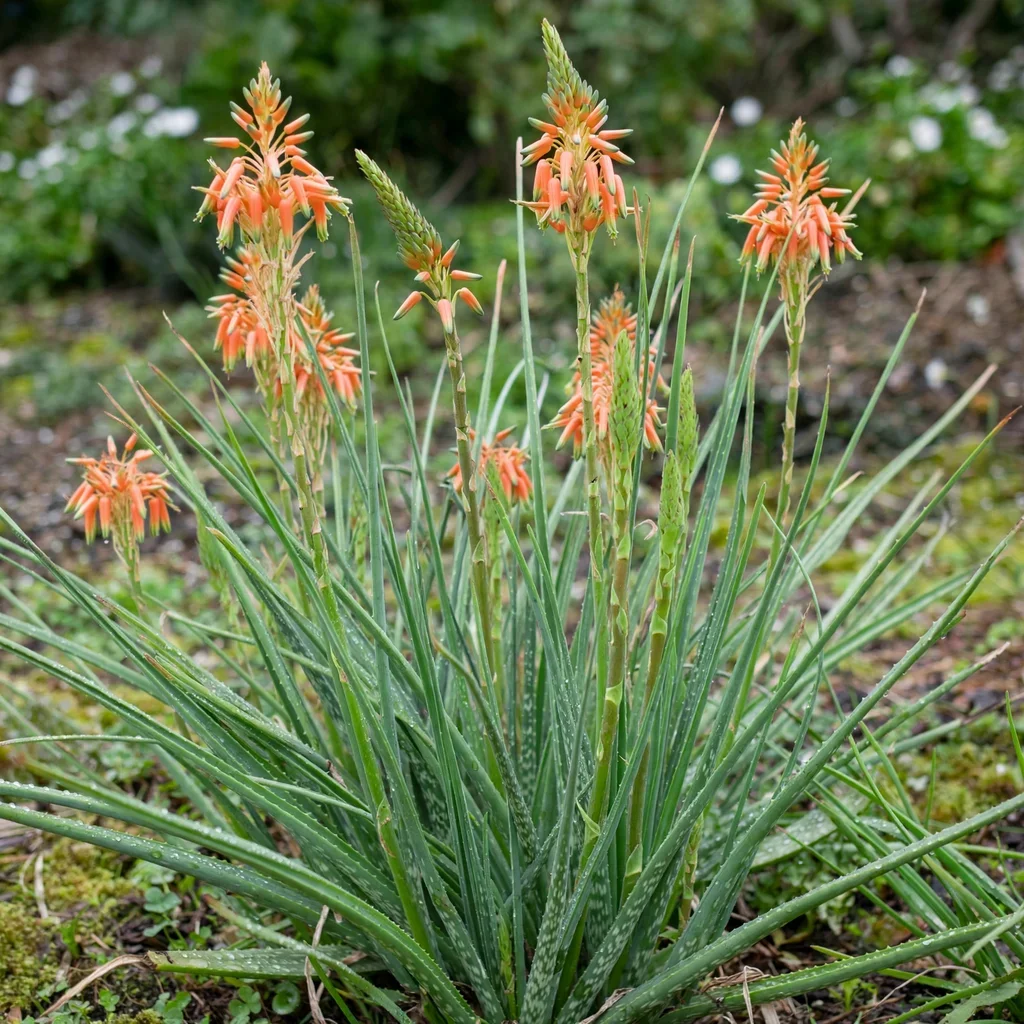
Cooper's Aloe
Aloe cooperi
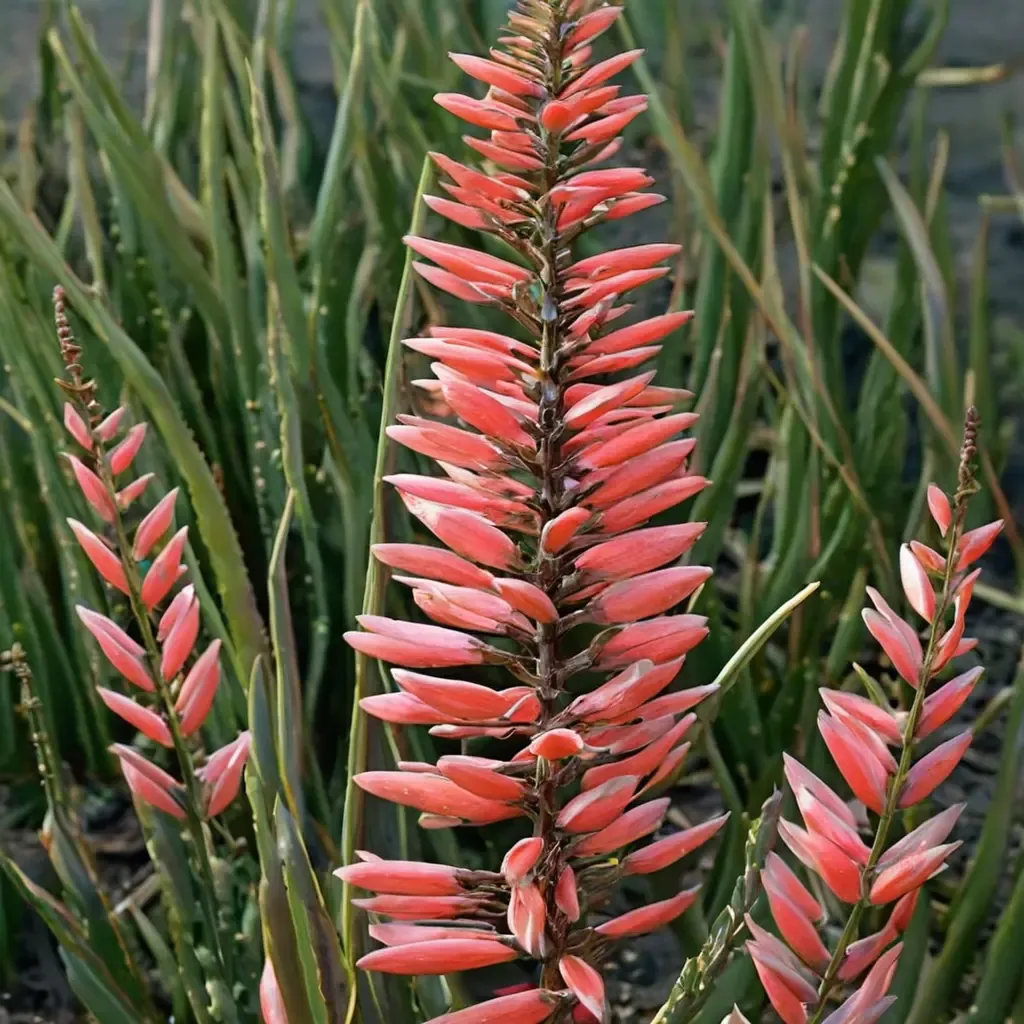
Safari Rose Aloe
Aloe vera 'Safari Rose'
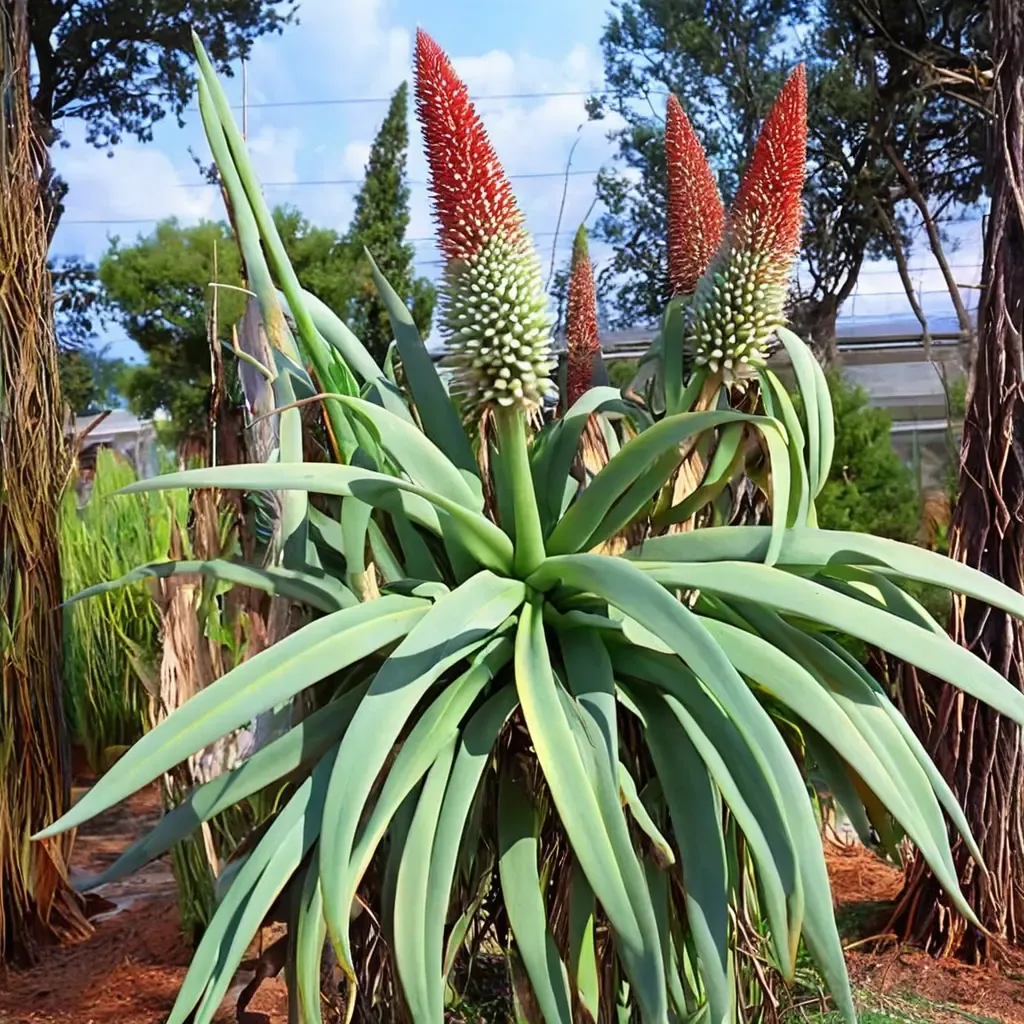
Tilt-Head Aloe
Aloe speciosa 'Tilt-Head Aloe'
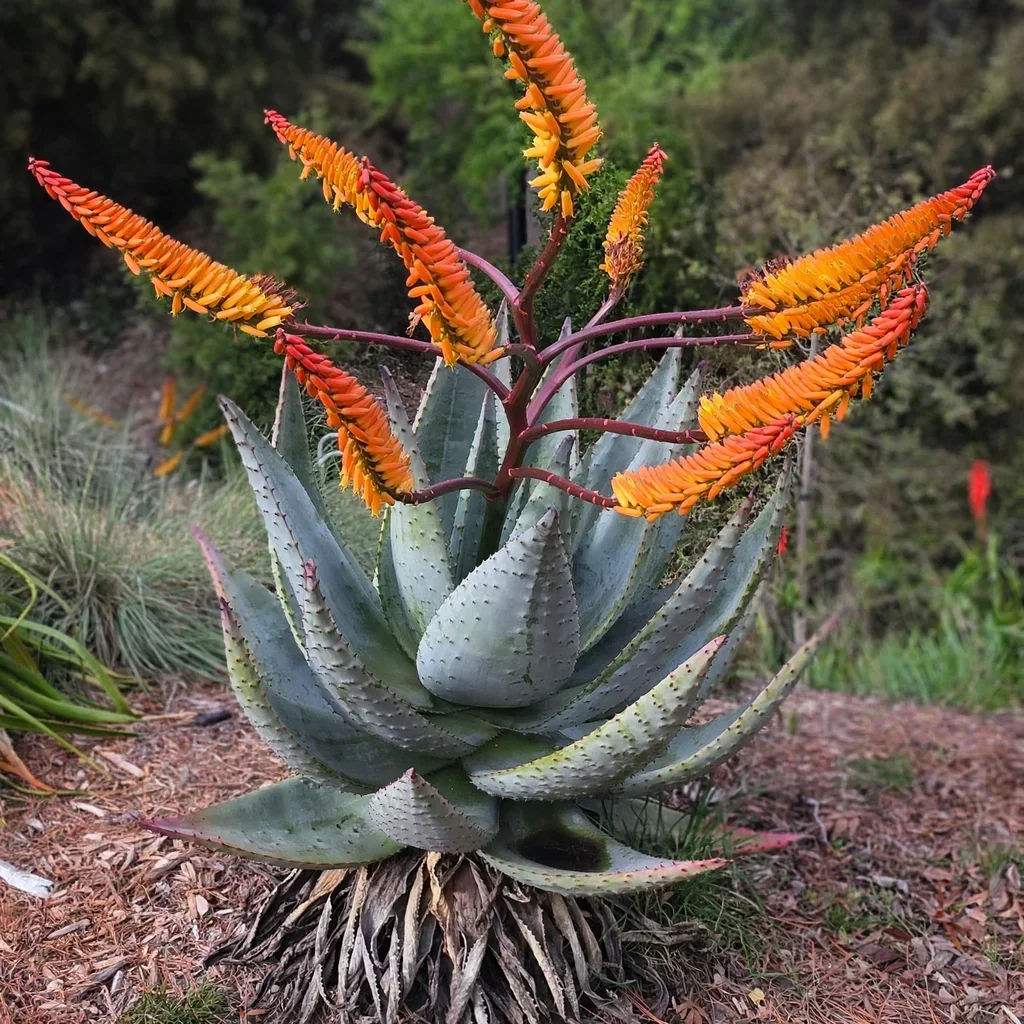
Mountain Aloe
Aloe marlothii 'Flat Flowered Aloe'
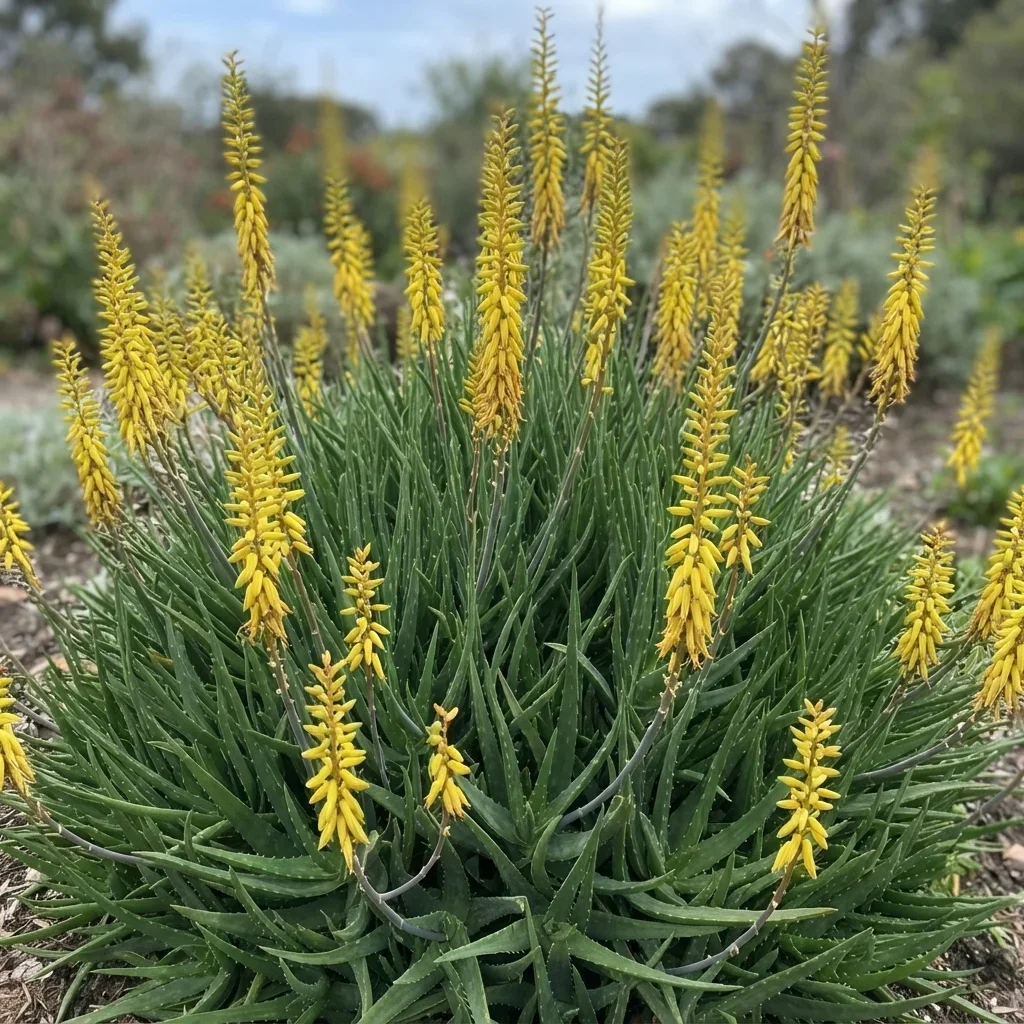
Fence Aloe
Aloe tenuior 'Fence Aloe'
Keep exploring
Explore the genus
Hardy in your zone?
Grow Hercules Aloe with confidence
See it in a design of your actual yard, get zone-matched care reminders, and track it season by season in your garden journal.