The Story
Plant Bio
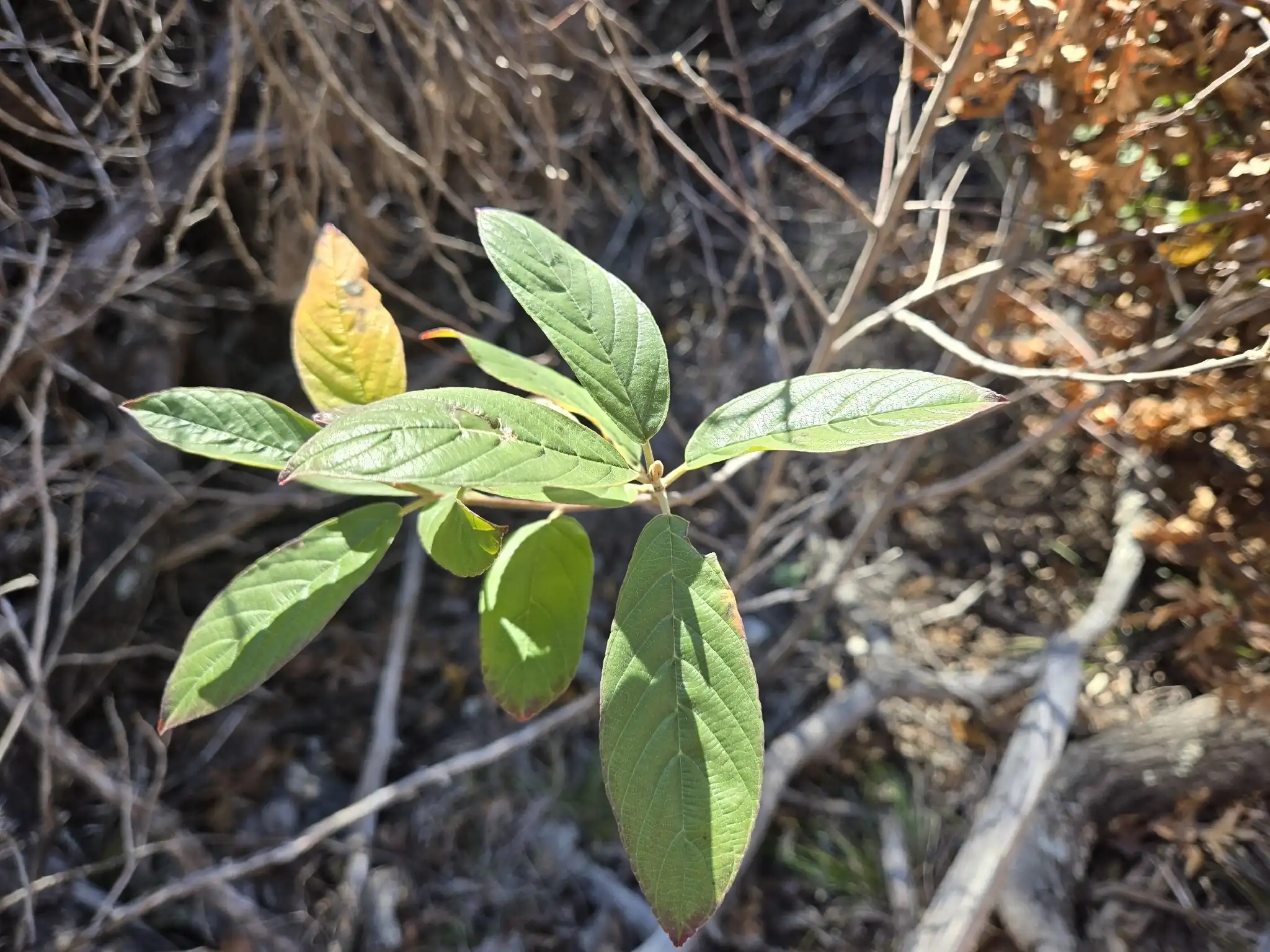
Frangula caroliniana is a deciduous North American shrub or small tree reaching 10 to 15 feet in gardens, with slender thornless branches forming an open upright-spreading crown. The leaves are glossy bright to dark green, elliptic-oblong to ovate with 8 to 10 pairs of prominent veins, holding late into fall before turning yellow-green.
Unlike the thorny Eurasian buckthorns it is often confused with, Carolina buckthorn is completely thornless and carries finely toothed to entire leaves with 8 to 10 vein pairs. Its small creamy-green flowers in spring give way to red drupes that ripen to black in September and October, feeding songbirds while remaining toxic to people.
Uses & Benefits:
Essentials
At a Glance
Plant Type
Shrub
Height
180"
Width
180"
Light
Full Sun, Partial Sun
Zones
5, 6, 7, 8, 9
Water
Medium
Humidity
Average
Lifespan
Woody perennial
Native To
Southeastern and central USA to northeastern Mexico
Toxicity
Toxic to humans
Bloom period
Spring – Early summer
In flower about 4 months of the year
Planting
How to Grow
- Plant in full sun to part shade, with afternoon shade ideal in hot areas, in average medium-moisture well-drained soil.
- Amend acid soils with limestone to keep pH neutral to alkaline and work in compost for moisture retention without waterlogging.
- Water deeply to establish, then maintain even moisture; do not water daily, especially in containers.
- Mulch 2 to 3 inches to conserve moisture and keep roots cool, keeping mulch off the stems.
Pro Tip
Plant it in alkaline limestone soil in part shade and keep containers on the dry side; overwatering rots the roots while seedlings self-sow freely around a happy plant.
Keep It Thriving
Care Guide
Do
- Grow in neutral to alkaline, calcareous or rocky soil with consistent moisture.
- Site in part shade with 3 to 4 hours of sun for best foliage.
- Collect ripe black fruit in fall if you want to propagate.
Don't
- Do not plant in strongly acid soil.
- Do not overwater or keep containers constantly wet.
- Do not plant near oat fields where crown rust is a concern.
Seasonal Care Calendar
| Task | Jan | Feb | Mar | Apr | May | Jun | Jul | Aug | Sep | Oct | Nov | Dec |
|---|---|---|---|---|---|---|---|---|---|---|---|---|
| Mulch | ||||||||||||
| Plant | ||||||||||||
| Propagate | ||||||||||||
| Prune |
Watch Out For
Pests & Diseases
Common Pests
Common Diseases
In the Garden
Landscape Uses & Companions
Landscape Uses
Multiply
Propagation Methods
Good to Know
Common Questions
Carolina Buckthorn questions
What zones can Carolina Buckthorn grow in?
Carolina Buckthorn is hardy in USDA Zones 5–9: in that range it survives winter in the ground. Colder than Zone 5, grow it in a container you can move to shelter for the winter. Warmer than Zone 9, winter isn't the problem: it prefers colder winters, and summer heat can shorten its life.
Is Carolina Buckthorn deer resistant?
Not reliably. Deer may browse Carolina Buckthorn, especially tender spring growth — plan on repellents or fencing where pressure is high.
When does Carolina Buckthorn bloom?
Carolina Buckthorn typically blooms from early spring to early summer. Exact timing shifts a week or two with your zone — Sow's bloom calendar maps it to your garden.
Does Carolina Buckthorn need full sun?
Carolina Buckthorn does best in full sun to part shade. In hot climates, afternoon shade keeps blooms fresher longer.
More Frangula to compare
Keep exploring
Explore the genus
Hardy in your zone?
Grow Carolina Buckthorn with confidence
See it in a design of your actual yard, get zone-matched care reminders, and track it season by season in your garden journal.