The Story
Plant Bio
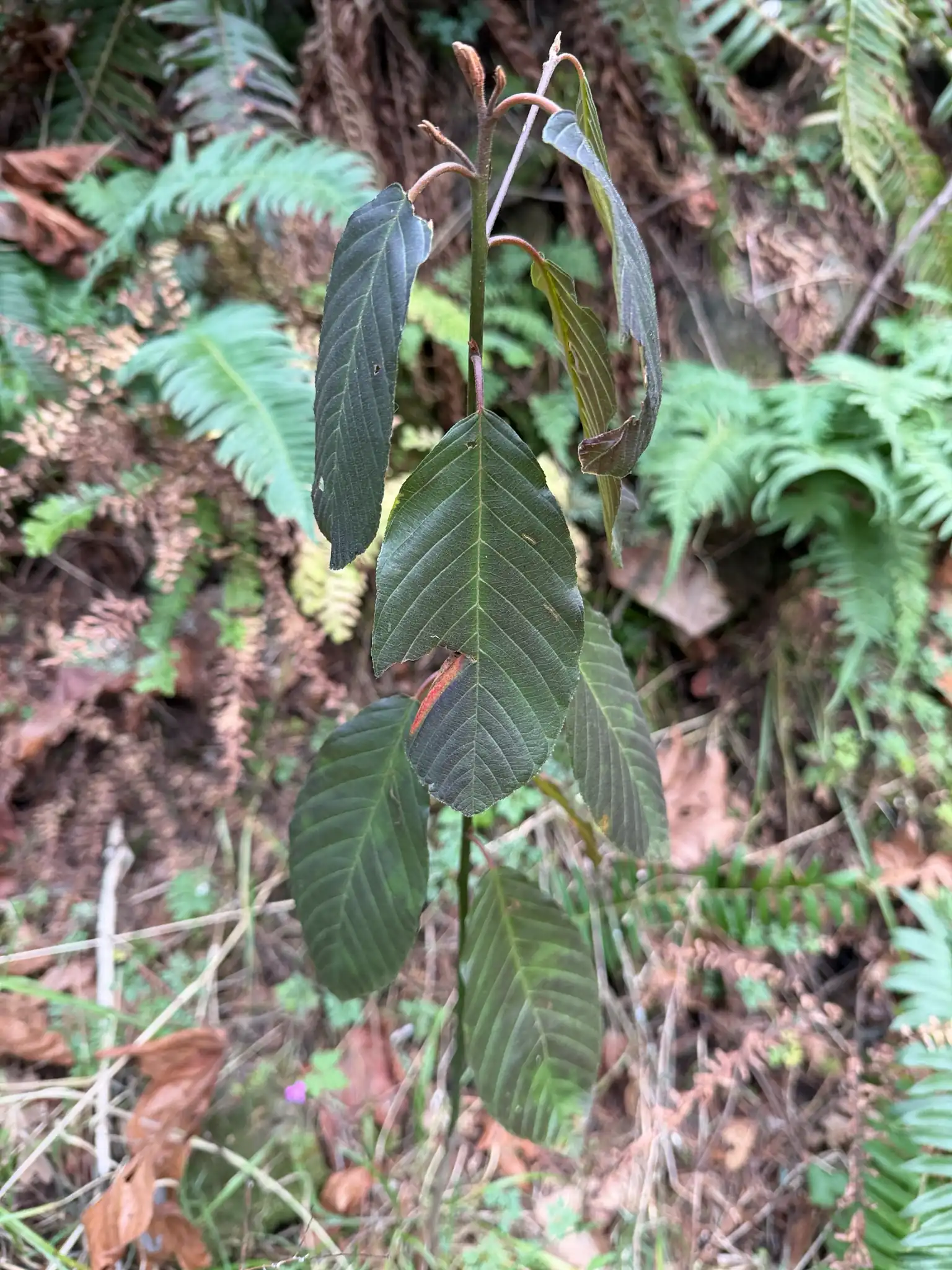
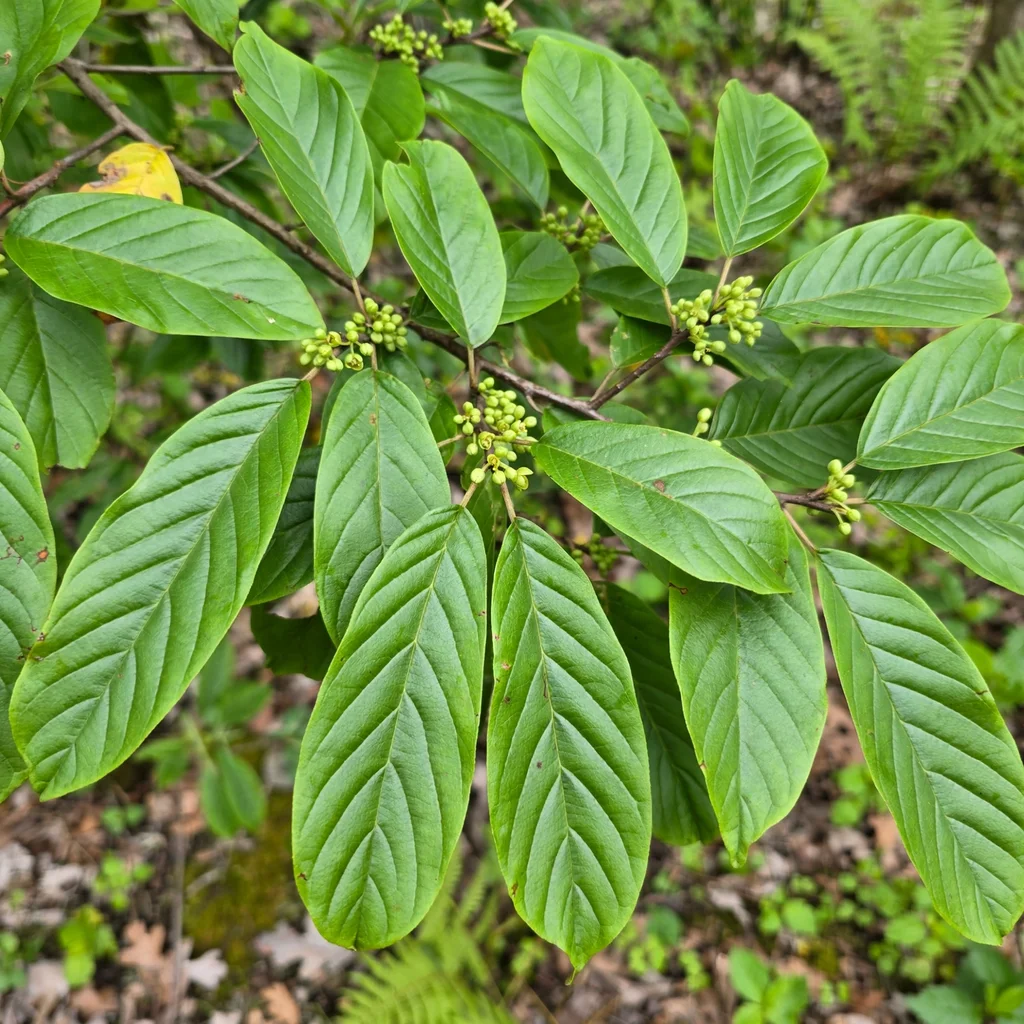
Frangula purshiana, commonly known as cascara sagrada, is a deciduous small tree native to western North America with prominently veined, dark green leaves. Inconspicuous greenish-white spring flowers give way to dark fleshy fruits that mature in late summer.
This native species is distinguished from invasive European buckthorns by its thornless stems and parallel leaf veining. Its foliage turns clear yellow in fall, providing seasonal color in damp woodland settings.
Uses & Benefits:
Essentials
At a Glance
Plant Type
Tree
Height
360"
Width
216"
Light
Full Sun, Partial Sun, Shade
Zones
7, 8, 9, 10
Water
Moderate
Humidity
High
Lifespan
Perennial
Native To
Western North America
Toxicity
Toxic if ingested (fresh bark)
Bloom period
Spring – Late spring
In flower about 3 months of the year
Planting
How to Grow
- Select a site offering full sun to deep shade with rich, moist, acidic to neutral soil.
- Plant in spring or fall, settling the root ball flush with the soil line and soaking thoroughly.
- Apply a three-inch layer of organic mulch around the base, keeping it clear of the direct trunk.
- Water regularly during summer dry periods for the first two years to establish deep roots.
Pro Tip
Prune only back to active lateral buds in late winter; cutting hard into old, leafless wood prevents new shoots from forming.
Keep It Thriving
Care Guide
Do
- Keep soil consistently moist, especially during hot summer periods.
- Top-dress with organic compost each spring to supply nutrients naturally.
- Wear gloves when handling fresh cut bark to prevent potential skin irritation.
Don't
- Do not prune hard into bare stem wood lacking visible leafy nodes.
- Do not ingest fresh, un-aged bark or raw berries.
- Do not allow soil to dry out completely in hot, sunny locations.
Seasonal Care Calendar
| Task | Jan | Feb | Mar | Apr | May | Jun | Jul | Aug | Sep | Oct | Nov | Dec |
|---|---|---|---|---|---|---|---|---|---|---|---|---|
| Fertilize | ||||||||||||
| Pest Check | ||||||||||||
| Prune | ||||||||||||
| Winter Prep |
Watch Out For
Pests & Diseases
Common Pests
Common Diseases
In the Garden
Landscape Uses & Companions
Landscape Uses
Multiply
Propagation Methods
Good to Know
Common Questions
Cascara Sagrada questions
What zones can Cascara Sagrada grow in?
Cascara Sagrada is hardy in USDA Zones 7–10: in that range it survives winter in the ground. Colder than Zone 7, winters are too cold for it to survive outdoors.
Is Cascara Sagrada deer resistant?
Not reliably. Deer may browse Cascara Sagrada, especially tender spring growth — plan on repellents or fencing where pressure is high.
When does Cascara Sagrada bloom?
Cascara Sagrada typically blooms in spring. Exact timing shifts a week or two with your zone — Sow's bloom calendar maps it to your garden.
Does Cascara Sagrada need full sun?
Cascara Sagrada does best in full sun to part shade. In hot climates, afternoon shade keeps blooms fresher longer.
More Frangula to compare
Keep exploring
Explore the genus
Hardy in your zone?
Grow Cascara Sagrada with confidence
See it in a design of your actual yard, get zone-matched care reminders, and track it season by season in your garden journal.