Species
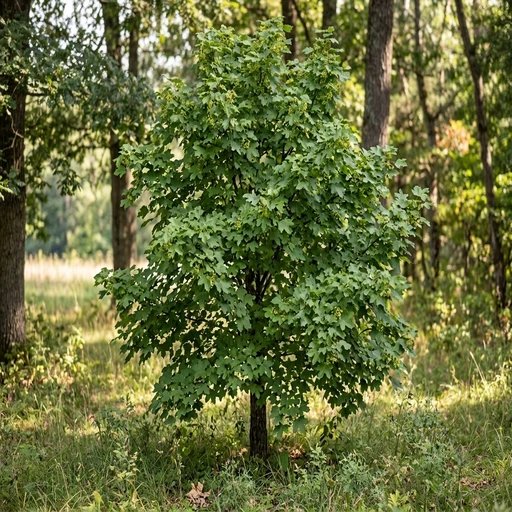
 Acer campestreHedge Maple
The Story
Plant Bio
Acer campestre, the Hedge or Field Maple, is a tough, adaptable, medium-sized deciduous tree native to Europe and western Asia. It's known for its dense canopy of small, five-lobed leaves and its tolerance of a wide range of growing conditions.
'Queen Elizabeth' ('Evelyn') is a vigorous, upright cultivar with a more uniform, oval to rounded crown than the species. It has larger, darker green leaves and displays a reliable, clear yellow fall color, making it an excellent street tree.
Uses & Benefits:
Essentials
At a Glance
Plant Type
Tree
Height
420"
Width
360"
Light
Full Sun, Partial Sun
Zones
5, 6, 7, 8
Water
Low to Medium
Humidity
Adaptable
Lifespan
Long-lived
Native To
Europe, Western Asia
Toxicity
Non-toxic
Bloom period
Mid-spring – Late spring
In flower about 2 months of the year
Planting
How to Grow
- Select a site in full sun or partial shade.
- This tree is highly adaptable to most soil types except very wet ones.
- Dig a hole twice as wide as the root ball.
- Plant with the root flare at or slightly above ground level.
- Backfill, water thoroughly to remove air pockets.
- Mulch around the base, but not touching the trunk.
Pro Tip
An excellent choice for tough urban sites where other trees might struggle due to pollution, compacted soil, or drought.
Keep It Thriving
Care Guide
Do
- Water regularly for the first year to establish.
- Prune to develop a strong structure when the tree is young.
- Appreciate its tolerance of a wide range of soil pH.
- Provide space for its mature size.
Don't
- Don't plant in waterlogged, poorly drained areas.
- Avoid major pruning that would ruin its natural form once mature.
- Don't worry about minor aphid infestations; they rarely cause significant harm.
- Don't plant where its roots can damage sidewalks.
Seasonal Care Calendar
| Task | Jan | Feb | Mar | Apr | May | Jun | Jul | Aug | Sep | Oct | Nov | Dec |
|---|---|---|---|---|---|---|---|---|---|---|---|---|
| Plant | ||||||||||||
| Prune |
Watch Out For
Pests & Diseases
Common Pests
Common Diseases
In the Garden
Landscape Uses & Companions
Landscape Uses
Multiply
Propagation Methods
Good to Know
Common Questions
Queen Elizabeth Maple questions
What zones can Queen Elizabeth Maple grow in?
Queen Elizabeth Maple is hardy in USDA Zones 5–8. Inside that range it survives winter in the ground; outside it, grow it as an annual or a container plant you protect.
Is Queen Elizabeth Maple deer resistant?
Not reliably. Deer may browse Queen Elizabeth Maple, especially tender spring growth — plan on repellents or fencing where pressure is high.
When does Queen Elizabeth Maple bloom?
Queen Elizabeth Maple typically blooms in mid-spring through late spring. Exact timing shifts a week or two with your zone — Sow's bloom calendar maps it to your garden.
Does Queen Elizabeth Maple need full sun?
Queen Elizabeth Maple does best in full sun to part shade. In hot climates, afternoon shade keeps blooms fresher longer.
Is Queen Elizabeth Maple drought tolerant?
Yes — once established (usually after the first full season), Queen Elizabeth Maple handles dry spells with minimal watering. Water deeply its first year to build the root system that makes that possible.
More Acer to compare
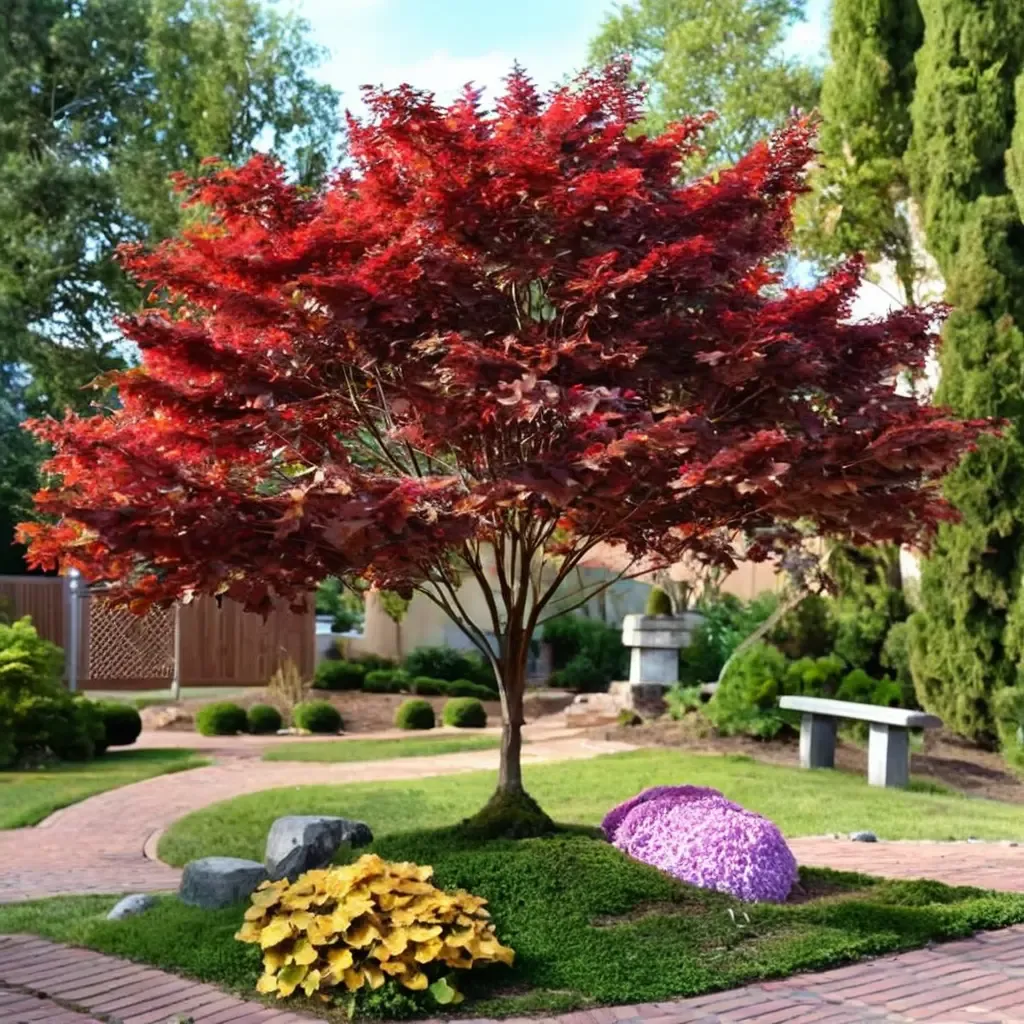
Bloodgood Japanese Maple
Acer palmatum 'Bloodgood'
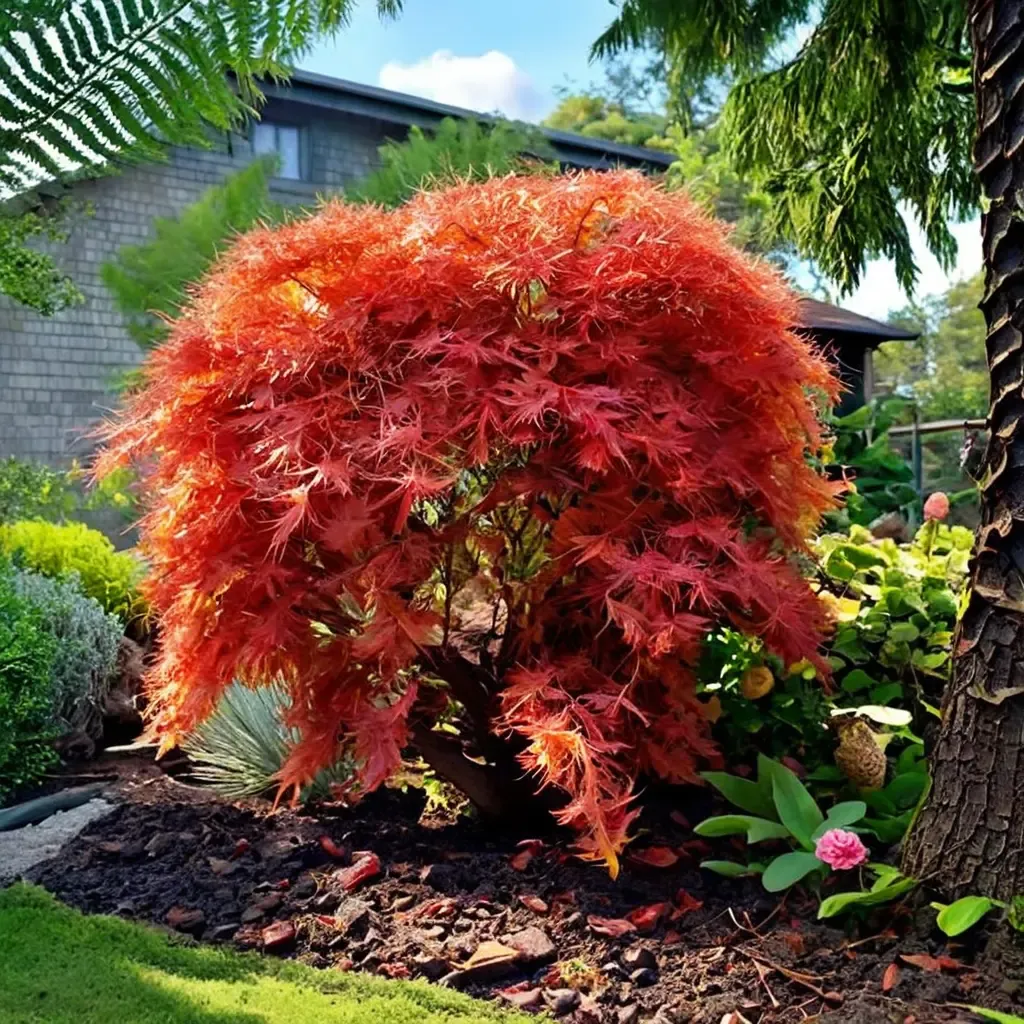
Orangeola Japanese Maple
Acer palmatum 'Orangeola'
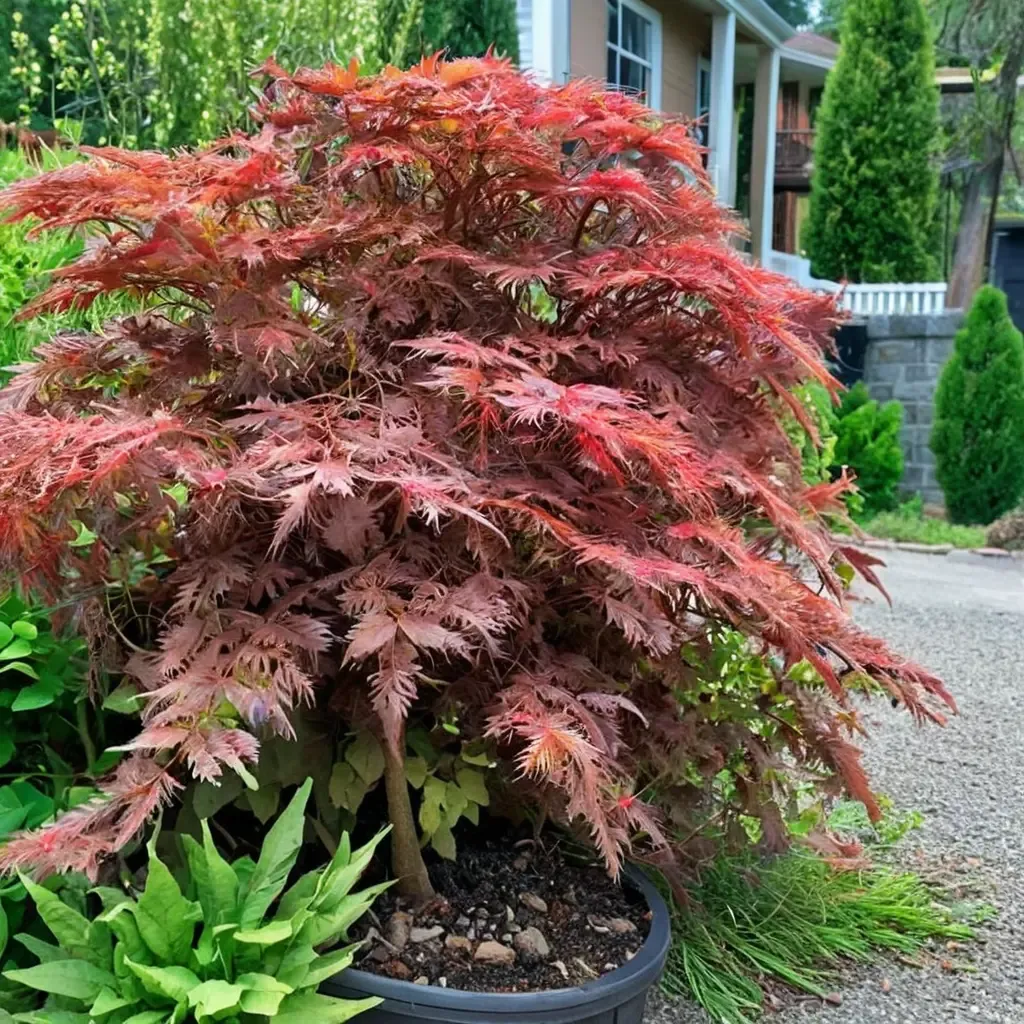
Crimson Queen Japanese Maple
Acer palmatum 'Crimson Queen'
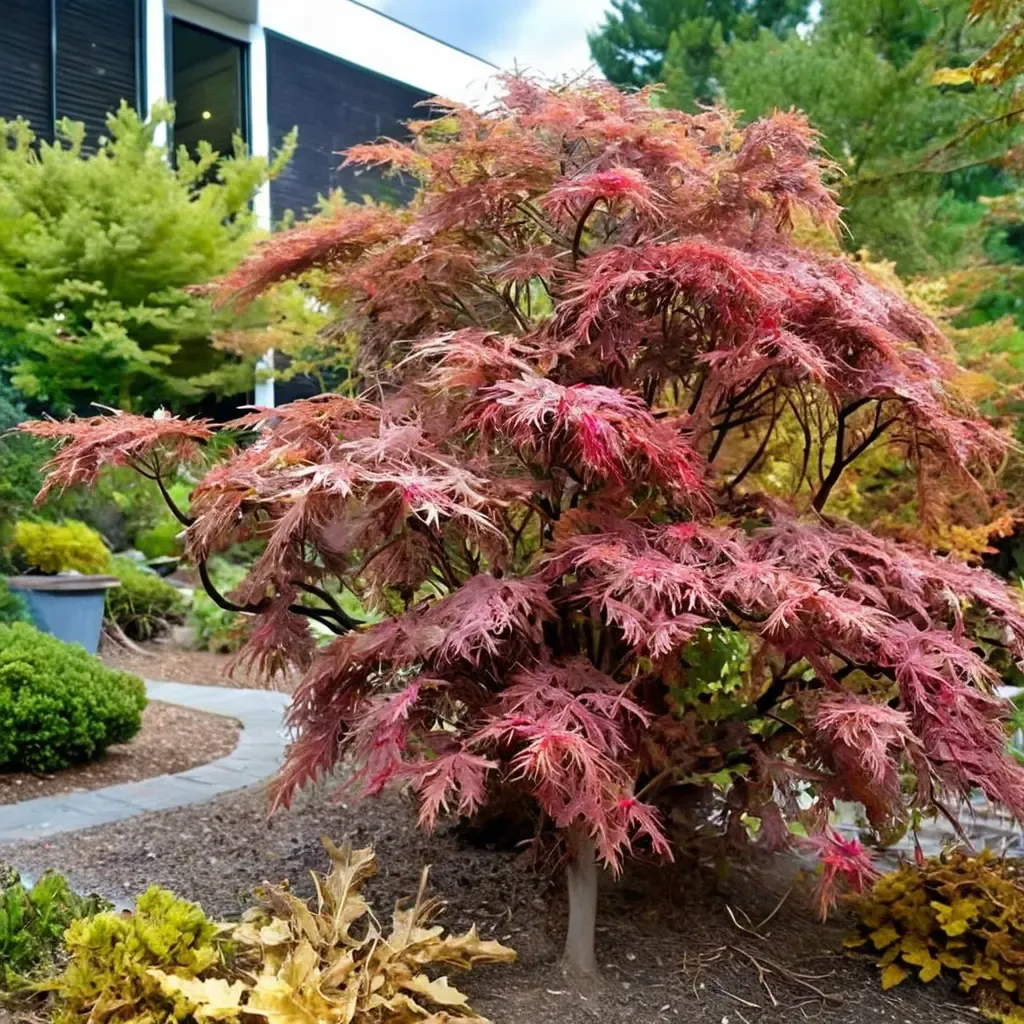
Weeping Japanese Maple
Acer palmatum 'Shidare'
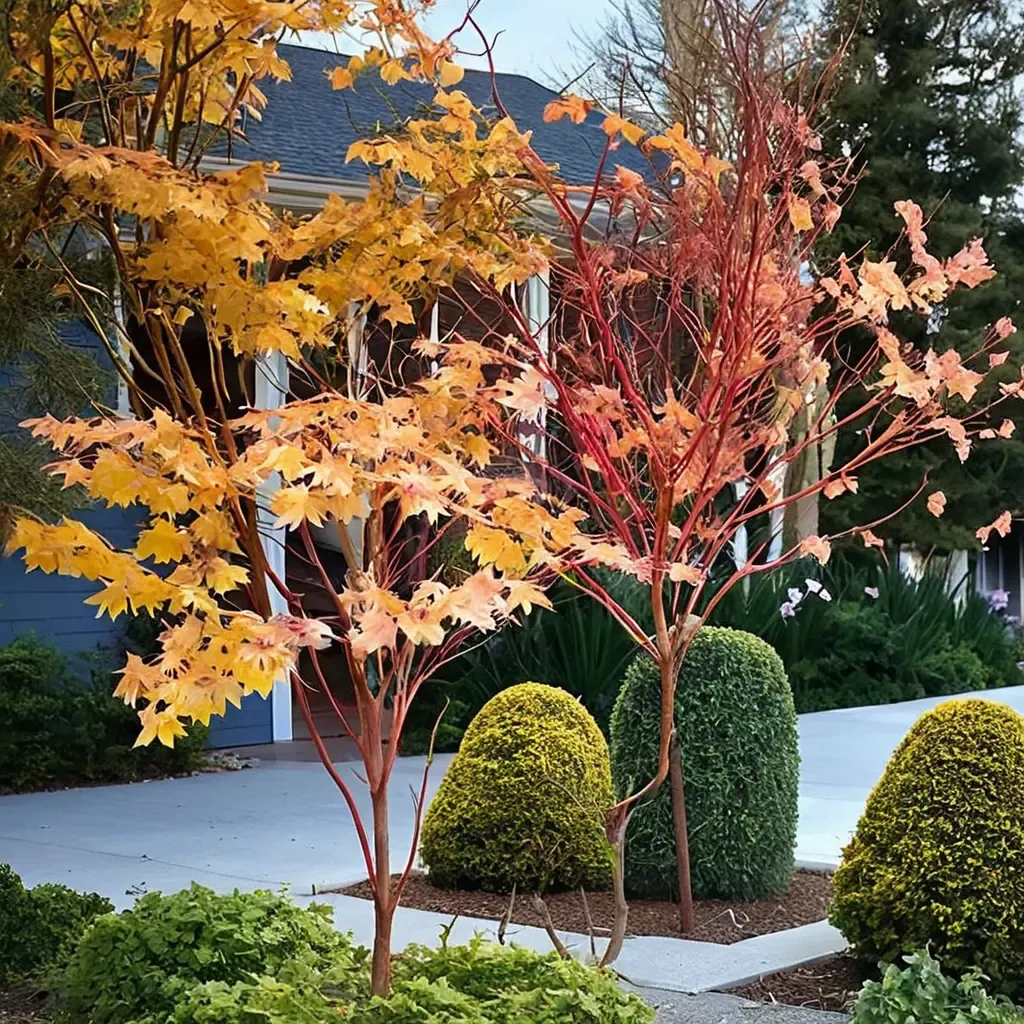
Coral Bark Maple
Acer palmatum 'Sango-Kaku'
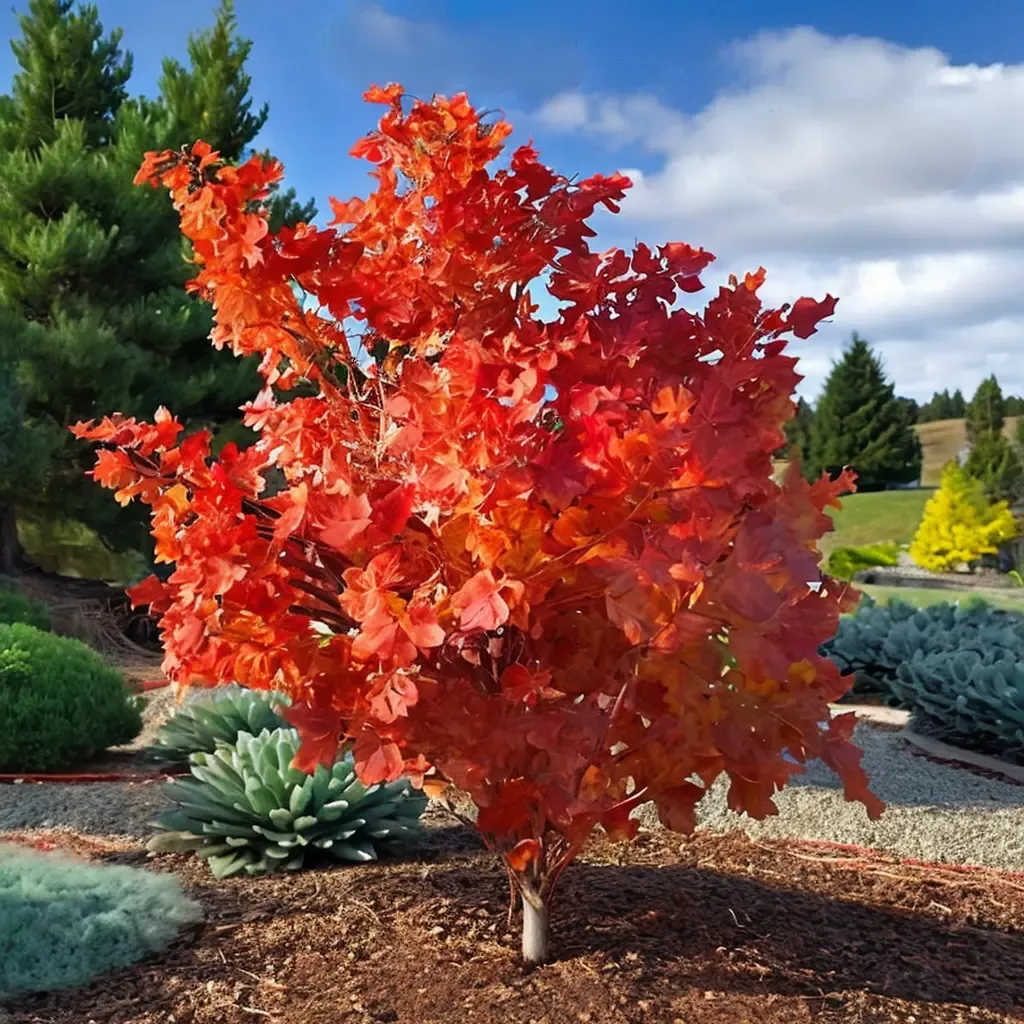
Final Fire Japanese Maple
Acer palmatum 'Final Fire'
Keep exploring
Explore the genus
Hardy in your zone?
Grow Queen Elizabeth Maple with confidence
See it in a design of your actual yard, get zone-matched care reminders, and track it season by season in your garden journal.