The Story
Plant Bio
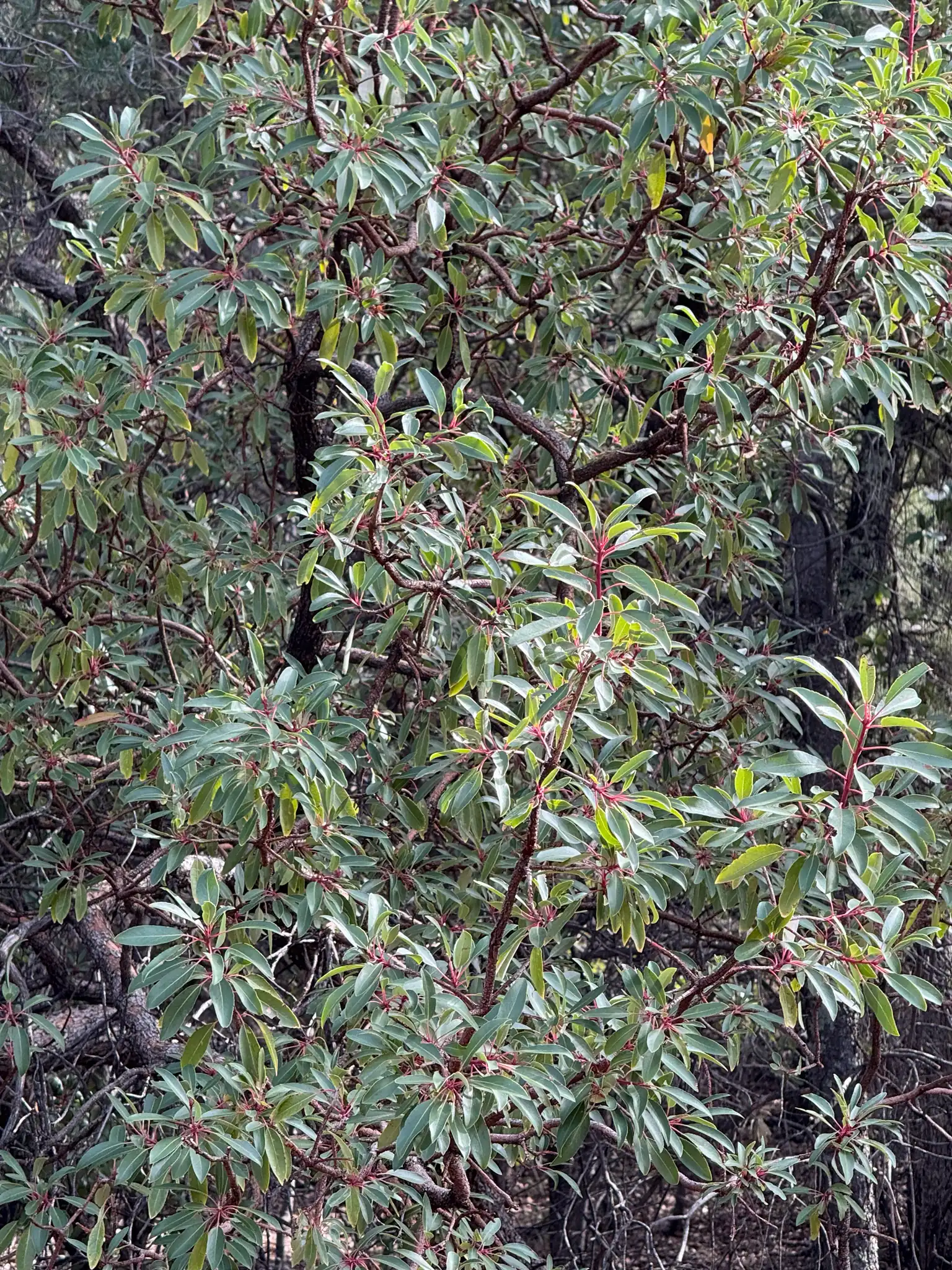
Arbutus arizonica, the Arizona madrone, is an evergreen tree reaching 45 to 50 feet with stout spreading branches forming a compact round-topped crown. The thick leathery leaves are glossy green and oblong, and the small white to pink urn-shaped flowers cluster at the branch tips followed by mealy orange-red berries.
Unlike madrones of wetter forests, this Madrean woodland species demands full sun and sharp drainage on rocky ground and fails in wet soil or low desert heat. It is slow from a taproot that resents disturbance, flushing new leaves in spring and again after summer rain and ripening half-inch fruit in fall.
Uses & Benefits:
Essentials
At a Glance
Plant Type
Tree
Height
540"
Width
420"
Light
Full Sun
Zones
7, 8, 9, 10
Water
Low
Humidity
Low
Lifespan
Long-lived tree
Native To
Southeastern Arizona, southwestern New Mexico, and Mexico
Toxicity
Berries reported with narcotic properties
Bloom period
Spring – Summer
In flower about 6 months of the year
Planting
How to Grow
- Set out in full sun on a slope or raised mound in rocky, gravelly soil that drains sharply.
- Dig the hole no deeper than the root ball and keep the crown slightly high to shed water.
- Backfill with native soil only, water once to settle, then water sparingly while roots establish.
- Top with gravel mulch and keep irrigation, lawn water, and fertilizer away from the trunk.
Pro Tip
Plant high in rocky, gravelly soil that drains fast and then leave it alone; overwatering and fertilizer damage the taproot and kill more plants than drought.
Keep It Thriving
Care Guide
Do
- Give full sun and open air on well-drained upland soil.
- Water deeply but infrequently during the first year, then reduce to natural rainfall.
- Leave the root zone undisturbed and let fallen fruit feed birds.
Don't
- Do not overwater, fertilize heavily, or plant in a lawn or irrigated bed.
- Do not cut into the taproot or move an established tree.
- Do not shear or head back limbs; remove only dead wood.
Seasonal Care Calendar
| Task | Jan | Feb | Mar | Apr | May | Jun | Jul | Aug | Sep | Oct | Nov | Dec |
|---|---|---|---|---|---|---|---|---|---|---|---|---|
| Mulch | ||||||||||||
| Pest Check | ||||||||||||
| Plant | ||||||||||||
| Prune |
Watch Out For
Pests & Diseases
Common Pests
Common Diseases
In the Garden
Landscape Uses & Companions
Landscape Uses
Multiply
Propagation Methods
Good to Know
Common Questions
Arizona Madrone questions
What zones can Arizona Madrone grow in?
Arizona Madrone is hardy in USDA Zones 7–10: in that range it survives winter in the ground. Colder than Zone 7, winters are too cold for it to survive outdoors.
Is Arizona Madrone deer resistant?
Not reliably. Deer may browse Arizona Madrone, especially tender spring growth — plan on repellents or fencing where pressure is high.
When does Arizona Madrone bloom?
Arizona Madrone typically blooms from spring to summer. Exact timing shifts a week or two with your zone — Sow's bloom calendar maps it to your garden.
Does Arizona Madrone need full sun?
Arizona Madrone does best in full sun (6+ hours).
Is Arizona Madrone drought tolerant?
Yes — once established (usually after the first full season), Arizona Madrone handles dry spells with minimal watering. Water deeply its first year to build the root system that makes that possible.
More Arbutus to compare
Keep exploring
Explore the genus
Hardy in your zone?
Grow Arizona Madrone with confidence
See it in a design of your actual yard, get zone-matched care reminders, and track it season by season in your garden journal.