The Story
Plant Bio
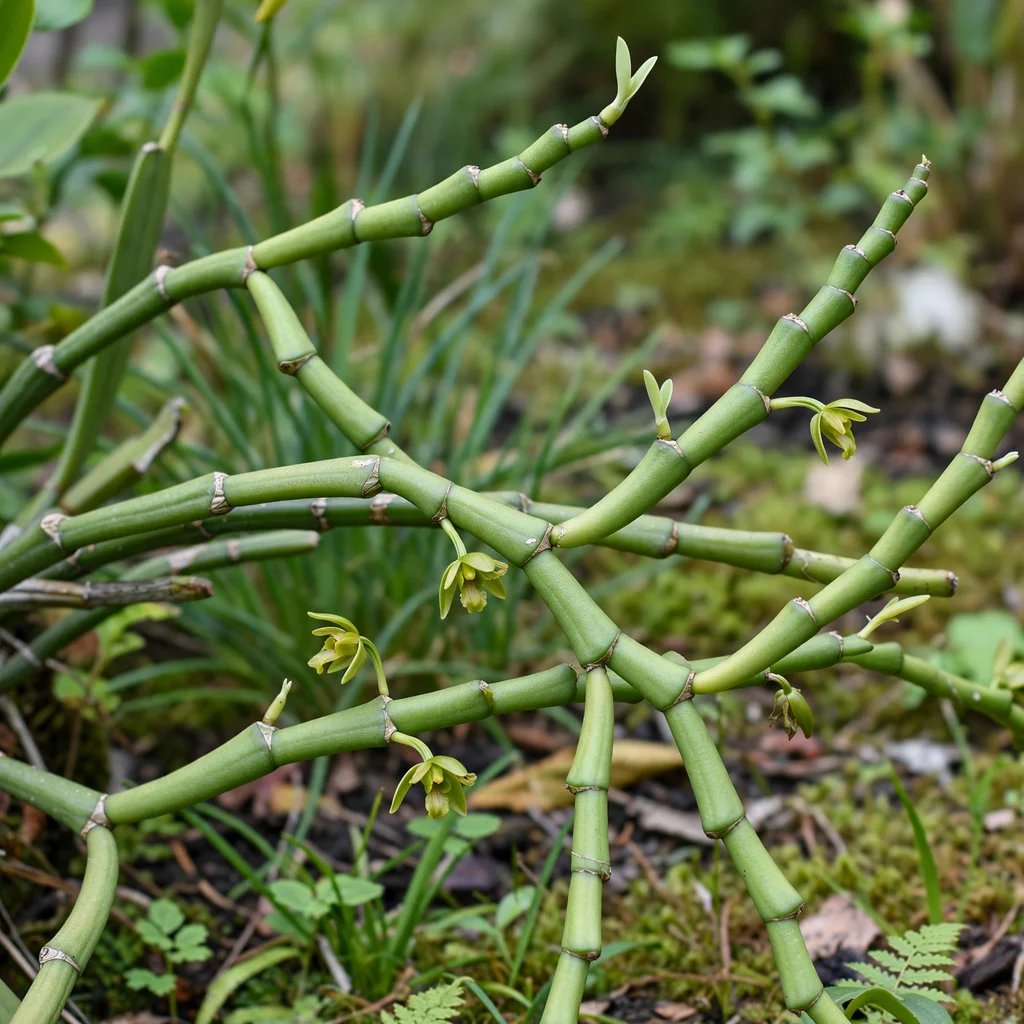
Vanilla dilloniana is a multi-branched leafless climbing orchid that anchors by aerial roots and scrambles to about 15 feet through tropical hardwood hammocks. The fleshy green stems are 4 to 8 mm thick with joints to 8 inches long and carry small fleshy leaves to 4 inches only on new growth that drop before flowering.
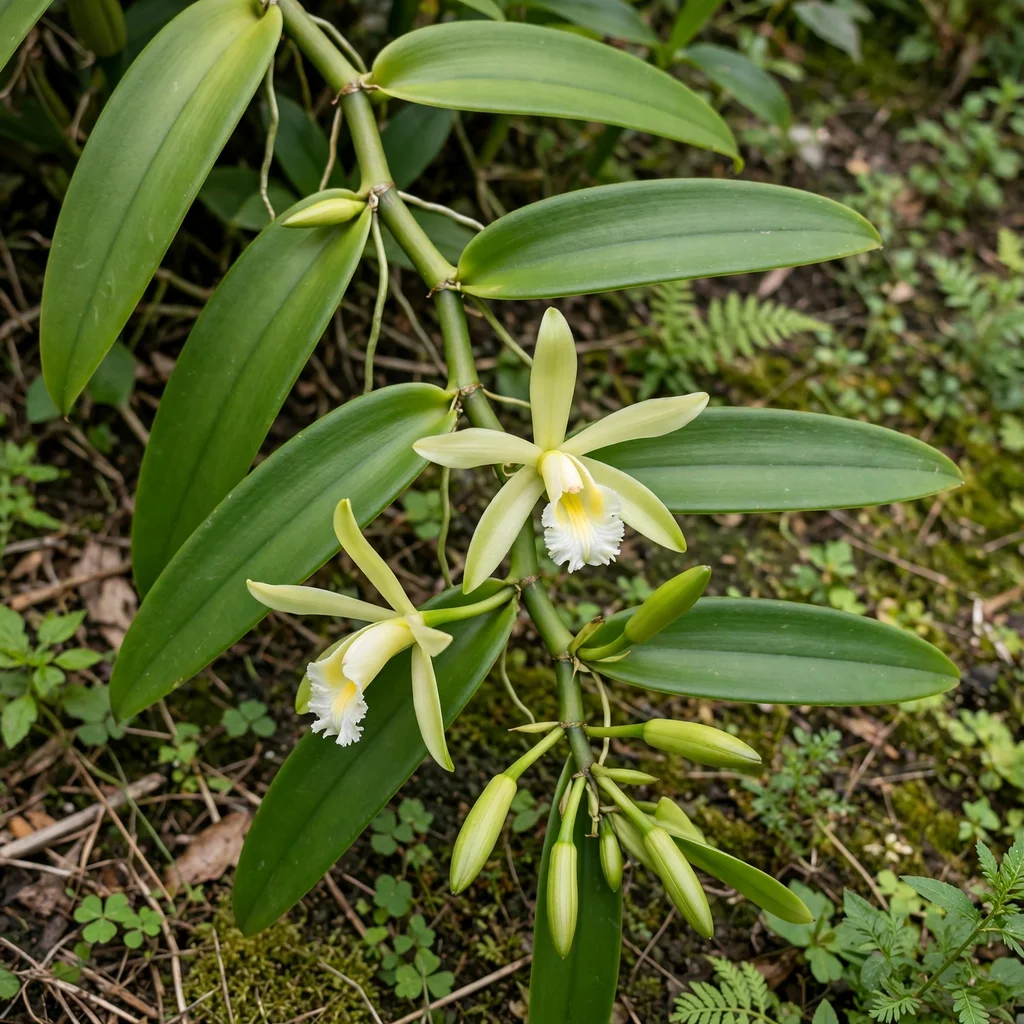
It differs from Vanilla barbellata in longer light green to yellow-cream sepals 48 to 55 mm long and a fluted deep reddish-purple lip 40 to 50 mm long with a yellow crest and pale throat. Mature plants often flower leafless on short axillary racemes of 1 to 8 flowers followed by pendent pods to about 6 inches long, and wild stock is endangered and must not be collected.
Uses & Benefits:
Essentials
At a Glance
Plant Type
Vine
Height
197"
Width
72"
Light
Partial Sun, Shade
Zones
9, 10
Water
Moderate with sharp drainage
Humidity
High
Lifespan
Perennial vine
Native To
South Florida to Caribbean
Toxicity
Unknown
Bloom period
Late spring – Summer
In flower about 4 months of the year
Planting
How to Grow
- Site in bright filtered light with morning sun only and protection from hot afternoon sun.
- Plant in a coarse epiphytic bark mix over limestone or mount to rough bark for instant drainage at 0 to 65 feet elevation effect.
- Tie leads to a post, tree or trellis so aerial roots can grip and climb.
- Keep the crown dry and the mix open; never leave roots standing in water.
- Move pots to a greenhouse or indoors for winter where nights fall toward 40F, hardy only in USDA 9-11.
Pro Tip
Mount to rough bark or grow in a very coarse bark mix that drains instantly, give bright filtered light with no hot afternoon sun, and bring containers inside before nights near 40F.
Keep It Thriving
Care Guide
Do
- Do give strong air movement around climbing stems.
- Do anchor new growth to support until aerial roots attach.
- Do protect from frost below 40F.
Don't
- Do not mistake normal leafless stems for dead wood and cut them out.
- Do not plant in dense soil that holds water around the roots.
- Do not collect plants from the wild.
Seasonal Care Calendar
| Task | Jan | Feb | Mar | Apr | May | Jun | Jul | Aug | Sep | Oct | Nov | Dec |
|---|---|---|---|---|---|---|---|---|---|---|---|---|
| Pest Check | ||||||||||||
| Plant | ||||||||||||
| Propagate | ||||||||||||
| Winter Prep |
Watch Out For
Pests & Diseases
Common Pests
Common Diseases
In the Garden
Landscape Uses & Companions
Landscape Uses
Multiply
Propagation Methods
Good to Know
Common Questions
Dillon's Vanilla questions
What zones can Dillon's Vanilla grow in?
Dillon's Vanilla is hardy in USDA Zones 9–10: in that range it survives winter in the ground. Colder than Zone 9, grow it in a container you can move to shelter for the winter, or as an annual.
When does Dillon's Vanilla bloom?
Dillon's Vanilla typically blooms from late spring to late summer. Exact timing shifts a week or two with your zone — Sow's bloom calendar maps it to your garden.
Does Dillon's Vanilla need full sun?
Dillon's Vanilla does best in part shade.
More Vanilla to compare
Keep exploring
Explore the genus
Hardy in your zone?
Grow Dillon's Vanilla with confidence
See it in a design of your actual yard, get zone-matched care reminders, and track it season by season in your garden journal.