The Story
Plant Bio
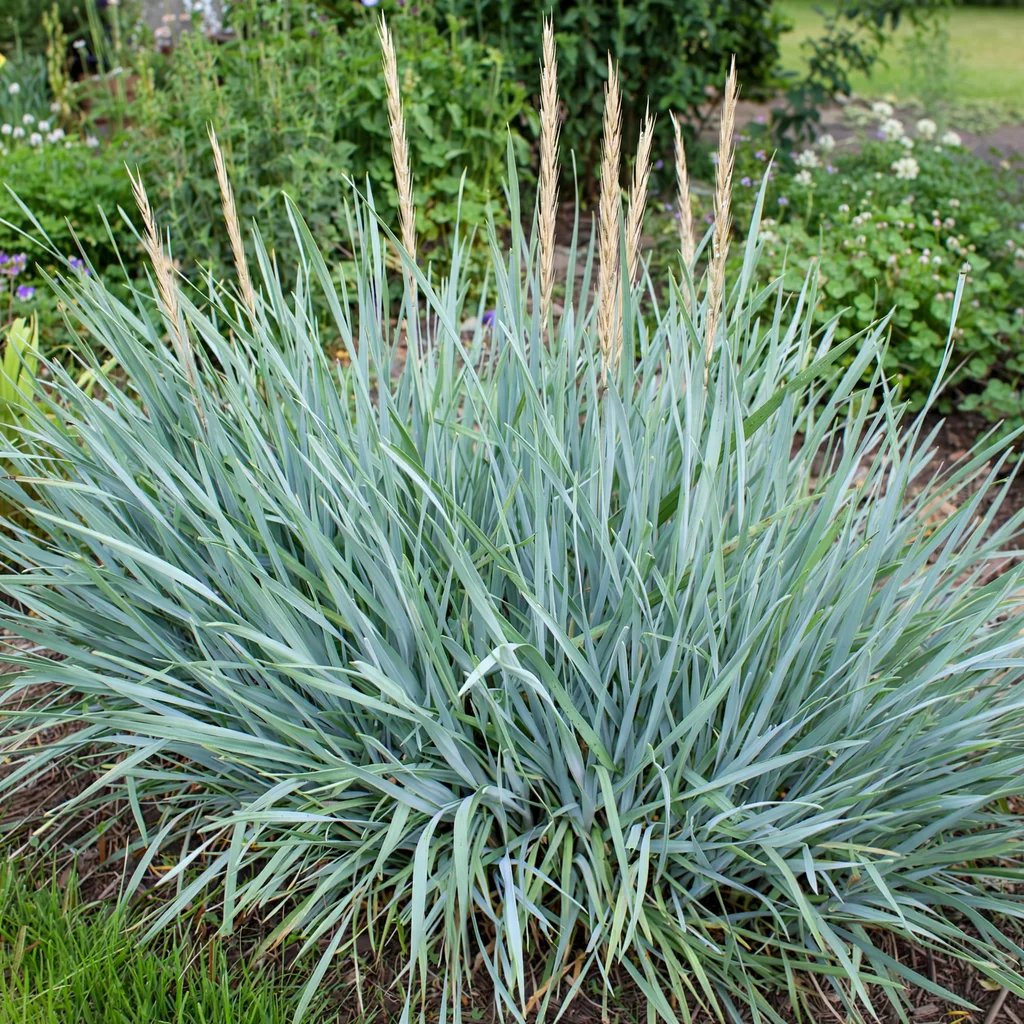
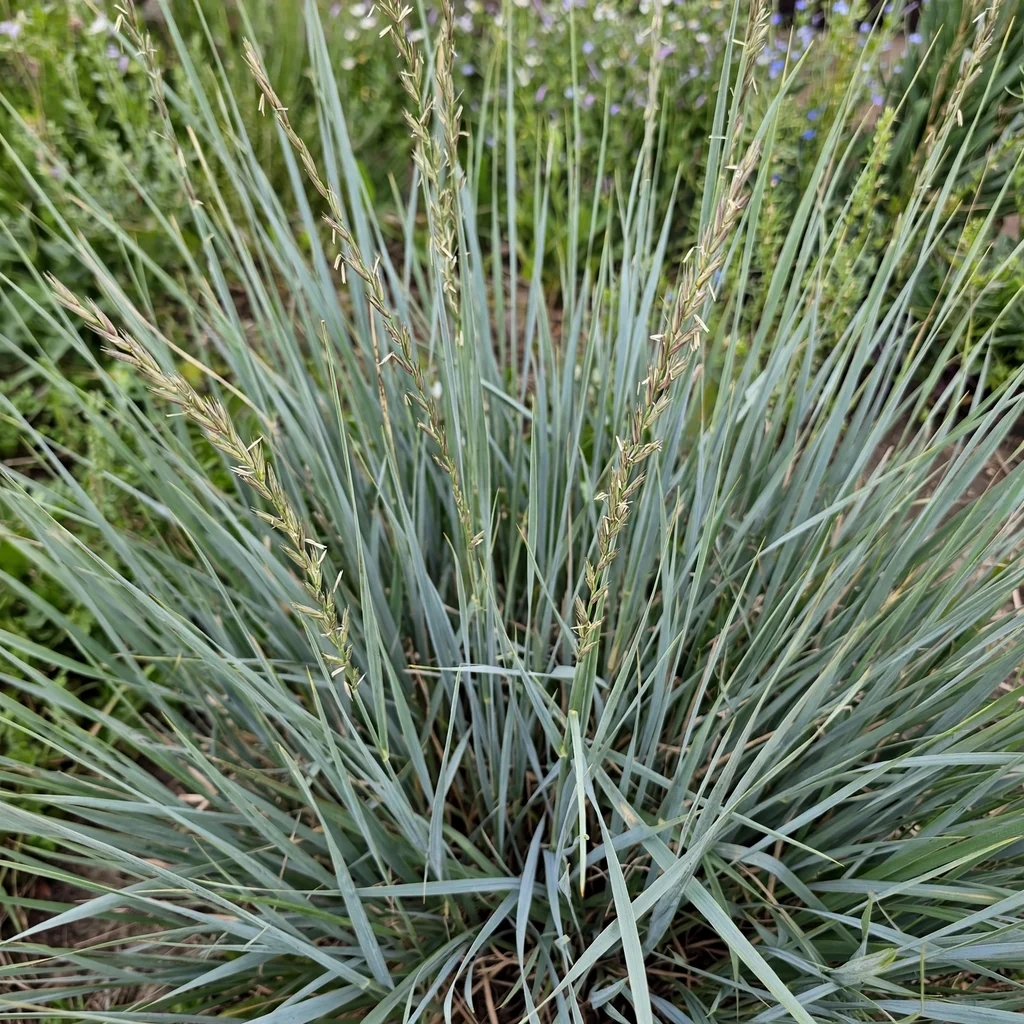
Elymus glaucus, sold as Leymus glaucus, is a cool-season perennial bunchgrass forming loose to dense tufts of hollow culms two to five feet tall. The foliage is broad, flat and waxy blue-green with clasping auricles, and each culm ends in a single stiff spike that ripens from green to straw.
Blue wildrye is the most widespread western wildrye, native from Alaska to New Mexico in prairies and open woods on dry to moist hillsides. It is short-lived at three to four years, palatable early and coarse after spring, grown for forage, habitat and erosion repair rather than flower display.
Uses & Benefits:
Essentials
At a Glance
Plant Type
Grass
Height
48"
Width
24"
Light
Full Sun, Partial Sun
Zones
4, 5, 6, 7, 8, 9
Water
Medium
Humidity
Unknown
Lifespan
Short-lived perennial, 3-4 years
Native To
Western North America
Toxicity
Non-toxic
Bloom period
Early summer – Late summer
In flower about 3 months of the year
Planting
How to Grow
- Plant in full sun to part shade in a meadow, open woodland edge, or bank with good air movement.
- Sow seed in early spring on firm, moist soil and press in lightly; keep evenly moist until established.
- Water to establish, then reduce; plants persist on 15 inches of rain but tolerate seasonal moisture near streams.
- Leave seed spikes to ripen for birds and self-sowing, then mow or cut back spent culms in late fall.
Pro Tip
Cut forage growth before the boot stage and plan to reseed or divide clumps every three to four years; mature plants turn coarse and do not recover from hard cutting back.
Keep It Thriving
Care Guide
Do
- Provide full sun and space clumps 1 to 2 feet apart for air flow to limit rust.
- Cut for forage before the boot stage when leaves are still soft.
- Reseed or divide every 3 to 4 years to replace short-lived clumps.
Don't
- Do not expect showy flowers; it is wind-pollinated and grown for foliage and habitat.
- Do not cut mature clumps to the crown late in the season; regrowth is weak.
- Do not let weedy grasses overtop young seedlings; they suppress establishment.
Seasonal Care Calendar
| Task | Jan | Feb | Mar | Apr | May | Jun | Jul | Aug | Sep | Oct | Nov | Dec |
|---|---|---|---|---|---|---|---|---|---|---|---|---|
| Harvest | ||||||||||||
| Pest Check | ||||||||||||
| Plant | ||||||||||||
| Propagate |
Watch Out For
Pests & Diseases
Common Pests
Common Diseases
In the Garden
Landscape Uses & Companions
Landscape Uses
Multiply
Propagation Methods
Good to Know
Common Questions
Blue Wildrye questions
What zones can Blue Wildrye grow in?
Blue Wildrye is hardy in USDA Zones 4–9: in that range it survives winter in the ground. Warmer than Zone 9, winter isn't the problem: it prefers colder winters, and summer heat can shorten its life.
Is Blue Wildrye deer resistant?
Not reliably. Deer may browse Blue Wildrye, especially tender spring growth — plan on repellents or fencing where pressure is high.
When does Blue Wildrye bloom?
Blue Wildrye typically blooms in summer. Exact timing shifts a week or two with your zone — Sow's bloom calendar maps it to your garden.
Does Blue Wildrye need full sun?
Blue Wildrye does best in full sun to part shade. In hot climates, afternoon shade keeps blooms fresher longer.
Is Blue Wildrye drought tolerant?
Yes — once established (usually after the first full season), Blue Wildrye handles dry spells with minimal watering. Water deeply its first year to build the root system that makes that possible.
More Leymus to compare
Keep exploring
Explore the genus
Grow Blue Wildrye with confidence
See it in a design of your actual yard, get zone-matched care reminders, and track it season by season in your garden journal.