The Story
Plant Bio
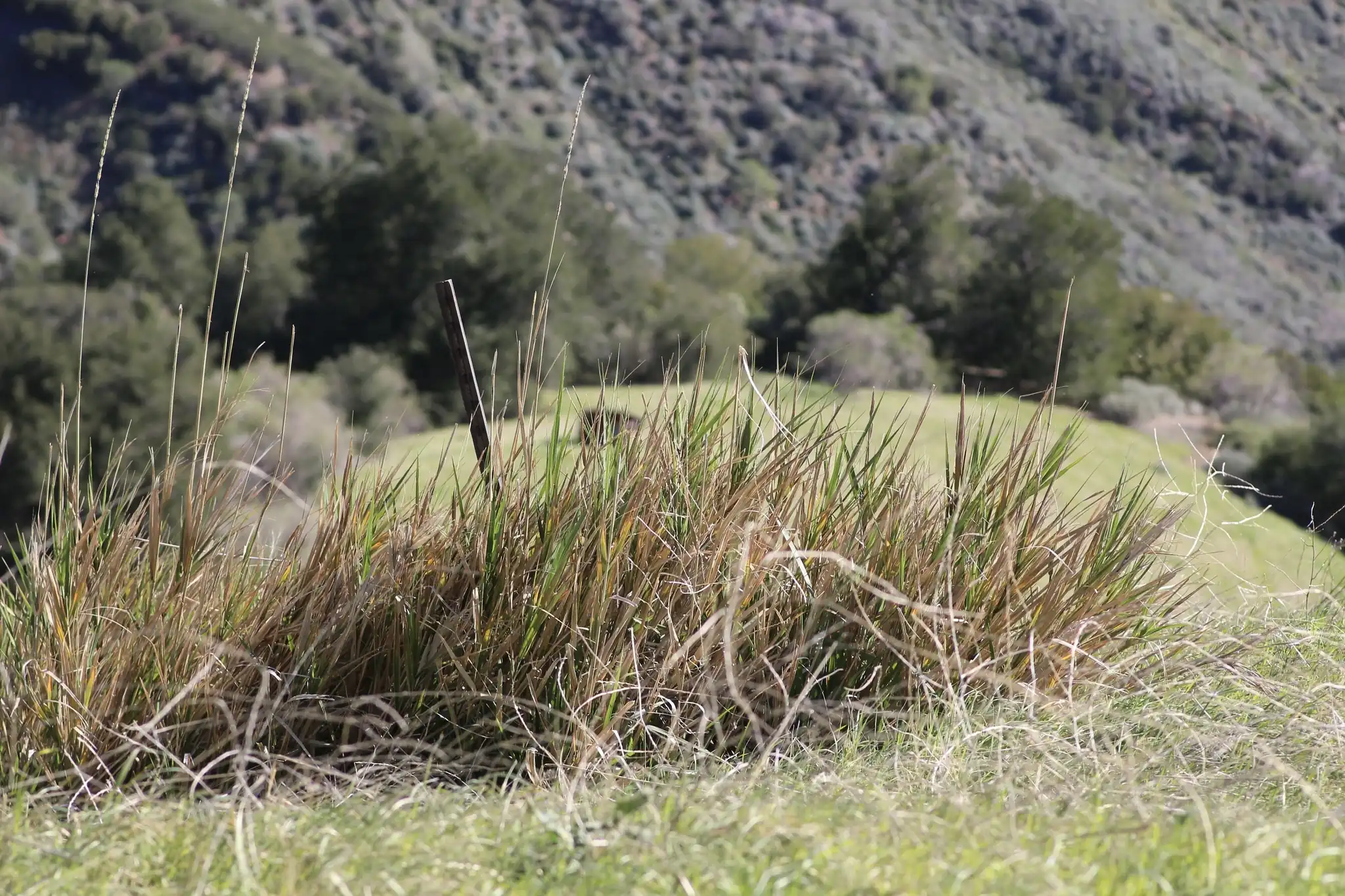
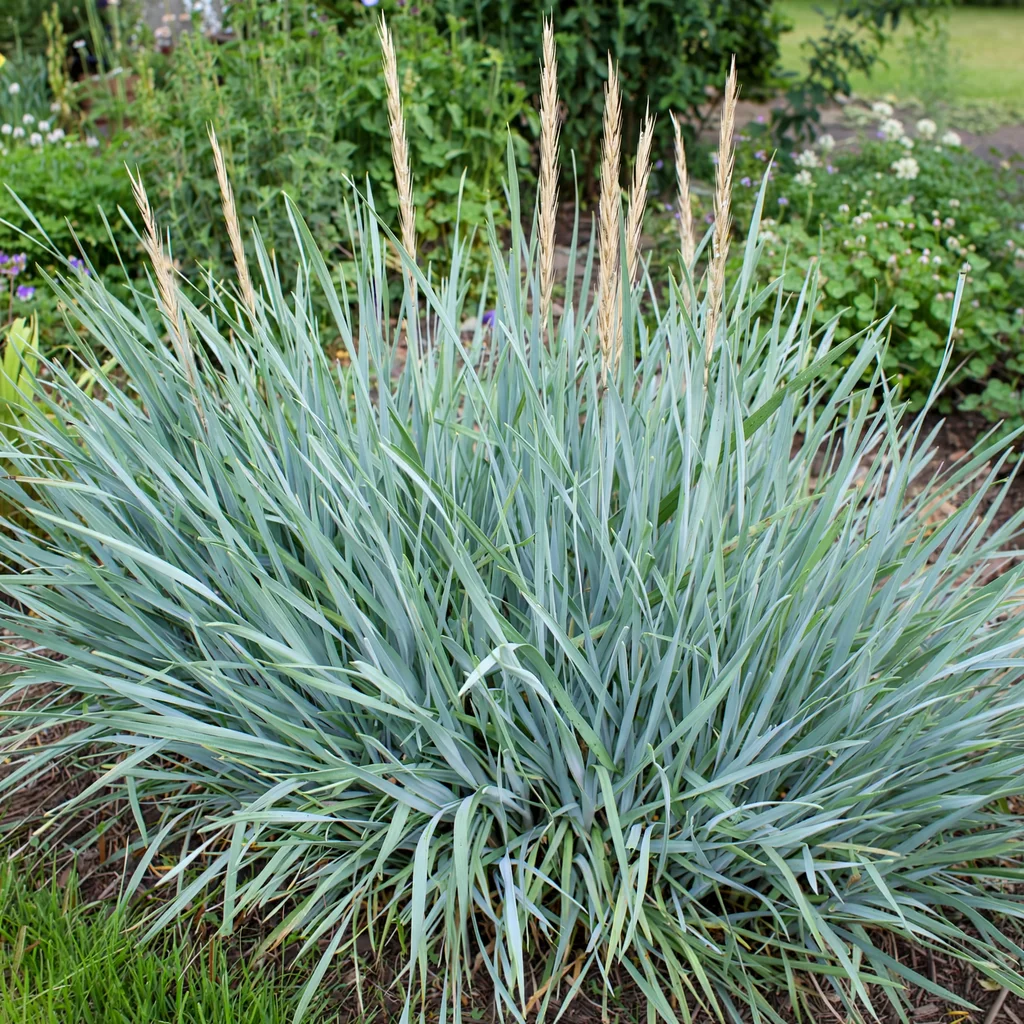
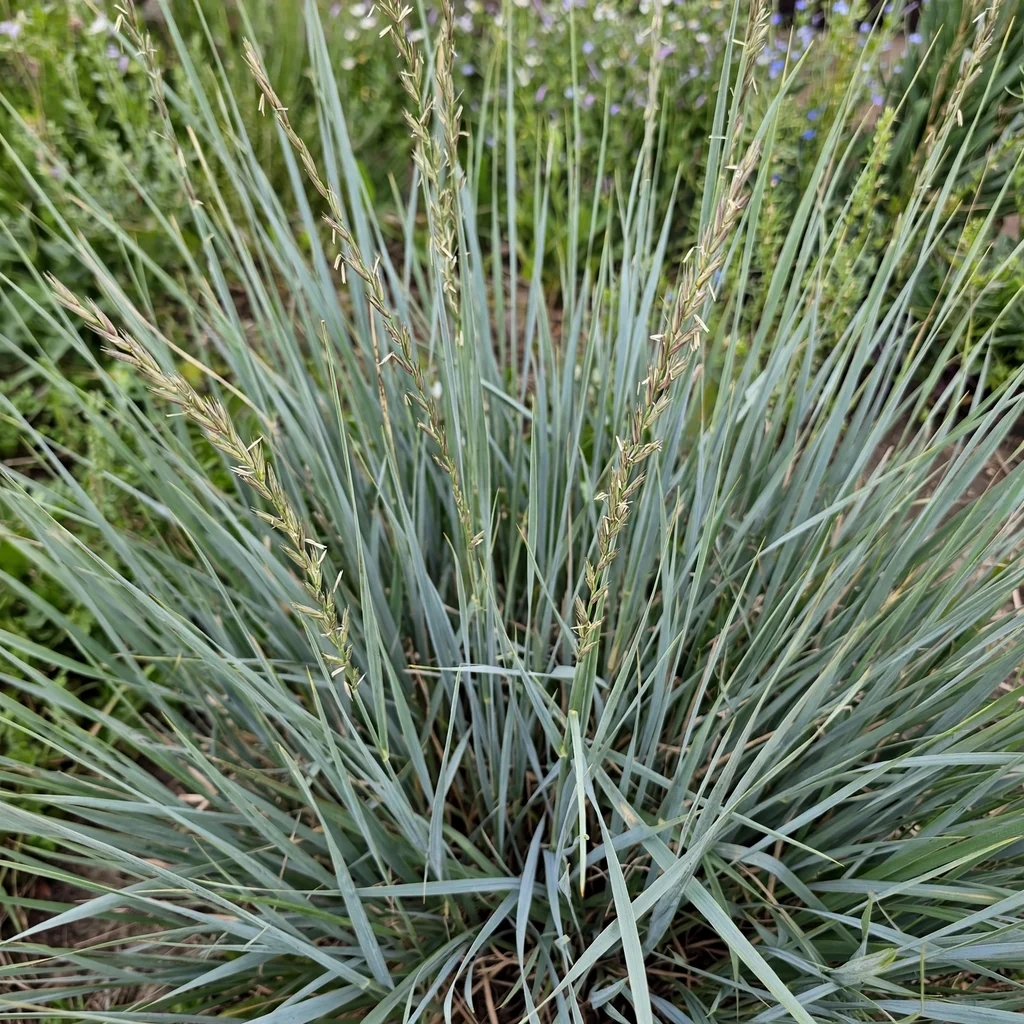
Leymus condensatus is an evergreen perennial grass native to dry slopes, chaparral, and coastal sage scrub across California and Baja California. It forms massive, upright clumps of narrow silver-blue foliage, topped in summer by dense wheat-colored flower spikes that held well above the leaves.
As the largest native grass species in North America, it reaches heights up to eleven feet and spreads through underground rhizomes to form extensive structural colonies. New shoots emerge bright green in spring before developing their characteristic powdery blue-gray cast.
Uses & Benefits:
Essentials
At a Glance
Plant Type
Grass
Height
132"
Width
96"
Light
Full Sun, Partial Sun
Zones
7, 8, 9, 10
Water
Low
Humidity
Low to moderate
Lifespan
Perennial
Native To
California, Baja California
Toxicity
Non-toxic
Bloom period
Summer – Early fall
In flower about 4 months of the year
Planting
How to Grow
- Select a site in full sun with well-draining sandy, mineral, or lean soil.
- Dig a planting hole twice the width of the container and set the plant crown level with the surrounding soil.
- Water deeply at planting time to settle roots, then taper off irrigation once established.
- Cut all top growth down to near ground level in late winter every one to two years to clear spent foliage.
Pro Tip
Withhold supplemental nitrogen and avoid over-irrigation; excessive fertilizer and moisture cause the rigid stems to flop and turn lush green.
Keep It Thriving
Care Guide
Do
- Plant in lean, fast-draining soils in full sun
- Install root barriers near paved areas to contain spreading rhizomes
- Cut foliage back hard in late winter to promote clean spring growth
Don't
- Do not apply high-nitrogen fertilizers
- Do not overwater established plants
- Do not plant in soggy or poorly drained sites
Seasonal Care Calendar
| Task | Jan | Feb | Mar | Apr | May | Jun | Jul | Aug | Sep | Oct | Nov | Dec |
|---|---|---|---|---|---|---|---|---|---|---|---|---|
| Divide | ||||||||||||
| Pest Check | ||||||||||||
| Plant | ||||||||||||
| Prune |
Watch Out For
Pests & Diseases
Common Pests
Common Diseases
In the Garden
Landscape Uses & Companions
Landscape Uses
Multiply
Propagation Methods
Good to Know
Common Questions
Giant Wildrye questions
What zones can Giant Wildrye grow in?
Giant Wildrye is hardy in USDA Zones 7–10: in that range it survives winter in the ground. Colder than Zone 7, grow it in a container you can move to shelter for the winter, or as an annual.
Is Giant Wildrye deer resistant?
Yes — Giant Wildrye is rated deer-resistant. Deer typically pass it over, though extreme hunger can override any plant's defenses.
When does Giant Wildrye bloom?
Giant Wildrye typically blooms from early summer to early fall. Exact timing shifts a week or two with your zone — Sow's bloom calendar maps it to your garden.
Does Giant Wildrye need full sun?
Giant Wildrye does best in full sun to part shade. In hot climates, afternoon shade keeps blooms fresher longer.
Is Giant Wildrye drought tolerant?
Yes — once established (usually after the first full season), Giant Wildrye handles dry spells with minimal watering. Water deeply its first year to build the root system that makes that possible.
More Leymus to compare
Keep exploring
Explore the genus
Hardy in your zone?
Grow Giant Wildrye with confidence
See it in a design of your actual yard, get zone-matched care reminders, and track it season by season in your garden journal.