The Story
Plant Bio
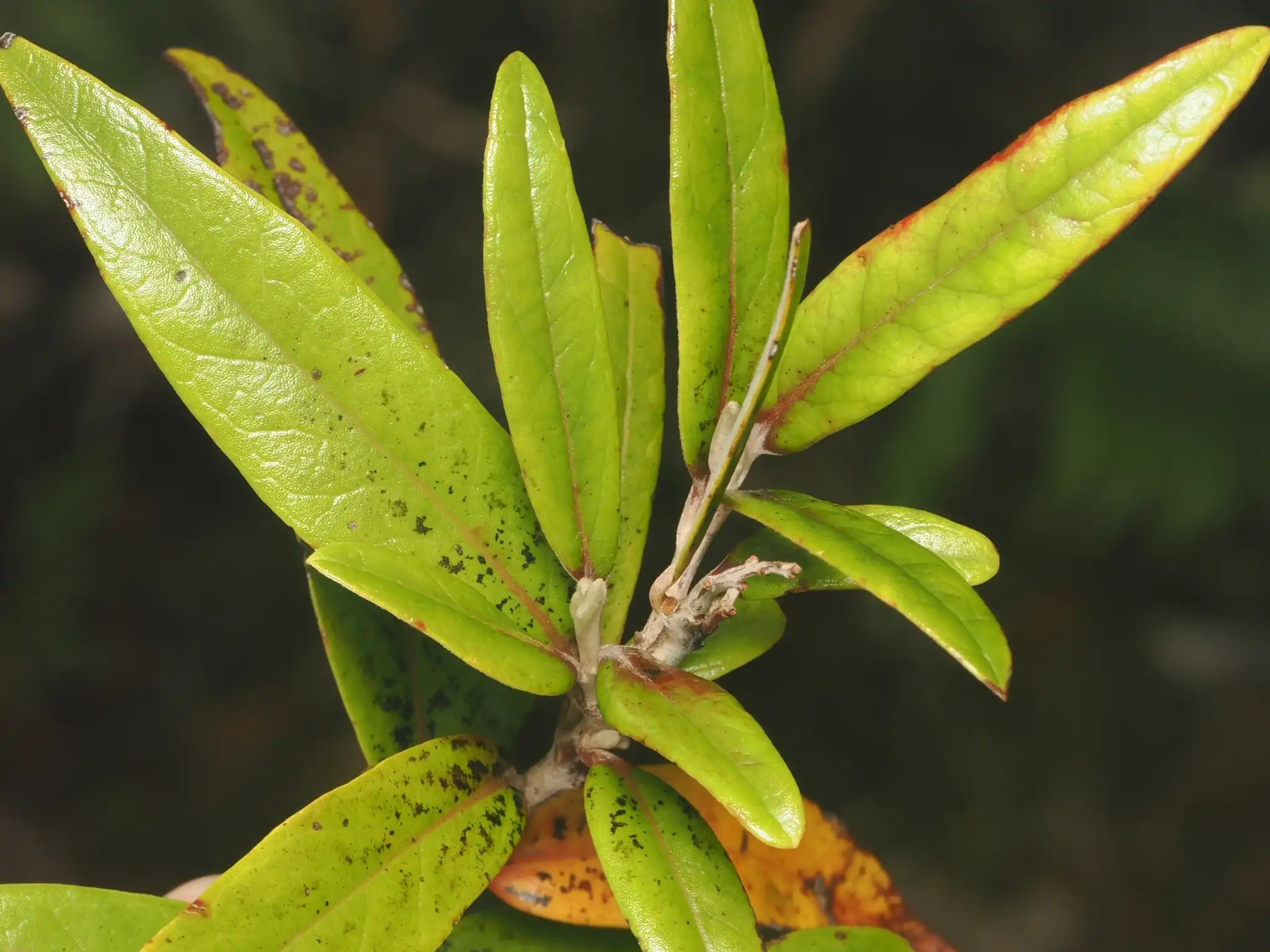
Corokia buddleioides, known as korokio, is an upright evergreen shrub native to the North Island of New Zealand that reaches six to twelve feet tall. It features slender, dark-barked branches clad in narrow, lanceolate leaves with glossy green topsides and dense silvery-white felted undersides.
In spring, small star-shaped yellow flowers with fringed petals bloom in short terminal clusters, followed by small berries. Unlike its relative Corokia cotoneaster, this species develops straight branches rather than a zig-zag divaricating form, paired with longer willow-like foliage.
Uses & Benefits:
Essentials
At a Glance
Plant Type
Shrub
Height
118"
Width
70"
Light
Full Sun, Partial Sun
Zones
8, 9, 10
Water
Low to Moderate
Humidity
Tolerates high coastal air exposure
Lifespan
Perennial
Native To
New Zealand
Toxicity
Non-toxic
Bloom period
Spring
In flower about 3 months of the year
Planting
How to Grow
- Select a planting site in full sun to partial shade with light, rapidly draining soil.
- Dig a hole twice as wide as the root ball and set the plant so the root crown sits level with the surrounding soil.
- Backfill with unamended native soil and water thoroughly to settle the root system.
- Apply a light layer of organic mulch around the base, keeping it clear of the direct stem.
- Water weekly during the first dry season until established, after which rainfall is usually sufficient.
Pro Tip
Prune only into young leafy shoots immediately after flowering; cutting back into old leafless wood causes stem dieback because old stems lack dormant buds.
Keep It Thriving
Care Guide
Do
- Plant in soil with fast surface and subsoil drainage.
- Prune lightly right after spring flowering to maintain bushiness.
- Provide full sun to maximize silver foliage contrast and flower production.
Don't
- Do not hard-prune into old, bare, woody stems.
- Do not overwater or plant in heavy, waterlogged clay soils.
- Do not heavy-feed with high-nitrogen fertilizers.
Seasonal Care Calendar
| Task | Jan | Feb | Mar | Apr | May | Jun | Jul | Aug | Sep | Oct | Nov | Dec |
|---|---|---|---|---|---|---|---|---|---|---|---|---|
| Fertilize | ||||||||||||
| Pest Check | ||||||||||||
| Prune | ||||||||||||
| Winter Prep |
Watch Out For
Pests & Diseases
Common Pests
Common Diseases
In the Garden
Landscape Uses & Companions
Landscape Uses
Companion Plants
Multiply
Propagation Methods
Good to Know
Common Questions
Korokio questions
What zones can Korokio grow in?
Korokio is hardy in USDA Zones 8–10: in that range it survives winter in the ground. Colder than Zone 8, grow it in a container you can move to shelter for the winter.
Is Korokio deer resistant?
Not reliably. Deer may browse Korokio, especially tender spring growth — plan on repellents or fencing where pressure is high.
When does Korokio bloom?
Korokio typically blooms in spring. Exact timing shifts a week or two with your zone — Sow's bloom calendar maps it to your garden.
Does Korokio need full sun?
Korokio does best in full sun to part shade. In hot climates, afternoon shade keeps blooms fresher longer.
Is Korokio drought tolerant?
Yes — once established (usually after the first full season), Korokio handles dry spells with minimal watering. Water deeply its first year to build the root system that makes that possible.
More Corokia to compare
Keep exploring
Explore the genus
Hardy in your zone?
Grow Korokio with confidence
See it in a design of your actual yard, get zone-matched care reminders, and track it season by season in your garden journal.