

The Story
Plant Bio
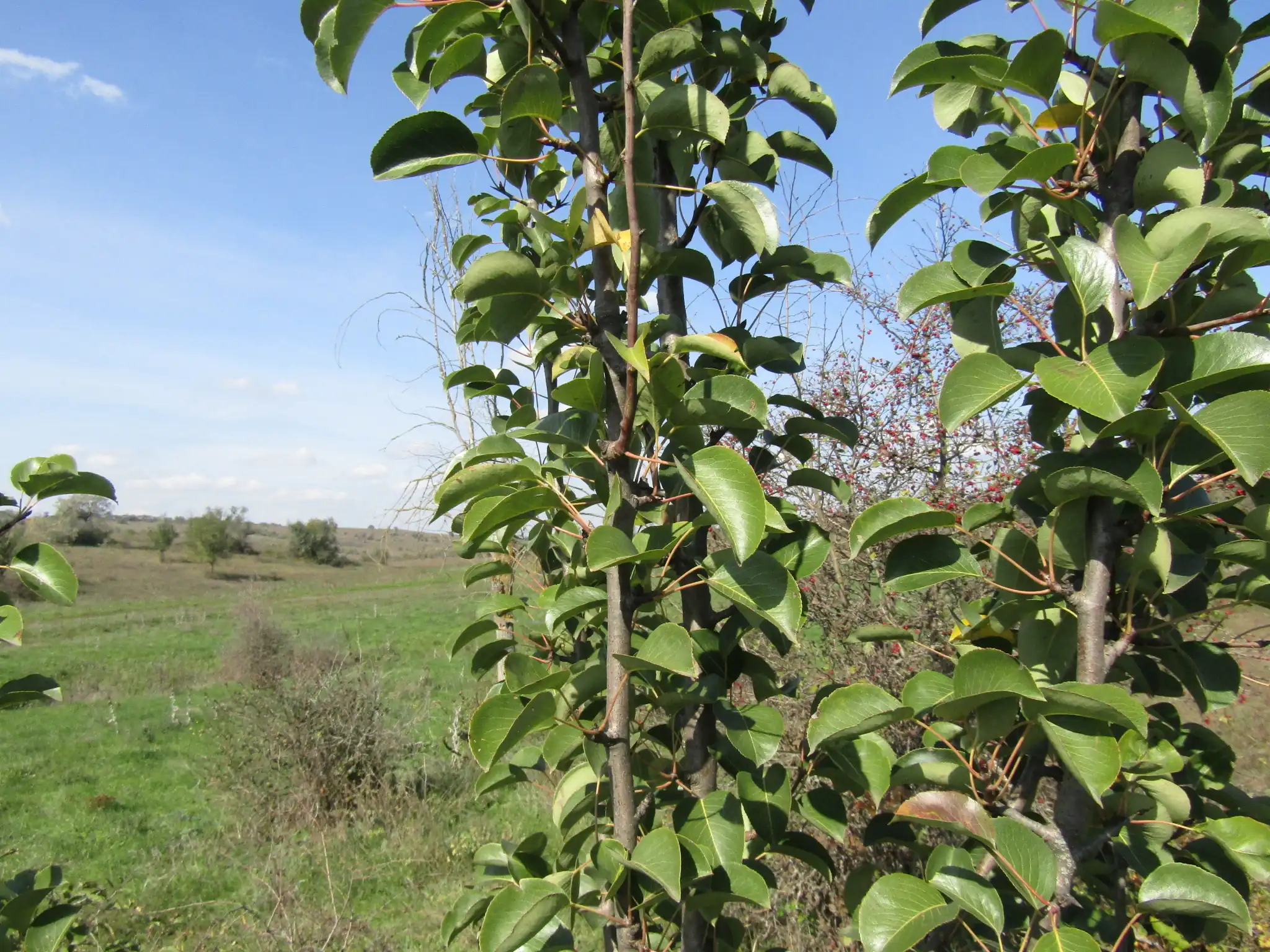
Pyrus communis, the common or European pear, is a deciduous tree from Europe to northern Iraq, erect and spreading, reaching 40 to 50 ft tall and 25 to 35 ft wide on its own roots. Alternate oval leaves 1 to 4 in long have serrated edges and turn yellow in autumn. Grey bark becomes blocky and furrowed with age.
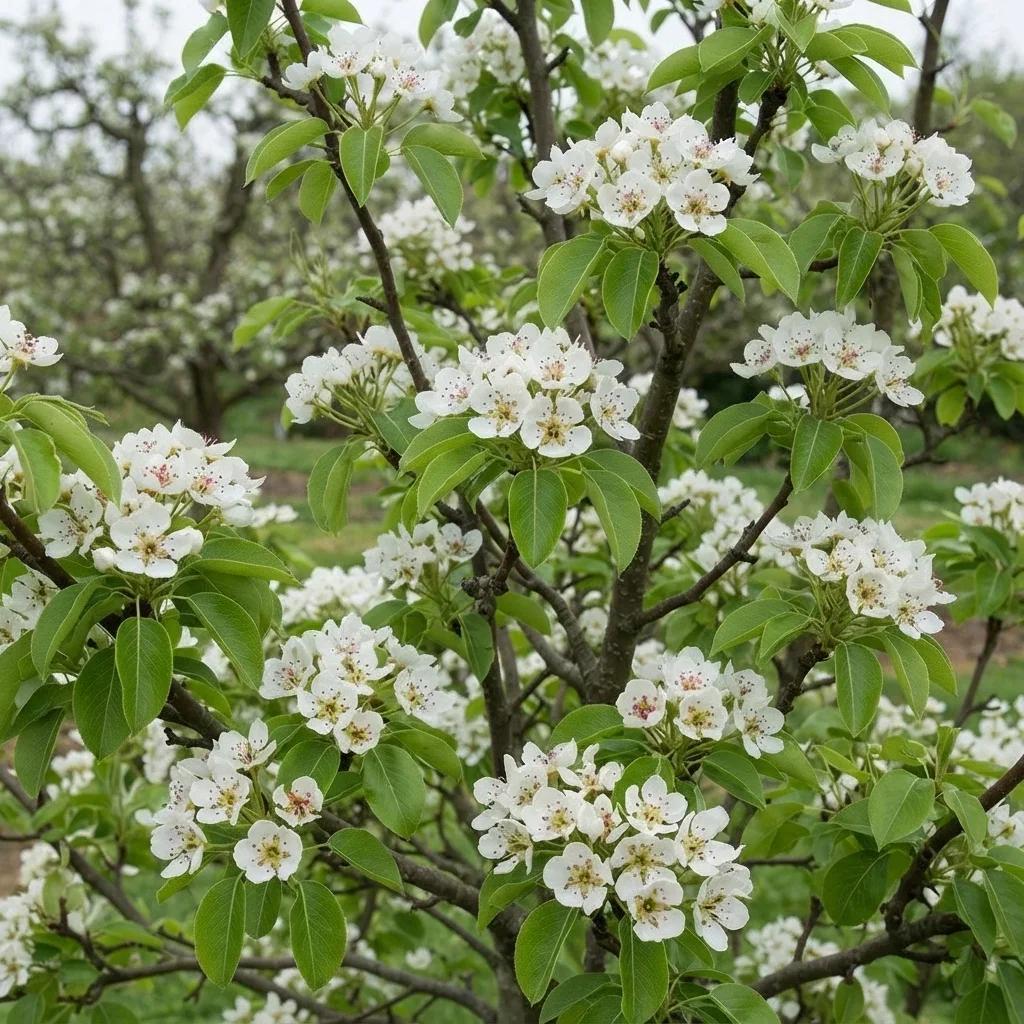
White cup to saucer-shaped flowers 1 to 3 in across open in corymbs in spring, ahead of most apple blossom. Nearly all cultivars need a compatible pollination partner. Pears are unusual among fruit in that they should be picked while still firm and ripened off the tree, or the flesh goes soft at the core.
Uses & Benefits:
Essentials
At a Glance
Plant Type
Fruit Vegetable
Height
540"
Width
360"
Light
Full Sun
Zones
4, 5, 6, 7, 8
Water
Medium; even moisture with free drainage
Humidity
Prefers drier air; wet springs worsen scab
Lifespan
Long-lived; well over a century on seedling roots
Native To
Europe to northern Iraq
Toxicity
No significant toxicity reported; fruit is edible
Planting
How to Grow
- Choose a sheltered site in full sun; pears flower early and frost easily.
- Select a rootstock sized to your space and soil.
- Check the cultivar's pollination group and plant a compatible partner.
- Plant while dormant with the graft union clear of the soil.
- Prune in winter to an open framework and thin crowded spurs.
- Pick while firm and ripen the fruit indoors at room temperature.
Pro Tip
Pick pears firm and ripen them off the tree; left to soften on the branch they go brown and mealy at the core.
Keep It Thriving
Care Guide
Do
- Plant two compatible cultivars for reliable fruit set 🍐
- Site trees away from frost pockets ❄️
- Prune to an open centre in winter ✂️
- Ripen picked fruit indoors at room temperature 🏠
Don't
- Do not leave fruit to soften on the tree ❌
- Do not overfeed with nitrogen; soft growth invites disease ❌
- Do not plant a single tree and expect a full crop ❌
Seasonal Care Calendar
| Task | Jan | Feb | Mar | Apr | May | Jun | Jul | Aug | Sep | Oct | Nov | Dec |
|---|---|---|---|---|---|---|---|---|---|---|---|---|
| Harvest | ||||||||||||
| Winter Pruning |
Watch Out For
Pests & Diseases
Common Pests
Common Diseases
In the Garden
Landscape Uses & Companions
Landscape Uses
Companion Plants
Multiply
Propagation Methods
Good to Know
Common Questions
Common Pear questions
What zones can Common Pear grow in?
Common Pear is hardy in USDA Zones 4–8. Inside that range it survives winter in the ground; outside it, grow it as an annual or a container plant you protect.
Is Common Pear deer resistant?
Not reliably. Deer may browse Common Pear, especially tender spring growth — plan on repellents or fencing where pressure is high.
When does Common Pear bloom?
Common Pear typically blooms in mid-spring, white corymbs through late spring. Exact timing shifts a week or two with your zone — Sow's bloom calendar maps it to your garden.
Does Common Pear need full sun?
Common Pear does best in full sun (6+ hours).
More Pyrus to compare
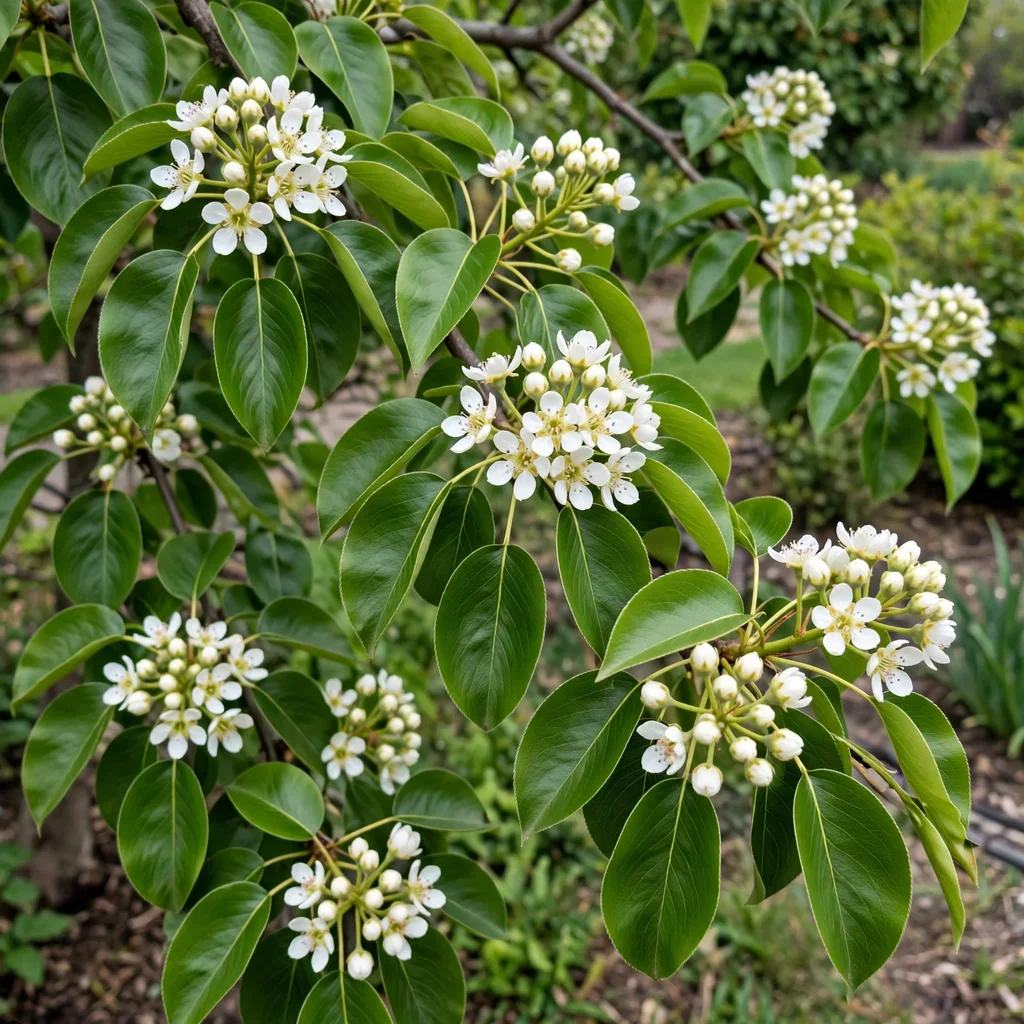
Drippin' Honey Pear
Pyrus calleryana 'Drippin' Honey'
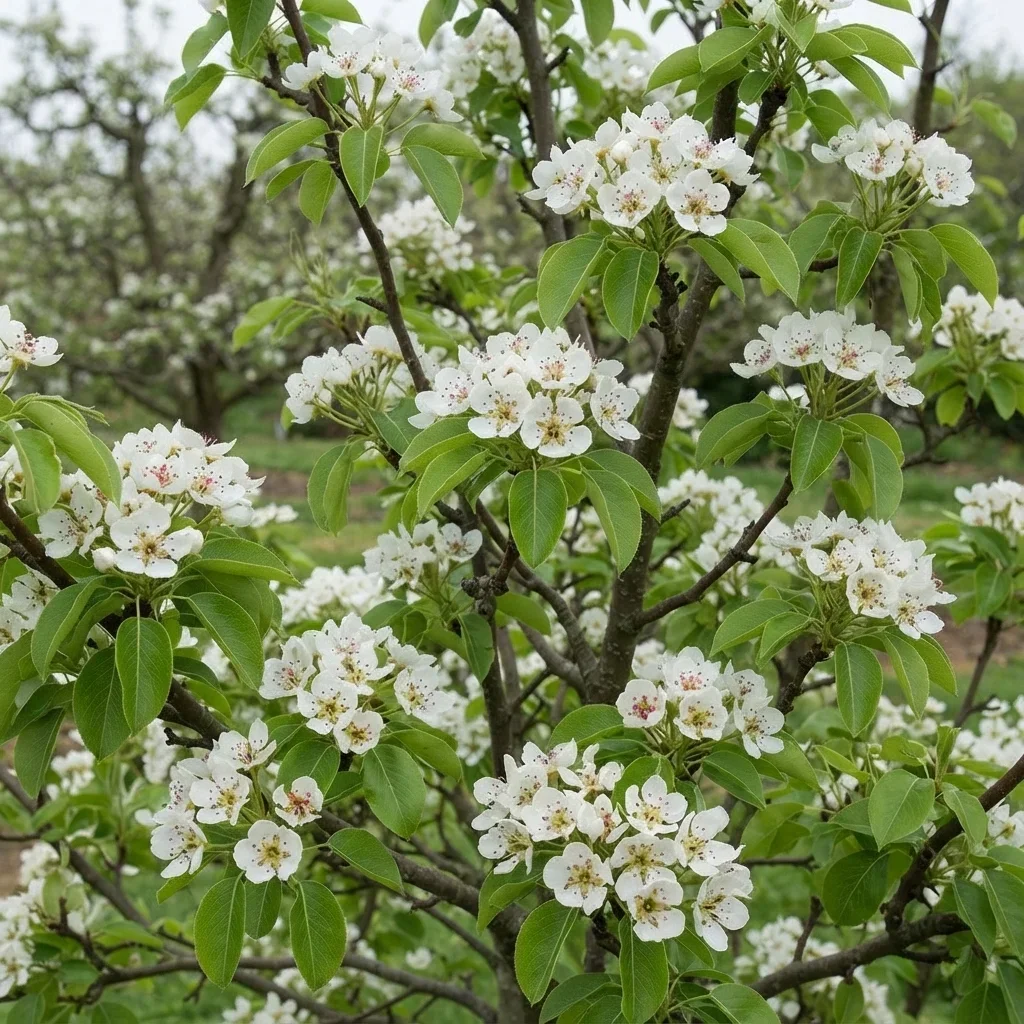
Bartlett Pear
Pyrus communis 'Bartlett'
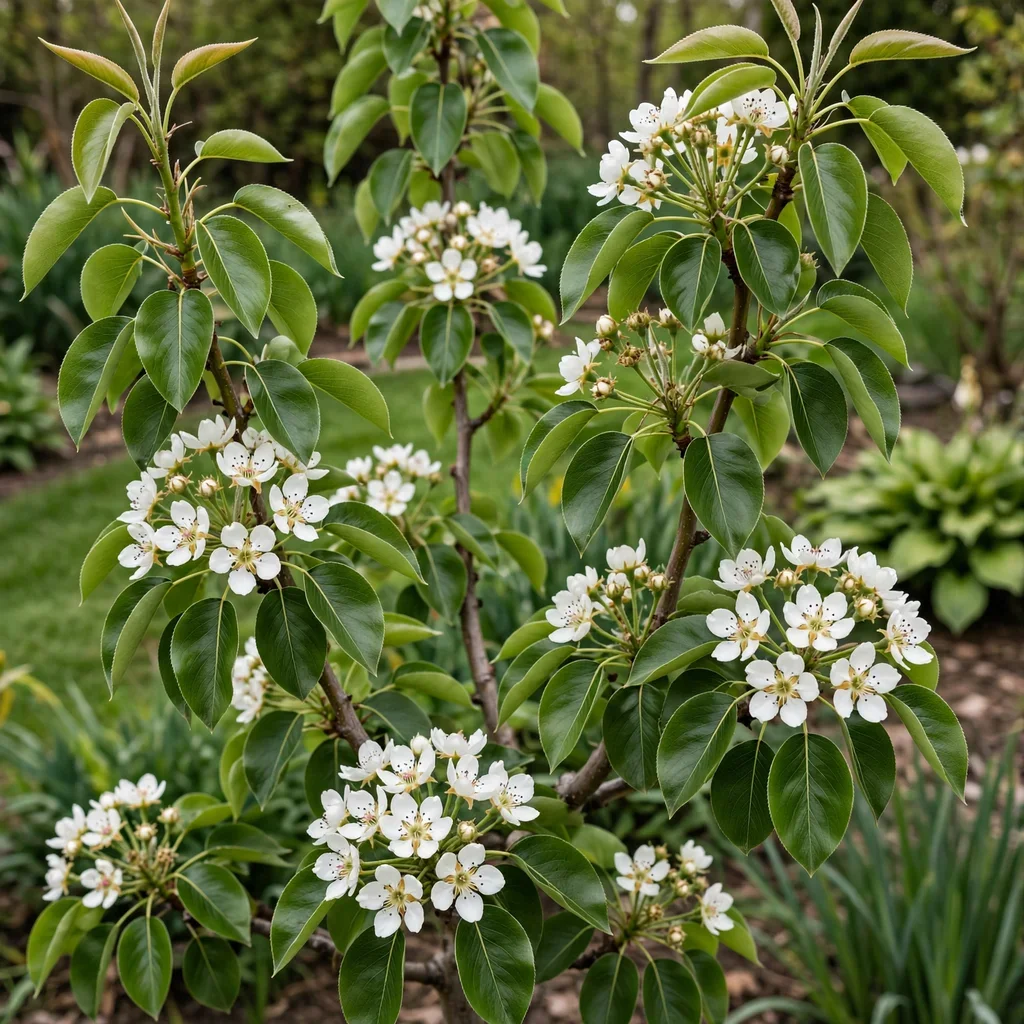
Apricot Sugar Pear
Pyrus communis 'Apricot Sugar Pearls Reachables'
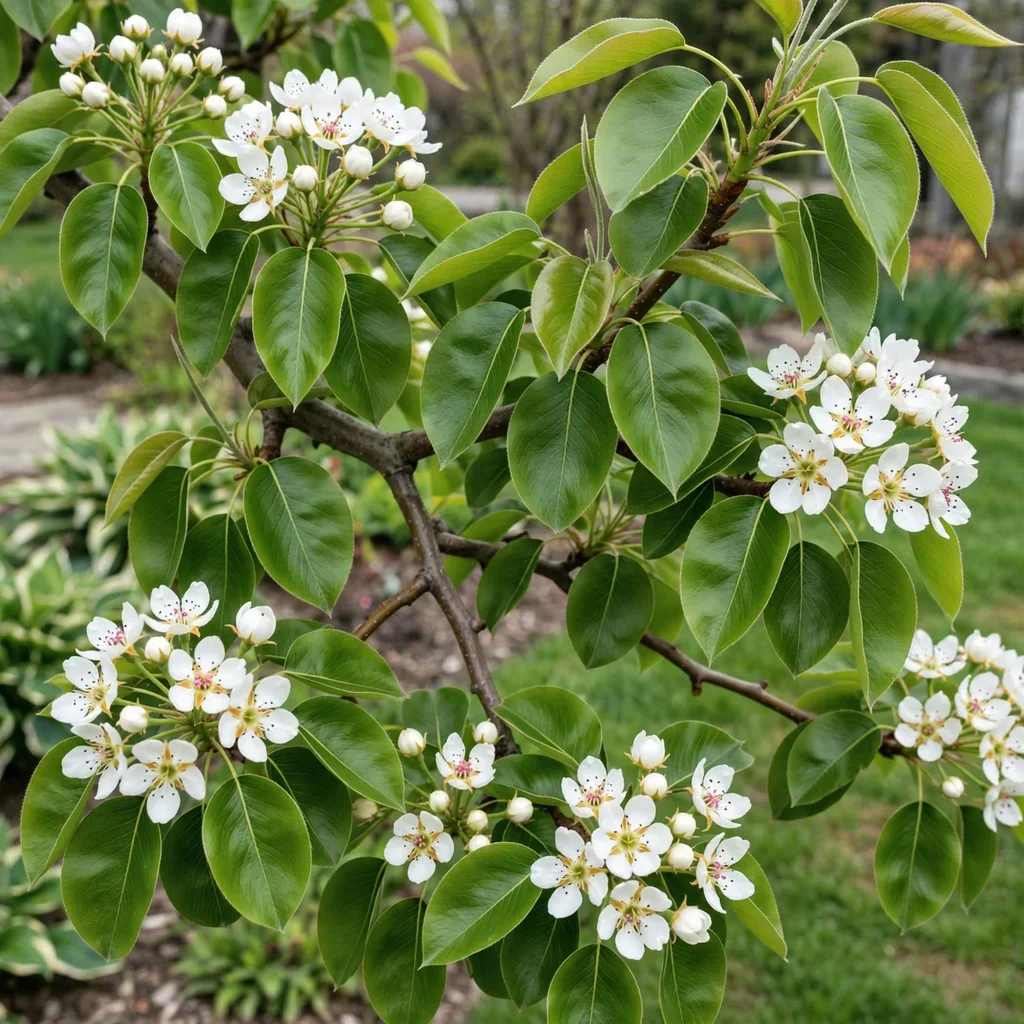
Crisp 'n Sweet Pear
Pyrus communis 'Crisp 'n Sweet'
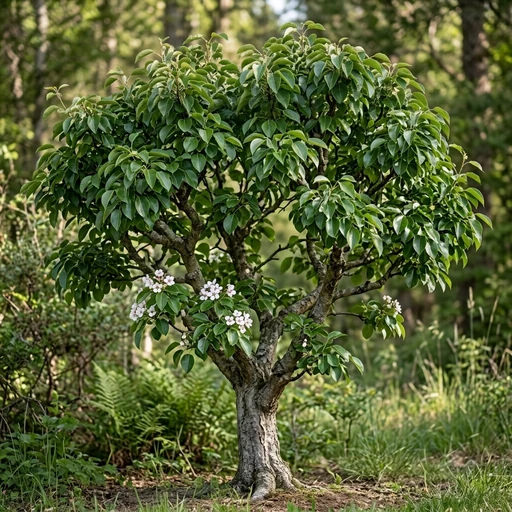
Kieffer Pear
Pyrus x hybrida 'Kieffer'
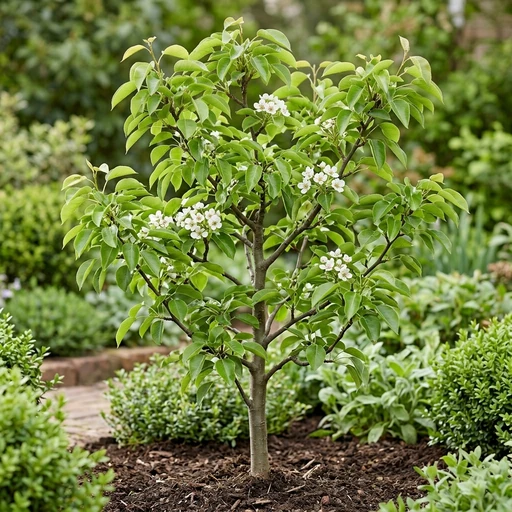
Hosui Asian Pear
Pyrus pyrifolia 'Hosui'
Keep exploring
Explore the genus
Hardy in your zone?
Grow Common Pear with confidence
See it in a design of your actual yard, get zone-matched care reminders, and track it season by season in your garden journal.