The Story
Plant Bio
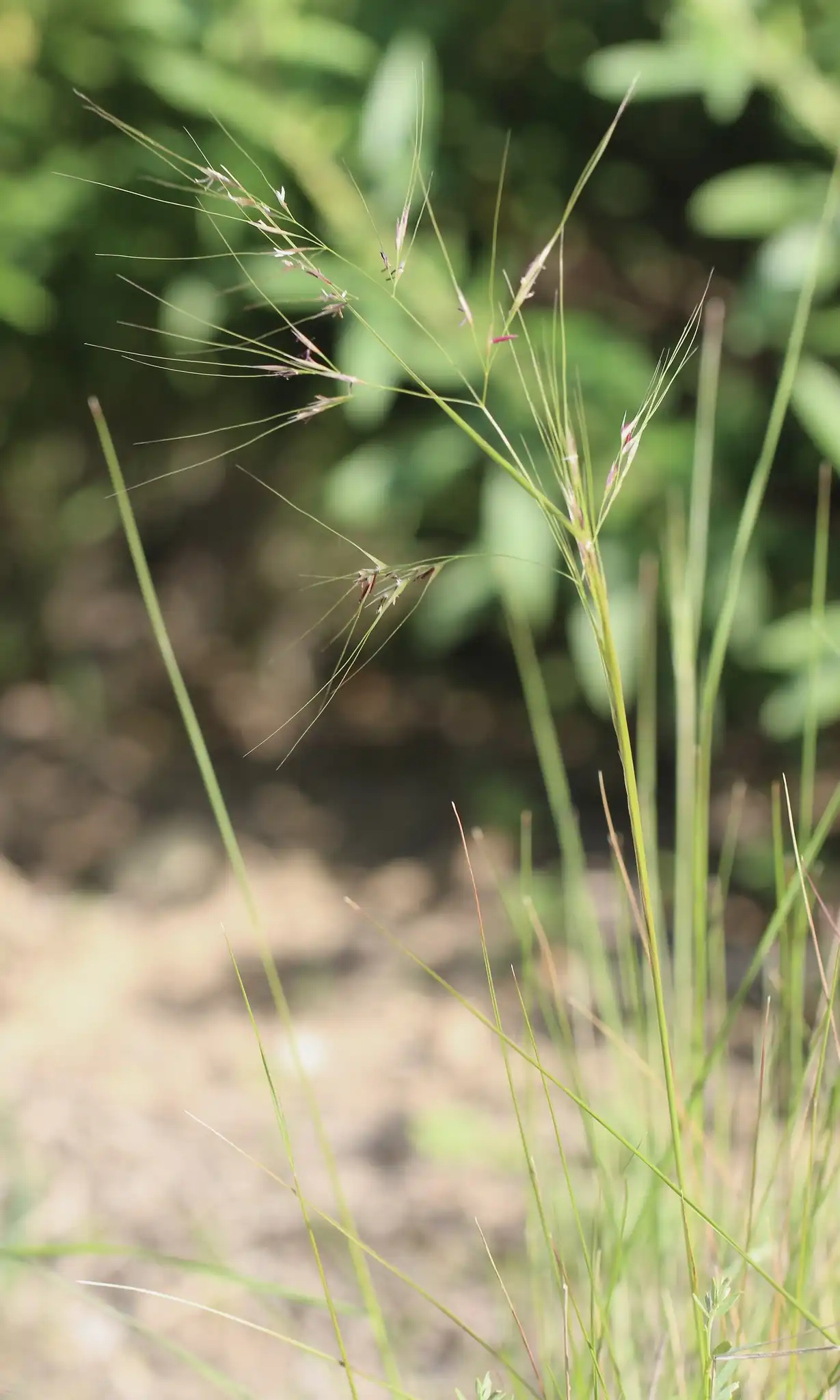
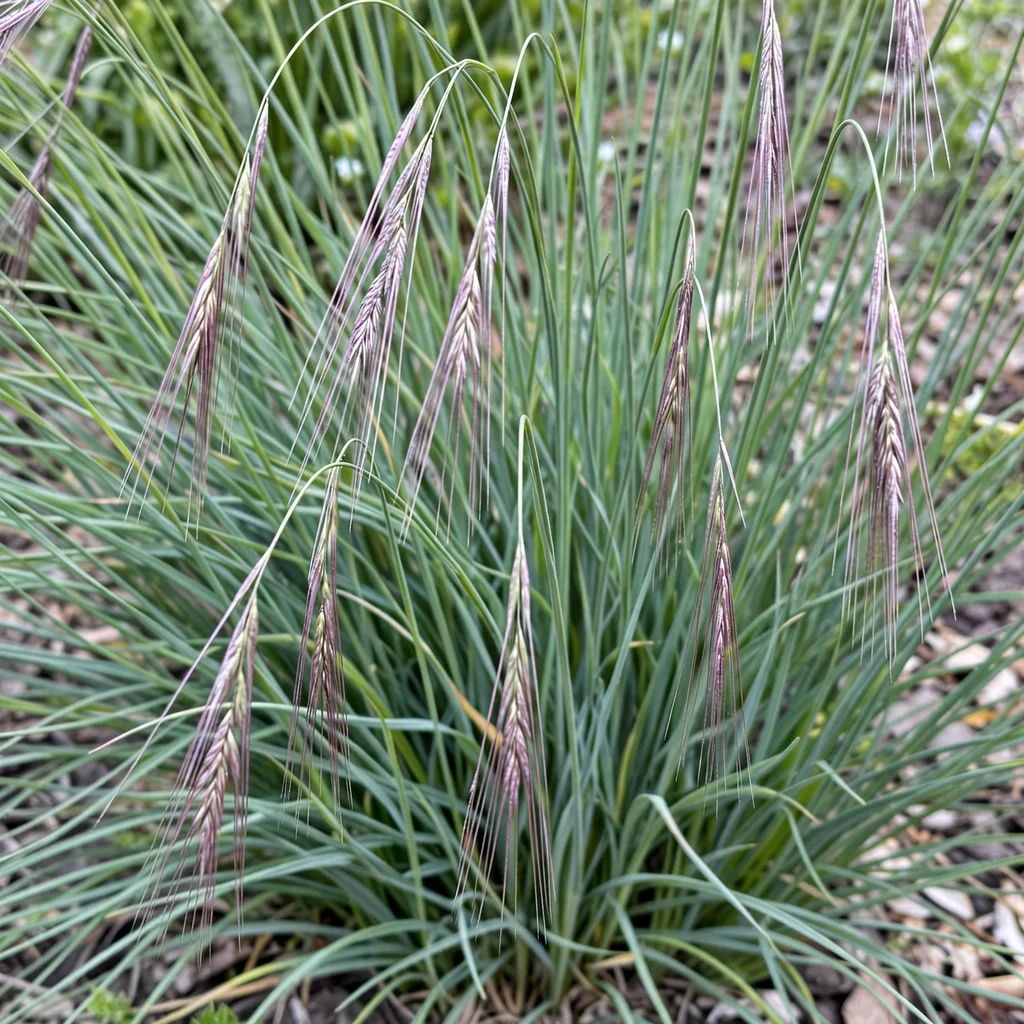
Nassella lepida, the foothill needlegrass, is a summer-dormant perennial bunchgrass from dry slopes in California and Baja California, forming an upright clump 2 to 3 feet tall and about 2 feet wide. The foliage is slender, wiry and green to grayish-green, with narrow flat to inrolled blades 5 to 9 inches long and erect culms that carry open airy panicles in spring.
It is distinguished by small green-brown spikelets with papery glumes and slender twice-bent awns about one-half to 2 inches long, borne several to a branch on panicles 4 to 22 inches long. It carries more spikelets per branch on finer awns than nodding needlegrass, hybridizes with purple needlegrass where they overlap, and is not the invasive Mexican feathergrass sold as Nassella tenuissima.
Uses & Benefits:
Essentials
At a Glance
Plant Type
Grass
Height
36"
Width
24"
Light
Full Sun, Partial Sun
Zones
8, 9, 10
Water
Low
Humidity
Unknown
Lifespan
Perennial
Native To
California, Baja California
Toxicity
Unknown
Bloom period
Spring
In flower about 3 months of the year
Planting
How to Grow
- Plant in fall in full sun to part sun in fast-draining soil on a slope or raised mound.
- Space 2 feet apart, setting the crown level with the soil and watering in once.
- Water through the first winter and spring, then taper off as foliage yellows.
- Keep completely dry in summer dormancy and do not feed for forced green growth.
Pro Tip
Withhold water once leaves straw in early summer; summer irrigation keeps the crown wet and kills dormant plants.
Keep It Thriving
Care Guide
Do
- Plant on dry slopes and in chaparral, sage scrub and oak grassland plantings.
- Leave spring seed heads to ripen and shatter.
- Use gravel mulch to keep the crown dry.
Don't
- Do not overwater or fertilize during summer dormancy.
- Do not shear green growth hard into the crown.
- Do not plant in wet clay or irrigated lawns.
Seasonal Care Calendar
| Task | Jan | Feb | Mar | Apr | May | Jun | Jul | Aug | Sep | Oct | Nov | Dec |
|---|---|---|---|---|---|---|---|---|---|---|---|---|
| Pest Check | ||||||||||||
| Plant | ||||||||||||
| Prune | ||||||||||||
| Spring Cleanup |
Watch Out For
Pests & Diseases
Common Pests
Common Diseases
In the Garden
Landscape Uses & Companions
Landscape Uses
Multiply
Propagation Methods
Good to Know
Common Questions
Foothill Needlegrass questions
What zones can Foothill Needlegrass grow in?
Foothill Needlegrass is hardy in USDA Zones 8–10: in that range it survives winter in the ground. Colder than Zone 8, grow it in a container you can move to shelter for the winter, or as an annual.
When does Foothill Needlegrass bloom?
Foothill Needlegrass typically blooms in spring. Exact timing shifts a week or two with your zone — Sow's bloom calendar maps it to your garden.
Does Foothill Needlegrass need full sun?
Foothill Needlegrass does best in full sun to part shade. In hot climates, afternoon shade keeps blooms fresher longer.
Is Foothill Needlegrass drought tolerant?
Yes — once established (usually after the first full season), Foothill Needlegrass handles dry spells with minimal watering. Water deeply its first year to build the root system that makes that possible.
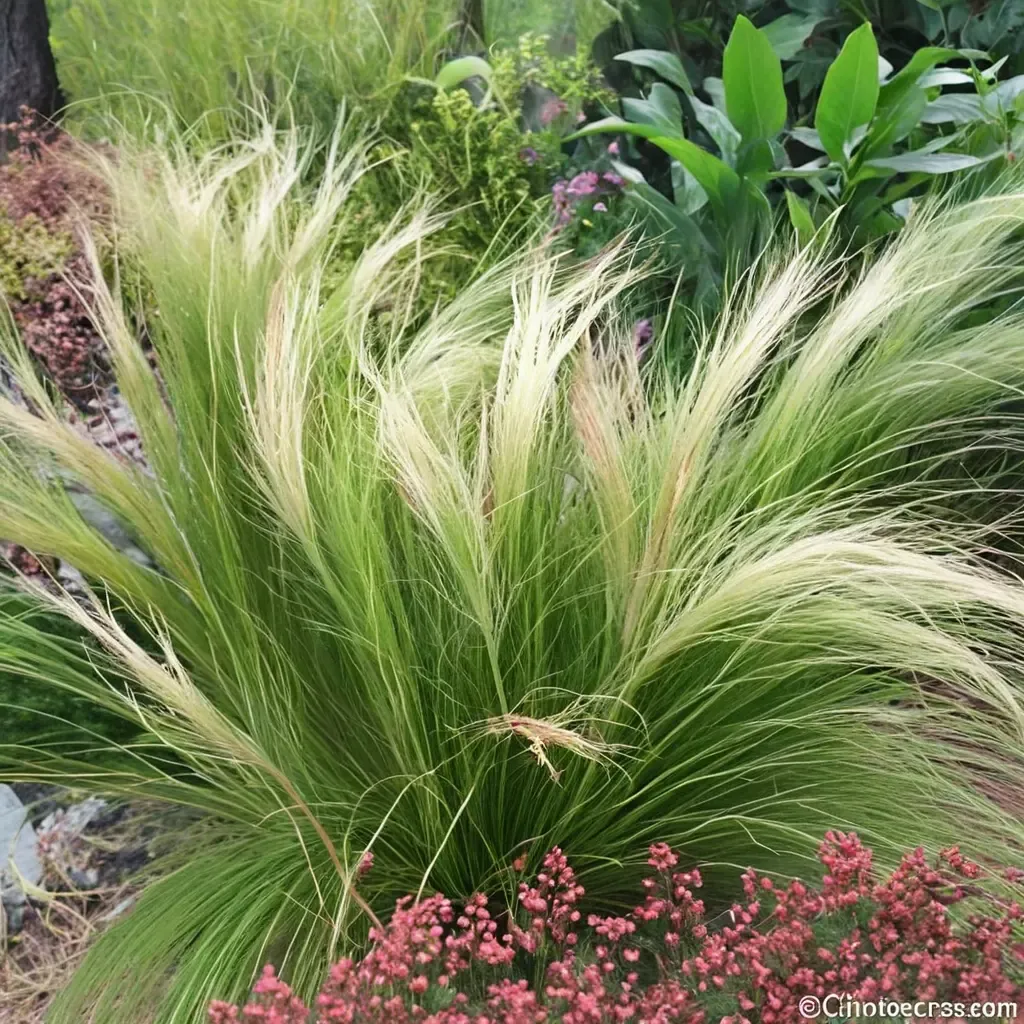
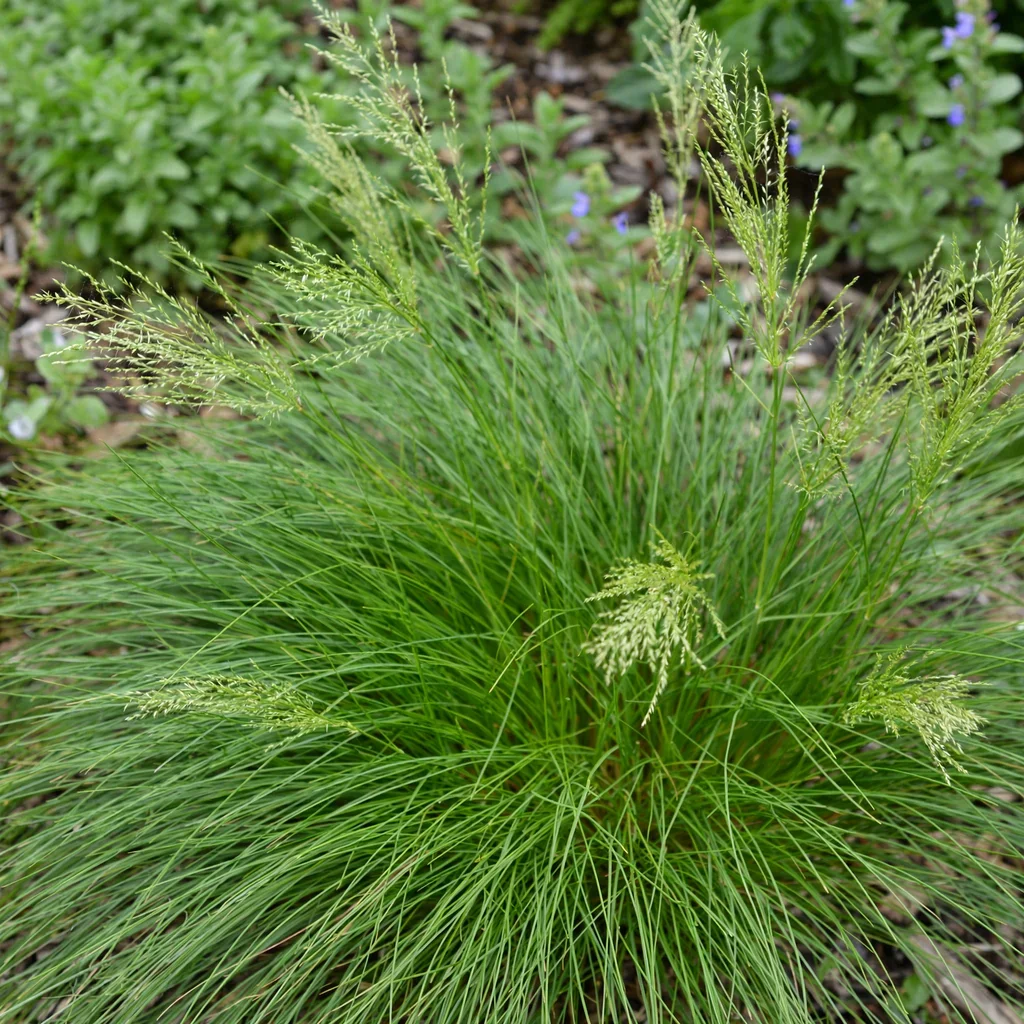
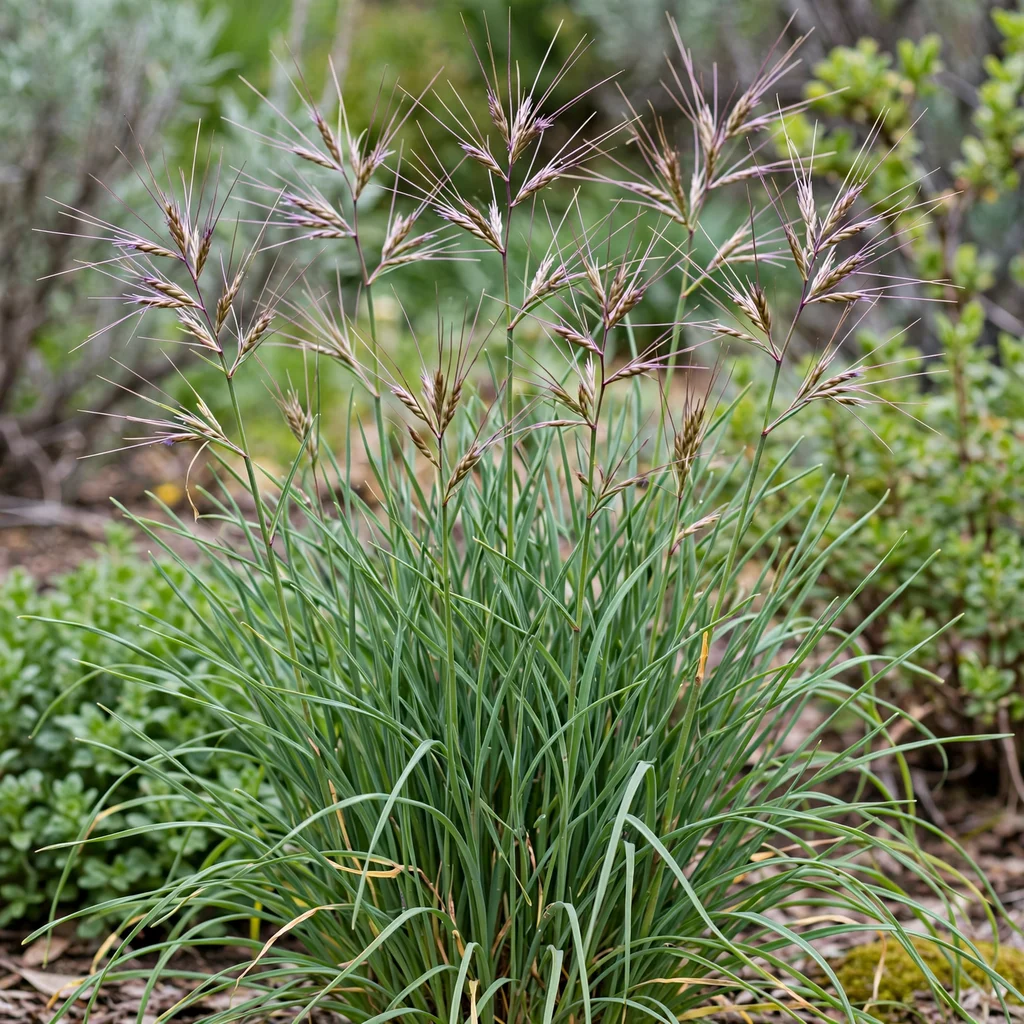
More Nassella to compare
Keep exploring
Explore the genus
Hardy in your zone?
Grow Foothill Needlegrass with confidence
See it in a design of your actual yard, get zone-matched care reminders, and track it season by season in your garden journal.