The Story
Plant Bio
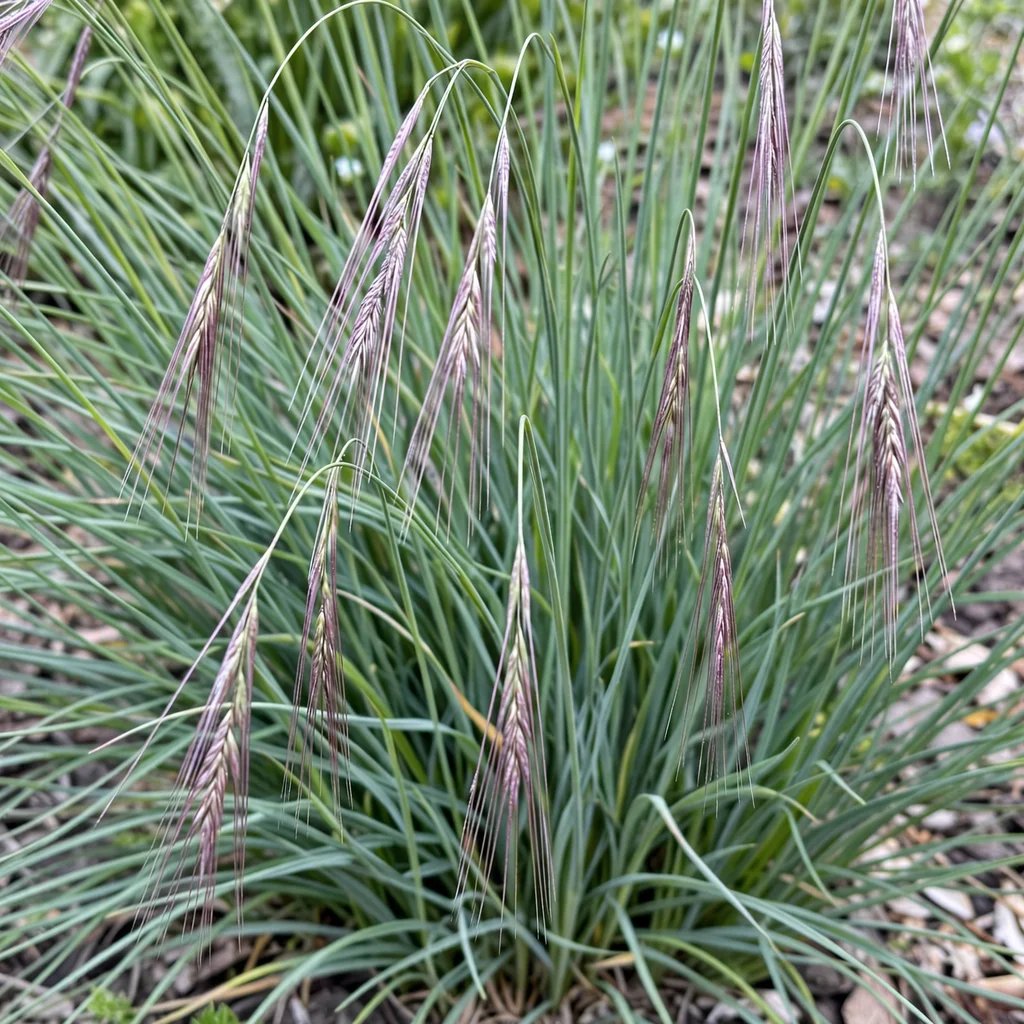
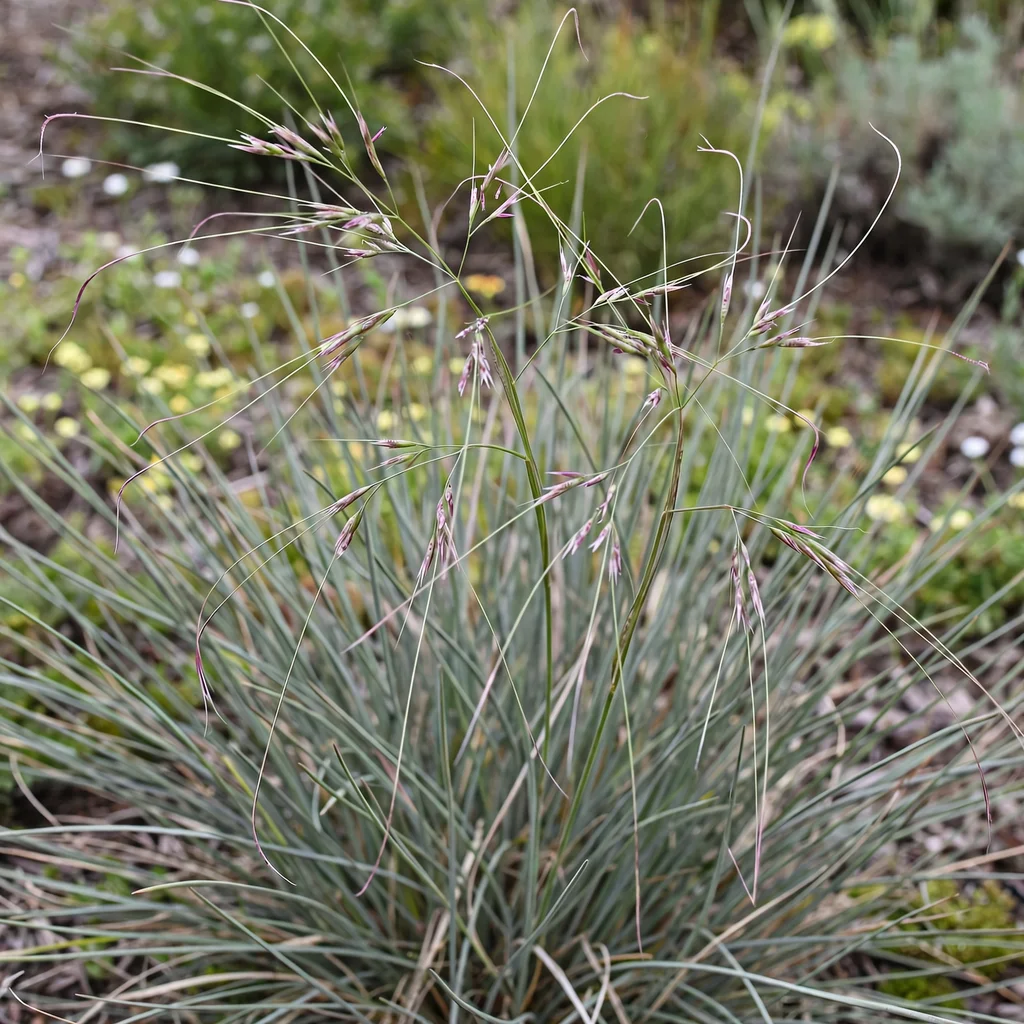
Nassella cernua is a cool-season perennial bunchgrass from western California that forms a dense erect tuft 20 to 40 inches tall with narrow green to glaucous-green leaves. Flowering culms rise above the foliage in spring and arch under an open panicle of wind-pollinated florets tipped with long awns.
It is separated from purple needlegrass by its distinctly nodding flower head and 2- to 4-inch awns that open purplish and dry to a silky silver. The plant goes summer-dormant in heat and its crown rots if kept wet through dormancy.
Uses & Benefits:
Essentials
At a Glance
Plant Type
Grass
Height
36"
Width
18"
Light
Full Sun, Partial Sun
Zones
7, 8, 9, 10
Water
Very low
Humidity
Low to moderate
Lifespan
Perennial
Native To
Western California and Baja California
Toxicity
Unknown, sharp awns may irritate
Bloom period
Spring – Summer
In flower about 6 months of the year
Planting
How to Grow
- Plant plugs in fall in full sun to part shade in sandy, well-drained loam with pH 6.0 to 8.0.
- Water deeply at planting and through the first winter and spring, then taper off as foliage yellows.
- Once established, give no more than very light water twice per month in summer, or none at all.
- Top-dress with gravel or leave soil bare; do not enrich with compost or fertilizer.
- Leave seed heads to ripen and self-sow, then comb out dead thatch before fall rain resumes growth.
Pro Tip
Plant in fall and cut summer water to zero after the first year; wet soil in dormancy kills it.
Keep It Thriving
Care Guide
Do
- Do plant in fall to use winter rain for root establishment.
- Do grow in lean, rocky or sandy soil with sharp drainage.
- Do let seed mature in late spring to feed birds and reseed the colony.
Don't
- Do not irrigate through summer dormancy or fertilize to push green growth.
- Do not cut into the crown or shear hard in summer heat.
- Do not graze or mow while flowering if you want seed set.
Seasonal Care Calendar
| Task | Jan | Feb | Mar | Apr | May | Jun | Jul | Aug | Sep | Oct | Nov | Dec |
|---|---|---|---|---|---|---|---|---|---|---|---|---|
| Mulch | ||||||||||||
| Pest Check | ||||||||||||
| Plant | ||||||||||||
| Propagate | ||||||||||||
| Spring Cleanup |
Watch Out For
Pests & Diseases
Common Pests
Common Diseases
In the Garden
Landscape Uses & Companions
Landscape Uses
Multiply
Propagation Methods
Good to Know
Common Questions
Nodding Needlegrass questions
What zones can Nodding Needlegrass grow in?
Nodding Needlegrass is hardy in USDA Zones 7–10: in that range it survives winter in the ground. Colder than Zone 7, grow it in a container you can move to shelter for the winter, or as an annual.
When does Nodding Needlegrass bloom?
Nodding Needlegrass typically blooms from spring to summer. Exact timing shifts a week or two with your zone — Sow's bloom calendar maps it to your garden.
Does Nodding Needlegrass need full sun?
Nodding Needlegrass does best in full sun to part shade. In hot climates, afternoon shade keeps blooms fresher longer.
Is Nodding Needlegrass drought tolerant?
Yes — once established (usually after the first full season), Nodding Needlegrass handles dry spells with minimal watering. Water deeply its first year to build the root system that makes that possible.
More Nassella to compare
Keep exploring
Explore the genus
Hardy in your zone?
Grow Nodding Needlegrass with confidence
See it in a design of your actual yard, get zone-matched care reminders, and track it season by season in your garden journal.