The Story
Plant Bio
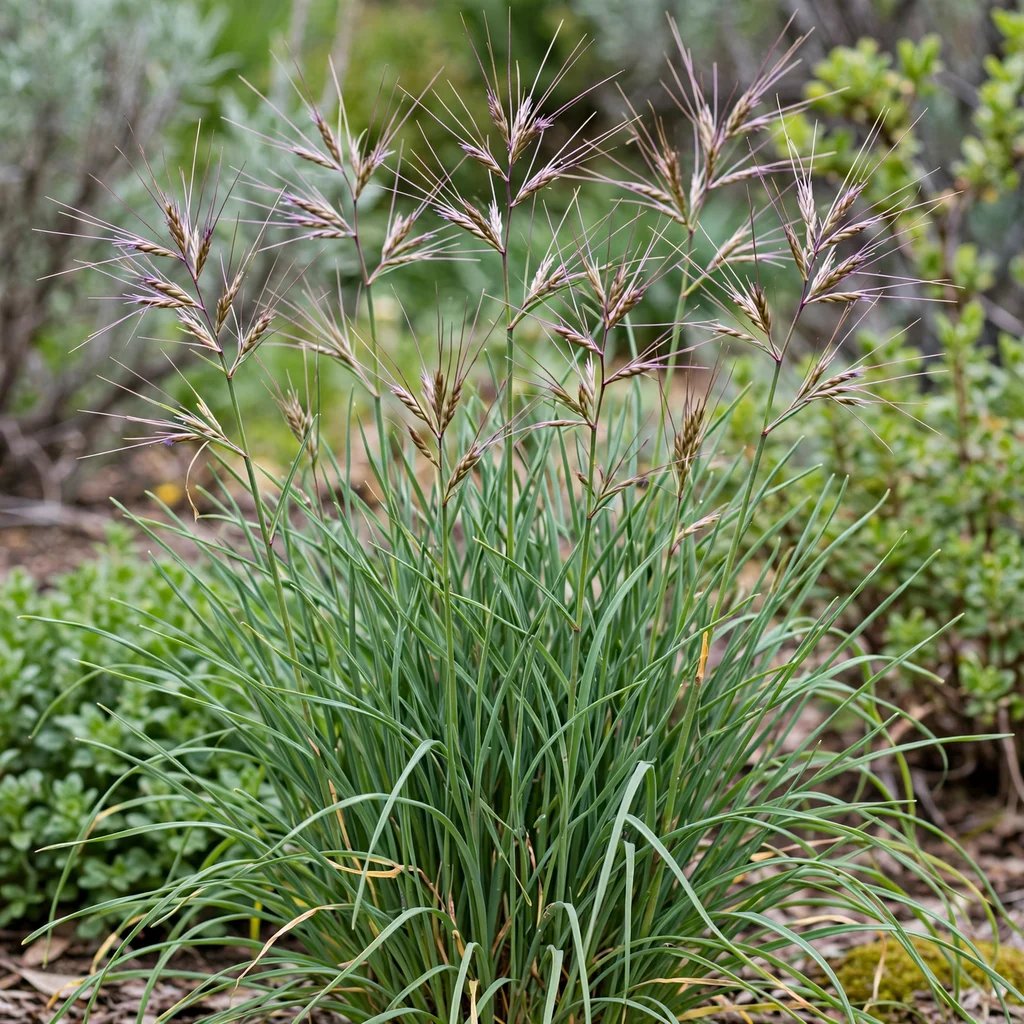
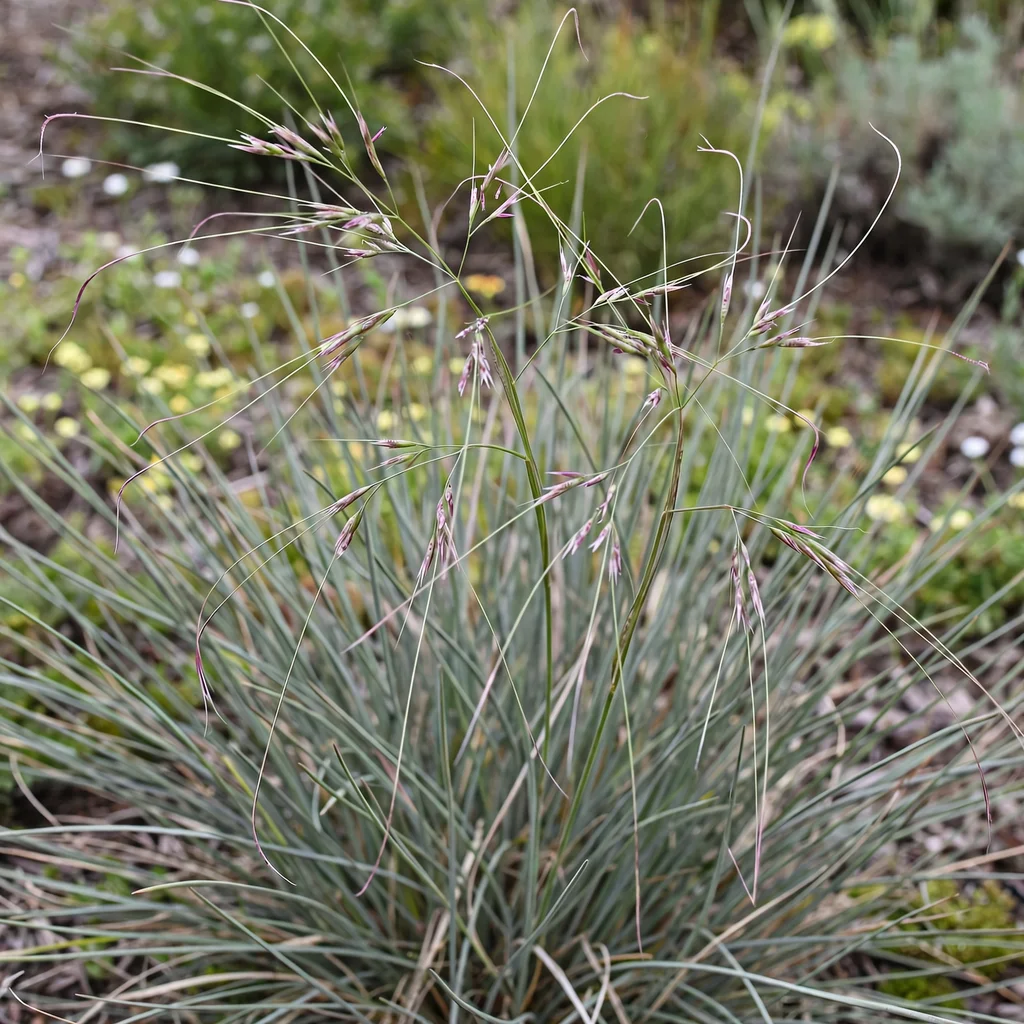
Nassella pulchra is a densely tufted cool-season perennial bunchgrass with upright 2- to 3-foot culms and long narrow green leaves with inrolled blades that green up early. In cultivation it forms a fountain of foliage topped by slender flowering stems that rise well above the tuft.
It flowers in a loose nodding panicle that ripens purple to brown, each seed tipped with a long bent awn that twists with humidity to work the seed into soil. Named California state grass in 2004, it is a deep-rooted resprouter valued for erosion control and as a non-invasive replacement for pampas grass and exotic fountain grasses.
Uses & Benefits:
Essentials
At a Glance
Plant Type
Grass
Height
36"
Width
24"
Light
Full Sun, Partial Sun
Zones
7, 8, 9, 10
Water
Very low
Humidity
Low
Lifespan
Perennial
Native To
California to Baja California
Toxicity
Unknown - no toxicity reported
Bloom period
Spring – Summer
In flower about 6 months of the year
Planting
How to Grow
- Plant plugs in fall at the same crown depth as in the pot, 12 to 18 inches apart, in full sun to part shade.
- Water deeply at planting, then water through the first winter if rains fail; established plants need very low water.
- Spread no rich mulch or fertilizer; a thin gravel or leaf litter layer keeps the crown dry.
- Leave seed heads to ripen and self-sow, then lightly comb out dead thatch in early spring without cutting the live tuft.
- Withhold summer water except in extreme drought; wet summer soil shortens life.
Pro Tip
Let seed ripen and drop where you want spread and leave the basal tuft intact; cutting hard into the crown kills tillers and opens the stand to weeds.
Keep It Thriving
Care Guide
Do
- Plant in dry, well-drained clay, loam, sand, or serpentine soils in full sun.
- Allow self-sowing to fill a meadow stand.
- Leave roots undisturbed once established for erosion control.
Don't
- Do not irrigate heavily in summer or keep soil soggy.
- Do not shear the bunch to the ground each year.
- Do not plant where yellow starthistle seed can invade the stand.
Seasonal Care Calendar
| Task | Jan | Feb | Mar | Apr | May | Jun | Jul | Aug | Sep | Oct | Nov | Dec |
|---|---|---|---|---|---|---|---|---|---|---|---|---|
| Pest Check | ||||||||||||
| Plant | ||||||||||||
| Propagate | ||||||||||||
| Spring Cleanup |
Watch Out For
Pests & Diseases
Common Pests
Common Diseases
In the Garden
Landscape Uses & Companions
Landscape Uses
Multiply
Propagation Methods
Good to Know
Common Questions
Purple Needlegrass questions
What zones can Purple Needlegrass grow in?
Purple Needlegrass is hardy in USDA Zones 7–10: in that range it survives winter in the ground. Colder than Zone 7, grow it in a container you can move to shelter for the winter, or as an annual.
Is Purple Needlegrass deer resistant?
Yes — Purple Needlegrass is rated deer-resistant. Deer typically pass it over, though extreme hunger can override any plant's defenses.
When does Purple Needlegrass bloom?
Purple Needlegrass typically blooms from spring to summer. Exact timing shifts a week or two with your zone — Sow's bloom calendar maps it to your garden.
Does Purple Needlegrass need full sun?
Purple Needlegrass does best in full sun to part shade. In hot climates, afternoon shade keeps blooms fresher longer.
Is Purple Needlegrass drought tolerant?
Yes — once established (usually after the first full season), Purple Needlegrass handles dry spells with minimal watering. Water deeply its first year to build the root system that makes that possible.
More Nassella to compare
Keep exploring
Explore the genus
Hardy in your zone?
Grow Purple Needlegrass with confidence
See it in a design of your actual yard, get zone-matched care reminders, and track it season by season in your garden journal.