The Story
Plant Bio
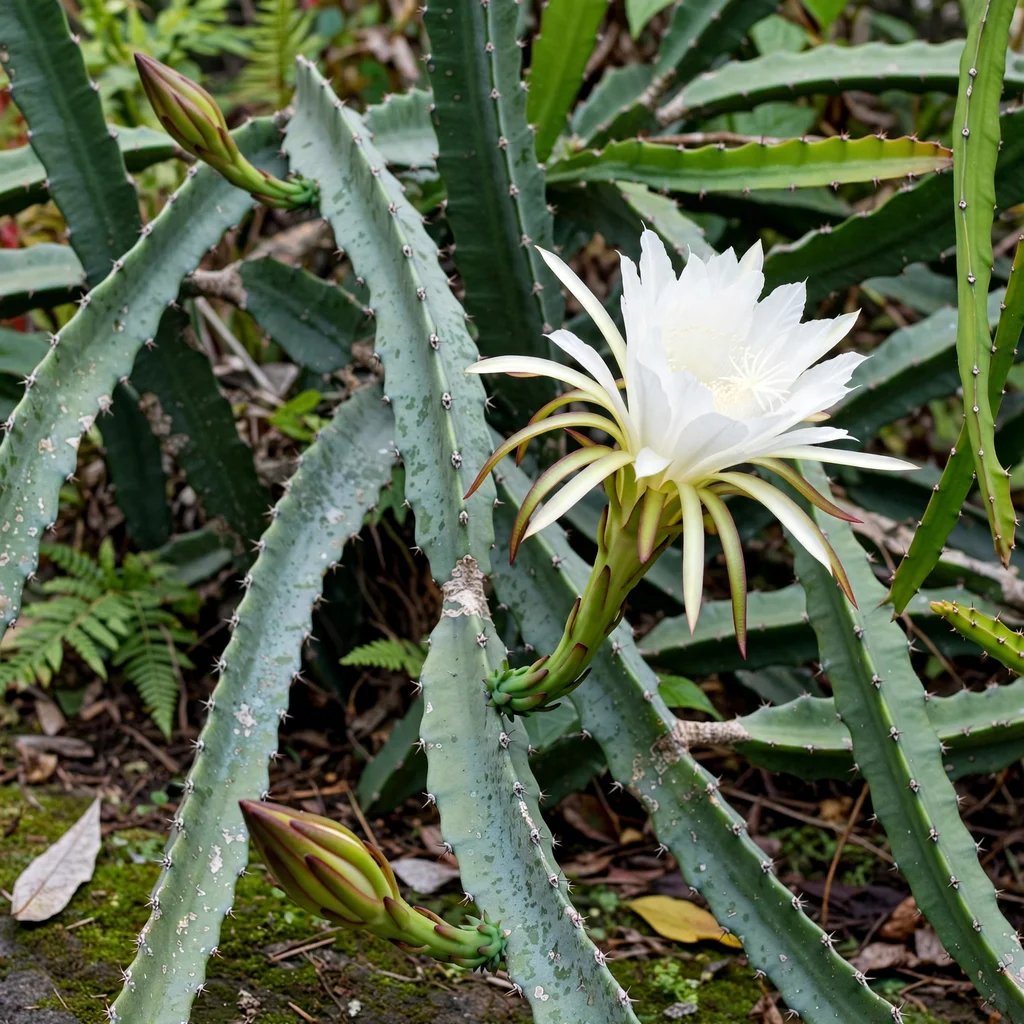
Hylocereus costaricensis is a climbing epiphytic cactus from seasonally dry forests from Nicaragua to Peru, anchoring by aerial roots with long waxy three-ribbed stems. It opens very large white fragrant bells to twelve inches long for a single night in summer, followed by oval red-skinned fruit.
It is set apart from white-fleshed dragonfruit by fruit with red skin and deep red-purple pulp studded with black seeds, to about one pound. Stock is still sold as Hylocereus, though the accepted name is now Selenicereus costaricensis, and much material labeled Hylocereus polyrhizus belongs here.
Uses & Benefits:
Essentials
At a Glance
Plant Type
Cactus Succulent
Height
120"
Width
72"
Light
Full Sun, Partial Sun
Zones
9, 10
Water
Moderate, well-drained
Humidity
Humid tolerant
Lifespan
Long-lived perennial
Native To
Nicaragua to Peru
Toxicity
Fruit edible; stems spiny
Bloom period
Late spring – Fall
In flower about 7 months of the year
Planting
How to Grow
- Plant in full sun to part shade in a very well-drained cactus mix in a large container or against a strong trellis.
- Train one or two main stems up the support and allow upper stems to arch and hang for flowering.
- Water deeply then let the mix dry before watering again; never keep the base soggy.
- Feed lightly through the warm growing season and protect from frost below 40F.
- Prune in the off season to keep growth open and remove any rotted or cankered stems.
Pro Tip
Set a stout trellis at planting time and let stems hang; each flower opens after dark for one night only, with fruit ripening weeks later.
Keep It Thriving
Care Guide
Do
- Provide a strong trellis or post that will carry several feet of heavy fleshy stems
- Grow in fast-draining soil and containers with drainage holes
- Protect from frost and bring containers indoors before hard freezes
Don't
- Do not overwater or let water stand around the base, which causes stem and root rot
- Do not plant without support or allow long vines to sprawl on wet ground
- Do not expect daytime bloom; flowers open at night and collapse by morning
Seasonal Care Calendar
| Task | Jan | Feb | Mar | Apr | May | Jun | Jul | Aug | Sep | Oct | Nov | Dec |
|---|---|---|---|---|---|---|---|---|---|---|---|---|
| Fertilize | ||||||||||||
| Harvest | ||||||||||||
| Pest Check | ||||||||||||
| Prune | ||||||||||||
| Winter Prep |
Watch Out For
Pests & Diseases
Common Pests
Common Diseases
In the Garden
Landscape Uses & Companions
Landscape Uses
Companion Plants
Multiply
Propagation Methods
Good to Know
Common Questions
Costa Rican Pitahaya questions
What zones can Costa Rican Pitahaya grow in?
Costa Rican Pitahaya is hardy in USDA Zones 9–10: in that range it survives winter in the ground. Colder than Zone 9, grow it in a container you can move to shelter for the winter, or as an annual.
When does Costa Rican Pitahaya bloom?
Costa Rican Pitahaya typically blooms from late spring to late fall. Exact timing shifts a week or two with your zone — Sow's bloom calendar maps it to your garden.
Does Costa Rican Pitahaya need full sun?
Costa Rican Pitahaya does best in full sun to part shade. In hot climates, afternoon shade keeps blooms fresher longer.
More Hylocereus to compare
Keep exploring
Explore the genus
Hardy in your zone?
Grow Costa Rican Pitahaya with confidence
See it in a design of your actual yard, get zone-matched care reminders, and track it season by season in your garden journal.