The Story
Plant Bio
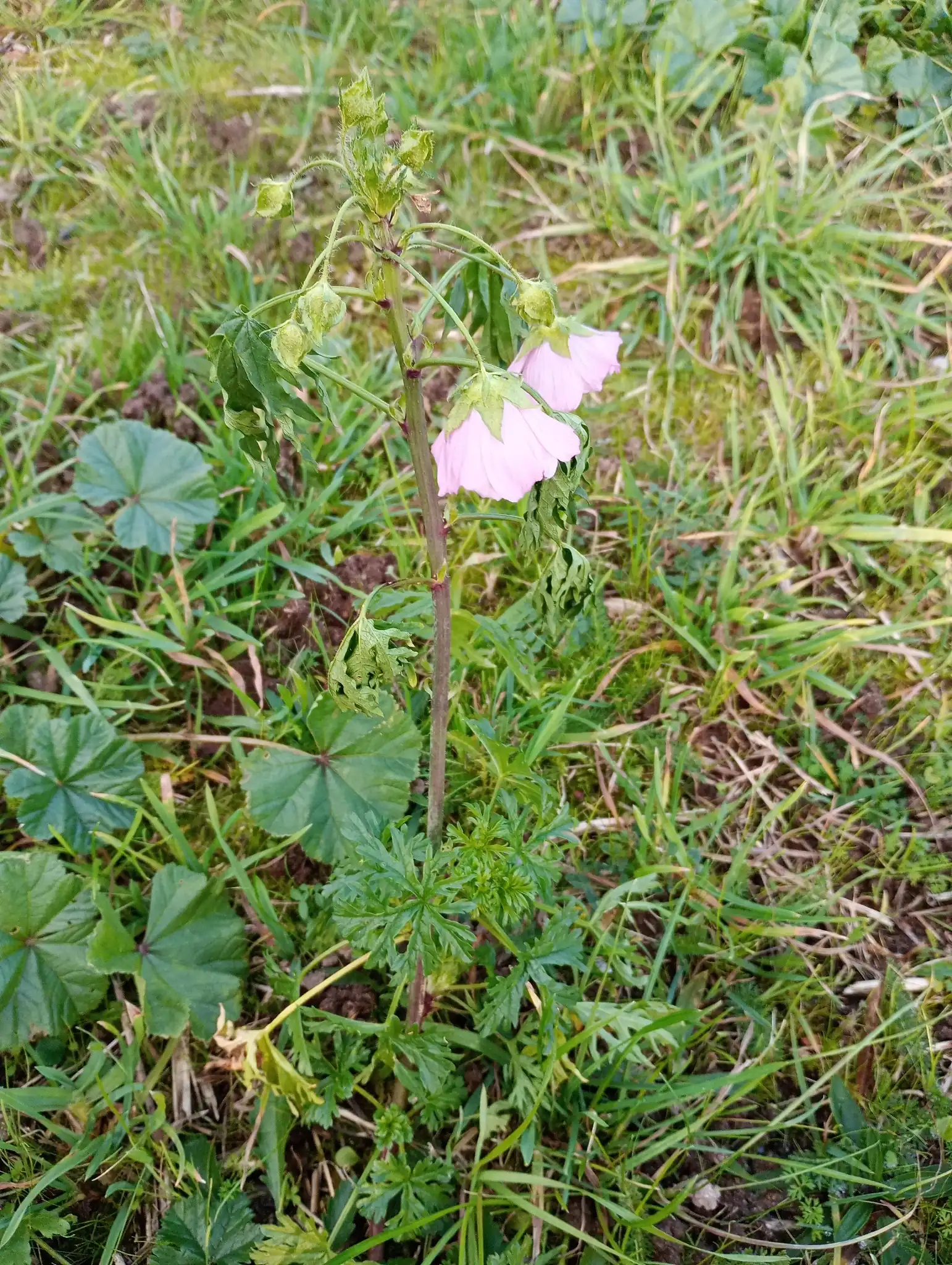
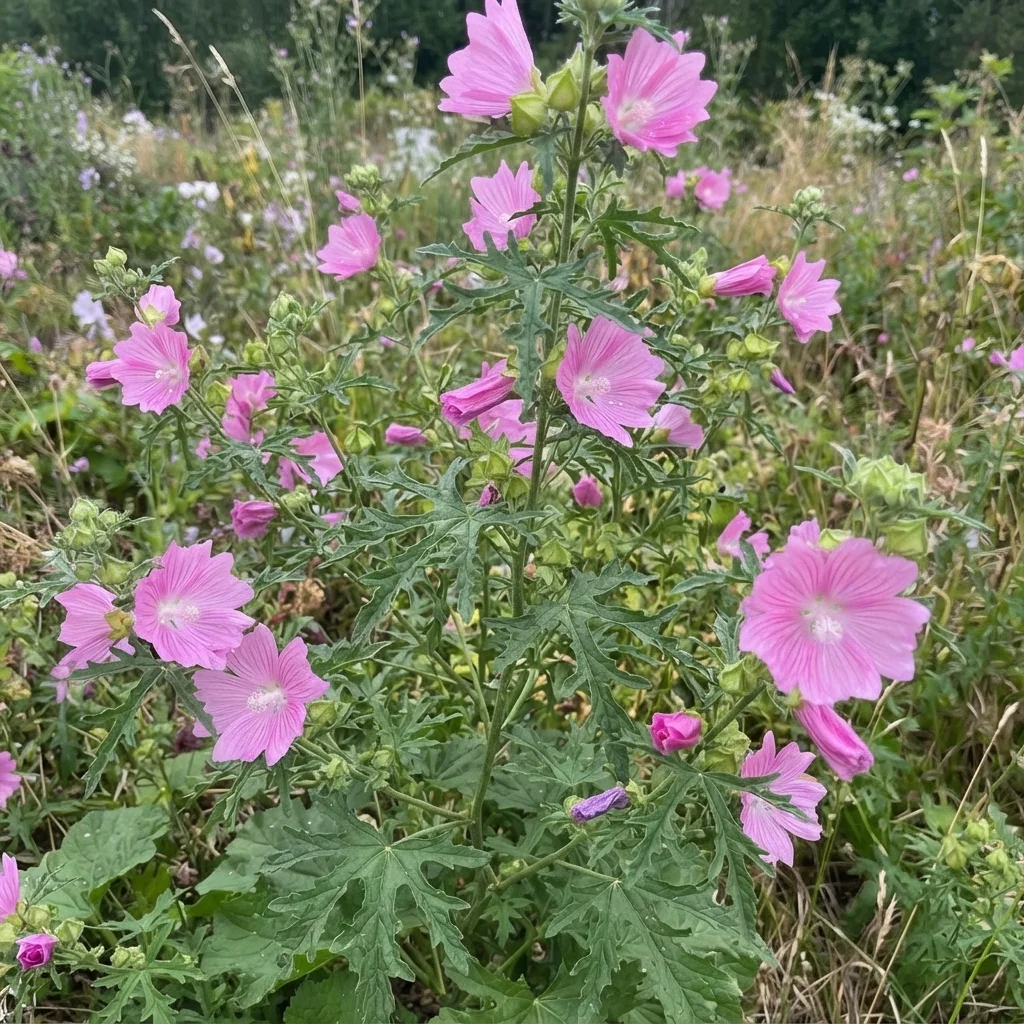
Malva moschata is an upright, clump-forming herbaceous perennial producing deeply lobed foliage and broad, bowl-shaped flowers. It establishes quickly in temperate gardens, blooming continuously from midsummer through early fall.
The upper stem foliage is divided into narrow linear segments that contrast with rounded basal leaves. When brushed or crushed, stems and foliage release a delicate musky fragrance.
Uses & Benefits:
Essentials
At a Glance
Plant Type
Perennial
Height
35"
Width
24"
Light
Full Sun, Partial Sun
Zones
4, 5, 6, 7, 8
Water
Low to moderate
Humidity
Moderate
Lifespan
Short-lived perennial
Native To
Europe, Western Türkiye
Toxicity
Non-toxic
Bloom period
Summer – Fall
In flower about 6 months of the year
Planting
How to Grow
- Select a planting site in full sun or light shade with well-drained soil.
- Space plants 18 to 24 inches apart to ensure adequate air movement around stems.
- Water thoroughly upon planting until roots establish, then reduce watering to dry spells only.
- Shear flowering stems back by half after the midsummer bloom flush to stimulate secondary flowers.
Pro Tip
Keep nitrogen levels low; fertile or highly amended soils cause stems to become weak and floppy, requiring artificial support.
Keep It Thriving
Care Guide
Do
- Plant in light, freely draining soil to avoid winter crown rot.
- Cut spent flower stems back after blooming to limit unwanted self-seeding.
- Provide full sun to maintain dense growth and maximize flower production.
Don't
- Do not apply high-nitrogen fertilizers that encourage weak, lodging stems.
- Do not plant in heavy clay or waterlogged winter ground.
- Do not leave mature seed pods intact if you wish to prevent self-seeding.
Seasonal Care Calendar
| Task | Jan | Feb | Mar | Apr | May | Jun | Jul | Aug | Sep | Oct | Nov | Dec |
|---|---|---|---|---|---|---|---|---|---|---|---|---|
| Deadhead | ||||||||||||
| Fertilize | ||||||||||||
| Pest Check | ||||||||||||
| Prune | ||||||||||||
| Spring Cleanup |
Watch Out For
Pests & Diseases
Common Pests
Common Diseases
In the Garden
Landscape Uses & Companions
Landscape Uses
Multiply
Propagation Methods
Good to Know
Common Questions
Musk Mallow questions
What zones can Musk Mallow grow in?
Musk Mallow is hardy in USDA Zones 4–8: in that range it survives winter in the ground. Warmer than Zone 8, winter isn't the problem: it prefers colder winters, and summer heat can shorten its life.
Is Musk Mallow deer resistant?
Not reliably. Deer may browse Musk Mallow, especially tender spring growth — plan on repellents or fencing where pressure is high.
When does Musk Mallow bloom?
Musk Mallow typically blooms from summer to fall. Exact timing shifts a week or two with your zone — Sow's bloom calendar maps it to your garden.
Does Musk Mallow need full sun?
Musk Mallow does best in full sun to part shade. In hot climates, afternoon shade keeps blooms fresher longer.
Is Musk Mallow drought tolerant?
Yes — once established (usually after the first full season), Musk Mallow handles dry spells with minimal watering. Water deeply its first year to build the root system that makes that possible.
More Malva to compare
Keep exploring
Explore the genus
Hardy in your zone?
Grow Musk Mallow with confidence
See it in a design of your actual yard, get zone-matched care reminders, and track it season by season in your garden journal.