The Story
Plant Bio
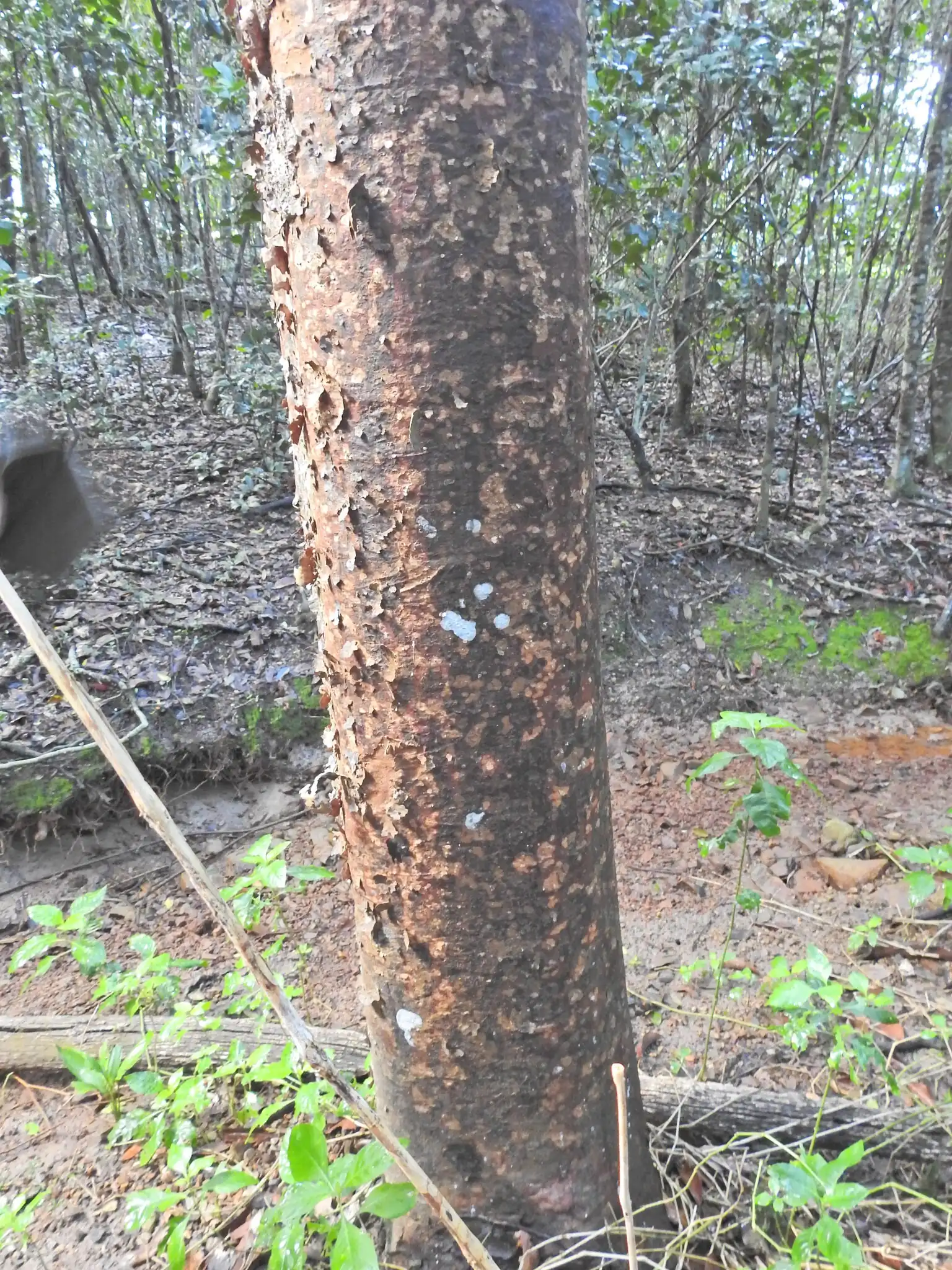
Agathis robusta, known as the Queensland kauri, is a massive evergreen conifer native to eastern Australia and New Guinea that forms a straight, cylindrical trunk and a spreading canopy. Its broad, leathery leaves emerge bronze-green before maturing to deep glossy green, held oppositely along smooth, grey-brown stems that shed bark in thin flakes.
Unlike typical needle-leaf conifers, this species produces flat, broad elliptic leaves and massive globose seed cones that shatter on the tree when mature. Its strong apical dominance maintains a dominant central leader, producing a symmetric, pyramidal habit when young before expanding into a towering crown.
Uses & Benefits:
Essentials
At a Glance
Plant Type
Tree
Height
11811"
Width
3937"
Light
Full Sun, Partial Sun
Zones
9, 10
Water
Moderate
Humidity
High
Lifespan
Long-lived perennial
Native To
Australasia (Eastern Queensland, Papua New Guinea)
Toxicity
Non-toxic
Bloom period
Spring
In flower about 3 months of the year
Planting
How to Grow
- Select a site in full sun to partial shade with deep, rich, well-draining soil and ample overhead clearance.
- Dig a planting hole twice as wide as the root ball and equal in depth, ensuring the root flare rests flush with the surrounding grade.
- Backfill with native soil, firming gently to eliminate air pockets, and water thoroughly to settle the root system.
- Apply a 3-inch layer of organic mulch around the root zone, keeping it clear of the trunk bark to prevent stem rot.
Pro Tip
Never prune or head back the central leader, as removing the primary growing tip permanently destroys the natural columnar structure and induces weak, erratic multi-trunk regrowth.
Keep It Thriving
Care Guide
Do
- Plant in light, well-draining soils with acidic to neutral pH.
- Provide regular moisture while young to build a deep, stable root system.
- Protect young trees from severe frost and persistent cold winds.
Don't
- Do not plant in heavy, waterlogged clay soils prone to standing water.
- Do not trim or cut back the main leader stem.
- Do not apply heavy doses of high-phosphorus fertilizers.
Seasonal Care Calendar
| Task | Jan | Feb | Mar | Apr | May | Jun | Jul | Aug | Sep | Oct | Nov | Dec |
|---|---|---|---|---|---|---|---|---|---|---|---|---|
| Fertilize | ||||||||||||
| Mulch | ||||||||||||
| Pest Check | ||||||||||||
| Plant | ||||||||||||
| Prune |
Watch Out For
Pests & Diseases
Common Pests
Common Diseases
In the Garden
Landscape Uses & Companions
Landscape Uses
Multiply
Propagation Methods
Good to Know
Common Questions
Queensland Kauri questions
What zones can Queensland Kauri grow in?
Queensland Kauri is hardy in USDA Zones 9–10: in that range it survives winter in the ground. Colder than Zone 9, winters are too cold for it to survive outdoors.
Is Queensland Kauri deer resistant?
Not reliably. Deer may browse Queensland Kauri, especially tender spring growth — plan on repellents or fencing where pressure is high.
When does Queensland Kauri bloom?
Queensland Kauri typically blooms in spring. Exact timing shifts a week or two with your zone — Sow's bloom calendar maps it to your garden.
Does Queensland Kauri need full sun?
Queensland Kauri does best in full sun to part shade. In hot climates, afternoon shade keeps blooms fresher longer.
More Agathis to compare
Keep exploring
Explore the genus
Hardy in your zone?
Grow Queensland Kauri with confidence
See it in a design of your actual yard, get zone-matched care reminders, and track it season by season in your garden journal.