The Story
Plant Bio
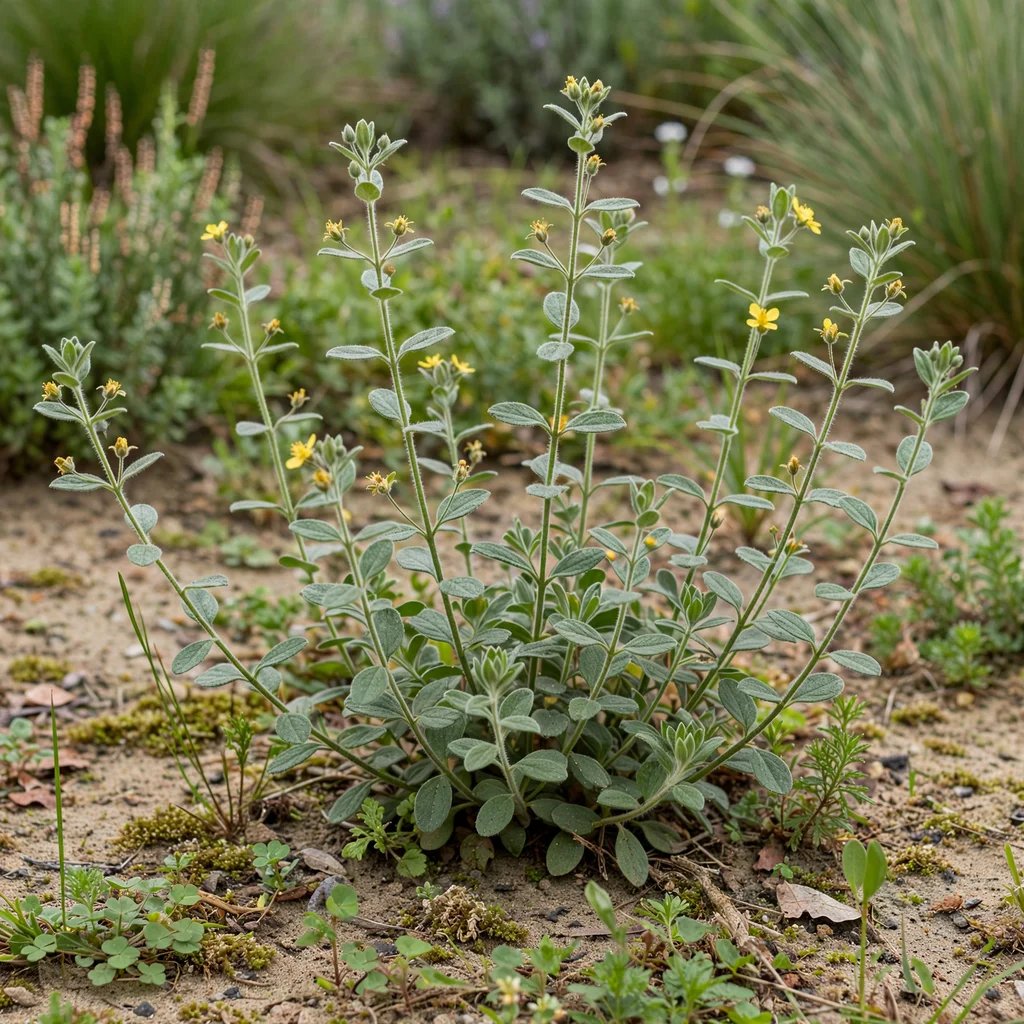
Halimium ocymoides is a bushy, spreading dwarf evergreen shrub from sandy ground in Portugal, Spain and northern Morocco, forming a dense rounded mound with narrow oval gray-green leaves coated in fine fuzz. The leaves hold through winter and the plant keeps its tight habit only in hot overhead sun and lean, sharply drained sand.
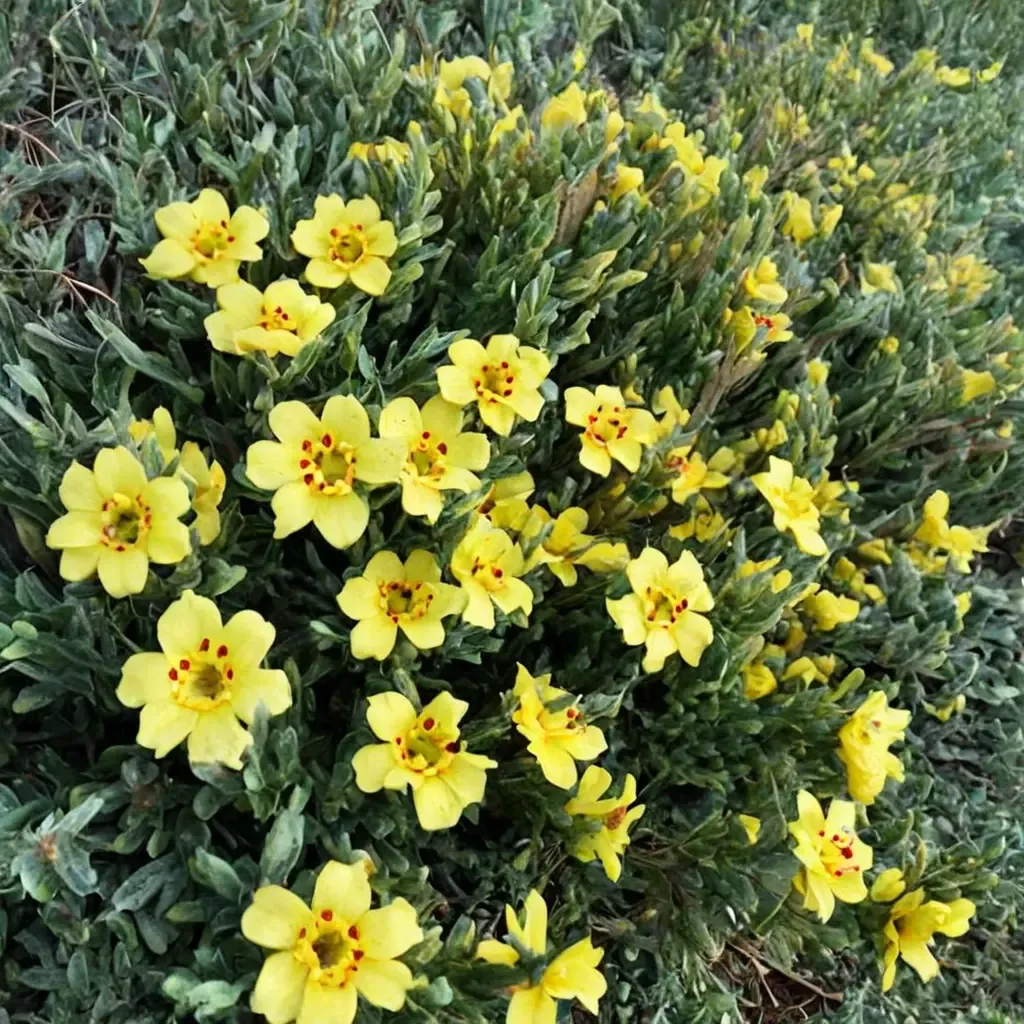
What distinguishes it is the flower: solitary saucer-shaped blooms 2.5 to 3 cm wide, bright yellow with a deep chocolate-purple blotch at the base of each petal. Plants reach 24 to 36 inches tall and spread wider to about 36 to 48 inches, branching densely from the base and failing if cut back into old leafless wood.
Uses & Benefits:
Essentials
At a Glance
Plant Type
Shrub
Height
30"
Width
42"
Light
Full Sun, Partial Sun
Zones
7, 8, 9, 10
Water
Low
Humidity
Low
Lifespan
Perennial shrub
Native To
Portugal, Spain, northern Morocco
Toxicity
Unknown - no verified data
Bloom period
Late spring – Summer
In flower about 4 months of the year
Planting
How to Grow
- Plant in full sun in very well-drained sandy or gritty soil with lean fertility.
- Set the crown level with the soil surface and firm gently; water in once to settle.
- Mulch thinly with gravel or sand, keeping organic mulch back from the stems.
- Water sparingly the first summer, then reduce to low water once established.
- Tip-prune lightly after flowering to shape; do not shear or hard-prune.
Pro Tip
Prune lightly just behind spent flowers after bloom to keep growth dense; cutting into old bare wood gives slow, patchy regrowth.
Keep It Thriving
Care Guide
Do
- Grow in full sun with hot overhead light
- Provide sharp drainage with sandy, rocky soil that dries in summer
- Prune lightly after bloom to keep the mound dense
Don't
- Do not overwater, fertilize, or plant in rich moisture-holding soil
- Do not cut back hard into old bare wood
- Do not plant in shallow chalk or ground that stays wet in winter
Seasonal Care Calendar
| Task | Jan | Feb | Mar | Apr | May | Jun | Jul | Aug | Sep | Oct | Nov | Dec |
|---|---|---|---|---|---|---|---|---|---|---|---|---|
| Mulch | ||||||||||||
| Pest Check | ||||||||||||
| Plant | ||||||||||||
| Prune | ||||||||||||
| Winter Prep |
Watch Out For
Pests & Diseases
Common Pests
Common Diseases
In the Garden
Landscape Uses & Companions
Landscape Uses
Multiply
Propagation Methods
Good to Know
Common Questions
Basil-Leaved Rock Rose questions
What zones can Basil-Leaved Rock Rose grow in?
Basil-Leaved Rock Rose is hardy in USDA Zones 7–10: in that range it survives winter in the ground. Colder than Zone 7, grow it in a container you can move to shelter for the winter.
Is Basil-Leaved Rock Rose deer resistant?
Yes — Basil-Leaved Rock Rose is rated deer-resistant. Deer typically pass it over, though extreme hunger can override any plant's defenses.
When does Basil-Leaved Rock Rose bloom?
Basil-Leaved Rock Rose typically blooms from late spring to late summer. Exact timing shifts a week or two with your zone — Sow's bloom calendar maps it to your garden.
Does Basil-Leaved Rock Rose need full sun?
Basil-Leaved Rock Rose does best in full sun to part shade. In hot climates, afternoon shade keeps blooms fresher longer.
Is Basil-Leaved Rock Rose drought tolerant?
Yes — once established (usually after the first full season), Basil-Leaved Rock Rose handles dry spells with minimal watering. Water deeply its first year to build the root system that makes that possible.
More Halimium to compare
Keep exploring
Explore the genus
Hardy in your zone?
Grow Basil-Leaved Rock Rose with confidence
See it in a design of your actual yard, get zone-matched care reminders, and track it season by season in your garden journal.