The Story
Plant Bio
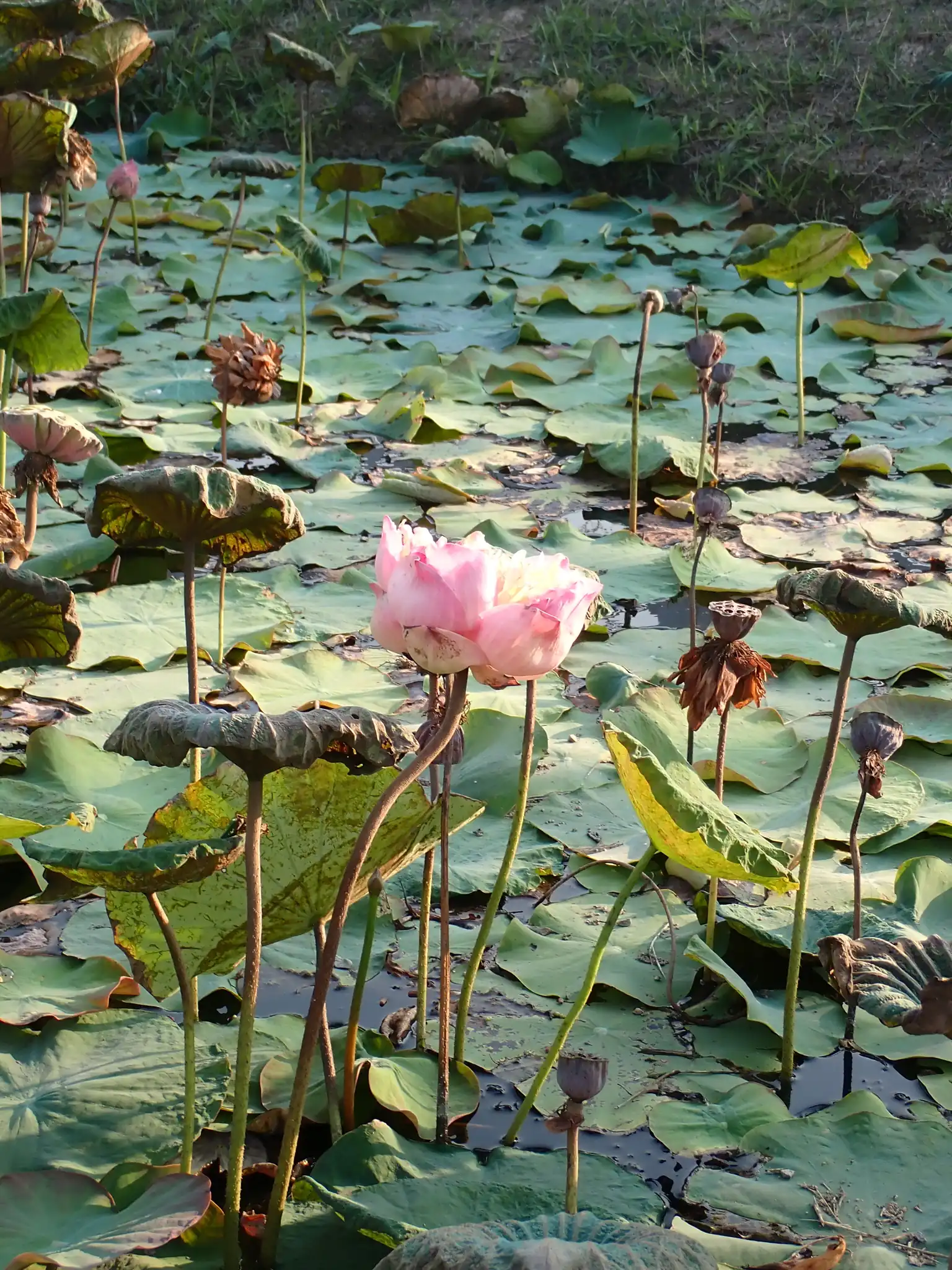
Nelumbo nucifera is an upright, emergent aquatic perennial with massive circular peltate leaves held well above the water surface on stout, prickly petioles. Solitary, radially symmetrical flowers up to twelve inches across open during mid-summer, featuring cupped petals surrounding a distinctive flat-topped yellow receptacle.
This species features superhydrophobic foliage that sheds water in rolling beads, keeping leaves completely dry despite growing in saturated substrate. Its aggressive horizontal rhizomes colonize shallow mud beds rapidly, sending up pointed leaf spears in late spring.
Uses & Benefits:
Essentials
At a Glance
Plant Type
Aquatic
Height
72"
Width
118"
Light
Full Sun
Zones
4, 5, 6, 7, 8, 9, 10
Water
High (Aquatic)
Humidity
High
Lifespan
Perennial
Native To
Asia, Northern Australia
Toxicity
Non-toxic
Bloom period
Summer – Late summer
In flower about 3 months of the year
Planting
How to Grow
- Select a solid aquatic container without drainage holes and fill it with six to eight inches of heavy clay or silt loam soil.
- Place the dormant tuber horizontally on the mud surface, keeping the growing eyes exposed, and anchor it gently with a light layer of pea gravel.
- Lower the container gradually into standing water so two to twelve inches of water covers the top of the mud.
- Position the plant in a location receiving at least six hours of direct full sun daily to support flowering.
Pro Tip
Plant dormant tubers horizontally in heavy clay substrate with the fragile growing tips resting slightly above the mud line; burying eyes vertically or breaking growing tips kills the rhizome.
Keep It Thriving
Care Guide
Do
- Press aquatic fertilizer tablets deep into the mud around the container edges monthly during active summer growth.
- Ensure the mud substrate remains submerged beneath un-frozen standing water throughout the year.
- Trim back browned foliage and spent flower stalks at the water line in late fall after frost.
Don't
- Never cut into old, leafless woody rhizome tissue during routine maintenance or division.
- Do not use lightweight potting soil or perlite mix, which floats out of the container and fouls water.
- Do not allow rhizomes to freeze solid in ice during winter conditions.
Seasonal Care Calendar
| Task | Jan | Feb | Mar | Apr | May | Jun | Jul | Aug | Sep | Oct | Nov | Dec |
|---|---|---|---|---|---|---|---|---|---|---|---|---|
| Fertilize | ||||||||||||
| Plant | ||||||||||||
| Prune | ||||||||||||
| Winter Prep |
Watch Out For
Pests & Diseases
Common Pests
Common Diseases
In the Garden
Landscape Uses & Companions
Landscape Uses
Companion Plants
Multiply
Propagation Methods
Good to Know
Common Questions
Sacred Lotus questions
What zones can Sacred Lotus grow in?
Sacred Lotus is hardy in USDA Zones 4–10: in that range it survives winter in the ground.
Is Sacred Lotus deer resistant?
Not reliably. Deer may browse Sacred Lotus, especially tender spring growth — plan on repellents or fencing where pressure is high.
When does Sacred Lotus bloom?
Sacred Lotus typically blooms in summer. Exact timing shifts a week or two with your zone — Sow's bloom calendar maps it to your garden.
Does Sacred Lotus need full sun?
Sacred Lotus does best in full sun (6+ hours).
Keep exploring
Explore the genus
Grow Sacred Lotus with confidence
See it in a design of your actual yard, get zone-matched care reminders, and track it season by season in your garden journal.