The Story
Plant Bio
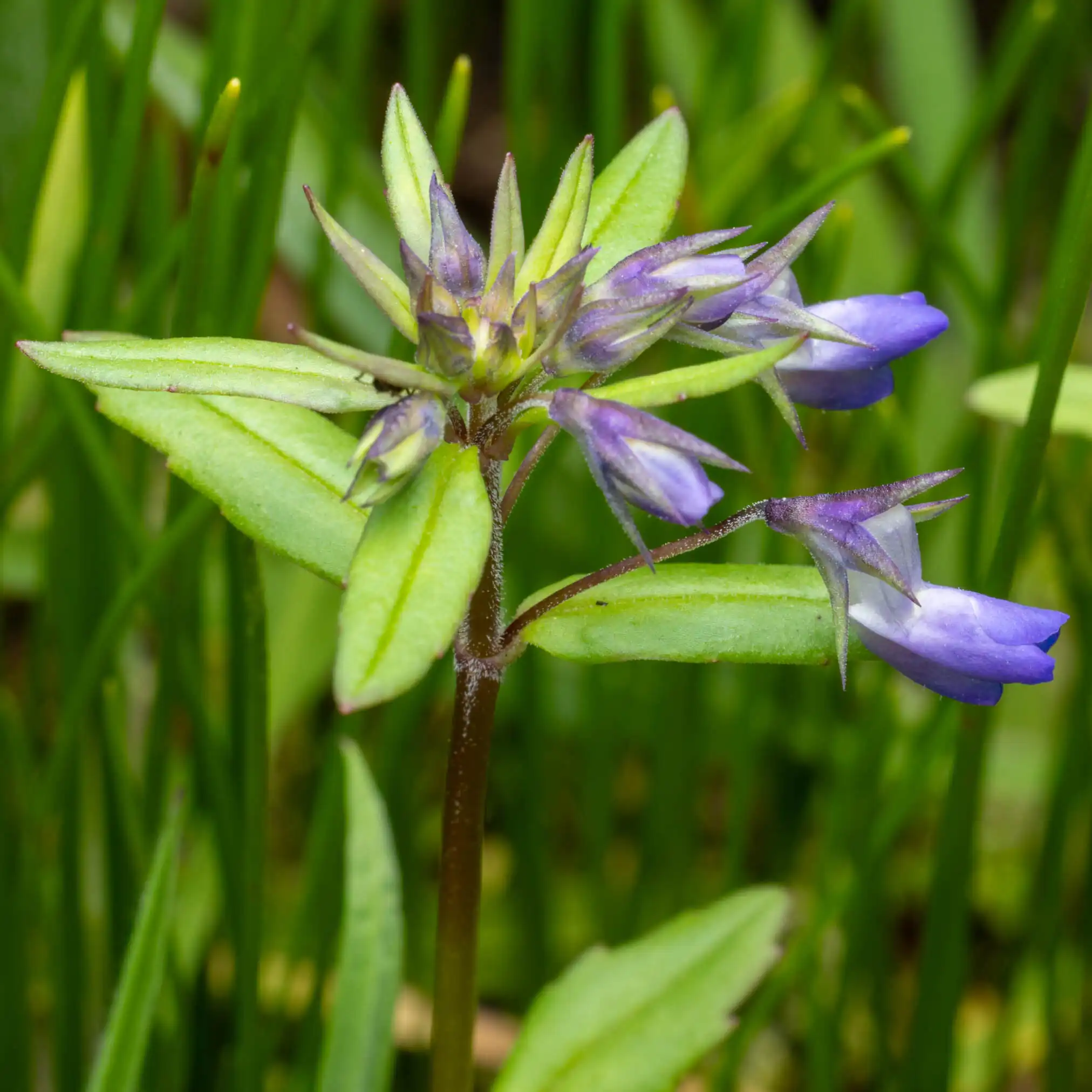
Collinsia grandiflora is an autumn-germinating annual herb native to western North America, forming slender, erect stems from six to sixteen inches tall. From late spring to early summer, upper leaf axils produce whorls of snapdragon-like flowers featuring white or pale lavender upper petals paired with deep purple-blue lower lips.
The species functions as a cool-season annual that overwinters as a low rosette following fall rainfall. As summer temperatures rise and seeds mature, the entire plant dries rapidly and sheds its seed capsules to regenerate the colony for the following year.
Uses & Benefits:
Essentials
At a Glance
Plant Type
Annual
Height
16"
Width
8"
Light
Full Sun, Partial Sun
Zones
6, 7, 8, 9, 10
Water
Low to Moderate
Humidity
Average to High
Lifespan
Annual
Native To
Western North America
Toxicity
Non-toxic
Bloom period
Spring – Late spring
In flower about 3 months of the year
Planting
How to Grow
- Sow seeds directly onto loose, well-draining soil in late fall to allow natural cold stratification and trigger germination with winter rains.
- Rake seeds lightly into the soil surface, ensuring light contact without burying them deep, as germination requires light.
- Keep soil moist through early spring during active rosette development if rainfall is light.
- Allow flower stalks to dry and turn brown post-bloom so seeds disperse naturally before clearing dead vegetation.
Pro Tip
Leave dried stalks standing for several weeks after flowering ends to allow seed capsules to shatter naturally, ensuring self-seeding colonies persist year after year.
Keep It Thriving
Care Guide
Do
- Sow seeds in fall for optimal root growth and spring establishment.
- Select sites with fast-draining, gravelly, or open sandy loam.
Don't
- Do not pull up dead plant skeletons immediately after flowering if self-seeding is desired.
- Do not over-fertilize, as excess nitrogen causes weak, floppy growth and poor bloom quality.
Seasonal Care Calendar
| Task | Jan | Feb | Mar | Apr | May | Jun | Jul | Aug | Sep | Oct | Nov | Dec |
|---|---|---|---|---|---|---|---|---|---|---|---|---|
| Deadhead | ||||||||||||
| Fertilize | ||||||||||||
| Pest Check | ||||||||||||
| Propagate |
Watch Out For
Pests & Diseases
Common Pests
Common Diseases
In the Garden
Landscape Uses & Companions
Landscape Uses
Multiply
Propagation Methods
Good to Know
Common Questions
Giant Blue-Eyed Mary questions
What zones can Giant Blue-Eyed Mary grow in?
Giant Blue-Eyed Mary is an annual: it grows, flowers and sets seed in one season, so winter cold doesn't limit where it grows. Gardeners in any zone can grow it by planting at the right time, usually after the last spring frost.
Is Giant Blue-Eyed Mary deer resistant?
Yes — Giant Blue-Eyed Mary is rated deer-resistant. Deer typically pass it over, though extreme hunger can override any plant's defenses.
When does Giant Blue-Eyed Mary bloom?
Giant Blue-Eyed Mary typically blooms in spring. Exact timing shifts a week or two with your zone — Sow's bloom calendar maps it to your garden.
Does Giant Blue-Eyed Mary need full sun?
Giant Blue-Eyed Mary does best in full sun to part shade. In hot climates, afternoon shade keeps blooms fresher longer.
Is Giant Blue-Eyed Mary drought tolerant?
Yes — once established (usually after the first full season), Giant Blue-Eyed Mary handles dry spells with minimal watering. Water deeply its first year to build the root system that makes that possible.
More Collinsia to compare
Keep exploring
Explore the genus
Hardy in your zone?
Grow Giant Blue-Eyed Mary with confidence
See it in a design of your actual yard, get zone-matched care reminders, and track it season by season in your garden journal.