The Story
Plant Bio
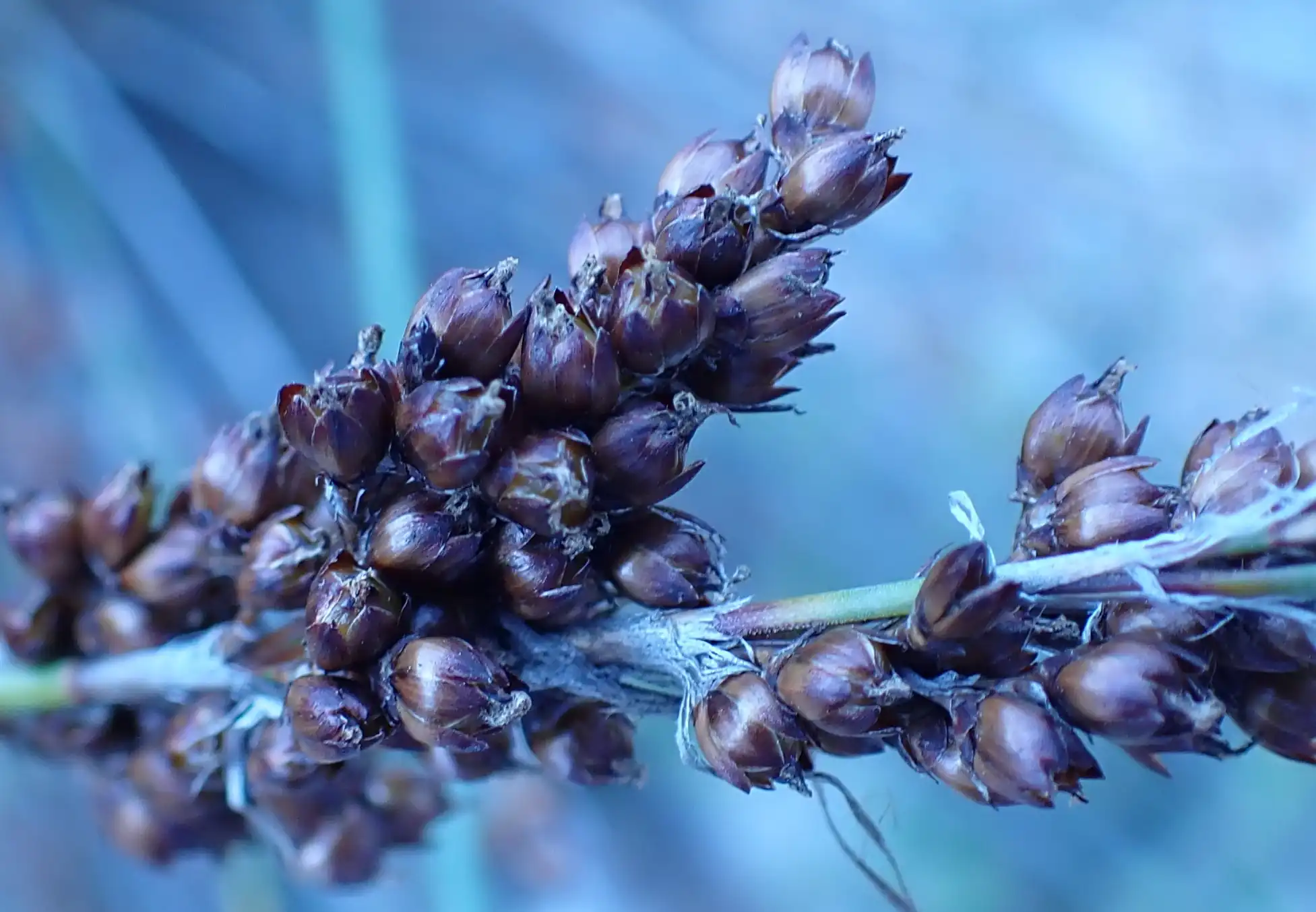
Rhodocoma arida is an evergreen South African restio that forms stiff tufts of smooth, leafless culms from a clumping base without spreading rhizomes. Photosynthesis takes place in the olive-green to blue-gray stems themselves, with true leaves reduced to golden-brown papery sheaths that clasp each joint.
This dry-country species stays narrower and more strictly vertical than most tall restios, reaching five to six feet tall with culms only an eighth of an inch thick at the base. Plants are either male or female and carry small brown chaffy spikelets in fall to winter, while the soft, much-branched juvenile growth disappears entirely as the smooth adult columns mature.
Uses & Benefits:
Essentials
At a Glance
Plant Type
Perennial
Height
72"
Width
60"
Light
Full Sun, Partial Sun
Zones
8, 9, 10
Water
Low
Humidity
Unknown
Lifespan
Perennial
Native To
Western Cape, South Africa
Toxicity
Unknown
Bloom period
Fall – Winter
In flower about 6 months of the year
Planting
How to Grow
- Plant in full sun with at least six hours of direct light.
- Set into sharply drained acidic sand or sandy gravel around pH 6.5, never into heavy clay or alkaline fill.
- Water deeply three times per week for the first season to establish, then cut back to occasional deep soakings.
- Feed rarely if at all and never use high-phosphorus fertilizer.
- Leave old culms in place; taller new culms overtop them each year until the clump reaches mature size.
Pro Tip
Hold back water once established; dry-grown clumps stay narrow and upright, while rich soil and frequent irrigation make them loose and floppy.
Keep It Thriving
Care Guide
Do
- Grow in full sun in fast-draining acidic sand or gravel
- Water sparingly once established to keep columns upright
- Feed rarely and use only low-phosphorus fertilizer if needed
Don't
- Do not cut the whole clump back hard each year
- Do not overwater or plant where water stands in winter
- Do not plant in alkaline soil or apply high-phosphorus fertilizer
Seasonal Care Calendar
| Task | Jan | Feb | Mar | Apr | May | Jun | Jul | Aug | Sep | Oct | Nov | Dec |
|---|---|---|---|---|---|---|---|---|---|---|---|---|
| Mulch | ||||||||||||
| Pest Check | ||||||||||||
| Plant | ||||||||||||
| Propagate | ||||||||||||
| Prune |
Watch Out For
Pests & Diseases
Common Pests
Common Diseases
In the Garden
Landscape Uses & Companions
Landscape Uses
Multiply
Propagation Methods
Good to Know
Common Questions
Dry Restio questions
What zones can Dry Restio grow in?
Dry Restio is hardy in USDA Zones 8–10: in that range it survives winter in the ground. Colder than Zone 8, grow it in a container you can move to shelter for the winter, or as an annual.
When does Dry Restio bloom?
Dry Restio typically blooms from fall to winter. Exact timing shifts a week or two with your zone — Sow's bloom calendar maps it to your garden.
Does Dry Restio need full sun?
Dry Restio does best in full sun to part shade. In hot climates, afternoon shade keeps blooms fresher longer.
Is Dry Restio drought tolerant?
Yes — once established (usually after the first full season), Dry Restio handles dry spells with minimal watering. Water deeply its first year to build the root system that makes that possible.
More Rhodocoma to compare
Keep exploring
Explore the genus
Hardy in your zone?
Grow Dry Restio with confidence
See it in a design of your actual yard, get zone-matched care reminders, and track it season by season in your garden journal.