The Story
Plant Bio
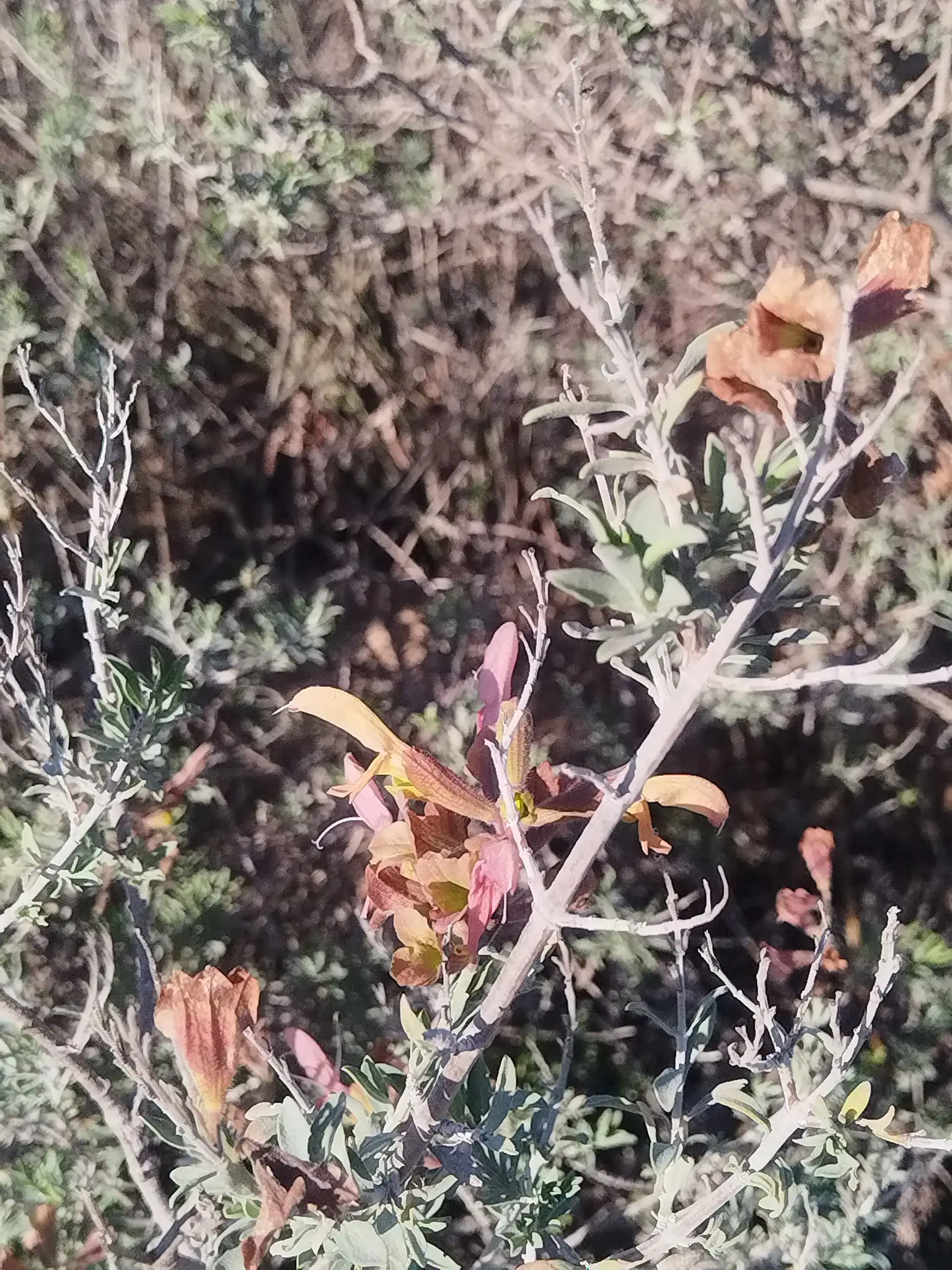
Salvia lanceolata is a much-branched South African shrub reaching about three feet tall in gardens, with square stems that turn woody and light tan at the base. The opposite gray-green leaves are narrow and paddle-shaped with light hairs, releasing a peppery-lemon scent when crushed.
The tubular two-lipped flowers are 25 to 35 millimeters long in dull rose-red to rusty crimson, carried in pairs in short spikes at the branch tips. The funnel-shaped calyx persists after the corolla falls, deepening to red and turning papery to extend the display.
Uses & Benefits:
Essentials
At a Glance
Plant Type
Shrub
Height
36"
Width
36"
Light
Full Sun
Zones
9, 10
Water
Low
Humidity
Low
Lifespan
Shrub
Native To
South Africa
Toxicity
Unknown
Bloom period
Spring – Autumn
In flower about 9 months of the year
Planting
How to Grow
- Plant in full sun in sharply drained sandy or rocky soil after last frost.
- Water in once, then water sparingly and let the soil dry between waterings.
- Top with compost mulch, keeping mulch back from the stem bases.
- Tip-prune lightly after each flush to keep the plant bushy and prevent woodiness.
- Cut back frost-damaged shoots in spring; established plants resprout from the base.
Pro Tip
Leave the reddened calyces after the corollas drop; they are the second display, and shearing them off removes weeks of color.
Keep It Thriving
Care Guide
Do
- Plant in full sun with sharp drainage.
- Allow soil to dry between waterings once established.
- Tip-prune lightly to keep a neat, bushy habit.
Don't
- Do not overwater once established.
- Do not shear off the persistent red calyces.
- Do not buy seed labeled only lanceleaf sage without checking it is S. lanceolata Lam.
Seasonal Care Calendar
| Task | Jan | Feb | Mar | Apr | May | Jun | Jul | Aug | Sep | Oct | Nov | Dec |
|---|---|---|---|---|---|---|---|---|---|---|---|---|
| Mulch | ||||||||||||
| Pest Check | ||||||||||||
| Plant | ||||||||||||
| Propagate | ||||||||||||
| Prune |
Watch Out For
Pests & Diseases
Common Pests
Common Diseases
In the Garden
Landscape Uses & Companions
Landscape Uses
Multiply
Propagation Methods
Good to Know
Common Questions
Rusty Sage questions
What zones can Rusty Sage grow in?
Rusty Sage is hardy in USDA Zones 9–10: in that range it survives winter in the ground. Colder than Zone 9, grow it in a container you can move to shelter for the winter.
When does Rusty Sage bloom?
Rusty Sage typically blooms from spring to fall. Exact timing shifts a week or two with your zone — Sow's bloom calendar maps it to your garden.
Does Rusty Sage need full sun?
Rusty Sage does best in full sun (6+ hours).
Is Rusty Sage drought tolerant?
Yes — once established (usually after the first full season), Rusty Sage handles dry spells with minimal watering. Water deeply its first year to build the root system that makes that possible.
More Salvia to compare
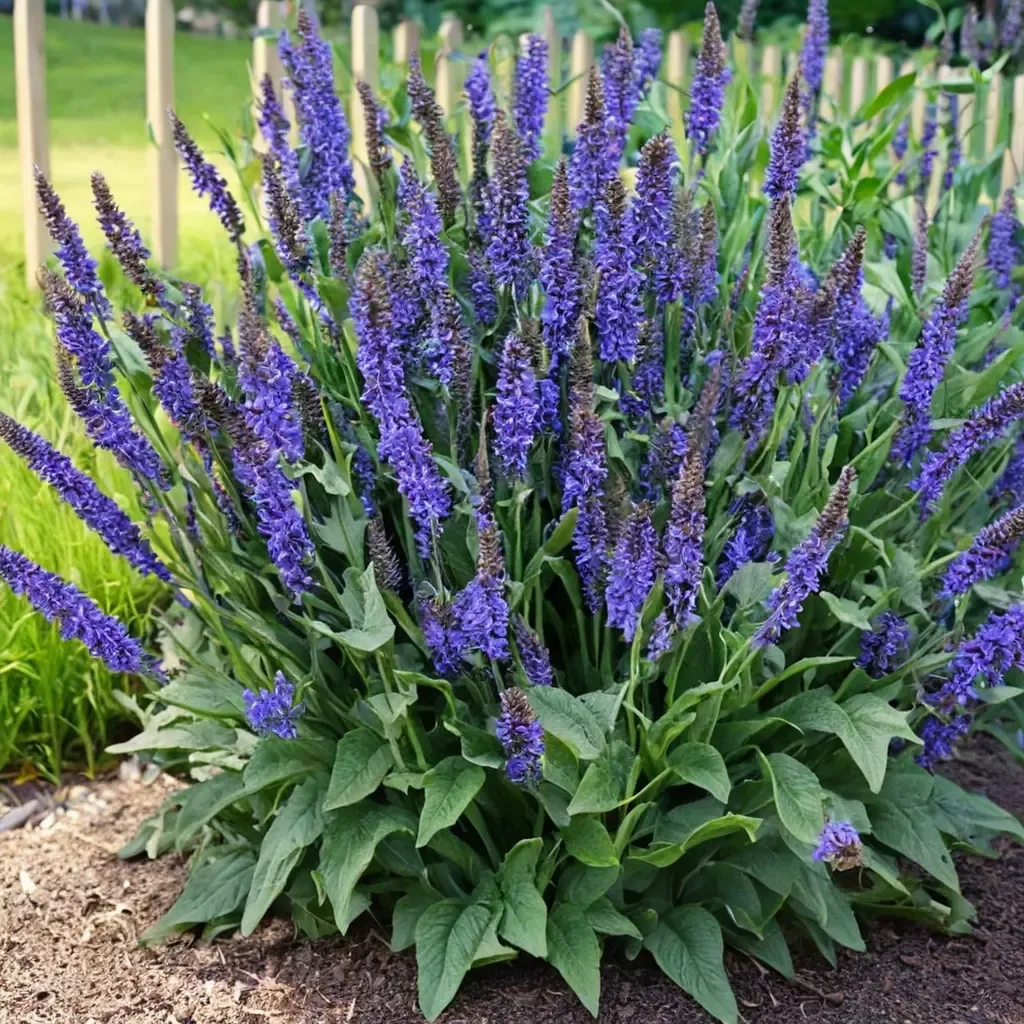
May Night Sage
Salvia nemorosa 'May Night'
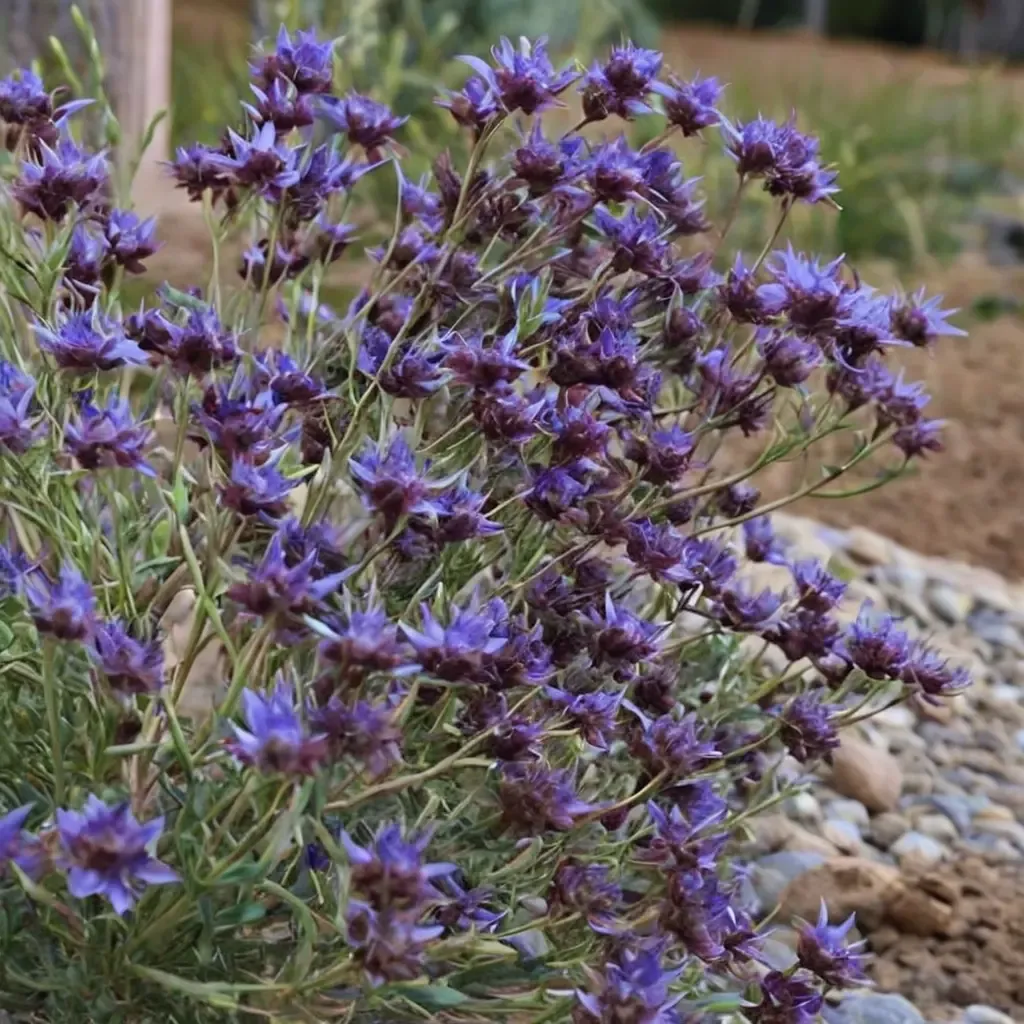
Celestial Blue Sage Wood Sage
Salvia nemorosa 'Celestial Blue'
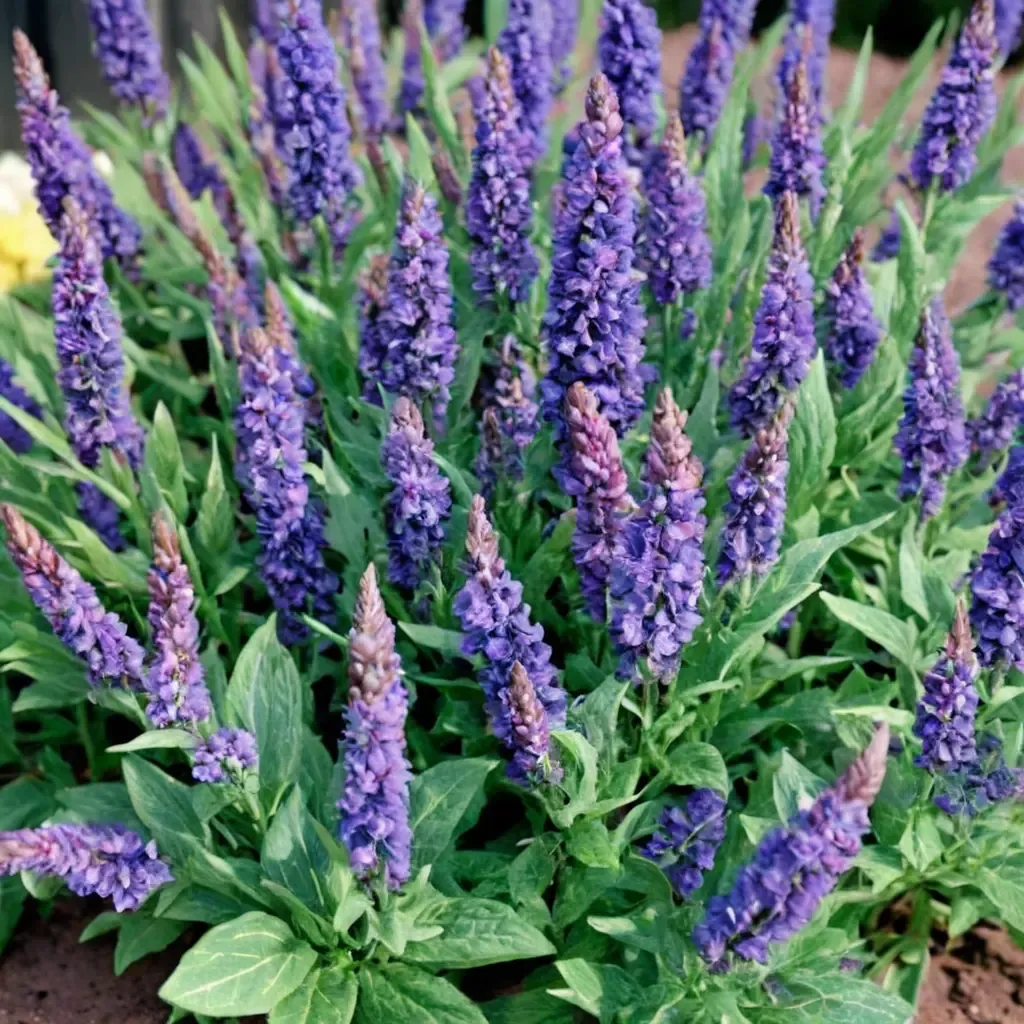
Marcus Woodland Sage
Salvia nemorosa 'Marcus'
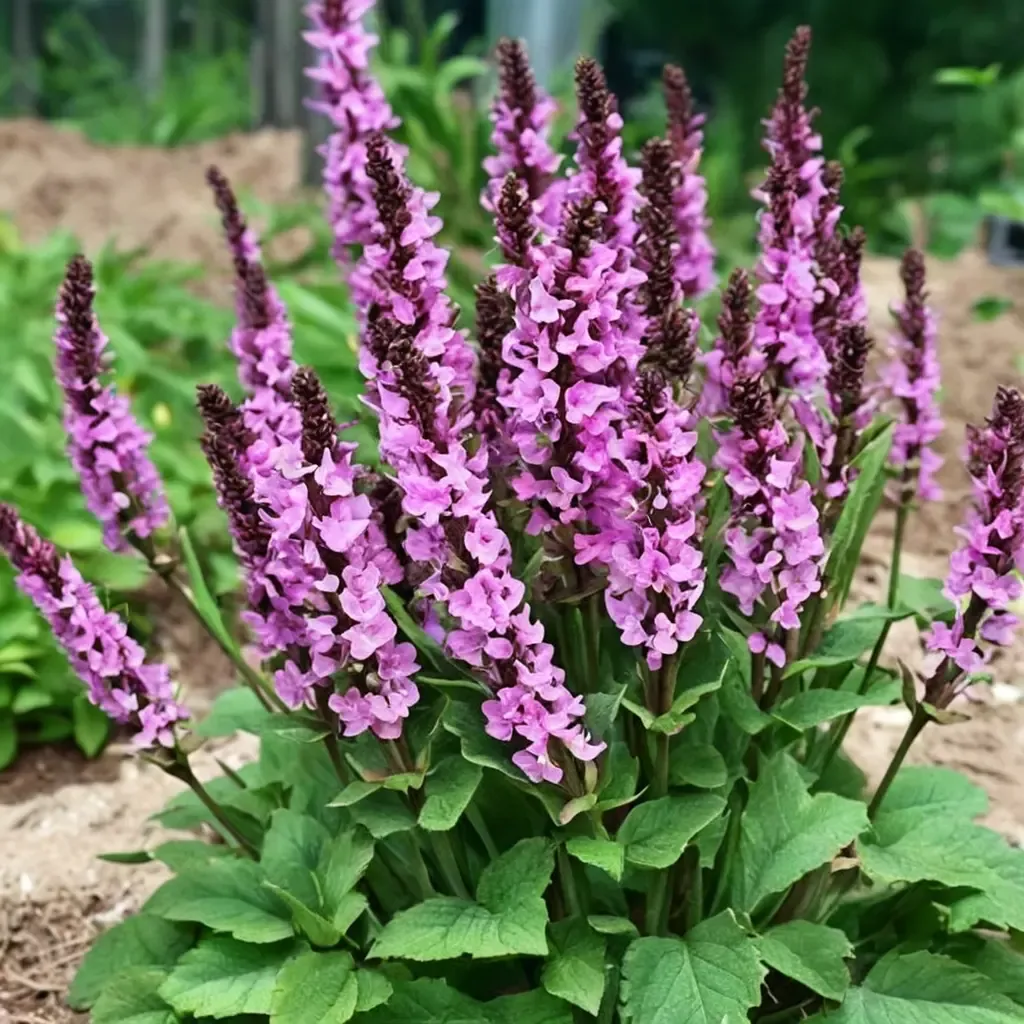
Rose Marvel Sage
Salvia nemorosa 'Rose Marvel'
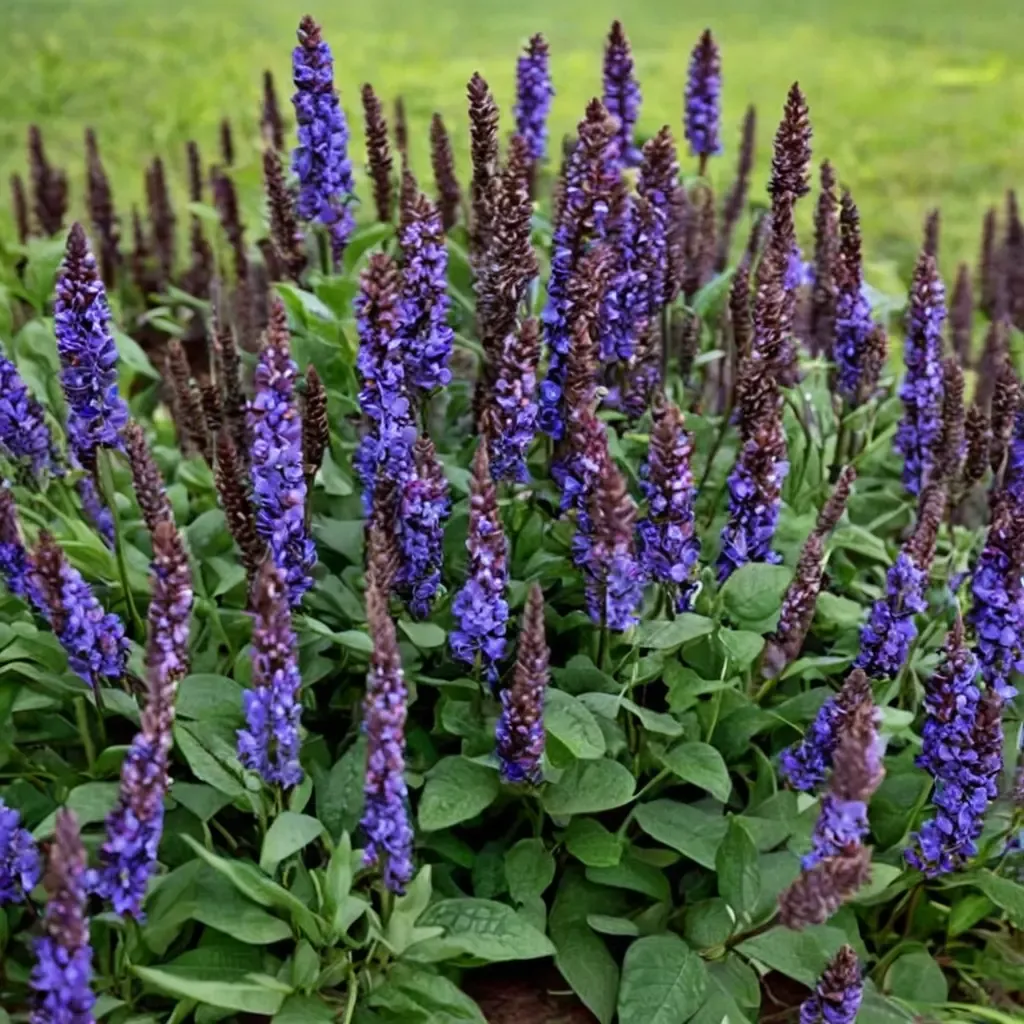
Bumbleblue Sage
Salvia nemorosa 'Bumbleblue'
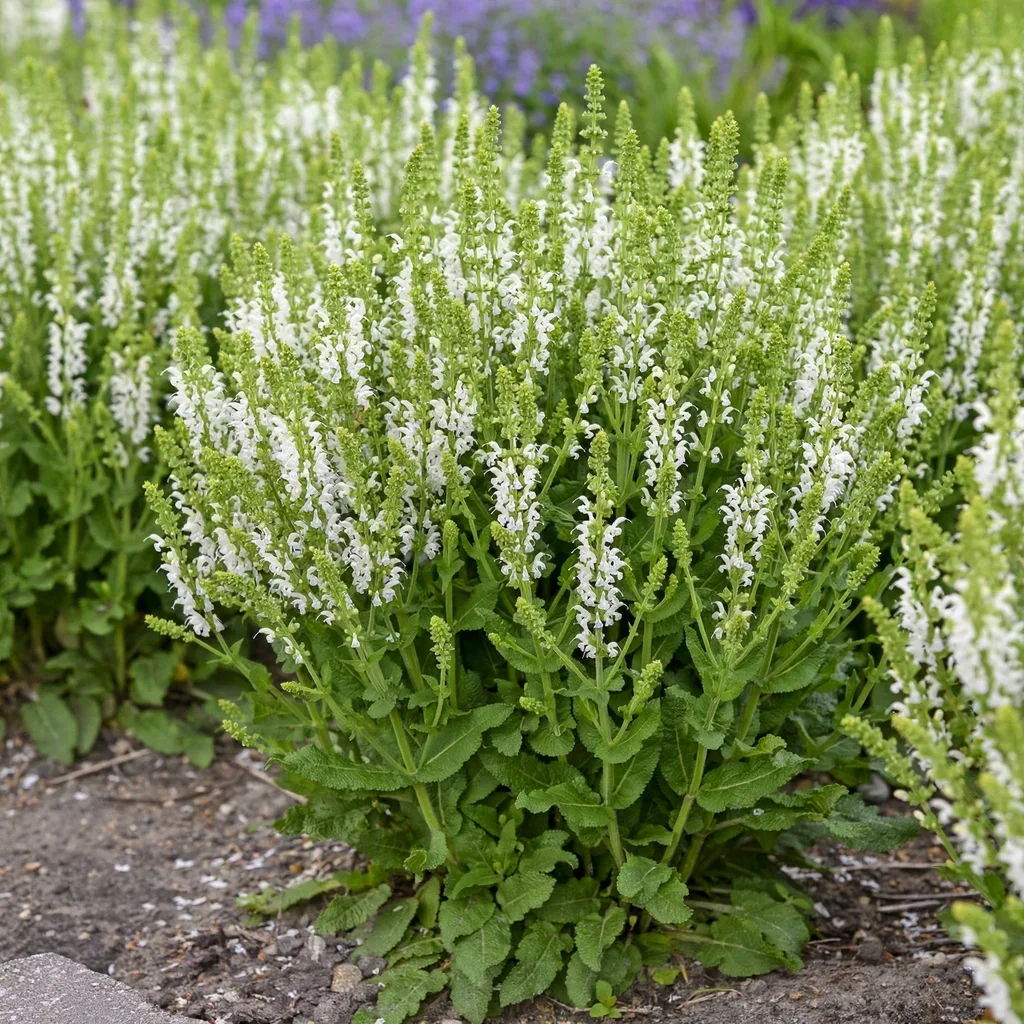
White Profusion Salvia
Salvia x hybrida 'White Profusion'
Keep exploring
Explore the genus
Hardy in your zone?
Grow Rusty Sage with confidence
See it in a design of your actual yard, get zone-matched care reminders, and track it season by season in your garden journal.